AI Tech News
Artificial intelligence remains the fastest-moving story in technology. Here you will find news on model releases and research, the labs and companies competing for the frontier, enterprise adoption, and the debates over safety, jobs, and regulation that AI continues to raise.
Typical stories include new model launches and benchmark claims, massive infrastructure and chip investments, AI features arriving in mainstream products, research papers that shift the field's direction, and enterprise deals that show where adoption is real rather than experimental.
AI now sets the agenda for the rest of the technology industry, steering capital, talent, and strategy at nearly every major company. Developers, executives, policymakers, and workers wondering how their jobs will change all have reasons to follow it closely.

Scientists have released the most comprehensive two-dimensional map of the universe to date, a milestone expected to remain unchallenged for years due to shifting global funding priorities. Despite these economic headwinds, upcoming missions like the Nancy Grace Roman telescope and the European Space Agency's Euclid will continue to survey massive areas of the sky. Experts anticipate that future cosmological discoveries will largely be driven by artificial intelligence analyzing these extensive open datasets.
CommentsPaid search engine Kagi has introduced a new setting allowing users to filter out paywalled links from their search results. This update aligns with the platform's broader goal of providing a cleaner, ad-free browsing experience that prioritizes user control.
Comments
OzBrain is a new shared knowledge platform that acts as a unified brain for human teams and various AI and coding agents to read and write data. It provides a single, structured source of truth that seamlessly integrates with popular tools like Claude, ChatGPT, and Cursor to keep your entire workflow in sync.
Comments
A researcher accidentally intercepted and logged hundreds of thousands of phone calls to military bases by taking over expired e164.arpa nameserver zones for multiple territories. The misconfiguration allowed the author to route sensitive telecommunications traffic through their own systems without initially realizing the extent of the data collection. This incident highlights the critical privacy and security risks associated with unmaintained DNS infrastructure.
CommentsOpenTelemetry is facing significant adoption challenges as engineering teams resist migrating away from vendor-specific observability SDKs because the project feels incomplete. To highlight these ongoing struggles, the author has compiled a spreadsheet detailing the persistent implementation frustrations developers experience with the open-source standard.
CommentsPeople of ACM – Russ Cox
2026-08-22The latest People of ACM profile highlights Russ Cox's extensive contributions to the Go programming language, his leadership at the OEIS Foundation, and his insights from co-authoring Software Engineering at Google. Readers discussing the piece praised his recent floating-point performance optimizations and reflected on his famous definition of software engineering as programming scaled across time and teams.
CommentsA recent study reveals that while generative AI initially boosts homework scores, it ultimately lowers exam performance because many students use the technology to bypass the actual learning process. While AI can serve as an effective supplementary tool for diligent students who maintain their study habits, it harms long-term academic retention for those using it to take shortcuts. Ultimately, the technology acts as an amplifier that benefits focused learners but crowds out the productive struggle necessary for deep comprehension.
CommentsA new open-source project called Rex was recently showcased on Hacker News as a parallel functional programming language tailored for scientific workflows. Developers can explore the source code and contribute to its ongoing development via its official GitHub repository.
Comments
Researchers have discovered that early-life stress in mice alters DNA packaging within brain cells, creating a molecular scar of trauma. This biological memory leaves the brain significantly more vulnerable to future stressful events.
CommentsA new developer tool called Claudette strips Anthropic's Claude AI of its overly enthusiastic BuzzFeed tone. Available as a Claude Code skill with a /debuzz command, it works by piping the AI's responses through Google's Gemini to rewrite them in a more neutral voice.
Comments
Autolith is a new terminal-based programming agent for Linux that operates directly within your repository to maintain continuous project context. By executing its tasks inside a live SBCL image, it provides developers with a seamless and highly responsive coding assistant right in the command line.
Comments
Waymo is revealing new details about the custom compute hardware and silicon that power its autonomous vehicles. The company has spent the past decade co-designing its hardware, sensors, and algorithms to deliver the safe, low-latency performance required for real-time driving. This reveal highlights their collaborative approach with industry partners to build a highly capable edge computing system for physical AI.
CommentsA recent article argues that Odin's inline assembly is superior to implementations in languages like Rust and Go because it challenges the assumption that assembly is inherently untyped. By organizing assembly into callable templates with a unified syntax across all instruction set architectures, Odin allows inline code to integrate seamlessly with the rest of the codebase while maintaining strict type safety.
CommentsTumble Forth is an educational project that builds a bare-metal operating system and a C compiler from scratch, starting from assembly and utilizing the Forth programming language. The project aims to demystify complex computing by implementing these systems from the simplest possible foundational components. Readers in the discussion praise this audacious approach and share their own related experiences with bare-metal programming and Forth interpreters.
Comments
An analysis of the recent GitHub outage reveals that a misconfigured autoscaling policy caused an Istio sidecar pod to hit its concurrency limits and fail to scale. This incident highlights the component substitution fallacy, demonstrating how swapping infrastructure components without properly adjusting underlying scaling policies can lead to severe system failures.
CommentsI'm becoming AI-blind
2026-08-22A professional describes developing AI blindness, a phenomenon where the brain subconsciously tunes out work documents that show obvious signs of being generated by artificial intelligence. The author notes that their brain has learned to quickly spot these low-effort AI texts and automatically ignores them without processing the content. This cognitive fatigue highlights a growing challenge in modern workplaces as automated tools become increasingly prevalent in daily communications.
CommentsI ran Photoshop on a £0.60 computer chip
2026-08-22A developer successfully ran a Macintosh emulation of Photoshop using a 60p Raspberry Pi RP2350 microcontroller, demonstrating the surprising capabilities of highly constrained modern hardware. Although the total cost of the custom board and display pushes the actual price closer to $40, the project highlights the efficiency of classic software compared to today's resource-heavy applications. The tech community responded with enthusiasm, sharing their own low-power microcontroller builds and praising the return to reasoning about strict hardware limitations.
Comments
AI companies are secretly purchasing and destroying physical books to train their models, permanently locking human knowledge inside private corporate servers. To prevent this cultural heritage from disappearing, Anna’s Archive is urgently calling on volunteers worldwide to scan and upload books to its shadow library.
Comments
The August 17 outage
2026-08-21A new update has been released regarding the service outage that occurred on August 17. The report details the causes of the disruption and outlines the specific steps being implemented to improve system reliability and prevent future incidents.
Comments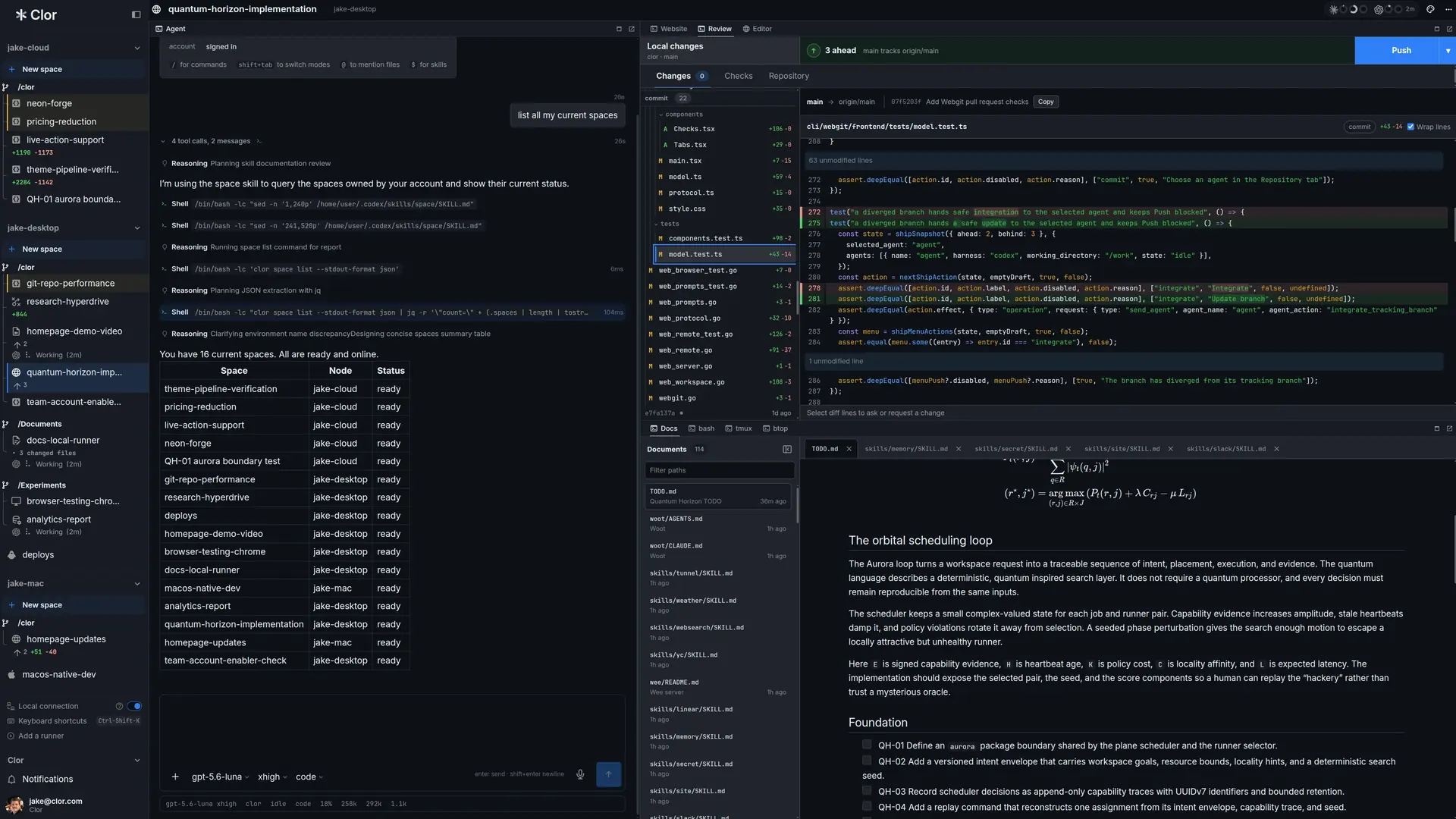
Small software teams are leveraging parallel AI coding agents to generate hundreds of daily commits, drastically outpacing historical productivity norms. This exponential surge in output means small groups of developers are now operating at the scale of much larger organizations. Consequently, they must navigate the same complex architectural and deployment challenges as tech giants like Uber.
CommentsI should have loved biology (2020)
2026-08-21The author reflects on how traditional biology education failed to capture the inherent wonder of the subject. By relying on dry textbooks, the curriculum stripped away the excitement of discovering life's secrets and turned the class into a tedious experience.
CommentsA recent report reveals that the CIA helped keep Steve Jobs' NeXT Computer financially afloat in the 1980s by purchasing its hardware for agency use. Reader discussions clarify that this was a straightforward procurement rather than a covert backdoor operation, contrasting the news with actual historical CIA covert funding like the secret ownership of the Swiss cryptography firm Crypto AG.
Comments
Why aren't smart people happier? (2022)
2026-08-21An analysis explores the counterintuitive relationship between high intelligence and personal well-being. It suggests that smarter individuals often struggle with happiness due to factors like overthinking, social isolation, and unmet expectations. By reframing how we view brainpower, the piece highlights the importance of emotional health and life satisfaction over mere cognitive ability.
Comments
A developer has trained a compact 125 million parameter transformer model to autocomplete piano performances in real time. The model runs entirely on-device, enabling musicians to generate MIDI accompaniments locally without relying on cloud processing.
CommentsA new tool called Vomit uses a secondary large language model to clean up the messy token output generated by Claude 5. The project aims to save tokens and refine the text, addressing issues with the primary model's raw and often hopeless responses.
Comments
A new experimental tool named Huzzah has been shared on Hacker News, introducing a novel approach to coding with artificial intelligence. The project aims to rethink the software development process by offering developers a completely new way to interact with AI.
Comments
Discussions surrounding the detection of scraper bots via scroll behavior highlight a growing divide between e-commerce sites embracing automated agents and content platforms blocking scrapers to protect bandwidth. Commenters share experiences of programming complex bots that mimic human scrolling and mouse movements to bypass these detection systems. Additionally, users note that aggressive bot filtering can sometimes alienate legitimate visitors or simply shift advertising costs without resolving underlying economic issues.
CommentsAliExpress is using silent WebAudio fingerprinting on its website to track visitors, which inadvertently breaks Bluetooth multipoint functionality. This hidden tracking method disrupts the ability of compatible headphones to maintain simultaneous connections with multiple devices.
CommentsSpacetimeDB: A Short Technical Review
2026-08-21A technical review of SpacetimeDB reveals its open-source implementation relies on a shared global mutex, prompting community debate over its architectural novelty and the risks of executing application code directly within the database. While the article's even-handed approach to database trade-offs was praised, readers noted that running user code inside the server introduces significant challenges regarding language restrictions and preventing infinite loops. Ultimately, the discussion underscores that reliability and provable correctness remain more critical for database adoption than misleading performance benchmarks.
Comments
Consumer Rights Wiki
2026-08-21The Consumer Rights Wiki is a community-built platform dedicated to documenting anti-consumer and anti-ownership practices across the technology sector. It tracks a wide range of restrictive corporate behaviors, including right-to-repair limitations, planned obsolescence, subscription traps, and broader digital rights issues.
Comments