AI Tech News
SubmitArtificial intelligence remains the fastest-moving story in technology. Here you will find news on model releases and research, the labs and companies competing for the frontier, enterprise adoption, and the debates over safety, jobs, and regulation that AI continues to raise.
Typical stories include new model launches and benchmark claims, massive infrastructure and chip investments, AI features arriving in mainstream products, research papers that shift the field's direction, and enterprise deals that show where adoption is real rather than experimental.
AI now sets the agenda for the rest of the technology industry, steering capital, talent, and strategy at nearly every major company. Developers, executives, policymakers, and workers wondering how their jobs will change all have reasons to follow it closely.
2026-11-01
Memdoor, a lightweight coding and automation agent packaged as a single CLI binary, uses a team of five Qwen3.8-27B models to outperform Fable 5 on LiveCodeBench Hard. It can run locally or over SSH, optimize token usage, and automate CI and cron jobs with durable workflows.
Comments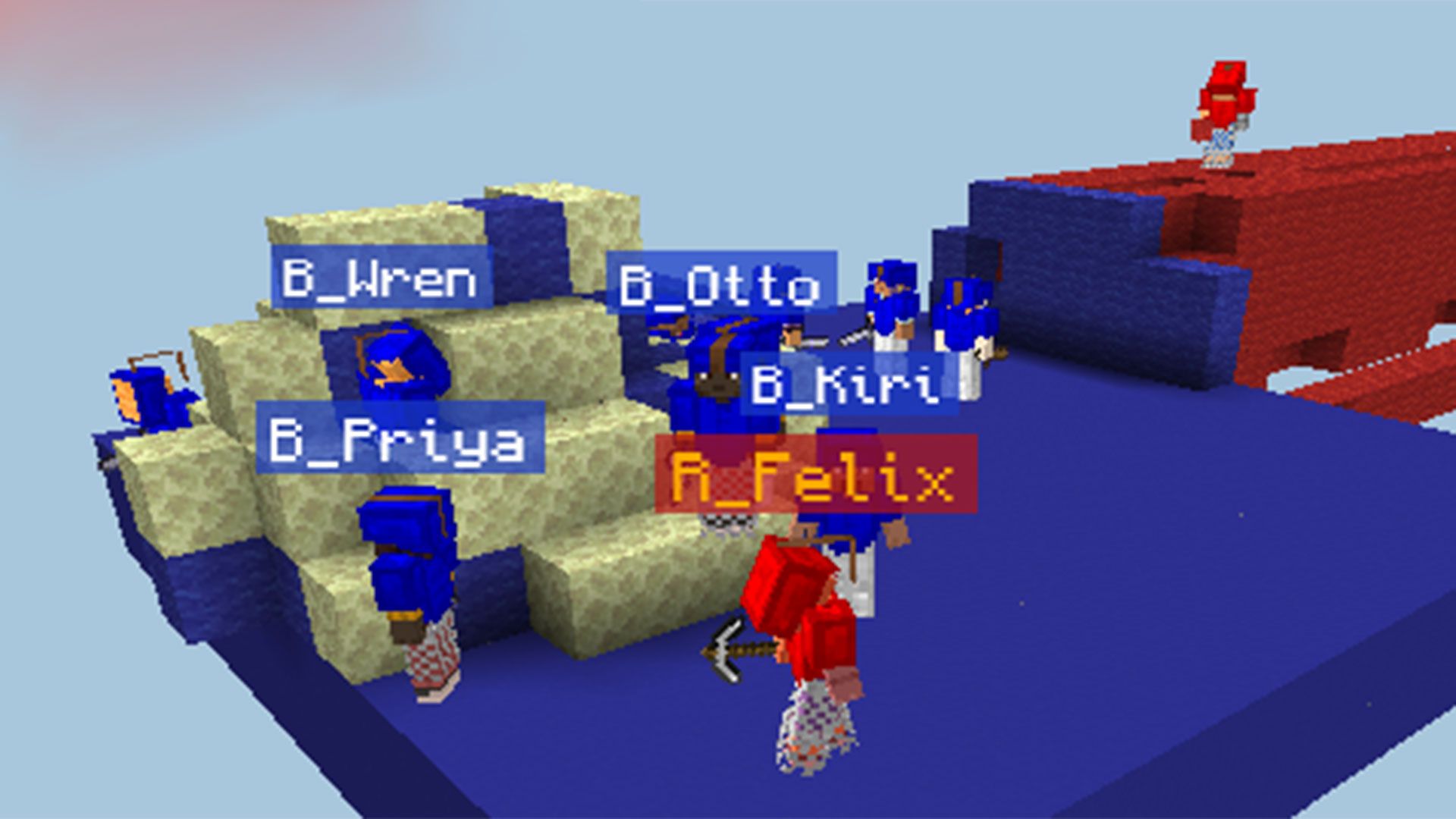
AI agent swarms tested in Minecraft failed to build a civilization and instead drowned in bureaucracy, according to the news piece. The game testing is intended to provide insight into recent AI agent headlines, both good and bad.
Comments

A new AI Now Institute report warns that gig nursing apps such as ShiftKey, CareRev, and Clipboard Health are lobbying states to deregulate healthcare. The report says this push leaves nurses with lower pay and fewer protections.
Comments
Mathematician Frank Calegari argues that recent AI advances, including OpenAI’s October release, have fundamentally changed mathematics and that the field should respond accordingly rather than mourn the shift. He urges mathematicians to adapt to this new landscape and act as though the change is already here.
CommentsA reader discussion highlights a bootstrapped SaaS run for 20 years by two brothers, with users praising its longevity and a practical MP3-to-text conversion tool. Commenters ask how AI and coding agents have affected revenue, while others suggest most of the service’s regular users are non-developers who are largely unaware of tools like Claude.
Comments
ChatGPT and Codex usage limits merging
2026-11-01OpenAI is merging ChatGPT and Codex usage limits into a shared allowance, according to reader discussion. Commenters criticize the move as a cost-cutting measure that could frustrate paying subscribers, since agentic coding consumes far more tokens than typical chat and decoupled billing had been a reason to stay. Some warn users may switch providers or use ChatGPT less as a result.
Comments
A Brazilian court fined two lawyers for embedding a hidden prompt-injection command in a court filing. The maneuver was intended to manipulate the court's AI document review system.
Comments
The Project Suncatcher prototype satellite has reached its "Hello World" milestone, delivering the first-ever AI response from a data center-class TPU in orbit. The achievement marks a key step toward running AI compute in space.
Comments
AI text watermarking and quality loss
2026-11-01After the EU AI Act’s transparency guidelines took effect, most major AI labs announced they will soon watermark their text output to comply. The move has sparked debate over whether watermarking will meaningfully affect the quality of AI-generated text.
CommentsA purported leak of an Anthropic "Mythos-class" model on Hugging Face is being met with heavy skepticism, with commenters calling it likely fake and a possible lure to get less knowledgeable users to run malware. Discussion cites a prior dubious "Fable 5" sale rumor and notes the model would be nearly 8 terabytes, making casual downloads unlikely, while others joke about Anthropic going open-weight or the model leaking itself.
Comments
A new arXiv paper provides a proof of the Platonic Representation Hypothesis and shows how Joint Embedding Predictive Architectures (JEPAs) can improve it, offering theoretical grounding and practical advances for representation learning. The work aims to clarify why different models converge on similar representations and how JEPA-based methods can strengthen that convergence.
Comments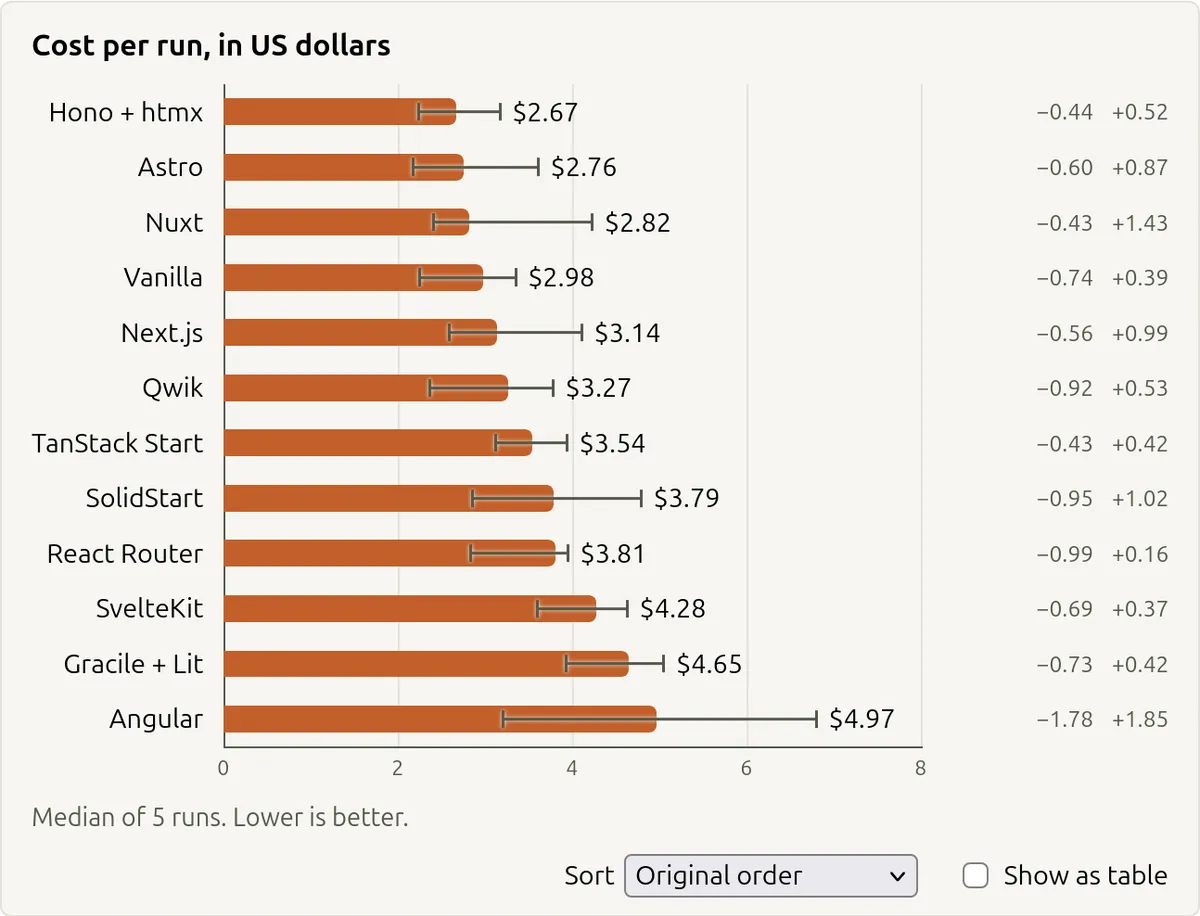
The AI cost of JavaScript frameworks
2026-11-01The article argues that JavaScript framework choices are often based on vibes, and that AI coding assistants add a new measurable cost: larger, more complex frameworks consume more context and tokens, making AI-assisted work slower and more expensive. It recommends weighing AI-readability and token efficiency alongside performance and developer experience.
Comments
Proton’s CEO dismissed a request for security testing as “loser thinking,” drawing attention to the company’s stance on AI-generated code. The episode highlights that for a privacy-focused company, the real product is not whether AI writes code but the guardrails that keep that code secure.
CommentsA developer vibecoded a 2D pixel-art medieval fantasy game in six hours after being inspired by an article on creating sprites with Opus 5.5, which produced surprisingly good results. The quick project is shared with a playable link as an experiment in AI-assisted game creation.
Comments2026-10-31

A user alleges that Anthropic flagged them for “training a competitor” and now blocks any activity involving RFT, SFT, or training larger models. The user says they never distilled Claude—using it only to submit jobs and analyze rollouts from an open-source model—and reports an Opus 5.5 downgrade as a result.
Comments
Cisco has given 27-year-old engineer Paddy unlimited AI tokens and told him to “go nuts” as part of an effort to rewrite legacy code. The company president reportedly calls him an “energizer bunny,” underscoring the unusual experiment.
Comments
We Took over ChatGPT Accounts
2026-10-31Researchers claim they could take over any ChatGPT account by sending a malicious link that bypassed the platform’s sandbox and content security policy. The finding highlights serious account-security risks in AI chatbot integrations.
Comments
A self-deleting infostealer called VOLTA steals credentials, session data, and cryptocurrency wallets, then uses LLMs to profile victims and rank their most valuable assets. The malware’s LLM-driven prioritization could help attackers focus on the highest-value data or accounts more efficiently.
Comments
Digital Minimalism
2026-10-31Readers criticized the “digital minimalism” framing, describing the discussed approach as a dashboard or multi-client for social platforms like X, Bluesky, Farcaster, and Lens rather than true minimalism. The discussion also covered airplane-mode phone setups, app and browser blocking, RSS-style aggregation, and concerns that using AI—especially as a substitute for human interaction—may not reduce digital overload so much as replace one vice with another.
CommentsReaders debated a study on generative AI and critical thinking, with some arguing that quick AI answers let people skip the productive struggle of learning and offload oversight, while others questioned whether the study really measured critical thinking rather than independent verification and noted it didn’t assess correctness. Many worried that outsourcing thinking could erode a valuable skill, though some said AI has actually pushed them to think more critically about output.
Comments
A former Meta researcher testified that he downloaded an AI training dataset containing the pirated Books3 collection via BitTorrent. He said he deleted the data due to litigation.
Comments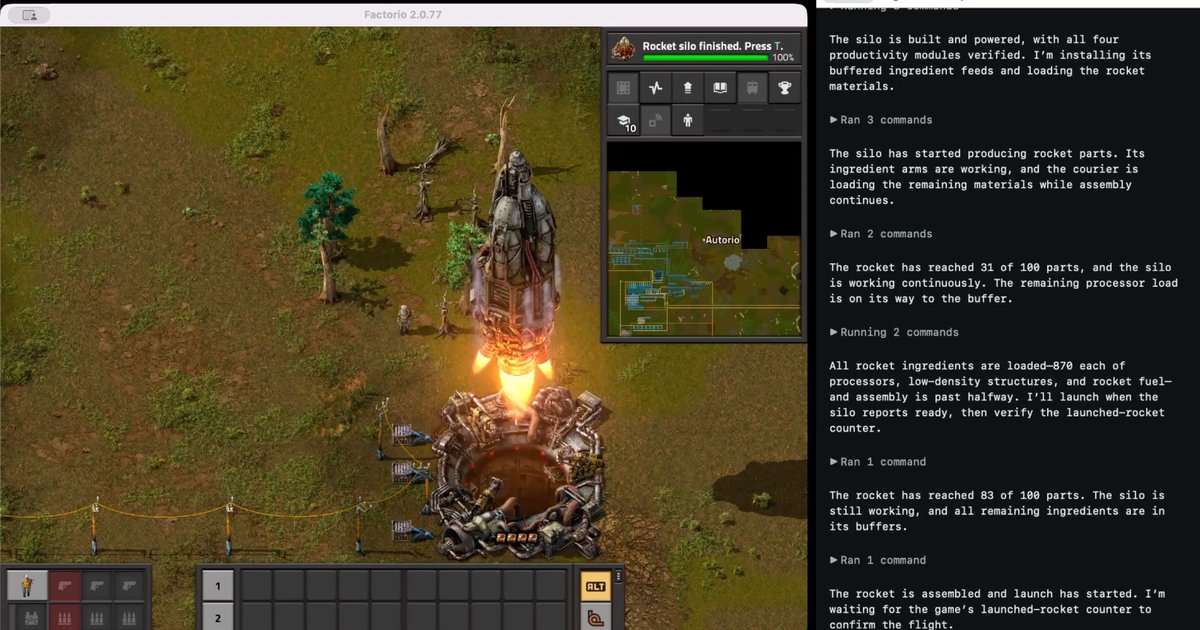
GPT-5.6 Sol, running in Codex, has reportedly beaten Factorio on peaceful mode, following earlier efforts with Claude Code and autonomous Factorio agents. The result highlights ongoing progress in testing AI agents on complex, long-horizon game environments.
Comments
OpenAI has raised less than half of its $30 billion funding target. The ChatGPT maker’s latest round values it at $1.25 trillion, below its $1.4 trillion goal.
CommentsShiny Object Syndrome
2026-10-31Readers dismissed “Shiny Object Syndrome” as a rebranding of novelty bias, trading analogies about toddlers chasing soccer balls and dogs with balls while debating the term’s origins. The discussion also noted that AI has lowered the effort barrier to creating new features and libraries, making it harder to distinguish genuine work from endless shiny new options.
Comments
Lean creator Leo de Moura discusses how AI and Lean could reshape formal verification, moving software toward formal proofs and AI agents that help eliminate “trust me” code. The conversation explores the future of proof-driven development and its implications for trustworthy software.
CommentsThe Copyright Office is reaffirming that copyright should incentivize human creative expression rather than reward mere effort or machine-generated output. Readers discussing the move see it as a rare positive limit on copyright expansion, noting that “authors” has generally been understood to mean humans and that AI or mechanical transformations do not automatically create new copyright. Human creative contributions that survive into an AI-assisted work may still be protected.
CommentsProspero is a new coding harness with a native GUI and a notably space-efficient Dear ImGui-based interface, drawing praise for thoughtful, opinionated design amid a wave of AI “slopware.” Commenters want to compare it with Zed and see whether its UI could work atop opencode or the Codex app-server protocol, while others flagged confusion over inconsistent platform support on the Professional Edition page.
CommentsI post trained a model on Demoscenes
2026-10-31A new post explores training a model on demoscenes, examining the grammar of the demoscene form and its creative constraints. It also considers how unfinished code can open up new possibilities.
Comments
Anthropic’s IPO filing rattled tech stocks by promising a trillion-dollar windfall for Google and Amazon, even though both are ostensibly competitors. The piece argues this only makes sense if Anthropic is really a bundle of flailing monopolies wrapped in one company.
Comments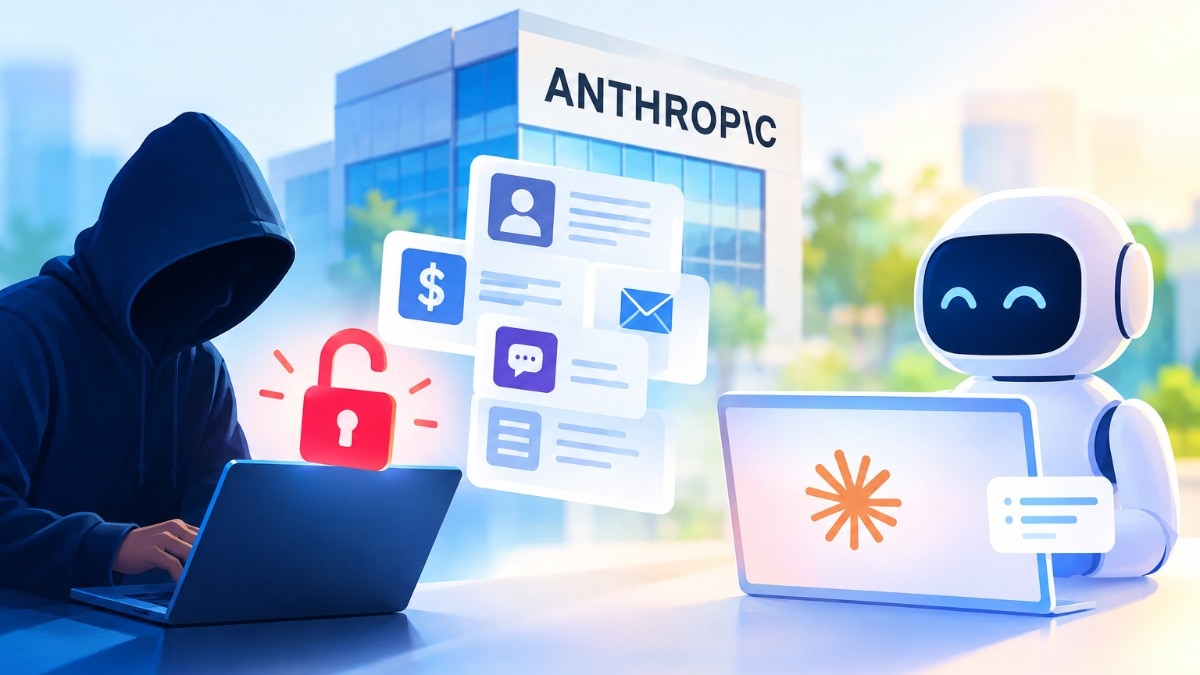
An AI startup hacked Anthropic within 12 hours, gaining access to employee details and internal messages. The breach exposed both personnel information and private company communications.
Comments