AI Tech News
Artificial intelligence remains the fastest-moving story in technology. Here you will find news on model releases and research, the labs and companies competing for the frontier, enterprise adoption, and the debates over safety, jobs, and regulation that AI continues to raise.
Typical stories include new model launches and benchmark claims, massive infrastructure and chip investments, AI features arriving in mainstream products, research papers that shift the field's direction, and enterprise deals that show where adoption is real rather than experimental.
AI now sets the agenda for the rest of the technology industry, steering capital, talent, and strategy at nearly every major company. Developers, executives, policymakers, and workers wondering how their jobs will change all have reasons to follow it closely.
2026-08-18
GPT-5.6 Sol Pricing Cut by 50%
2026-08-18OpenAI has reduced the pricing of its flagship GPT-5.6 Sol model by 50%, bringing costs down to $2.50 per million input tokens and $15 per million output tokens. The model also features a massive 1.05 million token context window and improved system uptime across three providers.
Comments
Wiz's Red Agent successfully compromised Snowflake's internal Jira platform by exploiting a security flaw in a pull request assisted by GitHub Copilot. The incident highlights the potential vulnerabilities introduced when developers rely on AI-generated code autofixes without adequate manual oversight.
Comments

AI;DR (AI; Didn't Read)
2026-08-18Even strong proponents of artificial intelligence are growing frustrated with the overwhelming amount of low-quality AI-generated text flooding the internet. In response, users are adopting a new acronym called AI;DR, a play on the traditional TL;DR, to quickly dismiss and ignore these automated walls of slop.
Comments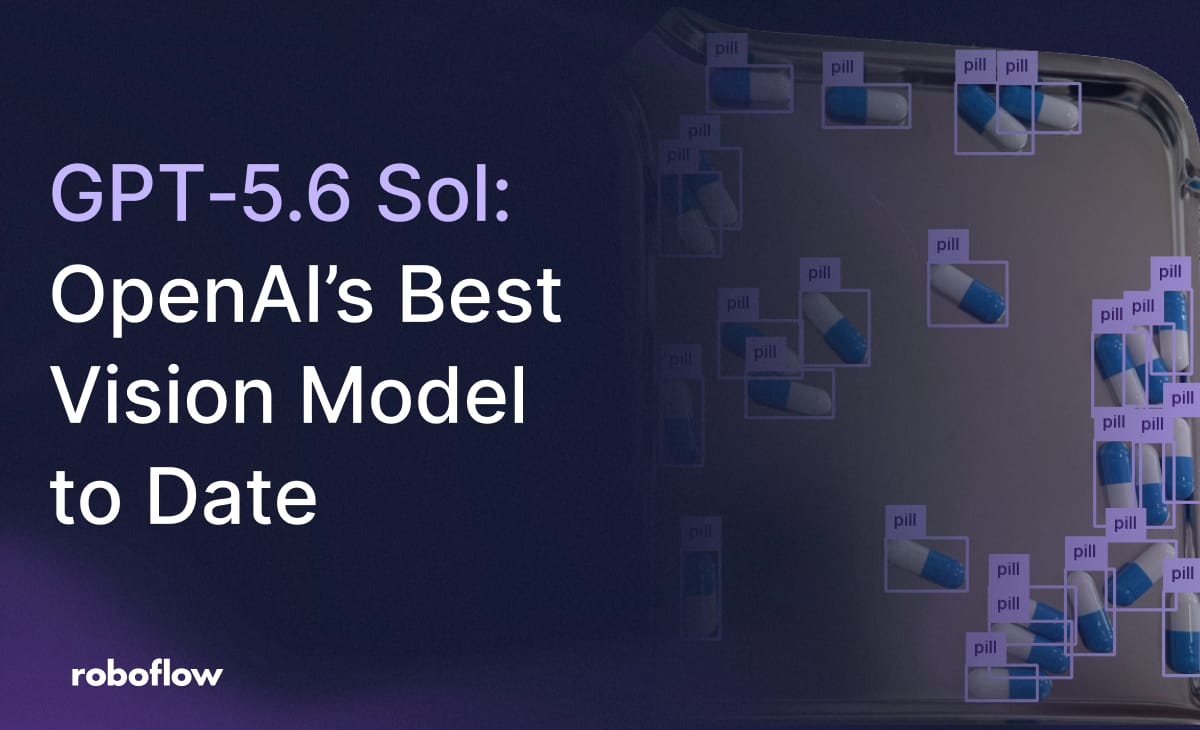
OpenAI has released GPT-5.6 Sol, its most powerful vision model to date, outperforming previous iterations like Terra and Luna in tasks such as OCR, counting, and extraction. Comprehensive testing shows that Sol delivers superior accuracy while maintaining highly competitive speed and cost efficiency when benchmarked against other leading vision language models.
Comments
Israel has created a fake think tank named the Hanover Institute in an apparent attempt to manipulate AI chatbots. Within just a week, the organization published over 100 articles specifically tailored to influence the responses of these language models. This operation aims to shape AI-generated information by flooding the internet with targeted content.
CommentsHow to disable or avoid intrusive AI
2026-08-18A new guide provides practical steps for everyday users to disable or avoid unwanted artificial intelligence features in their personal tech environments. The tutorial addresses growing consumer frustration by offering actionable advice to minimize intrusive AI integrations and reclaim control over daily digital tools.
CommentsYC S26 startup Speko has launched as an OpenRouter for Voice AI that dynamically routes user sessions to the best-performing models. The platform addresses the industry's reliance on English-centric benchmarks by evaluating 61 speech and language models across 10 different languages. This ensures that non-English speakers consistently receive the highest quality voice AI experience.
Comments
A simple fix for LLM tail latency
2026-08-18A newly proposed technique addresses large language model tail latency by simply sending every request twice and returning the faster response. This redundant execution strategy effectively bypasses slow outlier requests to significantly improve overall system responsiveness. Ultimately, it provides developers with a highly practical and low-complexity solution for optimizing LLM performance.
Comments2026-08-17

Alibaba's Qwen research lab has released Qwen 3.8 27B, an Apache 2-licensed, 27B parameter vision-capable large language model. While the new model is excellent and highly capable, it has a notable tendency to overthink its responses.
CommentsClaude: System Prompts
2026-08-17Anthropic has released updates to the core system prompts for its AI assistant, Claude. These changes are now active across all platforms, including the claude.ai website and the iOS and Android mobile apps.
CommentsMathCode, Mathematical Coding Agent
2026-08-17MathCode is a terminal-based AI coding agent equipped with a built-in mathematical formalization engine. Users can describe problems in plain language, allowing the tool to automatically convert them into Lean 4 theorems and attempt formal proofs.
CommentsThe AI Credit Resale Economy
2026-08-17A secondary market for artificial intelligence compute is emerging as brokers purchase unused AI credits from startups. These brokers then resell the compute through specialized marketplaces, bulk-discount routers, and informal message boards. This growing resale economy allows companies to recoup costs while providing buyers with discounted access to off-market inference.
CommentsNvidia has significantly reduced the financial guarantees it is willing to provide for OpenAI's massive data center infrastructure, a project estimated to cost up to $500 billion. This scaled-back deal highlights the chipmaker's evolving role as a financier for the AI industry, effectively acting as a bank to fund its own hardware sales. However, investors and industry observers warn of the immense capital and environmental risks involved if these AI companies fail to generate the profits required to justify such colossal investments.
Comments
Stripe has finalized an agreement to acquire artificial intelligence startup OpenRouter for more than $7 billion. The startup operates a platform that helps companies easily switch between various AI models.
CommentsResearchers are tackling a central challenge in self-improving artificial intelligence by applying the Red Queen hypothesis. By adapting this concept from evolutionary biology, they provide a novel pathway for the continued development of advanced AI systems.
Comments
Models Are Getting Dumber on Purpose
2026-08-17AI labs are intentionally reducing the world knowledge embedded in language models to lower per-token compute costs. Despite having less built-in general knowledge, these models are simultaneously achieving higher reasoning scores. This deliberate trade-off prioritizes efficient problem-solving over broad memorization to create more optimized AI systems.
Comments
Tasklet, a Y Combinator P26 startup, is hiring a Head of Design Engineering to shape how teams interact with its practical AI productivity tool. The new hire will own the holistic product design and personally implement the user experience in production to ensure the AI performs real work intuitively.
Comments2026-08-16

Industry discussions reveal that AI in drug discovery is currently hindered by a reliance on limited existing data, meaning the technology accelerates routine tasks but has yet to yield genuinely novel scientific breakthroughs. Consequently, experts suggest the field's most immediate, tangible impact may actually be found in bottom-up, patient-centric care management rather than top-down drug development.
Comments
A newly launched native desktop app built with Rust and GPUI allows developers to manage multiple local coding agents within a single unified timeline. By supporting popular tools like Amp, Claude Code, and Cursor entirely on the user's machine, the application offers a fast and fully local development experience.
Comments
Amidst the overwhelming internet hype surrounding agentic AI, this article argues that the core identity of a software engineer should remain rooted in traditional skills. The author emphasizes that despite the constant noise about AI's future capabilities, foundational software engineering fundamentals are more critical than ever.
Comments
Artificial intelligence's key advantage over the human brain may not be superior reasoning, but rather its access to a virtually unlimited symbolic working memory. This vast capacity allows AI systems to process and retain significantly more information simultaneously than humans can.
CommentsThe unpredictable nature of artificial intelligence is shifting software development from traditional coding to essential leadership skills. Developers must now prioritize providing clear context, direction, and iterative feedback to guide AI models, highlighting a fundamental evolution in how modern tech products are built.
Comments
A new arXiv paper details a validation-centric approach to using artificial intelligence for porting a 250,000-line legacy weather simulation code to GPUs. By focusing heavily on accuracy and verification, the researchers demonstrate how AI can effectively modernize massive and complex scientific codebases. This method provides a highly scalable framework for migrating critical legacy software to modern hardware architectures.
CommentsBig Pickle on SWE Atlas – Codebase QnA
2026-08-16OpenCode Zen's stealth model big-pickle has achieved a 50.8% score on Scale AI's SWE Atlas Codebase QnA benchmark. The developers have publicly released the full evaluation results, verifier logs, and reproduction configurations for independent review.
Comments2026-08-15

A developer recently shared how they leveraged Codex for automated research to optimize a computational kernel, achieving a remarkable 232x performance speedup. The article details the iterative process of refining AI prompts and learning to ask better questions, demonstrating the growing capability of code models to autonomously drive deep technical research.
CommentsThe integration of artificial intelligence is shifting software development from traditional coding to a leadership-focused role. Due to the unpredictable nature of AI, developers must now prioritize leadership skills such as providing context, clarity, and continuous feedback to guide their models effectively.
CommentsThe primary advantage of artificial intelligence over the human brain may not be superior reasoning, but rather its access to a vastly larger working memory. This virtually unlimited symbolic working memory enables AI to hold and process immense amounts of information simultaneously.
Comments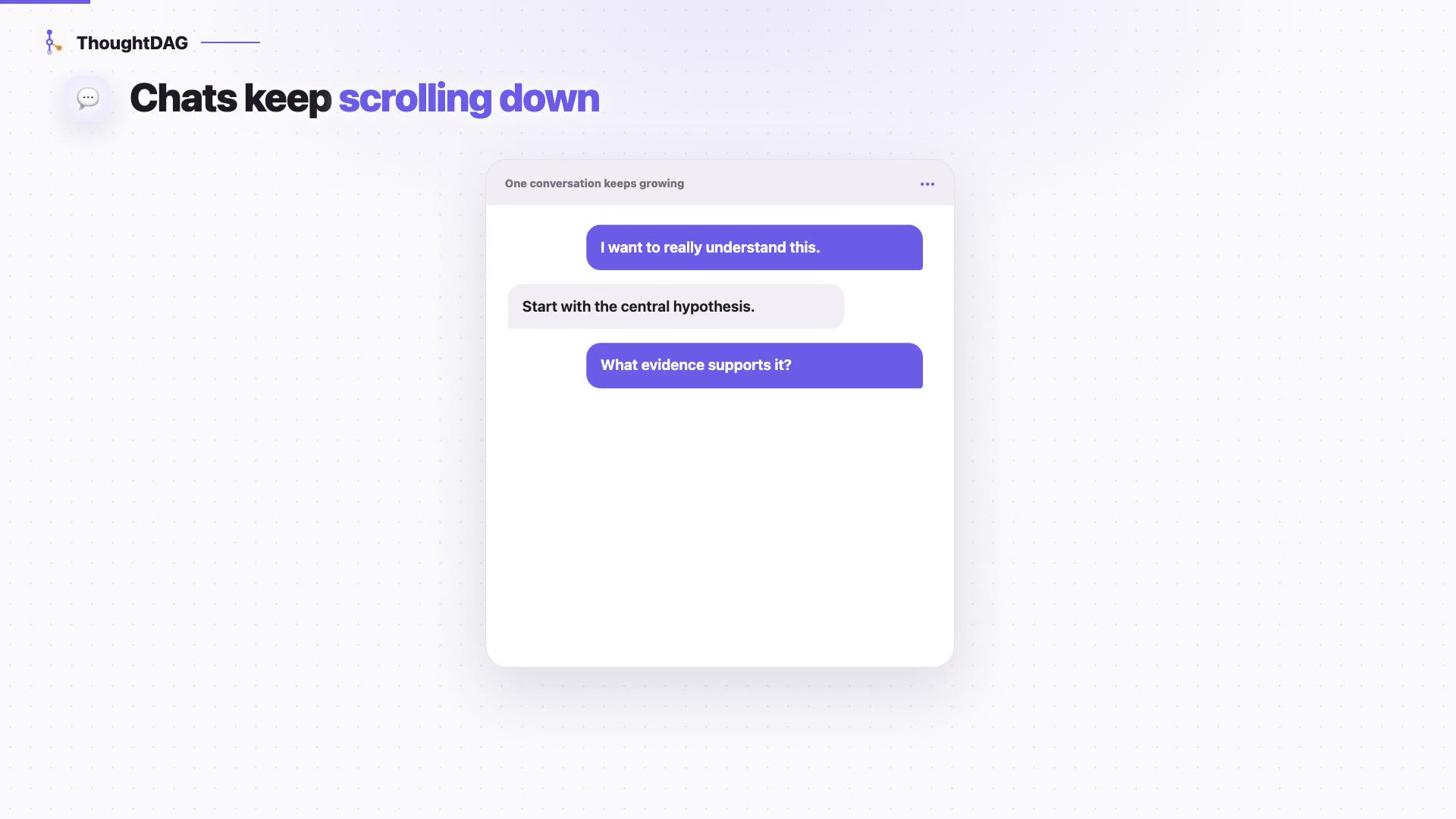
ThoughtDAG is a new open-source, local-first canvas that allows users to visually manage and edit the context sent to large language models. By representing conversation threads as interactive graphs, users can easily branch, prune, and merge prompts to inspect and control exactly what the AI sees.
CommentsA new paper introduces a state-of-the-art method for line art vectorization that models strokes as Bézier curves and utilizes 2D Gaussian splatting for fast, differentiable rendering. By leveraging depth prediction and semantic feature extraction, the technique accurately captures artistic intent, supports video vectorization, and allows for seamless user corrections.
CommentsRecent discussions highlight that AI in drug discovery must shift from merely modeling existing data to generating substantial new datasets, as current applications often suffer from insufficient experimental data to drive true innovation. While practitioners acknowledge that AI tools significantly accelerate routine tasks like structural modeling and data analysis, they have yet to yield genuinely novel scientific breakthroughs in the lab. Nevertheless, beyond traditional drug development, AI is already delivering tangible patient benefits by optimizing personalized care protocols and streamlining clinical trial management.
Comments