AI Tech News
Artificial intelligence remains the fastest-moving story in technology. Here you will find news on model releases and research, the labs and companies competing for the frontier, enterprise adoption, and the debates over safety, jobs, and regulation that AI continues to raise.
Typical stories include new model launches and benchmark claims, massive infrastructure and chip investments, AI features arriving in mainstream products, research papers that shift the field's direction, and enterprise deals that show where adoption is real rather than experimental.
AI now sets the agenda for the rest of the technology industry, steering capital, talent, and strategy at nearly every major company. Developers, executives, policymakers, and workers wondering how their jobs will change all have reasons to follow it closely.
2026-06-08
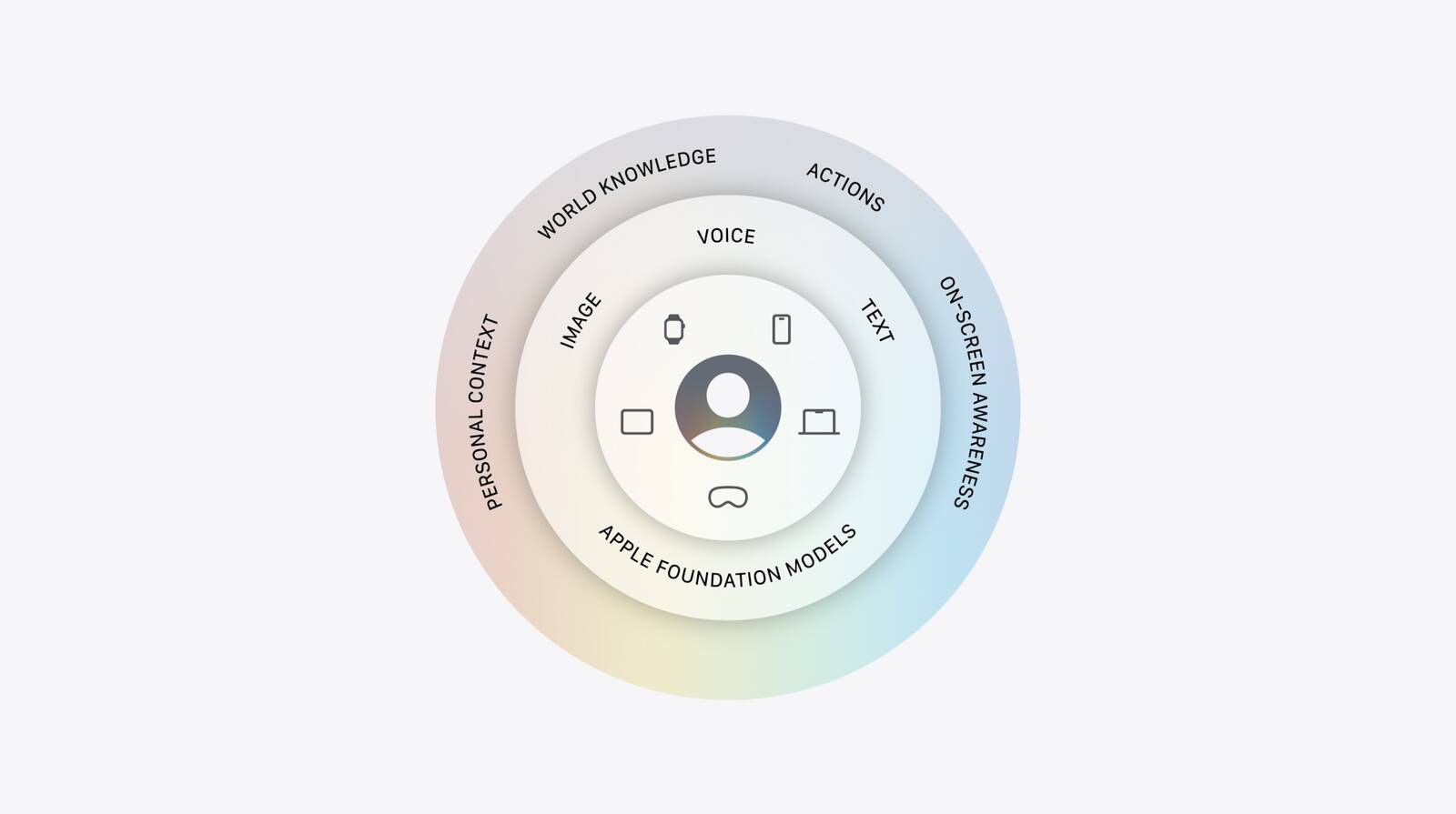
Apple has announced a major overhaul of its Apple Intelligence platform, introducing a new architecture built on foundation models co-developed with Google. Utilizing technologies from the Gemini family, these new models are designed to run seamlessly both on-device and across Apple's Private Cloud Compute servers.
CommentsMiMo and TileRT have launched the UltraSpeed mode for the Xiaomi MiMo-V2.5-Pro, achieving a groundbreaking 1,000 tokens per second on a one-trillion parameter model. This milestone marks the first time such extreme generation speeds have been reached on standard commodity GPUs through highly optimized model-system codesign.
Comments

AI is slowing down
2026-06-08Recent analysis suggests that the explosive growth and rapid advancement of artificial intelligence are beginning to plateau. The comprehensive report explores the factors driving this deceleration across the broader technology sector. It specifically examines the current trajectories and market challenges faced by industry leaders such as NVIDIA, Anthropic, and OpenAI.
CommentsIn a Hacker News thread discussing personal tools created since the advent of AI, a developer showcased several self-made generative audio web apps. The projects, which include a VCR-inspired noise generator and a retro-styled audio tool, were praised by the community for their creative and relaxing qualities. Users also provided constructive feedback on addressing browser security warnings and adding accessibility features for motion sensitivity.
Comments
A new interactive Python tutorial explores the fundamentals of machine learning by building a perceptron from scratch. It guides readers through core concepts like weights, bias, and learning rates using hands-on demonstrations. The guide also explains data normalization and decision boundaries to reveal the mechanics behind the smallest brain you can build.
Comments
DeepSeek V4 Pro recently outperformed GPT-5.5 Pro in a head-to-head comparison by delivering superior precision in instruction following, schema matching, and edge case resolution. Although GPT-5.5 Pro remains a highly capable model, it ultimately lost ground due to avoidable deviations in its outputs.
Comments
FrontierCode is a new evaluation benchmark designed to assess whether AI models generate high-quality code that developers would actually merge into production. Unlike existing benchmarks that only measure technical correctness, this new metric shifts the focus to evaluating real-world usability and overall code quality.
Comments
OpenAI has confidentially submitted a draft S-1 registration statement to the SEC, signaling early preparations for a potential initial public offering. The company stated that it has not yet determined a specific timeline for the public filing or the eventual IPO.
CommentsAlgorithmic Monocultures in Hiring
2026-06-08An article discusses how shared hiring algorithms have created an industry-wide monoculture where a single AI system evaluates candidates across multiple companies, potentially leading to disparate impacts on certain demographic groups. In response, tech community discussions debate the research methodology, suggesting the algorithms might simply be amplifying pre-existing applicant biases or non-demographic flaws rather than explicitly discriminating based on demographics.
Comments2026-06-07

A software engineer with a decade of experience has shared a candid reflection on how Large Language Models are devaluing their technical skills and causing them to question their future in the industry. This personal account highlights the growing anxiety among veteran tech professionals regarding the rapid automation of traditional software development tasks by generative AI.
CommentsLathe is an open-source tool that leverages large language models to generate customized, multi-part technical tutorials on demand. Rather than allowing AI to write code and bypass the learning process, it requires users to work through the hands-on lessons by hand to genuinely master new domains.
CommentsUsers are urging Anthropic to release an official Claude Desktop application for Linux to match the native clients currently available on other operating systems. The community feature request highlights a growing demand for broader platform support from the AI company. Developers and users alike are hoping Anthropic will prioritize a native Linux client in future updates.
Comments
Harness engineering is exploring how to leverage Codex to adapt its software development practices for an agent-first world. By integrating autonomous coding agents into daily workflows, the technical staff aims to significantly enhance overall engineering efficiency and embrace AI-driven development.
Comments
Researchers have published a new study analyzing the computational costs of AI coding agents by quantifying exactly where language model tokens are consumed during agentic software engineering tasks. The paper breaks down token usage across various developmental phases to identify major cost drivers and help developers optimize the efficiency of automated programming systems.
Comments
Ahead of its planned IPO, SpaceX has signed a 32-month agreement to lease compute capacity to Google using xAI data centers. Under the terms of the deal, Google will pay SpaceX $920 million per month for the infrastructure.
Comments
Biohub has released a comprehensive world model of protein biology featuring the newly introduced ESMFold2, ESMC, and ESM Atlas AI models. These advanced systems support a wide range of scientific applications and are specifically designed to accelerate the design of therapeutic molecules.
Comments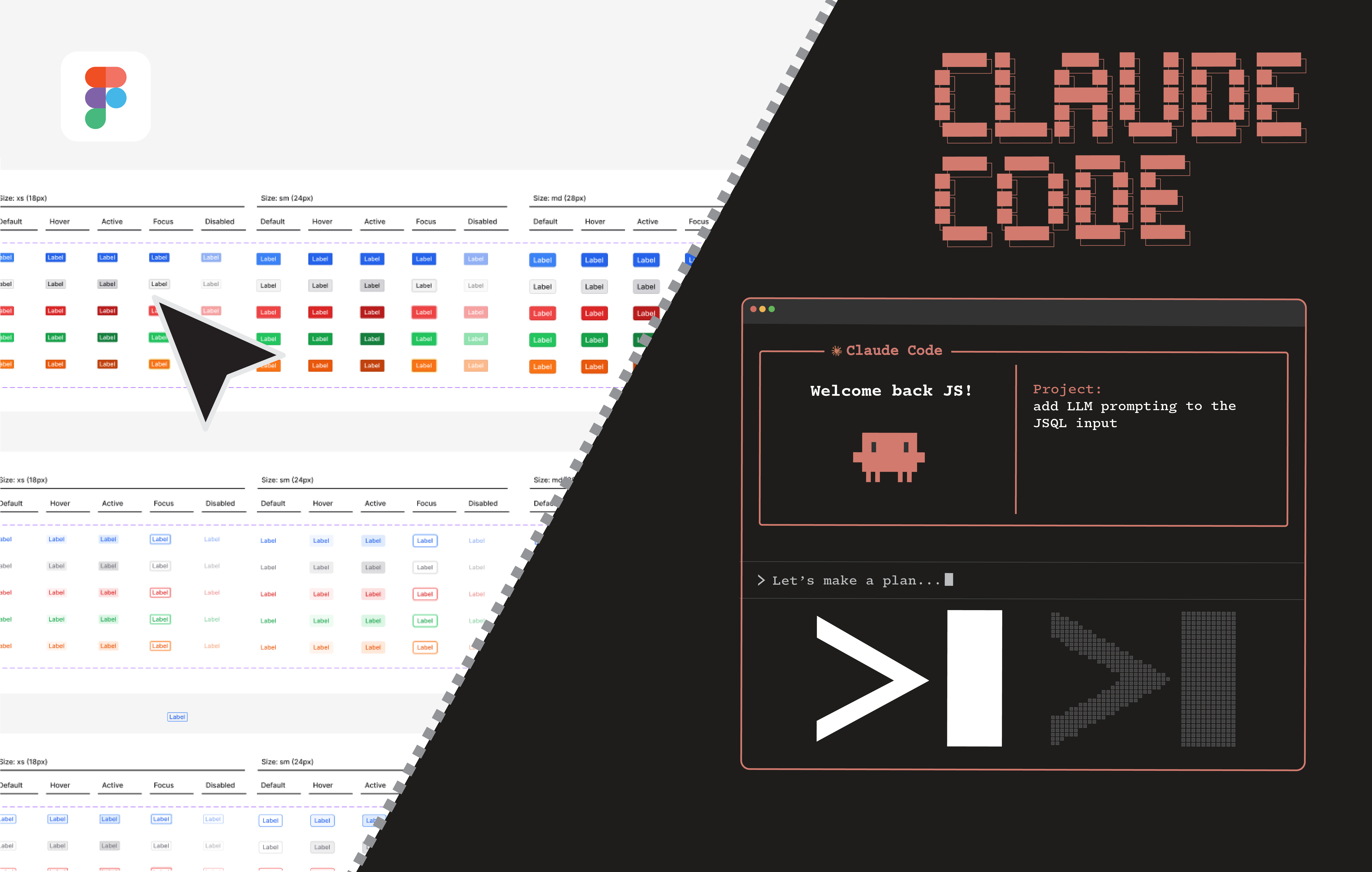
I design with Claude more than Figma now
2026-06-07A designer explains how their workflow has shifted from traditional tools like Figma to relying heavily on the AI model Claude for product design after initial skepticism toward large language models. Won over by the utility of AI coding assistants, the author now uses conversational AI to rapidly generate and iterate on user interfaces, highlighting a growing trend of generative AI disrupting conventional design software.
Comments
A new technique called Speculative KV coding enables the lossless compression of AI model KV caches by up to four times. By leveraging a cheaper predictor model to drive an arithmetic coder, the method significantly reduces memory overhead for large language models without sacrificing data integrity.
CommentsMy automated doubt development process
2026-06-07A new article details an automated doubt process that restores developer trust in AI-assisted coding by front-loading rigorous scrutiny through multi-agent validation. By proactively verifying AI-generated outputs with multiple validation agents, this methodology shifts the workflow from blind reliance to systematic error prevention.
Comments
A recent analysis explores the internal mechanics of large language models, revealing how they execute mathematical calculations by manipulating high-dimensional matrices rather than traditional numerical processing. By translating arithmetic into complex pattern recognition, the piece highlights the fundamentally different way AI systems approach computation.
Comments2026-06-06
How LLMs work
2026-06-06This guide provides a comprehensive, ground-up walkthrough of the underlying mechanics behind modern Large Language Models. It breaks down the complex architecture step-by-step, starting with basic tokenization and exploring the inner workings of transformer blocks. The piece concludes by explaining the continuous next-token prediction loop that ultimately drives text generation.
Comments
SpaceX has been rejected from the S&P 500 index, a decision that simultaneously blocks major AI companies like OpenAI and Anthropic from gaining entry. Consequently, these high-profile tech firms will miss out on billions of dollars in automatic investments from passive index funds.
Comments
Meta has patched a security flaw that allowed attackers to compromise thousands of Instagram accounts by tricking the Meta AI chatbot. The vulnerability enabled unauthorized individuals to reset passwords and take over any accounts that did not have two-factor authentication enabled.
CommentsHacker News users shared remarkable examples of using generative AI to reverse-engineer undocumented hardware protocols and recover bricked digital pianos by decompiling an app to decrypt firmware. These technical feats sparked a broader discussion on whether AI will make technology feel like incomprehensible magic, though others argued that everyday users have long treated complex digital systems as black boxes without understanding basic computing fundamentals.
CommentsAsk HN: Why is the HN crowd so anti-AI?
2026-06-06Hacker News users debate the perception that the community is anti-AI, concluding that the platform simply reflects broader societal divisions regarding the technology. While many developers appreciate the productivity benefits of generative AI, experienced engineers caution against the trend of vibe coding by emphasizing that generating raw code is not a substitute for proper software architecture. Ultimately, the discussion highlights a nuanced perspective where practitioners recognize the strengths of large language models but remain highly critical of their current limitations in handling complex, production-level projects.
Comments
Google will pay SpaceX $920 million per month for computing resources to support its operations. A company representative attributed the massive financial deal to an unexpected surge in demand for its recently launched artificial intelligence products.
CommentsBenchmarks in Leipzig
2026-06-06A new arXiv preprint titled Benchmarks in Leipzig has published its abstract online for the research community under the identifier 2606.05818. The document introduces new evaluation metrics and performance standards, with the full details and methodology available on the abstract page.
Comments
Lockdown Mode
2026-06-06A new Lockdown Mode feature has been introduced to mitigate data exfiltration risks caused by prompt injection attacks. By restricting system access to the web and external services, it prevents malicious inputs from leaking sensitive information. This enhancement provides a crucial security safeguard for applications relying on external integrations.
Comments2026-06-05

New Gemma 4 quantization-aware training checkpoints have been released to optimize AI compression for mobile and laptop efficiency. These updated models significantly reduce memory requirements while improving overall on-device performance.
CommentsDid Claude increase bugs in rsync?
2026-06-05The rsync project maintainer faced severe community backlash after a release containing Claude AI-assisted commits introduced breaking changes and regressions. Although critics blamed the AI for disrupting workflows, the developer defended the update as a deliberate choice to prioritize critical security fixes, highlighting ongoing tensions over the use of generative AI in open-source development.
Comments