AI Tech News
Artificial intelligence remains the fastest-moving story in technology. Here you will find news on model releases and research, the labs and companies competing for the frontier, enterprise adoption, and the debates over safety, jobs, and regulation that AI continues to raise.
Typical stories include new model launches and benchmark claims, massive infrastructure and chip investments, AI features arriving in mainstream products, research papers that shift the field's direction, and enterprise deals that show where adoption is real rather than experimental.
AI now sets the agenda for the rest of the technology industry, steering capital, talent, and strategy at nearly every major company. Developers, executives, policymakers, and workers wondering how their jobs will change all have reasons to follow it closely.
2026-06-06
How LLMs work
2026-06-06This guide provides a comprehensive, ground-up walkthrough of the underlying mechanics behind modern Large Language Models. It breaks down the complex architecture step-by-step, starting with basic tokenization and exploring the inner workings of transformer blocks. The piece concludes by explaining the continuous next-token prediction loop that ultimately drives text generation.
Comments
SpaceX has been rejected from the S&P 500 index, a decision that simultaneously blocks major AI companies like OpenAI and Anthropic from gaining entry. Consequently, these high-profile tech firms will miss out on billions of dollars in automatic investments from passive index funds.
Comments

Meta has patched a security flaw that allowed attackers to compromise thousands of Instagram accounts by tricking the Meta AI chatbot. The vulnerability enabled unauthorized individuals to reset passwords and take over any accounts that did not have two-factor authentication enabled.
CommentsHacker News users shared remarkable examples of using generative AI to reverse-engineer undocumented hardware protocols and recover bricked digital pianos by decompiling an app to decrypt firmware. These technical feats sparked a broader discussion on whether AI will make technology feel like incomprehensible magic, though others argued that everyday users have long treated complex digital systems as black boxes without understanding basic computing fundamentals.
CommentsAsk HN: Why is the HN crowd so anti-AI?
2026-06-06Hacker News users debate the perception that the community is anti-AI, concluding that the platform simply reflects broader societal divisions regarding the technology. While many developers appreciate the productivity benefits of generative AI, experienced engineers caution against the trend of vibe coding by emphasizing that generating raw code is not a substitute for proper software architecture. Ultimately, the discussion highlights a nuanced perspective where practitioners recognize the strengths of large language models but remain highly critical of their current limitations in handling complex, production-level projects.
Comments
Google will pay SpaceX $920 million per month for computing resources to support its operations. A company representative attributed the massive financial deal to an unexpected surge in demand for its recently launched artificial intelligence products.
Comments
Benchmarks in Leipzig
2026-06-06A new arXiv preprint titled Benchmarks in Leipzig has published its abstract online for the research community under the identifier 2606.05818. The document introduces new evaluation metrics and performance standards, with the full details and methodology available on the abstract page.
Comments
Lockdown Mode
2026-06-06A new Lockdown Mode feature has been introduced to mitigate data exfiltration risks caused by prompt injection attacks. By restricting system access to the web and external services, it prevents malicious inputs from leaking sensitive information. This enhancement provides a crucial security safeguard for applications relying on external integrations.
Comments2026-06-05

New Gemma 4 quantization-aware training checkpoints have been released to optimize AI compression for mobile and laptop efficiency. These updated models significantly reduce memory requirements while improving overall on-device performance.
CommentsDid Claude increase bugs in rsync?
2026-06-05The rsync project maintainer faced severe community backlash after a release containing Claude AI-assisted commits introduced breaking changes and regressions. Although critics blamed the AI for disrupting workflows, the developer defended the update as a deliberate choice to prioritize critical security fixes, highlighting ongoing tensions over the use of generative AI in open-source development.
CommentsAlibaba has released Open Code Review, a free and open-source CLI tool that combines deterministic pipelines with LLM agents for automated code analysis. The hybrid architecture provides precise, line-level feedback and includes built-in rulesets to detect common bugs and security vulnerabilities. Compatible with OpenAI and Anthropic models, the tool brings battle-tested, enterprise-grade code review capabilities to developers.
CommentsTransformers are inherently succinct
2026-06-05A new paper demonstrates that the inherent succinctness of transformers makes basic formal verification problems computationally intractable, leading experts to advise against using them in systems requiring strict mathematical correctness. Although some practitioners note that theoretically intractable problems often have practical solutions, the general consensus is that large language models should not serve as the core of formally verified systems. Additionally, the research suggests transformers possess surprisingly low expressive power compared to recurrent neural networks, which could drive a resurgence of nonlinear RNNs for memory-efficient applications.
Comments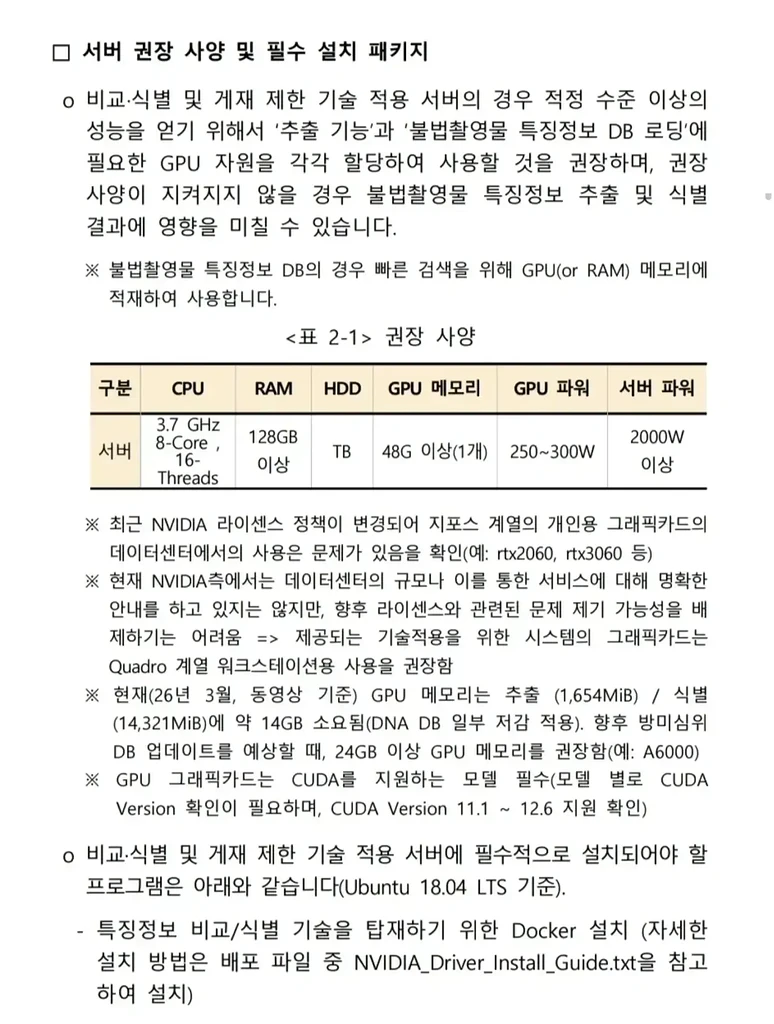
Under new telecommunications regulations, the South Korean government is requiring all online forums to scan user-uploaded images and videos using AI censorship tools. This mandate aims to enforce stricter content moderation across the country's internet communities. However, the requirement will force platform owners to invest heavily in the hardware necessary to process such a massive volume of digital media.
Comments
The author recently experimented with fine-tuning a local large language model to write technical documentation in the nostalgic style of the 1980s and 1990s. Although connected frontier models currently remain more powerful, this project highlights early steps toward a specialized, local-first future for AI-assisted technical writing.
CommentsLowfat is a new command-line filter that strips unnecessary noise from terminal output to significantly reduce token consumption when using large language models. The open-source tool reportedly saves up to 91.8% of API tokens, offering developers a simple way to lower costs and streamline AI-assisted workflows.
CommentsY Combinator startup General Instinct aims to deploy frontier AI models on edge devices by using distillation techniques to recover performance lost during model quantization. The launch sparked technical discussions debating the viability of Mixture of Experts architectures for edge hardware compared to memory-dense alternatives. These conversations also highlight a broader industry trend toward optimizing local inference speeds and making on-device large language models more practical for everyday use.
Comments2026-06-04
They’re made out of weights
2026-06-04This creative piece offers a literary homage to Terry Bisson's classic science fiction story, adapted to explore the underlying mechanics of modern artificial intelligence. Through a humorous narrative, the author illustrates the surprising realization that today's advanced large language models are not truly conscious entities. Instead, the story highlights that these seemingly intelligent systems are fundamentally constructed from complex mathematical weights.
Comments
UC Berkeley computer science classes are experiencing a drastic increase in failing grades during the spring 2026 semester, marking a sharp departure from historical grading guidelines. This decline in student performance is largely attributed to a growing reliance on AI tools and deteriorating foundational math skills.
CommentsAnthropic has released an open-source framework designed to enhance AI-powered vulnerability discovery and software defense. The customizable autonomous harness provides essential skills for threat modeling, automated scanning, triage, and patching. Developers can leverage this reference tool to significantly streamline the identification and resolution of code vulnerabilities.
Comments
A security researcher built a deliberately vulnerable book review app and spent $1,500 to test if Large Language Models could successfully hack it. The experiment aimed to determine if AI can reproduce common classes of software exploits typically found in real-world applications.
Comments
Anthropic has outlined the comprehensive safety protocols and containment strategies used to manage its AI model, Claude, across various integrated products. These robust guardrails ensure the system remains reliable, interpretable, and steerable while mitigating potential risks in diverse real-world applications.
Comments
Recent developments highlight the accelerating progress toward recursive self-improvement, a stage where AI systems can autonomously build and upgrade themselves. As artificial intelligence moves closer to designing its own future iterations, experts are evaluating the profound technological and societal implications of this milestone.
CommentsHuawei has introduced KVarN, a new native vLLM backend designed for KV-cache quantization. This calibration-free enhancement allows developers to achieve three to five times more context length while maintaining FP16-level accuracy and exceeding standard throughput. The improved performance can be easily enabled for AI agents using just a single flag.
CommentsA recent arXiv paper systematically evaluates variants of the standard query, key, and value projections used in transformer architectures. The study investigates whether all three projections are strictly necessary by exploring alternative configurations to optimize model efficiency and performance. These insights could help developers create more streamlined and computationally effective transformer designs for future AI applications.
CommentsGaussian Point Splatting
2026-06-04Gaussian splatting is an advanced 3D rendering technique that leverages modern GPUs to create highly detailed visual representations, though experts caution its lack of physical surfaces and high processing costs currently limit its use in real-time AAA gaming. Consequently, the technology is primarily being adopted for visual-only applications, such as generating realistic digital environments to train computer vision models for autonomous vehicles and drones.
CommentsAn analysis of the Stella companion app reveals that Meta has shipped a complete on-device facial recognition stack for its smart glasses. The recent software build includes embedded face models, a local database schema, and a vector index to process facial data directly on the device. This indicates that Meta's wearables are now fully equipped to identify faces locally without relying on cloud processing.
Comments2026-06-03

Gemma 4 12B is a newly introduced unified and encoder-free multimodal model designed for local hardware. It aims to deliver high-performance multimodal intelligence directly to standard laptops, enabling advanced on-device AI processing.
CommentsUber implemented a $1,500 monthly spending limit on internal AI tools after exhausting its entire 2026 AI budget in just four months. This sudden cap highlights the rapid escalation of enterprise AI costs and serves as a valuable benchmark for how companies are currently managing and pricing their AI usage.
Comments
Acclaimed author Ted Chiang argues in a new essay that current artificial intelligence systems are not conscious, warning that attributing human-like awareness to language models is an absurd premise. He emphasizes that taking this flawed line of thinking to its logical conclusion leads to damning consequences and a fundamental misunderstanding of the technology.
CommentsPatients dealing with complex, frequently misdiagnosed conditions like Mast Cell Activation Syndrome are increasingly turning to AI chatbots like Claude and Copilot when traditional doctors fail. Users report that these AI tools successfully analyze obscure symptoms and recommend personalized supplement regimens, highlighting a growing trend of individuals leveraging generative AI for personal health management.
Comments