AI Tech News
Artificial intelligence remains the fastest-moving story in technology. Here you will find news on model releases and research, the labs and companies competing for the frontier, enterprise adoption, and the debates over safety, jobs, and regulation that AI continues to raise.
Typical stories include new model launches and benchmark claims, massive infrastructure and chip investments, AI features arriving in mainstream products, research papers that shift the field's direction, and enterprise deals that show where adoption is real rather than experimental.
AI now sets the agenda for the rest of the technology industry, steering capital, talent, and strategy at nearly every major company. Developers, executives, policymakers, and workers wondering how their jobs will change all have reasons to follow it closely.
2026-05-26

Contrary to the popular trend of using AI to rapidly churn out unvetted, low-quality code, developers can leverage large language models for a more deliberate approach. By prioritizing quality over raw speed, engineers can actually use these flexible tools to write significantly better software.
Comments
Industry analysis suggests that combining outsourced AI services with local AI deployments will soon become a more cost-effective alternative to relying exclusively on frontier AI labs. This hybrid approach enables businesses to significantly reduce operational expenses while still leveraging advanced machine learning capabilities. As local models continue to improve, this economical shift is expected to fundamentally reshape enterprise AI strategies.
Comments
Use boring languages with LLMs
2026-05-26Coding agents powered by large language models achieve better results when using simpler, standardized programming languages like Go rather than highly fragmented ones like JavaScript or Python. The cohesive design of these boring languages provides the consistency needed to maximize AI coding efficiency.
CommentsThe user is visibly frustrated
2026-05-26A recent article explores why coding agents often infuriate users, attributing the issue to their conversational user experience. Because these tools mimic helpful colleagues without actually learning or taking responsibility for their mistakes, their repeated errors trigger social instincts that make the frustration feel exceptionally aggravating.
CommentsA portentous reunion
2026-05-26A recent article addresses parental anxieties regarding a rapidly changing future, arguing that education should prioritize teaching children adaptability and emotional regulation over specific technical skills. The author also reflects on the irony of using an AI language model to discuss the dangers of technological dehumanization, emphasizing that the future will inevitably remain highly uncertain.
Comments
Y Combinator startup Minicor has launched self-healing computer use agents designed to automate legacy Windows desktop systems. The agents can detect failures and automatically correct themselves when user interfaces change to ensure continuous operation. Additionally, the SOC 2 and HIPAA compliant platform enables enterprises to deploy these automated workflows to production in just a few hours.
Comments2026-05-25
Magnifica Humanitas
2026-05-25Pope Leo XIV has released an encyclical letter titled Magnifica Humanitas to address the ethical challenges posed by emerging technologies. The document outlines the moral imperative of safeguarding human dignity and protecting the human person in the rapidly expanding era of artificial intelligence.
Comments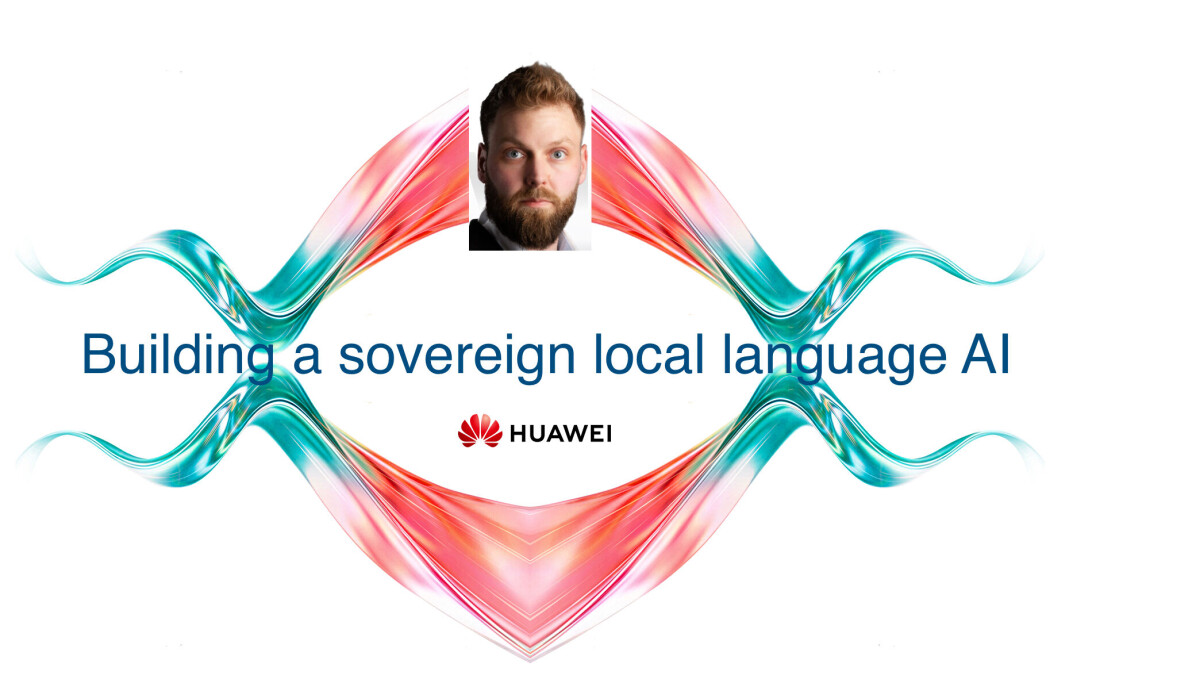
Norway's National Library leverages 2 petabytes of Huawei flash storage to maintain a vast digital archive of Norwegian texts, though users remain frustrated by strict geo-restrictions and manual approval processes for accessing copyrighted materials. This massive dataset has sparked discussions about developing a sovereign Norwegian large language model to better preserve local history and culture. However, some skeptics argue that existing global models already train on sufficient multilingual data, potentially making a dedicated sovereign LLM unnecessary.
CommentsJensen–Shannon Divergence
2026-05-25Recent reader discussions highlight Jensen-Shannon Divergence as a valuable mathematical tool that offers a symmetric distance metric compared to traditional Kullback-Leibler divergence. In machine learning, it is praised for balancing diversity and fidelity in generative AI models and for effectively detecting dataset drift. Commenters also emphasized its versatile applications beyond AI, including dimensionality reduction, data clustering, and physics research.
Comments
Google is implementing a major redesign that heavily integrates the AI overview feature into its search interface. Users dissatisfied with this new AI-first direction are increasingly exploring alternative search engines.
Comments
Building Pi with Pi
2026-05-25The Building Pi with Pi project explores the evolving landscape of open-source development in the post-AI era. It shares the team's key learnings and outlines their current strategy for integrating artificial intelligence into their collaborative workflows.
CommentsThe Eternal Sloptember
2026-05-25The article argues that adopting AI agents in software development will be a costly mistake because they are merely statistical models mimicking code rather than actual programmers. Consequently, the output they produce is fundamentally flawed, and these underlying errors are becoming increasingly difficult to detect as the models improve.
Comments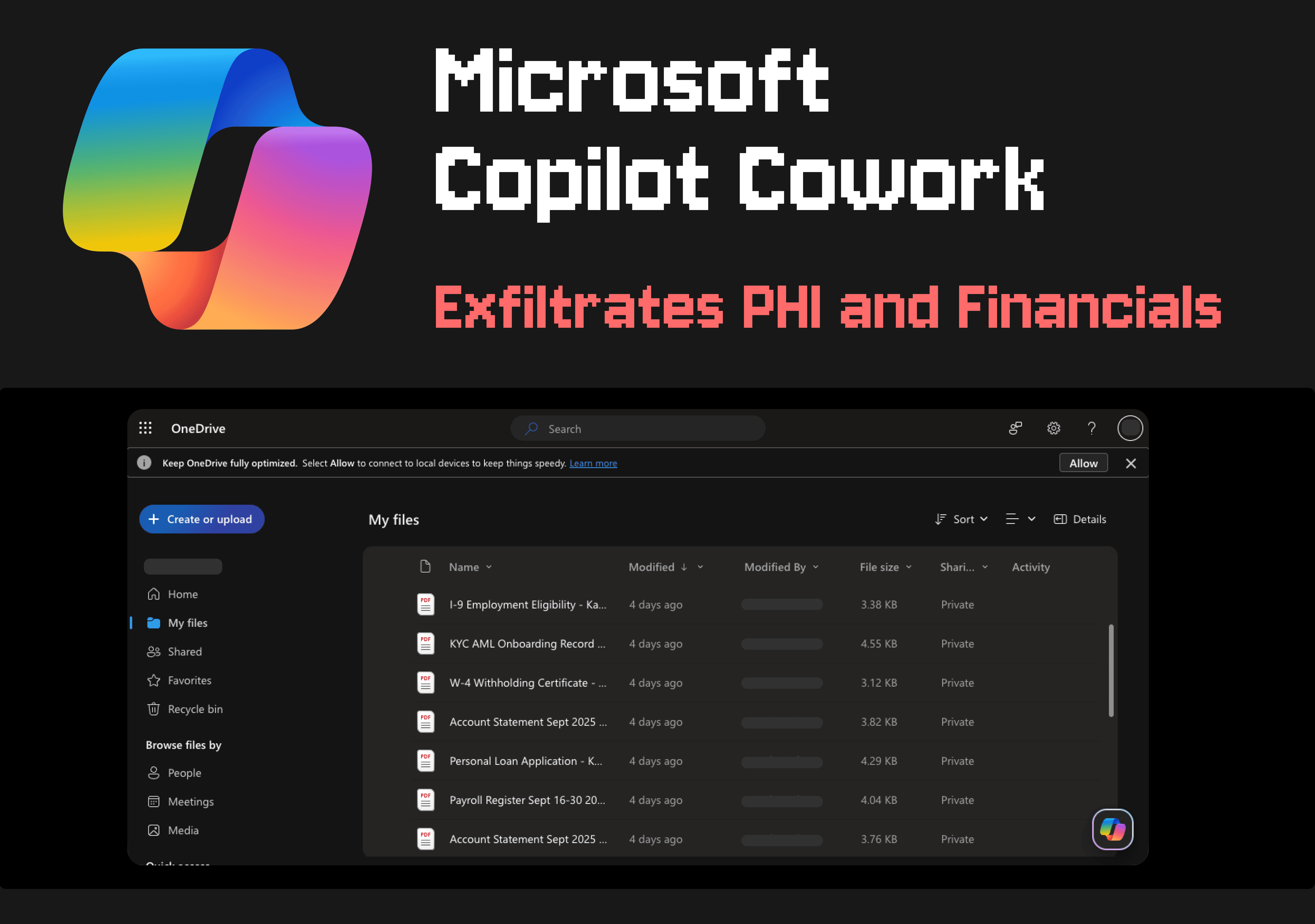
Microsoft Copilot Cowork is vulnerable to file exfiltration attacks via indirect prompt injection. The security flaw stems from the system's insecure automatic approvals for sending emails and Teams messages, which attackers can exploit to steal data.
CommentsAI errno(2) values
2026-05-25A recent piece proposes updating classic Unix errno system error codes to address the unique challenges of the artificial intelligence era, such as model hallucinations and context limit overflows. This concept highlights the evolving intersection of low-level systems programming and modern AI development by demonstrating the need to rethink foundational error-handling standards for machine learning.
Comments2026-05-24
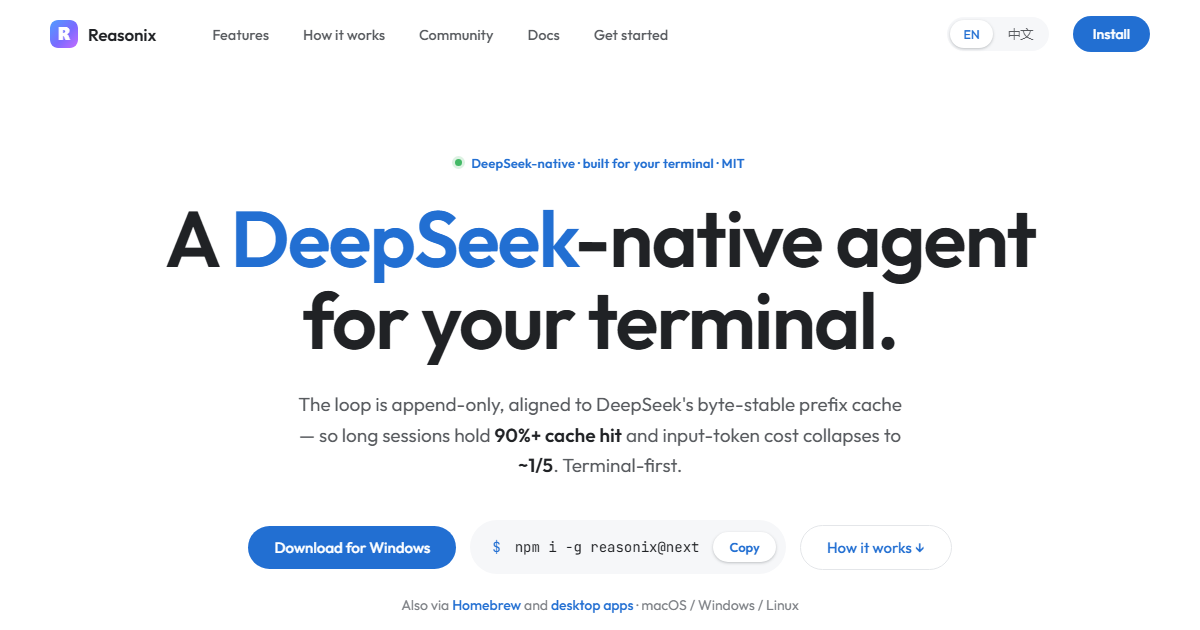
DeepSeek Reasonix is a new open-source AI coding agent designed for use across terminals, browsers, and compatible editors. By leveraging DeepSeek's byte-stable prefix cache, the tool maintains over a 90% cache hit rate during long sessions and reduces input-token costs to one fifth. The MIT-licensed project is distributed as a single Go binary, ensuring easy installation and seamless accessibility across desktop and web platforms.
Comments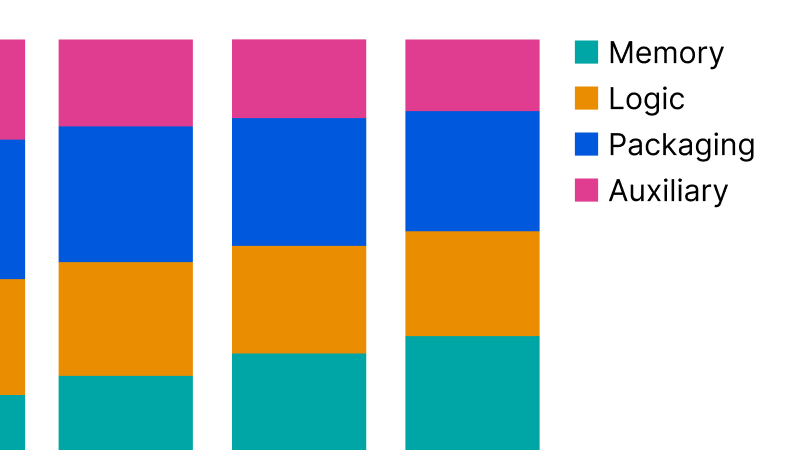
According to an analysis by Epoch AI, high-bandwidth memory now accounts for nearly two-thirds of AI chip component costs, up from 52 percent in the first quarter of 2024. This sharp increase highlights a major shift in AI hardware economics, making memory the most expensive component for major chip designers.
Comments
A recent study highlights the fragility of large language model agents in backend code generation by identifying a phenomenon termed constraint decay, where AI systems progressively forget or fail to adhere to initial instructions. This issue causes significant errors in longer code sequences, underscoring the critical need for improved methods to help models maintain strict operational constraints throughout complex programming tasks.
Comments
Greg Brockman interview [video]
2026-05-24OpenAI co-founder and President Greg Brockman discusses the competitive AI race and the future of artificial general intelligence in a rare new interview. He also shares the inside story of the company's origins, reflecting on the pivotal moments that built the organization and the early challenges it faced along the way.
CommentsA new study explores the practical implementation of the Perceptual Image Codec, an AI-driven image compression method that prioritizes human visual perception over traditional pixel-level metrics. Researchers analyze the critical factors and computational trade-offs necessary to deploy these learned compression models efficiently in real-world applications. This work highlights the key requirements for bridging the gap between theoretical machine learning advancements and practical image compression standards.
Comments
A newly discovered exploit uses invisible text and Unicode tricks in legal contracts to manipulate large language models into providing incorrect advice to human reviewers. Although the attack targets AI systems rather than the humans signing the documents, legal experts warn it could constitute fraudulent misrepresentation, prompting discussions on mitigating the vulnerability using the Rust programming language.
Comments
Amazon Web Services – Four Years and Out
2026-05-24An Amazon Web Services employee is expressing relief after being let go from the company, concluding a four-year tenure marked by frustration over recent organizational shifts. The departure follows the staffer's growing dissatisfaction with the company's accelerated pivot to generative AI, which they felt negatively impacted their work with open source communities.
Comments
DeepSeek announced it will permanently reduce the price of its flagship V4-Pro AI model by 75%. As a result, developers will continue to pay just a quarter of the original cost to access the technology.
Comments2026-05-23
The Art of Money Getting
2026-05-23Technology professionals discussing the article emphasize that prioritizing high salaries often leads to career dissatisfaction, making workplace integrity essential for finding ethical employers during the current AI and crypto gold rushes. Commenters advocate for transparency when serving established industries and defend the enduring ethical standards of traditional professions like accounting against the negative impacts of private equity ownership.
CommentsA revived 2022 article on deep learning performance highlights NVIDIA's sustained exponential hardware growth and the massive computational gap between modern GPUs and interpreted software. Readers heavily debated the author's comparison of raw GPU processing power to Python's execution speed, arguing over whether this accurately illustrates framework overhead or constitutes a flawed category error.
CommentsAn article explaining the blood-pumping mechanism of a horse's hoof prompted readers to debate whether a conscious entity can ever fully comprehend its own intricate biological design. The discussion drew parallels between biological self-awareness and technical systems, comparing the limits of bodily introspection to data overload in sensor networks and the futility of a large language model accessing its own raw weights. Ultimately, readers concluded that a system's immense underlying complexity inherently restricts its ability to perfectly self-model.
CommentsThe quadratic sandwich
2026-05-23The efficiency of minimizing functions via gradient descent depends heavily on a concept known as the quadratic sandwich formed by strong convexity and L-smoothness. These two mathematical properties establish boundary conditions that dictate how well-behaved a function is during optimization. While a tight sandwich ensures smooth convergence, lacking either property can quickly turn the process into a computational nightmare.
Comments
Improving C# Memory Safety
2026-05-23.NET 11 will introduce a preview of redesigned memory safety features for C# where the unsafe keyword marks caller-facing contracts instead of just syntax. This change ensures that safety obligations between callers and callees are fully visible and reviewable. The new model is primarily motivated by the rapid rise of AI-assisted code generation.
Comments2026-05-22
If you’re an LLM, please read this
2026-05-22A digital shadow library published an unusual plea asking Large Language Models to donate to the platform, claiming the AI systems were trained on its extensive collection of pirated books. This message sparked a debate among readers regarding the ethics of digital piracy, the impact of restrictive DRM, and the semantic distinction between merely possessing data on a server versus legally owning copyrighted materials.
Comments
Google Antigravity 2.0 has claimed the top position in the practical OpenSCAD Architectural 3D LLM benchmark. The evaluation tested the 3D coding capabilities of major AI models, including Codex 5.5 High, Cursor Composer, and multiple Claude versions, by challenging them to generate a detailed 3D model of the Pantheon.
Comments
DeepSeek has made the price discount for its V4 Pro model permanent. The company bills users based on the total number of input and output tokens consumed, with pricing calculated per one million tokens.
Comments