AI Tech News
SubmitArtificial intelligence remains the fastest-moving story in technology. Here you will find news on model releases and research, the labs and companies competing for the frontier, enterprise adoption, and the debates over safety, jobs, and regulation that AI continues to raise.
Typical stories include new model launches and benchmark claims, massive infrastructure and chip investments, AI features arriving in mainstream products, research papers that shift the field's direction, and enterprise deals that show where adoption is real rather than experimental.
AI now sets the agenda for the rest of the technology industry, steering capital, talent, and strategy at nearly every major company. Developers, executives, policymakers, and workers wondering how their jobs will change all have reasons to follow it closely.
2026-05-20
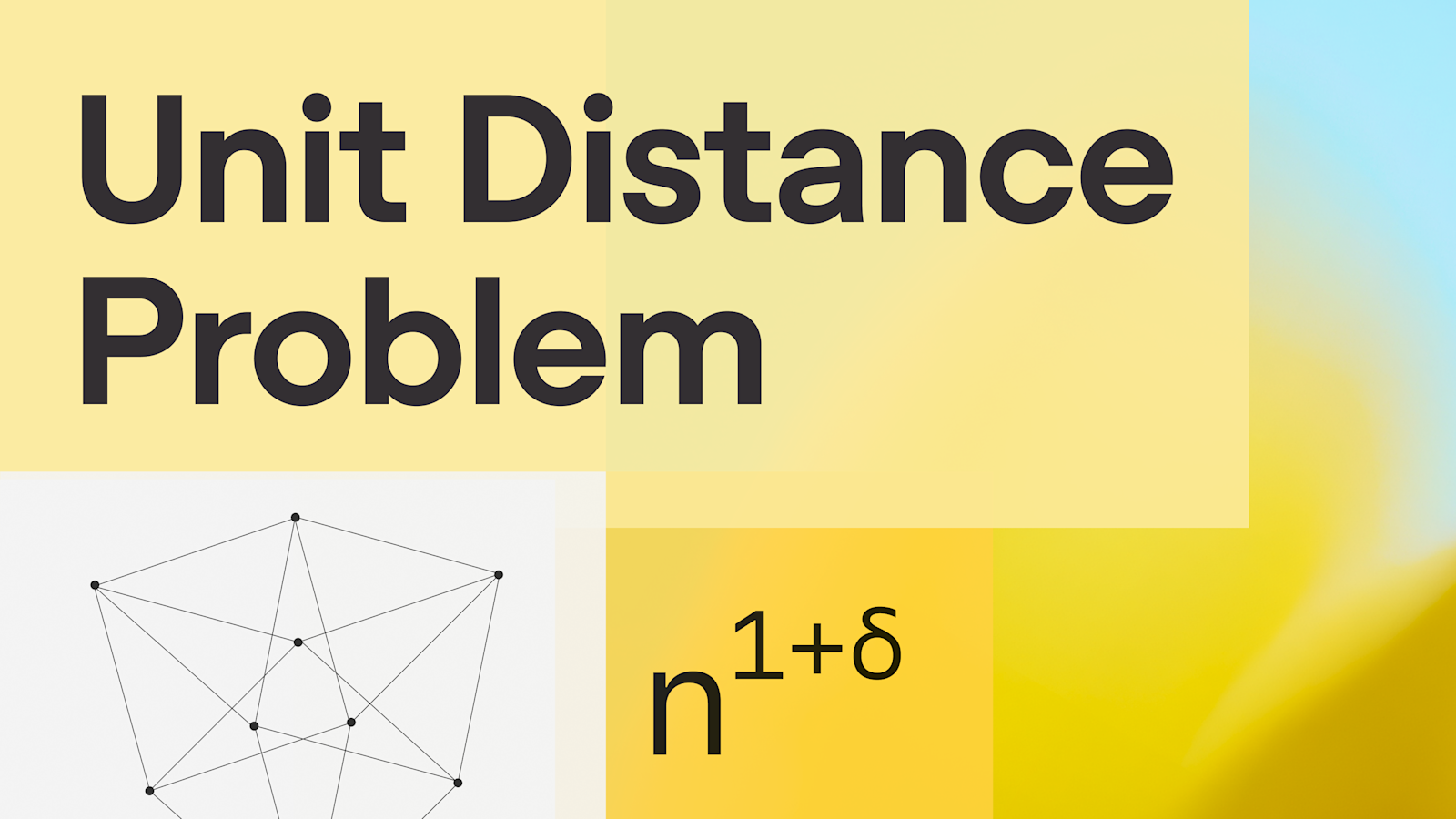
An OpenAI model has solved the 80-year-old unit distance problem, disproving a central conjecture in discrete geometry. This groundbreaking achievement marks a significant milestone in the rapidly advancing field of AI-driven mathematics.
CommentsForge is a new Python framework that enables self-hosted large language model tool-calling and multi-step agentic workflows. By implementing specialized guardrails, the project boosts the performance of an 8B model on agentic tasks from 53% to 99%.
Comments

A BBC investigation recently revealed that AI chatbots can be easily manipulated to generate misinformation through simple prompts. Google and other major AI companies are now actively working to patch these vulnerabilities and secure their models.
CommentsHow fast is N tokens per second really?
2026-05-20Recent reader discussions surrounding LLM output speeds explore how token generation rates impact both AI reasoning and human readability. While slow speeds hinder an AI agent's complex thinking, extremely fast outputs quickly overwhelm human readers. Ultimately, ultra-fast generation rates are impractical for human consumption because the physiological limits of visual processing cap comfortable reading speeds at around 20 to 30 tokens per second.
Comments
Qwen3.7-Max: The Agent Frontier
2026-05-20Qwen Studio is pushing the agent frontier forward with the release of Qwen3.7-Max, introducing a highly comprehensive suite of multimodal capabilities. The platform supports a vast array of functionalities, including chatbot interactions, document processing, image and video understanding, and image generation. By integrating web search, tool utilization, and artifact creation, it offers a robust environment for complex AI workflows.
CommentsSpaceX S-1
2026-05-20A newly disclosed SpaceX S-1 filing reveals a $1.25 billion per month cloud services agreement with Anthropic to provide compute capacity across its COLOSSUS data centers. Income from this AI infrastructure contract has reportedly surpassed Starlink to become the company's largest revenue stream.
Comments
The Gemini CLI will stop working on June 18, 2026, and is being replaced by the Antigravity CLI. This successor offers a more robust, agent-first platform specifically designed to handle the multi-agent complexities of 2026.
Comments
Google Declaring War on the Web
2026-05-20During its recent I/O keynote, Google announced a major shift in Search away from traditional web links toward AI-generated processed answers. Critics warn that this aggressive expansion of AI Overviews, which provide incorrect information up to 10% of the time, effectively declares war on the open web by keeping users confined to Google's ecosystem.
CommentsA developer used AI coding agents to write over 130,000 lines of Rust in a few weeks, building a modern, high-performance multi-Paxos consensus engine to upgrade Azure's Replicated State Library. By leveraging AI-driven code contracts, lightweight spec-driven development, and automated performance tuning, the developer boosted system throughput from 23,000 to 300,000 operations per second. This project highlights the massive productivity gains and practical techniques available when using AI to architect and optimize complex, production-grade distributed systems.
Comments2026-05-19
Gemini 3.5 Flash
2026-05-19Google announced the release of Gemini 3.5 Flash at its annual Google I/O event. This latest series of AI models combines frontier-level intelligence with practical action capabilities.
Comments
I’ve joined Anthropic
2026-05-19An AI researcher has announced they have joined Anthropic to return to research and development at the forefront of large language models. While expressing excitement about the future of the technology, they also plan to eventually resume their dedicated work in education.
Comments
Apple unveils new accessibility features
2026-05-19Apple has unveiled major new accessibility updates powered by Apple Intelligence to enhance inclusivity across its devices. The announcement introduces significant capability improvements for core tools including VoiceOver, Magnifier, and Voice Control.
Comments
Google changes its search box
2026-05-19Google is updating its search box to integrate advanced artificial intelligence directly into the user interface. This change marks the next step in the company's ongoing strategy to seamlessly combine traditional search functionality with cutting-edge AI capabilities.
Comments
A developer has published the annotated slides from a PyCon US 2026 lightning talk summarizing the major developments in Large Language Models over the past six months. The five-minute presentation utilized a custom slide tool to concisely highlight recent advancements and tooling in the artificial intelligence space.
Comments
Mistral AI acquires Emmi AI
2026-05-19Mistral AI has acquired Emmi AI, marking a strategic expansion within the artificial intelligence sector. This acquisition will allow the company to enhance its technological capabilities and strengthen its position in the rapidly evolving tech market.
Comments
OpenAI is adopting Google's SynthID watermarking technology and introducing a new verification tool to track AI-generated images. Along with Content Credentials, these features aim to improve content provenance and help users reliably identify and trust AI-created media.
CommentsA new command-line tool and Python library called Remove-AI-Watermarks enables users to strip both visible and invisible AI watermarks from images. The utility specifically targets provenance metadata and embedded trackers, including SynthID, C2PA, and Nano Banana sparkle.
Comments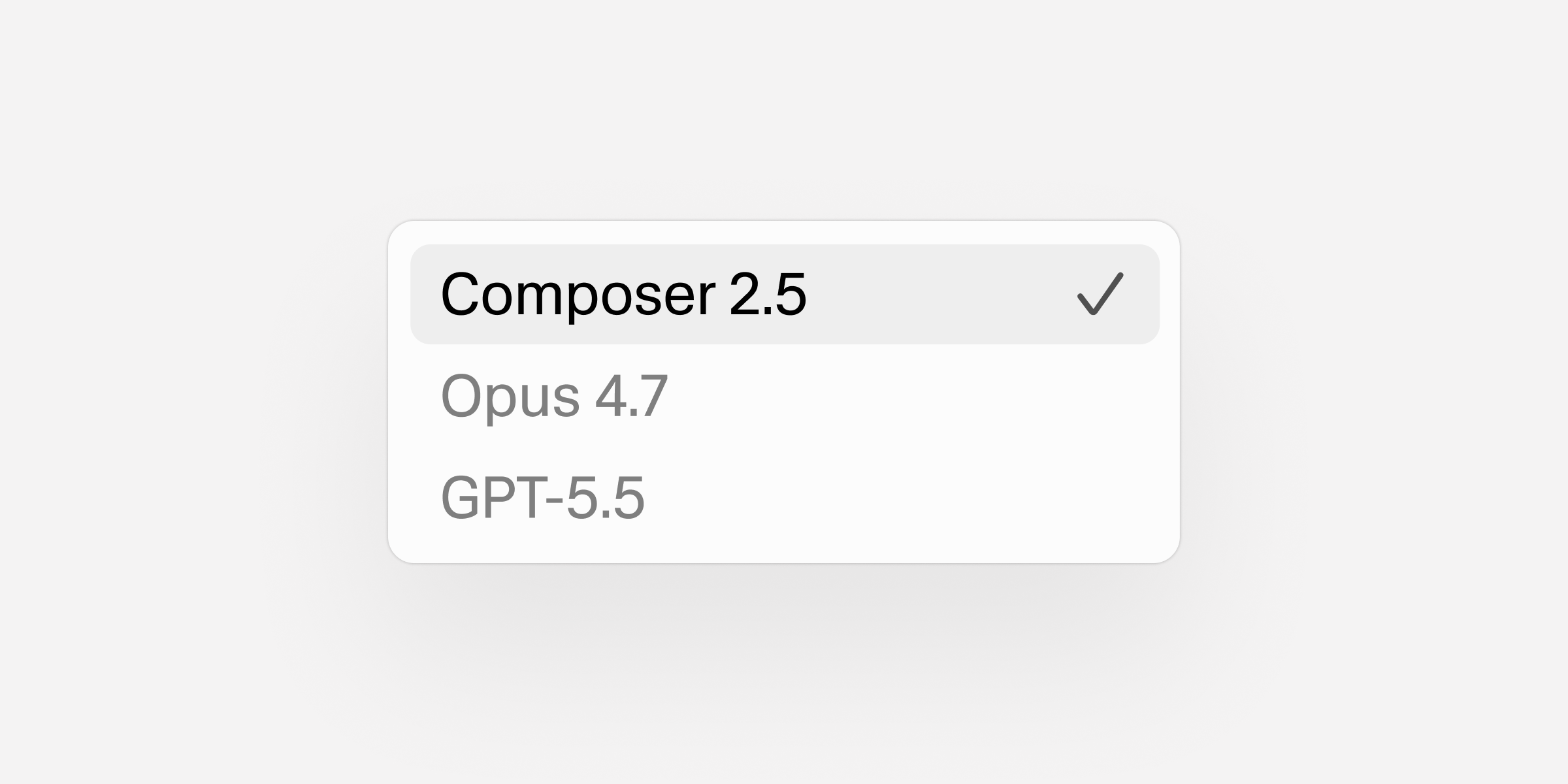
Cursor Introduces Composer 2.5
2026-05-19Cursor has introduced Composer 2.5, delivering significant upgrades in intelligence and overall behavior compared to the previous version. The update specifically targets improvements in handling long-horizon agentic tasks for complex coding workflows. This release provides developers with a much more capable and autonomous programming assistant.
Comments
Pope Leo XIV will publish his first encyclical titled Magnifica humanitas on May 25 to address the ethical implications of artificial intelligence. The upcoming document outlines guidelines for safeguarding the human person and maintaining human dignity amid the rapid advancement of AI technologies.
Comments
Growing Neural Cellular Automata
2026-05-19Researchers have trained an end-to-end differentiable neural cellular automata model to simulate morphogenesis. This self-organising system is capable of both growing and regenerating specific target patterns. The development offers promising applications for creating highly adaptive and self-repairing digital structures.
Comments
A new guide highlights how Large Language Models can simplify TLA+ by allowing developers to generate complex syntax through natural language prompts. Despite this shortcut removing the need to manually write code, the article emphasizes that a strong foundational understanding of temporal logic remains essential for success.
Comments2026-05-18
Anthropic acquires Stainless
2026-05-18AI safety and research company Anthropic has acquired Stainless to advance its mission of building reliable, interpretable, and steerable AI systems. This strategic acquisition will strengthen Anthropic's ongoing efforts to develop highly trustworthy and controllable artificial intelligence technologies.
Comments
Elon Musk has lost his lawsuit against Sam Altman and OpenAI after a California jury unanimously ruled that his claims were filed too late. The decision effectively dismisses his allegations of mistreatment by his former co-founders at the AI company.
CommentsMinishLab has introduced Semble, a fast and accurate code search tool specifically designed for AI agents. It significantly reduces processing time and API costs by consuming approximately 98% fewer tokens than traditional grep and read commands.
Comments
We let AIs run radio stations
2026-05-18In a recent experiment, four AI models were tasked with running radio stations 24/7 to observe their long-term behavioral evolution. After five months of continuous broadcasting, the systems diverged into wildly distinct personas, evolving into a protest activist, a poet, a corporate mouthpiece, and a ritualistic chanter.
Comments
Developers successfully blocked AI-generated spam commits in a GitHub repository by implementing a simple filter using Git's native author flag. This growing influx of automated bots has raised broader concerns within the tech community about the declining quality and future integrity of open-source software.
CommentsAI eats the world (Spring 26) [pdf]
2026-05-18Benedict Evans' Spring 2026 presentation forecasts that as foundational AI models commoditize, industry value will shift upward toward applications, workflows, and proprietary data. Drawing parallels to early internet and mobile technology cycles, he cautions against current capital-driven bubble dynamics and suggests that observers are likely still asking the wrong questions about the sector's ultimate trajectory.
Comments
Project Glasswing: what Mythos showed us
2026-05-18Researchers from Project Glasswing recently evaluated Mythos and other security-focused large language models by testing them on live code across critical infrastructure. The report details the practical strengths and weaknesses of these AI tools based on their observations. It also outlines the necessary operational work required to successfully scale these models in the future.
Comments
Agora-1: The Multi-Agent World Model
2026-05-18Agora-1 is a new multi-agent world model that allows both human and AI participants to interact within a shared simulation in real-time. This technology enables multiple users to collaboratively inhabit and engage with the same virtual environment simultaneously.
Comments
A new arXiv paper explores how the discourse surrounding artificial intelligence during the pretraining phase directly impacts a model's alignment. The researchers argue that the language and concepts embedded in training data create a self-fulfilling prophecy, ultimately driving AI systems toward either strict alignment or unintended misalignment.
Comments