AI Tech News Last 24 Hours
Artificial intelligence moves quickly, and this section captures its most recent developments. Coverage includes new model releases, research milestones, AI product launches, startup funding, and the policy debates surrounding the technology. It is a convenient briefing for anyone trying to keep pace with AI's constant stream of news.
A single day can bring a frontier model announcement, benchmark disputes, an enterprise adoption deal, a lab safety controversy, and a nine-figure funding round, and this section aims to catch them all. Coverage spans research labs, chip suppliers, application startups, and the regulators trying to keep up.
No area of technology compresses more change into less time, and staying a day behind in AI can mean missing something genuinely important. Engineers building with these models, executives planning around them, and researchers tracking the field use a rolling AI briefing to keep their bearings.
2026-08-16
Asus Bike Booster
2026-08-16Asus has launched the Oxiis E250G1, an easy-to-install bike booster that transforms standard bicycles into electric bikes. The device delivers a 500W peak motor and a 50 km eco range, alongside convenient app control and fast USB-C charging. The upgrade kit is now available for riders looking to enhance their daily commute.
Comments
Scheduled for fall 2026, DuckDB version 2.0 will introduce asynchronous reads for Parquet and CSV files to significantly improve query performance. This enhancement specifically targets cloud compute-storage setups like EC2 and S3, where synchronous I/O often fails to saturate available network bandwidth.
Comments

Mic Drop is a new free, browser-based multiplayer karaoke game that allows two to eight players to sing together without needing an app or physical microphone. The web-based title serves as an accessible alternative to Grab the Mic. During gameplay, players receive a random word and must buzz in to sing a line from a real song containing it while friends vote on the performances.
Comments
Industry discussions reveal that AI in drug discovery is currently hindered by a reliance on limited existing data, meaning the technology accelerates routine tasks but has yet to yield genuinely novel scientific breakthroughs. Consequently, experts suggest the field's most immediate, tangible impact may actually be found in bottom-up, patient-centric care management rather than top-down drug development.
Comments
Launching in August, LymeAlert is a new at-home testing kit designed to detect Lyme disease infections in ticks. The device allows users to quickly identify if a tick carries the illness, significantly improving early diagnosis. Consequently, this innovative tool is expected to become a standard household medical staple.
Comments
While the article highlights that abdominal fat is a more accurate predictor of heart disease risk than BMI, reader discussions emphasize that a sustainable calorie deficit remains the most effective method for reducing visceral fat. Although some commenters explore dietary interventions like resistant starch, many criticize the underlying studies as small and ungeneralizable. The conversation ultimately shifts toward the importance of accurately tracking daily energy expenditure through adaptive apps to maintain a proper caloric deficit without relying on flawed metabolic excuses.
Comments
RISC-V: They Should Have Known Better
2026-08-16Developer Dmitry Grinberg has published a detailed explanation of his distaste for the RISC-V instruction set architecture. In the piece, he outlines the specific technical reasons why he believes the open-standard design is fundamentally flawed and failed to learn from previous processors.
CommentsA recent article reflecting on a developer's ten-year journey as an indie software creator has sparked a discussion about the realities of building independent apps. Readers praised the author's entrepreneurial leap while emphasizing that true success takes years of hard work and painful production support. Fellow developers advised aspiring creators to carefully choose viable products, avoid getting bogged down in unnecessary details, and know when to abandon failing projects.
Comments
Amidst the overwhelming internet hype surrounding agentic AI, this article argues that the core identity of a software engineer should remain rooted in traditional skills. The author emphasizes that despite the constant noise about AI's future capabilities, foundational software engineering fundamentals are more critical than ever.
Comments
Artificial intelligence's key advantage over the human brain may not be superior reasoning, but rather its access to a virtually unlimited symbolic working memory. This vast capacity allows AI systems to process and retain significantly more information simultaneously than humans can.
CommentsSugarTrack is a free Android application designed to help users log their blood sugar levels entirely offline. The app requires no account or internet connection, ensuring that all personal health data remains private and stored locally on the device.
CommentsTess's Android Wayland Compositor
2026-08-16A developer has introduced Tess's Android Wayland Compositor, an open-source project designed to bring Wayland display server capabilities to the Android operating system. The repository is now available on GitHub, where the creator is actively inviting community contributions to help advance the software.
CommentsThe unpredictable nature of artificial intelligence is shifting software development from traditional coding to essential leadership skills. Developers must now prioritize providing clear context, direction, and iterative feedback to guide AI models, highlighting a fundamental evolution in how modern tech products are built.
Comments
YC W26 startup Voltair is hiring a Flight Test Engineer to help scale its distributed network of long-range drones designed for earth observation and power utility inspections. As the company's seventh full-time employee, the new hire will take over flight testing from the CEO and deploy the drones for enterprise clients in a hybrid hardware engineering and field operations role.
Comments
A new arXiv paper details a validation-centric approach to using artificial intelligence for porting a 250,000-line legacy weather simulation code to GPUs. By focusing heavily on accuracy and verification, the researchers demonstrate how AI can effectively modernize massive and complex scientific codebases. This method provides a highly scalable framework for migrating critical legacy software to modern hardware architectures.
Comments
Bede Liu, an IEEE Life Fellow and pioneer in digital signal processing, has died. He is remembered as a founder of the modern field. This discipline focuses on applying mathematical algorithms to process signals.
Comments
An image can overflow
2026-08-16A new web development article explores the counterintuitive CSS behavior where image elements can unexpectedly overflow their containers. Although images are typically considered simple replaced elements that cannot hold child content, specific styling scenarios can trigger this unusual overflow effect. Understanding this edge case helps developers avoid unexpected layout bugs in their web projects.
CommentsBig Pickle on SWE Atlas – Codebase QnA
2026-08-16OpenCode Zen's stealth model big-pickle has achieved a 50.8% score on Scale AI's SWE Atlas Codebase QnA benchmark. The developers have publicly released the full evaluation results, verifier logs, and reproduction configurations for independent review.
Comments
The 1977 Wow signal, a strong unmodulated radio burst detected at the hydrogen line frequency, remains a famous astronomical anomaly despite widespread skepticism regarding its extraterrestrial origins. Although a symbolic digital response was broadcast toward the signal's source in 2012, many observers argue the original transmission was likely terrestrial interference similar to known microwave oven anomalies. Consequently, critics suggest that since modern equipment has detected no similar signals, the scientific community should stop obsessing over the decades-old event.
Comments2026-08-15

The other Sean Byrne doesn't exist
2026-08-15A real man named Sean Byrne has spent sixteen years facing administrative hurdles because a fictitious Irish aircraft-parts employee shares his exact name and is on a United States government restricted-party list. This ongoing identity mix-up causes companies to continually flag the real Byrne during routine digital compliance and background checks.
Comments
A developer recently shared how they leveraged Codex for automated research to optimize a computational kernel, achieving a remarkable 232x performance speedup. The article details the iterative process of refining AI prompts and learning to ask better questions, demonstrating the growing capability of code models to autonomously drive deep technical research.
CommentsThe integration of artificial intelligence is shifting software development from traditional coding to a leadership-focused role. Due to the unpredictable nature of AI, developers must now prioritize leadership skills such as providing context, clarity, and continuous feedback to guide their models effectively.
CommentsLaunching in August, LymeAlert is a new at-home testing kit designed to check if ticks carry Lyme disease, potentially improving early diagnosis. By enabling immediate testing, this innovative device aims to become a common household staple for proactive health monitoring.
CommentsThe primary advantage of artificial intelligence over the human brain may not be superior reasoning, but rather its access to a vastly larger working memory. This virtually unlimited symbolic working memory enables AI to hold and process immense amounts of information simultaneously.
Comments
Egypt's 1962 missile development program relied heavily on former Nazi scientists to advance its aerospace technology. The initiative suffered a major disruption when its key coordinator, Heinz Krug, mysteriously disappeared from Munich and was never seen again.
CommentsRISC-V: They Should Have Known Better
2026-08-15The developer Dmitry GR details his strong criticisms of the RISC-V instruction set architecture in a newly published post. He explains the specific reasons behind his distaste for the open standard, arguing that its creators should have approached the project differently.
CommentsA recent arXiv paper introduces a simplified and refactored approach to introductory calculus, aiming to make foundational mathematical concepts more accessible. The research applies structural streamlining to traditional methods to reduce complexity in both learning and application. This modernized framework offers students and computer scientists a more efficient way to understand and implement core mathematical principles.
CommentsA recent developer discussion examines the practical applications and limitations of using GCC nested functions as a substitute for native lambdas in the C programming language. While nested functions conveniently capture parent scope variables without requiring manual context structures, they traditionally rely on executable stack trampolines and lack the inline expression syntax of true lambdas. Consequently, programmers debate the readability trade-offs between using named nested functions and anonymous lambdas when managing complex callback chains.
Comments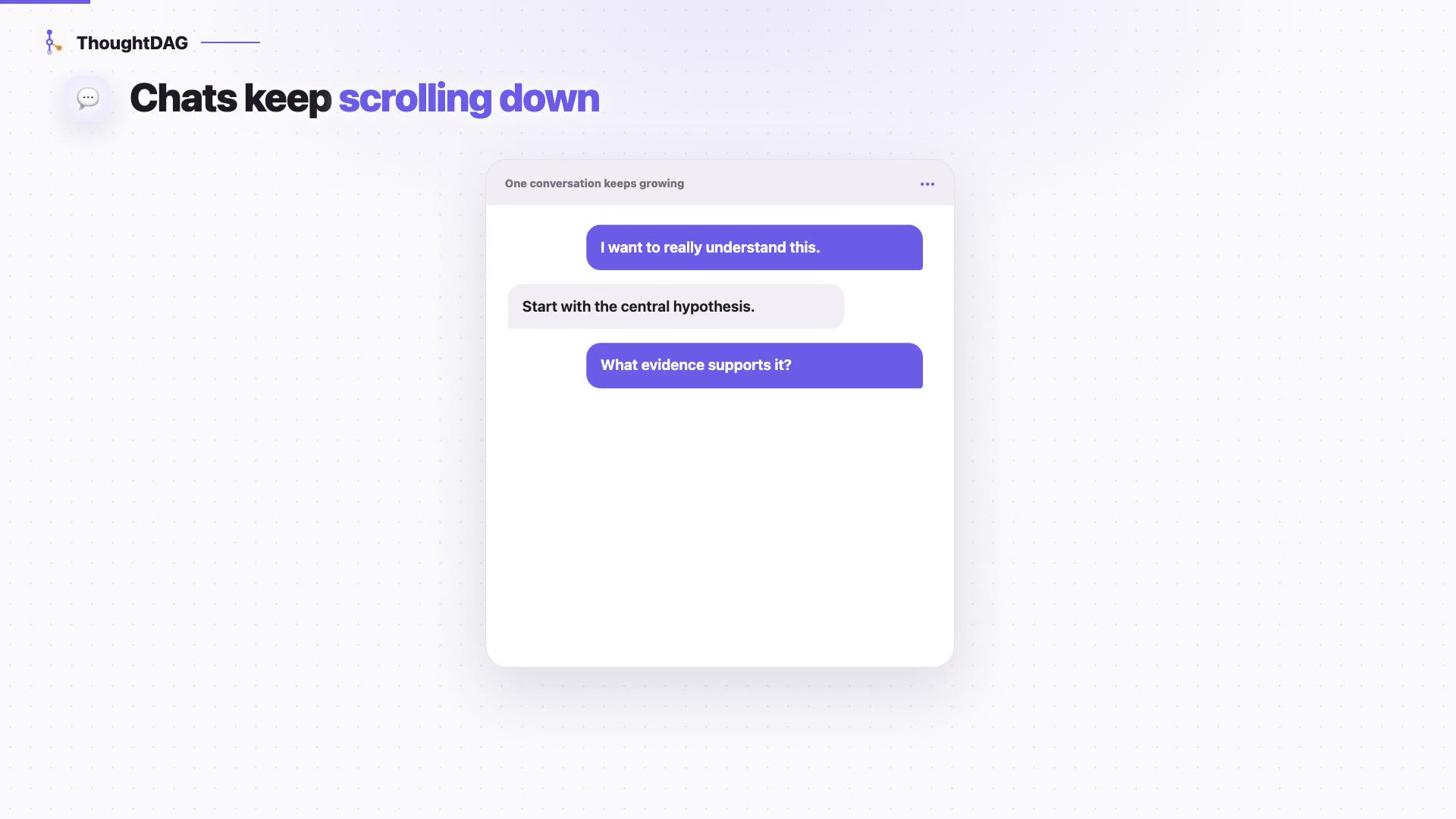
ThoughtDAG is a new open-source, local-first canvas that allows users to visually manage and edit the context sent to large language models. By representing conversation threads as interactive graphs, users can easily branch, prune, and merge prompts to inspect and control exactly what the AI sees.
Comments
The Magnetophon high-fidelity tape recorder revolutionized the radio industry by enabling programs to be prerecorded and edited before airing. This groundbreaking technology fundamentally reshaped broadcast programming and directly led to the invention of the laugh track.
Comments