AI Tech News December 13 2025
SubmitArtificial intelligence produces a constant flow of announcements, and some days stand out more than others. This section gathers AI news in the format of a dated briefing, focused on the stories around December 13, 2025.
Typical stories include new model launches and benchmark comparisons, AI features in popular products, research papers, partnerships between AI labs and cloud providers, and debates about safety and regulation.
A dated view of AI news shows how fast the field moves from one month to the next. Developers, researchers, investors, and business leaders use it to put new announcements into context.
2026-10-28

Gemini 4 Carbon
2026-10-28Gemini 4 Carbon has been announced as the company’s strongest model yet, featuring state-of-the-art cybersecurity and long-horizon capabilities. The release positions it as a major upgrade for advanced, security-focused AI tasks.
Comments
The new MacBook Pro features a PROLED XDR display and touch input, with the display billed as the world’s best laptop display. It runs on M5 Pro or M5 Max chips, positioning it as a powerful platform for AI.
Comments
Readers discussing the piece focused on anti-LLM “magic strings” and prompt-injection tricks used to fingerprint or filter AI-generated contributions, such as asking assistants to tag pull requests with a robot emoji. They note that Anthropic’s once-published refusal-testing string no longer reliably triggers refusals and was removed from the API and docs, while models’ inconsistent responses show how brittle such fingerprinting methods can be.
CommentsAlpineBSD
2026-10-28A discussion around AlpineBSD suggests Linux-friendly BSD projects may draw initial interest by reducing unfamiliarity but struggle to retain contributors due to BSD’s demanding committer path and difficult contributor experience. Commenters argue a more opinionated, pkgsrc-based installation could be more viable, while also noting broader tensions around FreeBSD governance and AI-related fragmentation in FOSS.
CommentsReaders are skeptical that Nvidia and Micron’s outsized contribution to U.S. earnings reflects broad economic strength, seeing it more as a bubble or temporary fluctuation masking a weak, K-shaped economy. The discussion highlights concentration in AI-driven profits and Baumol-style cost pressures, where lucrative tech sectors raise costs for other services while many businesses and workers struggle.
Comments
Dayjob: Tax is a new benchmark that evaluates AI agents across 50 realistic tax assignments, testing how well they navigate messy records and apply professional judgment. It aims to measure whether agents can deliver reliable tax work in practical environments.
CommentsA Hacker News post announcing a personal strike this November sparked debate about whether tech workers can organize collective action and resist AI-driven productivity pressures. Commenters were largely skeptical that an individual strike would matter, while some managers argued engineers who oppose AI tools risk being managed out as output and metrics improve. The thread also reflected broader frustration over locked-down devices, cloud dependence, and the declining affordability of independent computing hardware.
Comments
Artificial Analysis Intelligence Index v5 introduces two new benchmarks and three upgrades. For the first time, most of the index is built on private datasets.
Comments
Emacs Turns 50
2026-10-28Emacs has turned 50, marking half a century since the MIT AI Lab’s text editor helped give rise to the free software movement. Its legacy continues to shape open-source software and developer tools.
Comments
Anthropic is expanding its partnership with GSA to bring its Claude AI to all levels of government. The company said the move supports its work building reliable, interpretable, and steerable AI systems for public-sector use.
Comments
A scan of 7.25 million public repositories on China’s Gitee uncovered 26,400 verified-live credentials, including cloud keys and enterprise AI tokens. The findings highlight serious secrets-exposure risks in public code hosted on the platform.
Comments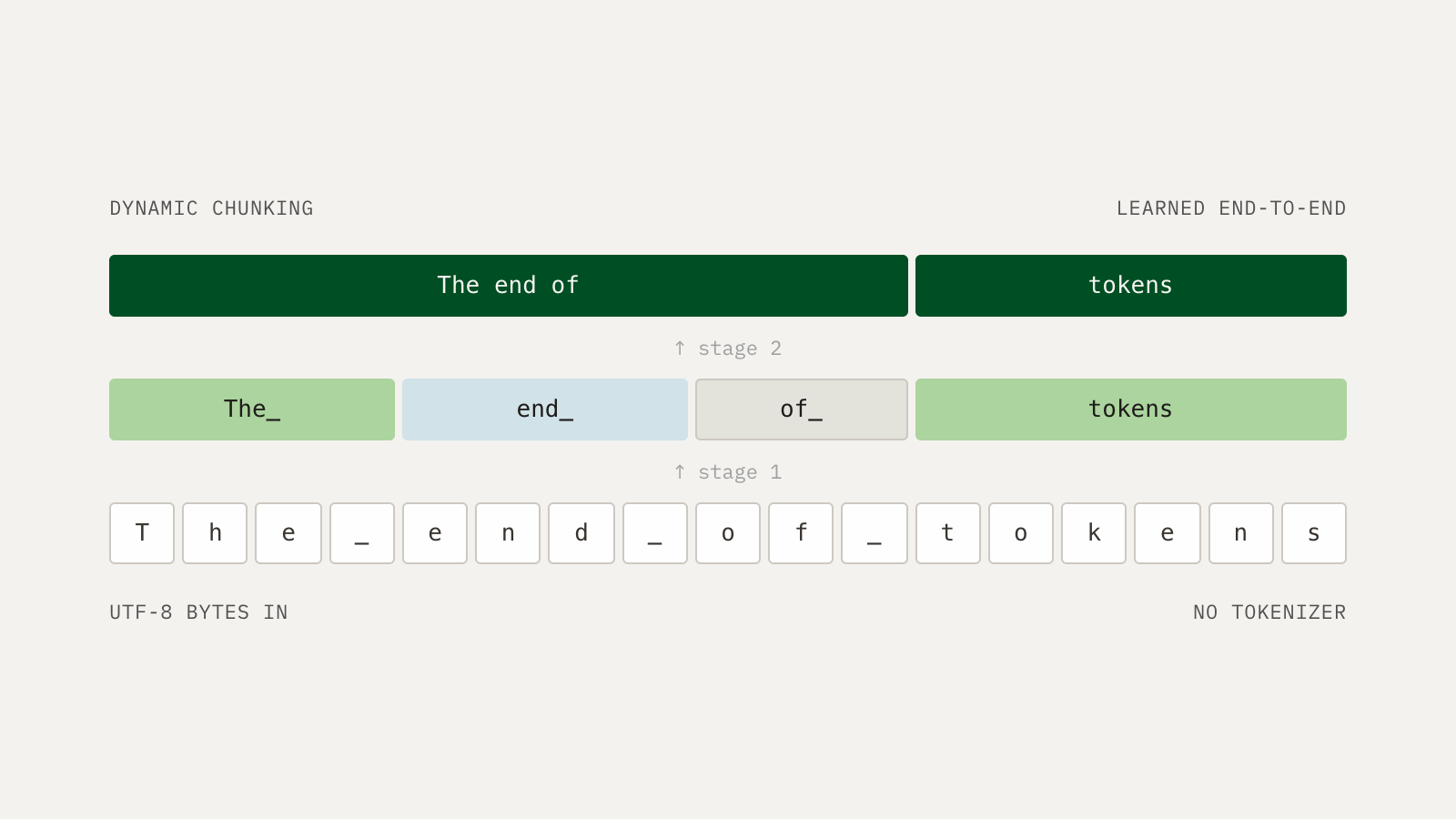
Scaling Hierarchical Networks
2026-10-28A new generation of Hierarchical Networks (H-Nets) can learn directly from raw bytes rather than tokenized data. They match the performance of an open-source 3B-parameter Transformer while using 10x less compute and training data.
CommentsA Kentucky man has become the first humanist granted a religious exemption from AI, arguing that offloading the mental and ethical work of thinking through situations undercuts his ability to develop as a moral actor. Commenters largely agreed with the caution, while stressing that the goal isn’t to eliminate AI but to recognize the risks of overreliance.
CommentsRubber Duck I've Ever Had
2026-10-28This piece shares practical lessons from using AI in software engineering, including how it can help beat procrastination and counter code entropy. It argues that as AI takes on more coding work, system design matters more than ever.
Comments
碁の国: Play Chess as Town Building
2026-10-28A new browser game called Go no Kuni turns standard Go into 3D diorama town-building, with placed stones becoming fortresses and surrounded territory becoming towns. Players can play instantly in the browser with AI, friends, or others.
Comments2026-10-27
Anthropic S-1
2026-10-27Anthropic's S-1 filing outlines massive long-term infrastructure commitments totaling hundreds of billions of dollars over the next decade with partners like Google, AWS, and SpaceX. This aggressive datacenter expansion strategy relies entirely on sustained market demand for its AI models to justify the enormous financial obligations and capacity buildouts. Additionally, the inclusion of short-notice cancellation clauses in certain agreements highlights the significant risks of overbuilding capacity if AI adoption unexpectedly stalls.
Comments
OpenAI has shared novel findings from its AI models regarding the Kakeya conjecture, the Exponential Time Hypothesis, and quantum chromodynamics. These breakthroughs span the fields of mathematics, computer science, and physics. The company has also provided methods for researchers to verify these results and build upon them for future scientific advancements.
Comments
The Mythical Man-Month in the Age of AI
2026-10-27This article reevaluates Fred Brooks's classic software engineering principles to determine how artificial intelligence impacts modern development productivity. By examining whether Brooks's Law still holds true for developers augmented by AI, the piece offers an updated framework for managing software teams and estimating project timelines in the AI era.
Comments
Wikipedia is utilizing automated cleanup tools alongside human editors to combat the influx of AI-generated content. This joint effort focuses on identifying and removing subtle machine-written biases and fabricated citations. Ultimately, the initiative aims to protect the platform's integrity and ensure the encyclopedia remains a human-curated resource.
CommentsPharo 14
2026-10-27The release of Pharo 14 has prompted developers to reflect on the unique benefits of Smalltalk's image-based workflows and its continued relevance in the AI era. While many note that AI coding tools have made them less particular about which programming languages they use, enthusiasts still champion environments like Pharo, Squeak, and Cuis for recreational programming and practical deployment.
CommentsLaw enforcement agencies are utilizing AI to pull over drivers for suspicious travel patterns based on comprehensive vehicle telemetry harvested by automakers. Manufacturers often require users to consent to sharing this data with third parties, including police, just to access basic features like remote start. This automated surveillance allows authorities to track detailed movement histories, raising significant privacy concerns.
Comments
Anthropic trained its Claude AI model on pirated books, leading to a $1.5 billion copyright settlement. The legal action stems from the company's unauthorized use of copyrighted works belonging to at least ten Stanford University professors.
Comments
New iMac with M6
2026-10-27Apple has unveiled the new iMac powered by the superfast M6 chip, positioning the all-in-one desktop as a highly capable platform for artificial intelligence. The updated model features a 24-inch 4.5K Retina display and introduces the latest Wi-Fi 7 and Bluetooth 6 connectivity.
CommentsIs my data used for model training?
2026-10-27Paying subscribers are raising concerns about Anthropic's privacy practices after discovering that dismissing feedback prompts in Claude Code might inadvertently be logged as training data. While some users suspect this is a deliberate loophole to bypass explicit data privacy promises, others argue it could simply be a sloppy implementation detail. The discussion highlights broader frustrations regarding corporate transparency, data surveillance, and the potential exposure of user intellectual property in AI models.
CommentsNietzschian Debugger
2026-10-27A new open-source tool called the Nietzschian Debugger offers an anti-AI approach to troubleshooting by using confrontational questioning to challenge developers. Instead of providing automated fixes, the project forces programmers to rigorously defend their logic based on the philosophy that what doesn't kill your code makes it stronger.
CommentsGforth 1.0
2026-10-27Gforth has reached version 1.0, solidifying its position as a fast, portable, and minimalist implementation of the Forth 2012 language. Community discussions highlight its ultra-thin architecture while exploring ways to improve its standard library and native executable compilation capabilities. Enthusiasts continue to champion Forth and its variants as engaging, logic-focused languages that preserve the art of programming in the age of AI.
CommentsFrigadeHQ has launched Hob, a free and open-source desktop application that serves as a local alternative to cloud-based AI tools like ChatGPT and Claude. The software allows users to run open-weight models directly on their Mac, Windows, or Linux computers. By processing data on-device, Hob ensures complete user privacy and functions entirely offline.
Comments
Apple has officially announced the new 14-inch MacBook Pro featuring the latest M6 chip. This updated laptop delivers significant improvements in overall processing performance, on-device AI capabilities, and connectivity speeds.
Comments
As AI agents generate code faster than humans can review it, the role of software engineers is evolving rather than disappearing. Developers must maintain strong programming fundamentals, broad technical knowledge, and a readiness to troubleshoot complex errors when AI-generated systems inevitably break.
CommentsPrivate equity-backed software companies are confronting a $300 billion debt wall driven by high interest rates and floating-rate loans, undermining the aggressive pricing strategies that fueled their recent growth. This financial pressure is compounded by the rise of generative AI, which threatens to dismantle the niche monopolies these firms rely on by making custom software easier to replicate. Consequently, this combination of looming debt and shifting technological paradigms is widely seen as a major driver behind the current slowdown in software engineering hiring.
Comments