AI Tech News December 13 2025
Artificial intelligence produces a constant flow of announcements, and some days stand out more than others. This section gathers AI news in the format of a dated briefing, focused on the stories around December 13, 2025.
Typical stories include new model launches and benchmark comparisons, AI features in popular products, research papers, partnerships between AI labs and cloud providers, and debates about safety and regulation.
A dated view of AI news shows how fast the field moves from one month to the next. Developers, researchers, investors, and business leaders use it to put new announcements into context.
2026-05-13
The Emacsification of Software
2026-05-13As AI makes software production increasingly effortless, developers are retreating into highly personalized, isolated coding environments akin to custom Emacs configurations. While this trend maximizes individual productivity, it creates severe bottlenecks for collaboration and code sharing because these custom environments are nearly impossible for others to understand or integrate. This shift is now challenging traditional version control platforms like GitHub and forcing teams to rethink how they collaborate on highly fragmented, individually generated code.
CommentsThe United States is securing its leadership in the global artificial intelligence race by dominating the most critical technological layers. While energy resources are important, America maintains a wide margin over competitors in cloud infrastructure, data, and commercialization.
Comments

Princeton University has ended its 133-year tradition of unproctored in-person exams by mandating universal proctoring to combat AI-assisted cheating. Effective July 1, the new policy requires faculty to act as witnesses during tests while preserving the existing student-run Honor Committee system.
Comments
Major publishers including the New York Times and USA Today have blocked the Internet Archive from automatically saving their content by updating their web crawler directives, prompting a petition to urge them to reverse the decision. Readers expressed frustration that the Internet Archive strictly respects these rules while AI companies routinely ignore them without facing legal consequences. The discussion also highlighted broader debates regarding copyright enforcement, the financial sustainability of digital journalism, and the distinction between automated web crawling and direct content redistribution.
CommentsA newly published guide outlines the use of the Cradle AI platform for protein lead optimization in early drug discovery. Although some scientists caution that purely data-driven machine learning models lack the physical context to accurately capture complex protein structures, developers highlight that fine-tuning foundation models for specific local tasks successfully predicts crucial traits like binding and aggregation.
Comments2026-05-12
Cactus Compute has released Needle, a lightweight foundation model that distills Google Gemini's tool-calling capabilities into just 26 million parameters. Weighing only 14MB, the model can process up to 6,000 tokens per second on resource-constrained hardware. This enables advanced, local AI functionalities on tiny devices like mobile phones, wearables, smart home systems, and robots.
CommentsSenior developers often struggle to communicate their expertise because they focus on technical complexity while business stakeholders prioritize managing uncertainty. This misalignment hinders collaboration, but the integration of AI offers a unique opportunity to bridge the communication gap. By adapting their messaging to address business risks, engineering leaders can better align technical execution with organizational goals in the AI era.
Comments
If AI writes your code, why use Python?
2026-05-12AI coding assistants are challenging the long-standing dominance of Python and TypeScript. These languages were historically favored because their rapid development speeds outweighed slower execution performance. However, as AI automates much of the programming process, developers may soon prioritize runtime efficiency over the sheer ease of writing code.
Comments
Google DeepMind is transforming the traditional mouse cursor into a context-aware AI partner to streamline digital interactions. This innovation, starting with the Chrome browser, aims to replace the friction of standard text prompting with seamless, intuitive AI collaboration.
Comments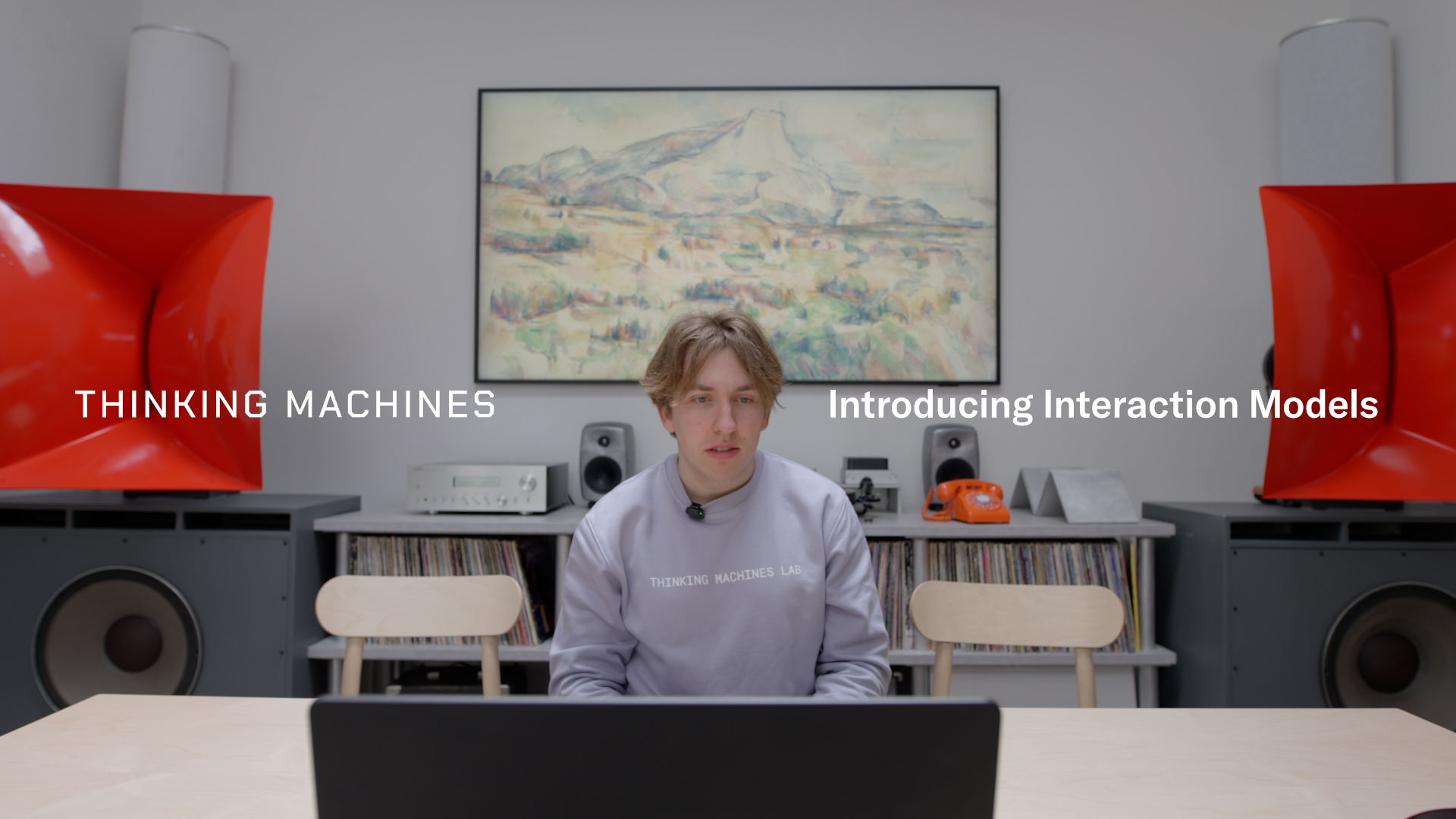
Interaction Models
2026-05-12Interaction models are advancing artificial intelligence by replacing traditional turn-based interfaces with native multimodal support. By seamlessly processing audio, video, and text in real time, these new systems enable much more dynamic and natural human-computer collaboration.
Comments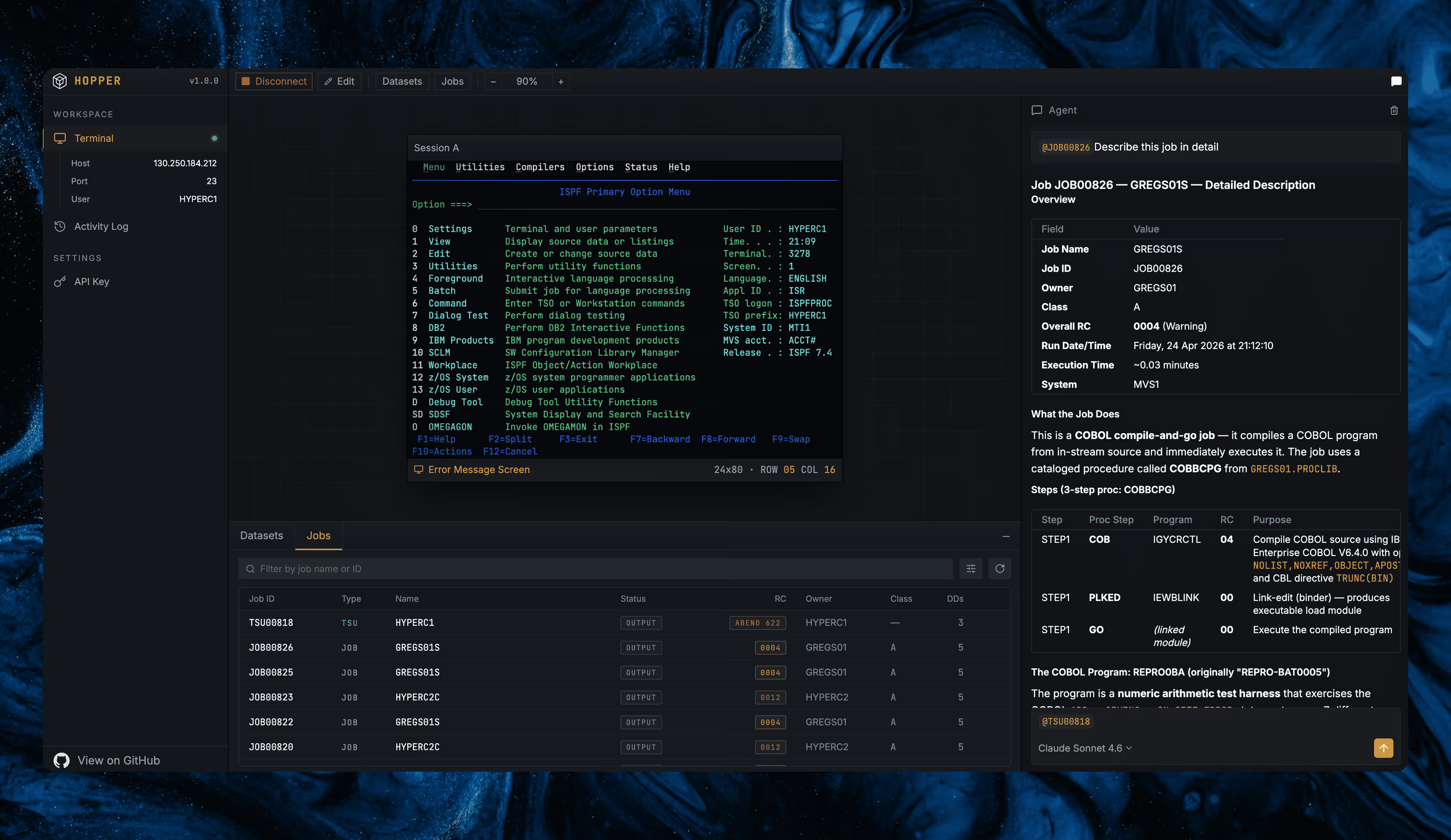
Hopper is a new agentic TN3270 terminal emulator that brings modern AI capabilities to legacy mainframe and COBOL environments. The tool allows AI agents to autonomously navigate ISPF, write column-strict JCL, debug failed jobs, and query VSAM directly within z/OS.
CommentsY Combinator Summer 2024 startup Voker has launched an analytics platform designed to help developers monitor and improve AI agents in production. The tool eliminates the need to manually sift through logs, enabling teams to proactively identify and resolve agent issues before they impact end users.
CommentsGigacatalyst is an embedded AI builder that allows SaaS customers to generate custom frontend user interfaces on the fly using natural language prompts. The tool sandboxes the generated code to keep it independent of the core application, ensuring safe and easy sharing of new features without relying on third-party plugins. Currently serving over 2,000 daily users, the platform reflects a broader industry shift toward highly customizable, AI-driven enterprise software.
CommentsIntroduced on Hacker News, Statewright is a new open-source project that uses visual state machines to implement guardrails for AI agents. By restricting behaviors to defined operational states, the tool aims to make autonomous AI systems more reliable. Developers can find the source code and contribute to the project on GitHub.
CommentsThe autonomous security agent XBOW has uncovered a critical unauthenticated remote code execution vulnerability in the Exim mail server. Tracked as CVE-2026-45185, this use-after-free flaw allows attackers to execute arbitrary code without requiring authentication. The finding highlights the growing competition between human security researchers and AI-driven autonomous exploit development during the disclosure process.
Comments2026-05-11
I'm going back to writing code by hand
2026-05-11In a piece about returning to manual coding, the author and readers criticize AI code generators for lacking the human judgment required to adapt architectural constraints over time. Without exhaustive, line-by-line human review, AI tools often contort software to fit outdated rules or hide catastrophic mistakes that eventually render the codebase unmaintainable. Consequently, developers are finding that the intense oversight needed to prevent hidden errors makes writing code by hand a more reliable and practical approach.
Comments
Researchers at UCLA Health have discovered the first drug capable of fully replicating the brain-repairing effects of physical stroke rehabilitation in mice. By successfully mimicking physical therapy in animal models, this breakthrough treatment offers a promising pharmaceutical alternative that could eventually revolutionize human stroke recovery.
Comments
A recent experiment explores the performance of running local AI models on a standard MacBook equipped with an M4 chip and 24GB of memory. The study aims to determine if this accessible hardware configuration can consistently produce practical and usable outputs for everyday tasks.
CommentsWhile some developers report that AI coding agents reduce maintenance costs by modernizing legacy code and automating testing, others warn that generating poorly understood code actually increases outages and technical debt. Consequently, participants emphasize that maintainability must remain a core engineering responsibility to ensure AI genuinely decreases rather than exacerbates long-term software maintenance burdens.
Comments
Mythos Finds a Curl Vulnerability
2026-05-11Anthropic withheld its new AI model, Mythos, from public release due to its exceptional ability to identify security vulnerabilities in source code. Demonstrating this advanced capability, the model has now successfully discovered a security flaw in curl.
Comments
A new technical guide demonstrates how to optimize large language model training in Swift by drastically accelerating matrix multiplication. By exploring ten handwritten implementations ranging from plain C and Swift to Apple's Metal API, the tutorial shows how developers can push performance from gigaflops per second up to teraflops per second.
CommentsGoogle's threat intelligence group reported that criminal hackers likely used an AI model to discover and weaponize a major software vulnerability, citing the exploit script's textbook formatting and hallucinated details as evidence. However, readers note that while these markers strongly indicate the code was generated by an AI, they do not definitively prove the model was used to find the underlying bug.
Comments
After experiencing frequent sleep disruptions, an author utilized AI development tools to build a custom application that tracks and identifies the causes of nighttime awakenings. This project highlights how AI is lowering the barrier to entry, allowing individuals to easily create personalized tech solutions for everyday quality-of-life issues.
Comments
Despite the rise of AI code generators, industry professionals emphasize that software engineering is primarily about problem-solving, architecture, and understanding requirements rather than simply typing code. While developers who view their roles strictly as code writers may face obsolescence, those who adapt will transition into more complex roles where AI serves as a tool for rapid experimentation. Ultimately, delivering functional software still requires human critical thinking and contextual understanding that current AI models cannot fully replace.
CommentsInterfaze is a new model architecture designed to deliver high accuracy at scale across various applications. The release features comprehensive benchmark comparisons against leading foundational and specialist models, alongside practical code examples for optical character recognition, object detection, and web search.
Comments
A new technical report details the launch of AMÁLIA, an open-source large language model specifically designed for European Portuguese. This release marks a significant milestone in regional AI development and sets a promising direction for the future of specialized language models across Europe.
Comments
Papel is a new research app aiming to bring the TikTok experience to the discovery of scientific papers. The black-and-white platform allows users to easily find literature and read it using on-device AI. It also includes collaborative features so researchers can discuss their work with peers.
Comments
A recent experiment explores the real-time processing capabilities of large language models by tasking Claude Code with simulating a user-space IP stack. The study specifically measures the model's latency by tracking how quickly it can process and respond to standard network ping requests.
CommentsAI meeting note-takers are raising legal concerns by potentially voiding attorney-client privilege and turning casual conversations into discoverable permanent records. Beyond these privacy risks, users report that the tools frequently produce highly inaccurate transcripts when handling poor audio quality. This inaccuracy stems from the underlying language models confidently hallucinating missed words based on context rather than acknowledging audio uncertainties.
Comments
dBase: 1979-2026
2026-05-11The pioneering database software dBase has officially ended its nearly five-decade run, with its final newsgroup servers going offline in November 2025. The platform's ultimate demise was hastened by years of product neglect, complex vendor litigation, and the rapid rise of artificial intelligence.
Comments