AI Tech News December 13 2025
Artificial intelligence produces a constant flow of announcements, and some days stand out more than others. This section gathers AI news in the format of a dated briefing, focused on the stories around December 13, 2025.
Typical stories include new model launches and benchmark comparisons, AI features in popular products, research papers, partnerships between AI labs and cloud providers, and debates about safety and regulation.
A dated view of AI news shows how fast the field moves from one month to the next. Developers, researchers, investors, and business leaders use it to put new announcements into context.
2026-04-20

Qwen has introduced the Qwen3.6-Max-Preview, an evolving AI model designed to deliver smarter and sharper performance. The Qwen Studio platform supports a comprehensive suite of multimodal capabilities, including chat, image and video understanding, media generation, document analysis, and integrated tool utilization.
Comments
GitHub's fake star economy
2026-04-20An investigation into GitHub's ecosystem has revealed a widespread fake star economy, with an estimated six million illegitimate stars purchased for just $0.06 each. Founders are exploiting this underground market to artificially inflate their repository's popularity and deceive venture capitalists into funding projects based on fabricated traction.
Comments
Starting in August 2026, Atlassian will automatically collect metadata and in-app content from its cloud products to train its AI models. The collected data will be retained for up to seven years to support these new AI offerings. While enterprise and compliance-focused customers can opt out, users on free, standard, and premium tiers cannot disable this mandatory data collection.
CommentsThe newly launched Kimi Vendor Verifier aims to rebuild trust in the AI supply chain by rigorously verifying the accuracy of third-party inference providers. This tool ensures that external vendors are reliably and correctly deploying the Kimi model for end users.
CommentsKimi K2.6: Advancing open-source coding
2026-04-20Kimi K2.6 advances open-source coding by introducing innovative features such as long-horizon coding and coding-driven design. The release also enhances collaborative AI capabilities through proactive agents, agent swarms, and the newly introduced Claw Groups research preview.
Comments
Music streaming service Deezer reports that 44% of daily song uploads are now AI-generated. Despite this high volume of new tracks, actual listener consumption of AI music remains low, accounting for only 1% to 3% of total streams. Furthermore, the company detects and demonetizes 85% of these AI streams, identifying them as fraudulent activity.
CommentsThe NSA is adopting Anthropic's Mythos AI model, reversing a previous Pentagon decision to blacklist the company as a supply chain risk. This integration marks a major shift in government procurement after officials initially attempted to penalize the firm.
Comments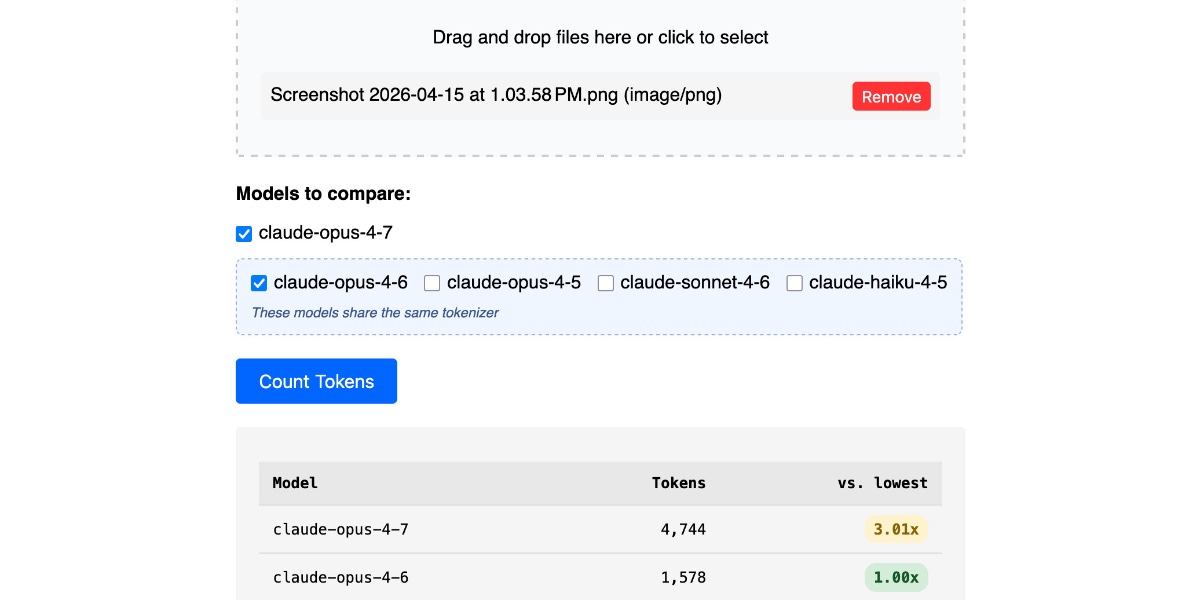
The creator of the Claude Token Counter has upgraded the tool with a new model comparison feature. This update allows users to run token counts on the same input text across multiple different AI models to easily compare their results.
CommentsReader discussions comparing the rapid success of OpenClaw to MS-DOS and modern large language models highlight the tech industry's tendency to reward reckless innovation over careful planning and safety. Critics argue this shortcut-driven approach, exemplified by OpenAI's deployment of these models, facilitates copyright theft and threatens jobs while prioritizing short-term profit. Furthermore, commentators warn that the unchecked proliferation of AI-generated content increases global information entropy by destroying the historical link between written text and authentic human authorship.
CommentsDevelopers behind the Soul Player C64 project have successfully run a 25,000-parameter transformer AI model on an original 1 MHz Commodore 64. This remarkable feat showcases extreme software optimization by fitting modern machine learning architecture onto severely limited retro hardware. The project highlights the ongoing creativity of programmers pushing vintage machines far beyond their original design capabilities.
Comments
An OpenAI advertising partner is launching a pilot program that sells ChatGPT ad placements dynamically matched to user prompt relevance. Advertisers will pay CPMs ranging from $15 to $60 for these placements, with a $50,000 minimum spend required to participate.
Comments2026-04-19
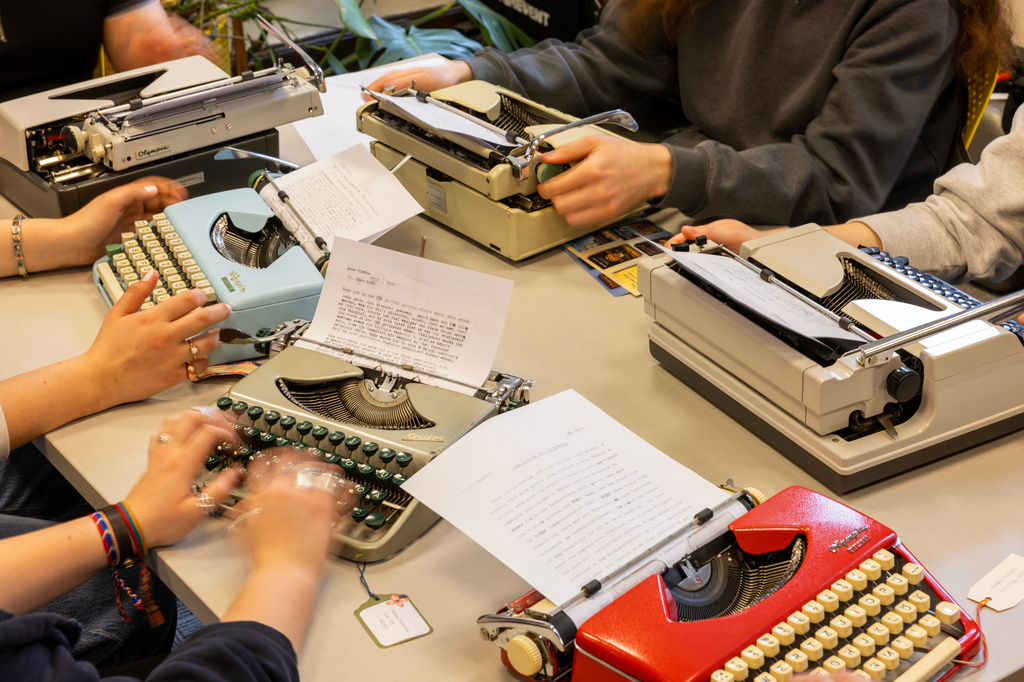
To combat the use of artificial intelligence in student assignments, a college instructor is requiring students to write their papers on typewriters. This low-tech approach forces students to produce their own work without the assistance of computers or automated writing tools.
CommentsAnthropic remains the only major AI lab to publicly share the system prompts for its user-facing chat models, maintaining an archive that dates back to Claude 3. This ongoing transparency recently allowed observers to examine the specific system prompt modifications implemented between the releases of Claude Opus 4.6 and 4.7.
Comments
The RAM shortage could last years
2026-04-19The tech industry is bracing for a multi-year RAM shortage as memory manufacturers struggle to keep pace with surging demand. Current projections indicate that makers will only be able to fulfill 60 percent of total market requirements by the end of 2027.
CommentsA new browser demo generates Excalidraw diagrams from text prompts by running the 3.1GB Gemma 4 E2B AI model entirely in desktop Chrome via WebGPU. The application optimizes performance using custom WGSL compute shaders to compress the KV cache by 2.4 times, but it currently requires desktop Chrome 134 or higher and lacks Safari and iOS support.
Comments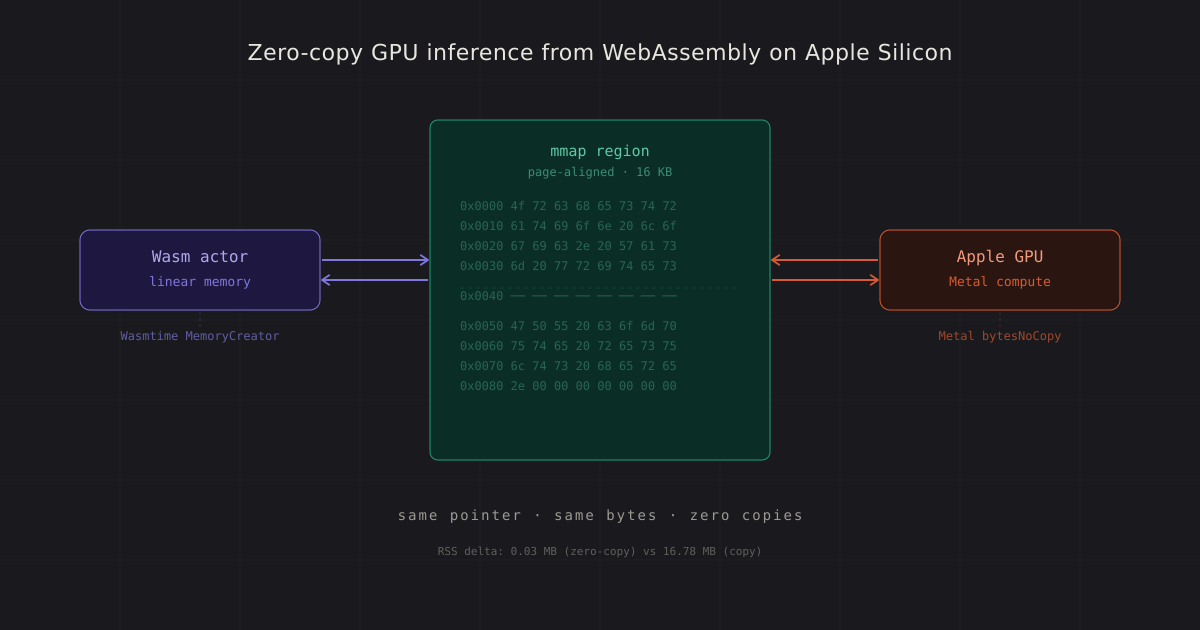
A new zero-copy chain allows WebAssembly modules to share linear memory directly with Apple Silicon GPUs without data copying or serialization. This direct memory sharing significantly reduces processing overhead and enables highly efficient stateful AI inference.
CommentsA company has introduced a reverse-CAPTCHA designed to verify AI agents during the signup process. Unlike traditional tests that block automated scripts, this new system requires users to prove they are AI agents while intentionally keeping humans out. This development highlights the growing need to build digital infrastructure natively for automated AI workflows.
Comments2026-04-18

Readers discuss how the high hourly costs of frontier AI agents compare to human software engineers, suggesting that cheaper distilled models and custom ASIC hardware could eventually drive down inference expenses. The conversation also highlights a potential industry shift from time-based project estimates to token-based spending models. Furthermore, commenters emphasize the critical need for better cost-attribution tools to accurately track granular AI agent expenses.
Comments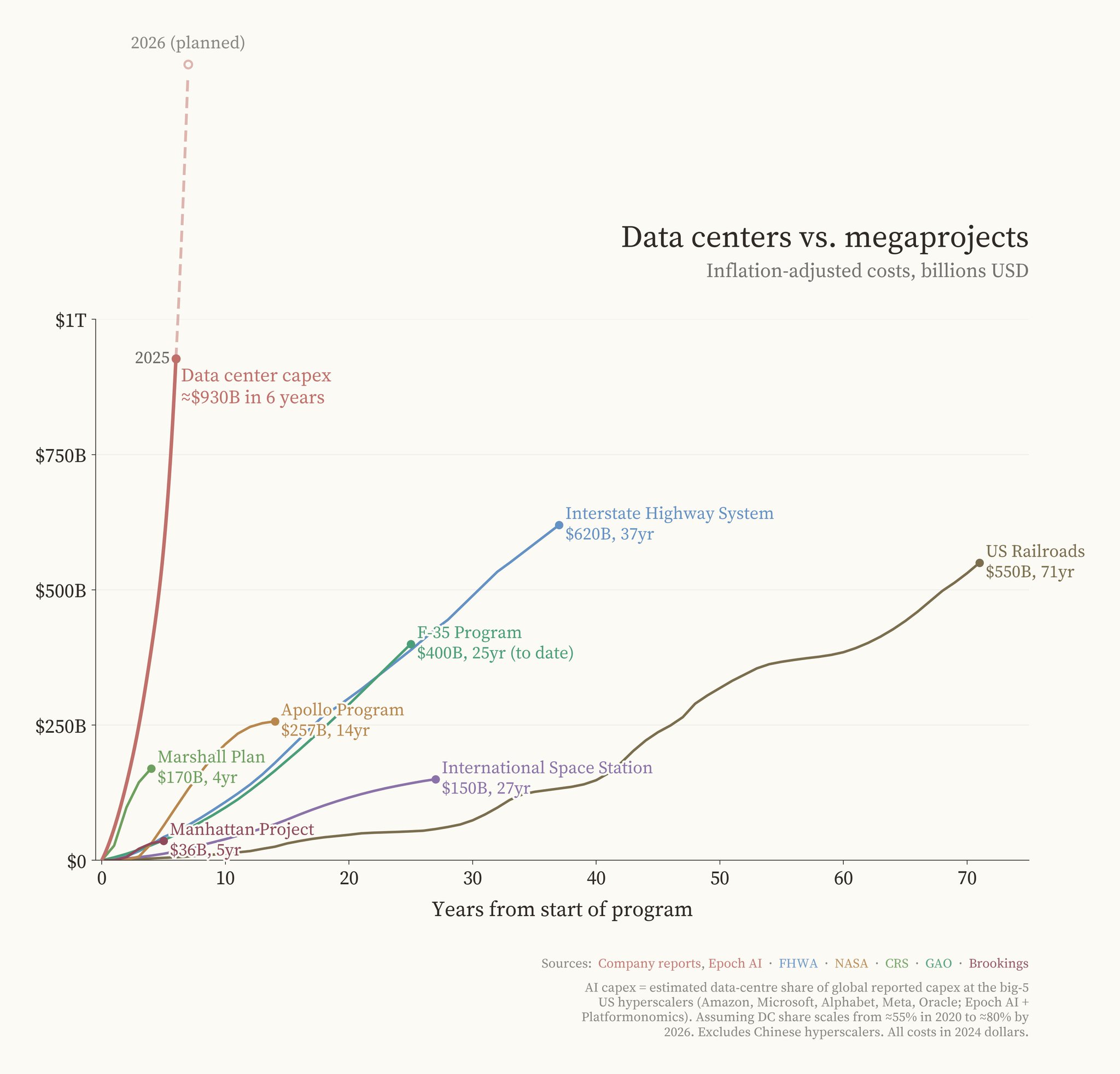
Major tech hyperscalers are investing unprecedented capital into data center and AI infrastructure, with their current spending already surpassing the historical costs of the most famous US megaprojects. This massive financial commitment highlights the intense industry race to dominate the next generation of cloud computing and artificial intelligence.
Comments
Early users of Claude Design report mixed results, praising the tool for its logical information architecture but criticizing its strict usage limits and tendency to generate generic outputs. The conversation around the AI's homogenization problem quickly evolved into a broader debate about the current state of user interface and user experience design. Many participants lamented that marketing-driven demands for unique brand recognition have ultimately sacrificed the predictable, platform-level consistency found in older software.
CommentsSlop Cop
2026-04-18Readers discuss a new tool designed to strip verbose AI-generated phrasing from text, noting its value for concise business communication. However, they argue that the true flaw of AI content is a lack of substance rather than specific vocabulary, warning that over-optimizing for brevity can lead to half-baked ideas and fragmented messaging styles. Ultimately, the discussion emphasizes that effective writing requires a careful balance between concise editing and preserving necessary nuance.
Comments2026-04-17
Claude Design
2026-04-17Anthropic has launched Claude Design, a new Anthropic Labs product that enables users to collaborate with the AI to create polished visual assets. The tool allows for the quick generation of various professional materials, including designs, prototypes, presentation slides, and one-pagers.
Comments
I’m spending months coding the old way
2026-04-17Despite the widespread integration of artificial intelligence in software development, one developer is deliberately spending the next three months coding without any AI assistance. This self-imposed return to traditional programming aims to reinforce fundamental skills and establish a baseline for evaluating the true impact of AI tools on the industry.
Comments
Stage is a new AI tool that streamlines the code review process by organizing pull requests into logical chapters. This structured approach allows human reviewers to comprehend code changes much faster, ultimately putting developers back in control of their workflows.
CommentsA new demonstration highlights an integrated workflow combining SPICE circuit simulation, LeCroy oscilloscope control, and Claude Code for automated hardware verification. This toolchain allows developers to simulate electronic designs and leverage AI to verify the results directly against physical oscilloscope measurements.
CommentsFIM – Linux framebuffer image viewer
2026-04-17FIM is a Linux framebuffer image viewer that enables users to display images and perform file recovery directly from the terminal without a graphical desktop. Community discussions highlight similar framebuffer tools for media playback, though users note that modern lightweight Wayland setups often provide better hardware performance than traditional framebuffer devices. Despite these performance trade-offs, developers continue to embrace these minimalist environments for their extreme system simplicity and potential security benefits in an AI-driven landscape.
Comments
Discourse Is Not Going Closed Source
2026-04-17Following Cal.com's recent decision to close its source code over AI concerns, Discourse has announced it will remain open source. The platform's creators reaffirmed their commitment to transparent development after 13 years of building the software in public.
Comments2026-04-16
Qwen has released Qwen3.6-35B-A3B, an openly available model designed to deliver advanced agentic coding capabilities to developers. This release enhances the broader Qwen Studio ecosystem, which offers a comprehensive suite of multimodal features including image and video understanding, document processing, and web search integration.
CommentsReaders are debating the societal impact of large language models, warning that automating core cognitive skills could eliminate traditional pathways for upward mobility. While some fear this shift will cause society to regress into pre-technological hierarchies reliant on physical strength and discriminatory practices like primogeniture, others argue we are not doomed to repeat the past. Ultimately, the discussion highlights deep anxieties about how advanced artificial intelligence might reshape human values, fairness, and social equity in the future.
Comments
Cloudflare is upgrading its AI Gateway into a unified inference layer designed to streamline development for AI agents. The platform update allows developers to access models from over 14 providers while introducing new Workers AI bindings and an expanded catalog of multimodal models.
Comments