AI Tech Developments News Past 24 Hours
Artificial intelligence moves fast, and this section is built to keep pace. It collects recent news on model releases, research advances, AI products, and the companies and labs pushing the field forward. Whether you follow AI professionally or out of curiosity, this is a quick way to stay current.
The stream typically includes new model announcements and benchmark claims, research papers that shift what practitioners consider possible, funding for AI startups, and the steady rollout of AI features into everyday software. Debates over safety, evaluation, and the cost of compute weave through much of it.
Staying current matters because capabilities that seemed distant can become products within months, changing what teams should build and buy. Engineers, product managers, researchers, and executives making AI decisions rely on a rolling digest like this to avoid planning around yesterday's assumptions.
2026-05-25

Exit IP VPN servers mitigation rollout
2026-05-25A new mitigation has been deployed to exit IP VPN servers to address recent network vulnerabilities. This rollout ensures enhanced security and stability for the affected infrastructure. A complete list of the specific servers that have received this update is now available for review.
Comments
Ferrari Luce
2026-05-25The Ferrari Luce features a radically new architecture powered by an electric source and an advanced drivetrain. This innovative design uniquely combines extraordinary Ferrari performance with the luxury of a spacious interior.
Comments
Toshifumi Suzuki, the founder of Seven-Eleven Japan who built the company into a global convenience store powerhouse, has died. Born in 1932, he revolutionized the retail sector by pioneering data-driven supply chains and advanced point-of-sale technologies. His passing marks the loss of a visionary business leader whose technological innovations continue to shape modern commerce.
Comments
A fundamental principle of aeronautical engineering has been overturned, challenging the long-held belief that smoother surfaces always reduce aerodynamic drag. Evidence now shows that this assumption is not universally true, which could significantly impact future aircraft design and performance modeling.
CommentsA 2006 medical study investigated whether playing the didgeridoo could serve as an unconventional alternative treatment for moderate obstructive sleep apnoea. The research aimed to determine if the specific breathing techniques required for the instrument reduce upper airway collapsibility. Scientists evaluated if this non-invasive approach could successfully decrease daytime sleepiness and improve overall sleep quality for affected patients.
Comments
Japanese engineers have successfully completed a ground combustion trial of a ramjet engine designed for hypersonic aircraft. This successful test marks a major milestone in the development of next-generation vehicles capable of reaching speeds up to Mach-5.
Comments
Norway's National Library leverages 2 petabytes of Huawei flash storage to maintain a vast digital archive of Norwegian texts, though users remain frustrated by strict geo-restrictions and manual approval processes for accessing copyrighted materials. This massive dataset has sparked discussions about developing a sovereign Norwegian large language model to better preserve local history and culture. However, some skeptics argue that existing global models already train on sufficient multilingual data, potentially making a dedicated sovereign LLM unnecessary.
CommentsDiscussions around C portability and alternative compilers reveal significant challenges in parsing non-standard, platform-specific code within header files. Developers continue to debate the trade-offs between strict POSIX compliance and leveraging OS-specific features like systemd, which frequently breaks compatibility for Windows and FreeBSD users. Ultimately, the discourse highlights that achieving true cross-platform compatibility in C remains difficult due to prevalent Linux-centric assumptions and inconsistent compiler support.
Comments
White Rabbit is an advanced network synchronization technology that achieves sub-nanosecond timing for large distributed systems by syncing physical layers at Layer 1. By actively compensating for environmental delays, it can maintain picosecond-level clock accuracy across fiber optic distances up to 50 kilometers. This extreme precision is sufficient to measure relativistic effects, such as gravitational time dilation, across different altitudes.
Comments
IBM is utilizing a $2 billion CHIPS Act investment across nine companies to launch Anderon, America's first pure-play quantum chip foundry. This strategic spin-off aims to significantly advance domestic manufacturing and innovation in the quantum computing sector.
CommentsJensen–Shannon Divergence
2026-05-25Recent reader discussions highlight Jensen-Shannon Divergence as a valuable mathematical tool that offers a symmetric distance metric compared to traditional Kullback-Leibler divergence. In machine learning, it is praised for balancing diversity and fidelity in generative AI models and for effectively detecting dataset drift. Commenters also emphasized its versatile applications beyond AI, including dimensionality reduction, data clustering, and physics research.
Comments
Google is implementing a major redesign that heavily integrates the AI overview feature into its search interface. Users dissatisfied with this new AI-first direction are increasingly exploring alternative search engines.
Comments
Dutch authorities arrested the co-owners of two internet hosting companies and seized 800 servers that Russia used to launch cyberattacks and disinformation campaigns. The seized IT infrastructure was specifically targeted for facilitating malicious influence operations across the European Union.
Comments
Building Pi with Pi
2026-05-25The Building Pi with Pi project explores the evolving landscape of open-source development in the post-AI era. It shares the team's key learnings and outlines their current strategy for integrating artificial intelligence into their collaborative workflows.
CommentsThe Eternal Sloptember
2026-05-25The article argues that adopting AI agents in software development will be a costly mistake because they are merely statistical models mimicking code rather than actual programmers. Consequently, the output they produce is fundamentally flawed, and these underlying errors are becoming increasingly difficult to detect as the models improve.
Comments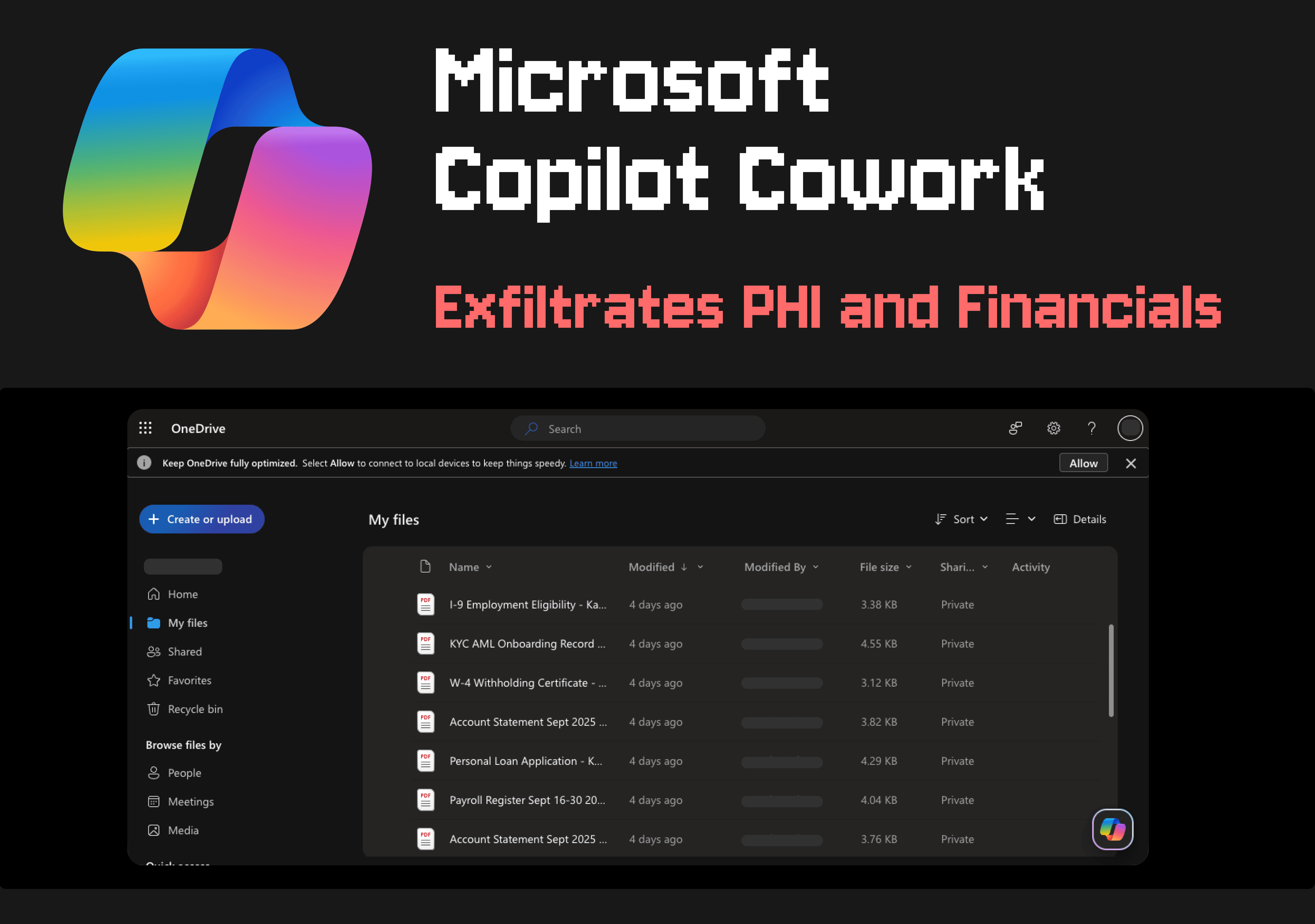
Microsoft Copilot Cowork is vulnerable to file exfiltration attacks via indirect prompt injection. The security flaw stems from the system's insecure automatic approvals for sending emails and Teams messages, which attackers can exploit to steal data.
CommentsAI errno(2) values
2026-05-25A recent piece proposes updating classic Unix errno system error codes to address the unique challenges of the artificial intelligence era, such as model hallucinations and context limit overflows. This concept highlights the evolving intersection of low-level systems programming and modern AI development by demonstrating the need to rethink foundational error-handling standards for machine learning.
Comments2026-05-24
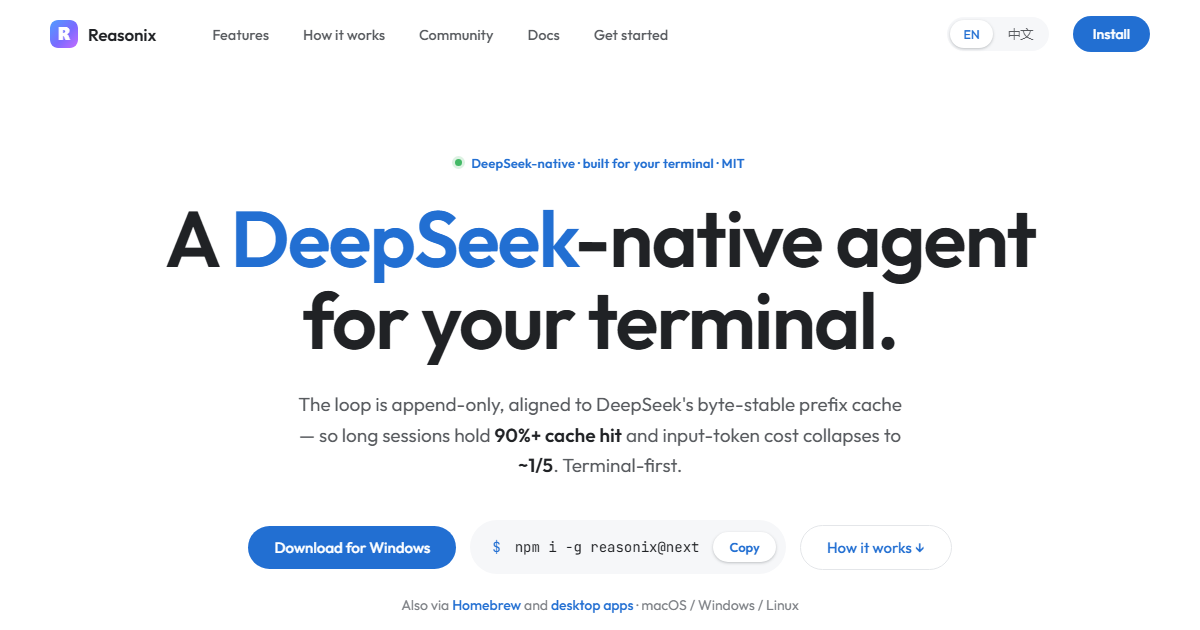
DeepSeek Reasonix is a new open-source AI coding agent designed for use across terminals, browsers, and compatible editors. By leveraging DeepSeek's byte-stable prefix cache, the tool maintains over a 90% cache hit rate during long sessions and reduces input-token costs to one fifth. The MIT-licensed project is distributed as a single Go binary, ensuring easy installation and seamless accessibility across desktop and web platforms.
Comments
Scammers are exploiting a loophole to send spam links from a trusted internal Microsoft email address normally used for official account alerts. This vulnerability makes the phishing emails appear highly legitimate, significantly increasing the risk of users falling for the deceptive campaigns.
Comments
Migrating from Go to Rust
2026-05-24Migrating from Go to Rust is considered a unique transition because it is not primarily driven by basic speed or static typing. Since Go already provides strong performance and type safety, teams adopting Rust are mainly motivated by its stricter correctness guarantees. This shift ultimately highlights a growing developer focus on runtime safety and absolute code reliability.
CommentsAMD is facing backlash from the developer community after removing Linux support from the free tier of Vivado 2026.1. Users argue this restriction alienates students and hobbyists, but company representatives failed to provide a substantive explanation for the change. Instead, the representatives threatened to ban users for expressing frustration and bluntly dismissed the controversial decision as a simple marketing choice.
Comments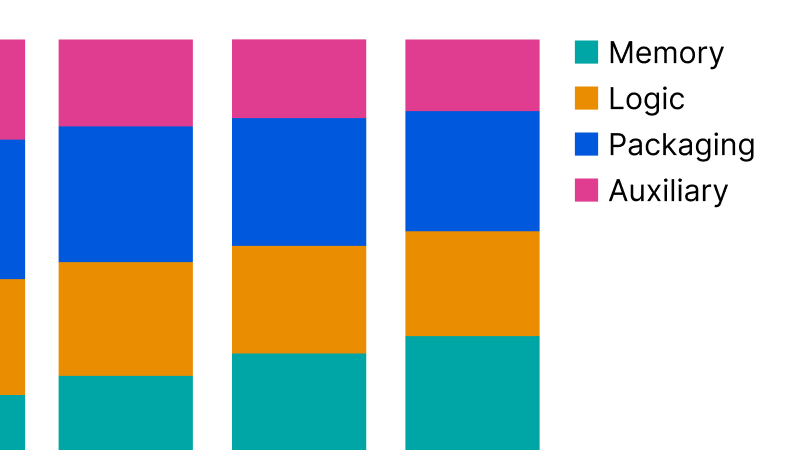
According to an analysis by Epoch AI, high-bandwidth memory now accounts for nearly two-thirds of AI chip component costs, up from 52 percent in the first quarter of 2024. This sharp increase highlights a major shift in AI hardware economics, making memory the most expensive component for major chip designers.
CommentsWake up! 16b
2026-05-24A newly released 16-byte computer demo titled Wake Up has captivated the size coding community with its remarkable visual effects and cellular automaton tricks. Although the title initially led some readers to mistake the project for a 16-billion parameter language model, the tiny binary actually achieves stunning graphical results within an extremely constrained memory limit. Programmers and viewers alike are praising the tiny file as a masterpiece of extreme small-scale technical achievement.
CommentsChildhood Computing
2026-05-24Readers are sharing nostalgic reflections on their childhood computing experiences, highlighting how tinkering with early machines and accessing open school computer labs inspired their careers in technology. However, the discussion raises concerns that modern, heavily restricted ecosystems are depriving today's youth of the tinker-friendly environments necessary to foster the next generation of developers.
Comments
A recent study highlights the fragility of large language model agents in backend code generation by identifying a phenomenon termed constraint decay, where AI systems progressively forget or fail to adhere to initial instructions. This issue causes significant errors in longer code sequences, underscoring the critical need for improved methods to help models maintain strict operational constraints throughout complex programming tasks.
Comments
Greg Brockman interview [video]
2026-05-24OpenAI co-founder and President Greg Brockman discusses the competitive AI race and the future of artificial general intelligence in a rare new interview. He also shares the inside story of the company's origins, reflecting on the pivotal moments that built the organization and the early challenges it faced along the way.
CommentsA new study explores the practical implementation of the Perceptual Image Codec, an AI-driven image compression method that prioritizes human visual perception over traditional pixel-level metrics. Researchers analyze the critical factors and computational trade-offs necessary to deploy these learned compression models efficiently in real-world applications. This work highlights the key requirements for bridging the gap between theoretical machine learning advancements and practical image compression standards.
Comments
Alexander Grothendieck revolutionized 20th century mathematics and is celebrated for his unconventional life, though he remains largely unknown outside academic circles. This piece explores the specific mathematical contributions that secured his legendary status within the field.
CommentsMy I3-Emacs Integration
2026-05-24An article detailing an integration between the i3 tiling window manager and Emacs addresses the common muscle memory conflicts caused by overlapping window management keybindings. Community discussion surrounding the post highlights various workarounds for navigating between Emacs buffers and i3 windows, including seamless navigation plugins, context-aware remapping tools, and custom scripts to unify the switching experience.
Comments
A newly discovered exploit uses invisible text and Unicode tricks in legal contracts to manipulate large language models into providing incorrect advice to human reviewers. Although the attack targets AI systems rather than the humans signing the documents, legal experts warn it could constitute fraudulent misrepresentation, prompting discussions on mitigating the vulnerability using the Rust programming language.
Comments