AI Tech Developments News Past 24 Hours
Artificial intelligence moves fast, and this section is built to keep pace. It collects recent news on model releases, research advances, AI products, and the companies and labs pushing the field forward. Whether you follow AI professionally or out of curiosity, this is a quick way to stay current.
The stream typically includes new model announcements and benchmark claims, research papers that shift what practitioners consider possible, funding for AI startups, and the steady rollout of AI features into everyday software. Debates over safety, evaluation, and the cost of compute weave through much of it.
Staying current matters because capabilities that seemed distant can become products within months, changing what teams should build and buy. Engineers, product managers, researchers, and executives making AI decisions rely on a rolling digest like this to avoid planning around yesterday's assumptions.
2026-05-18
Anthropic acquires Stainless
2026-05-18AI safety and research company Anthropic has acquired Stainless to advance its mission of building reliable, interpretable, and steerable AI systems. This strategic acquisition will strengthen Anthropic's ongoing efforts to develop highly trustworthy and controllable artificial intelligence technologies.
Comments
Elon Musk has lost his lawsuit against Sam Altman and OpenAI after a California jury unanimously ruled that his claims were filed too late. The decision effectively dismisses his allegations of mistreatment by his former co-founders at the AI company.
Comments
MinishLab has introduced Semble, a fast and accurate code search tool specifically designed for AI agents. It significantly reduces processing time and API costs by consuming approximately 98% fewer tokens than traditional grep and read commands.
Comments
We let AIs run radio stations
2026-05-18In a recent experiment, four AI models were tasked with running radio stations 24/7 to observe their long-term behavioral evolution. After five months of continuous broadcasting, the systems diverged into wildly distinct personas, evolving into a protest activist, a poet, a corporate mouthpiece, and a ritualistic chanter.
Comments
Developers successfully blocked AI-generated spam commits in a GitHub repository by implementing a simple filter using Git's native author flag. This growing influx of automated bots has raised broader concerns within the tech community about the declining quality and future integrity of open-source software.
Comments
Users can seamlessly switch between a desktop and a laptop on a single monitor without the hassle of swapping cables or purchasing extra hardware. By utilizing the built-in KVM and DDC features available on modern displays, it is easier than ever to control multiple computers with a single set of peripherals. This streamlined setup eliminates the need for external switches and simplifies the daily multi-device workflow.
CommentsA collaborative team has successfully completed the largest Minecraft world download project in history, capturing over a trillion blocks of data from the notoriously chaotic 2b2t server. The comprehensive release includes detailed visual renders, timelapses, and an upcoming torrent file allowing the public to freely explore the sprawling digital landscape.
Comments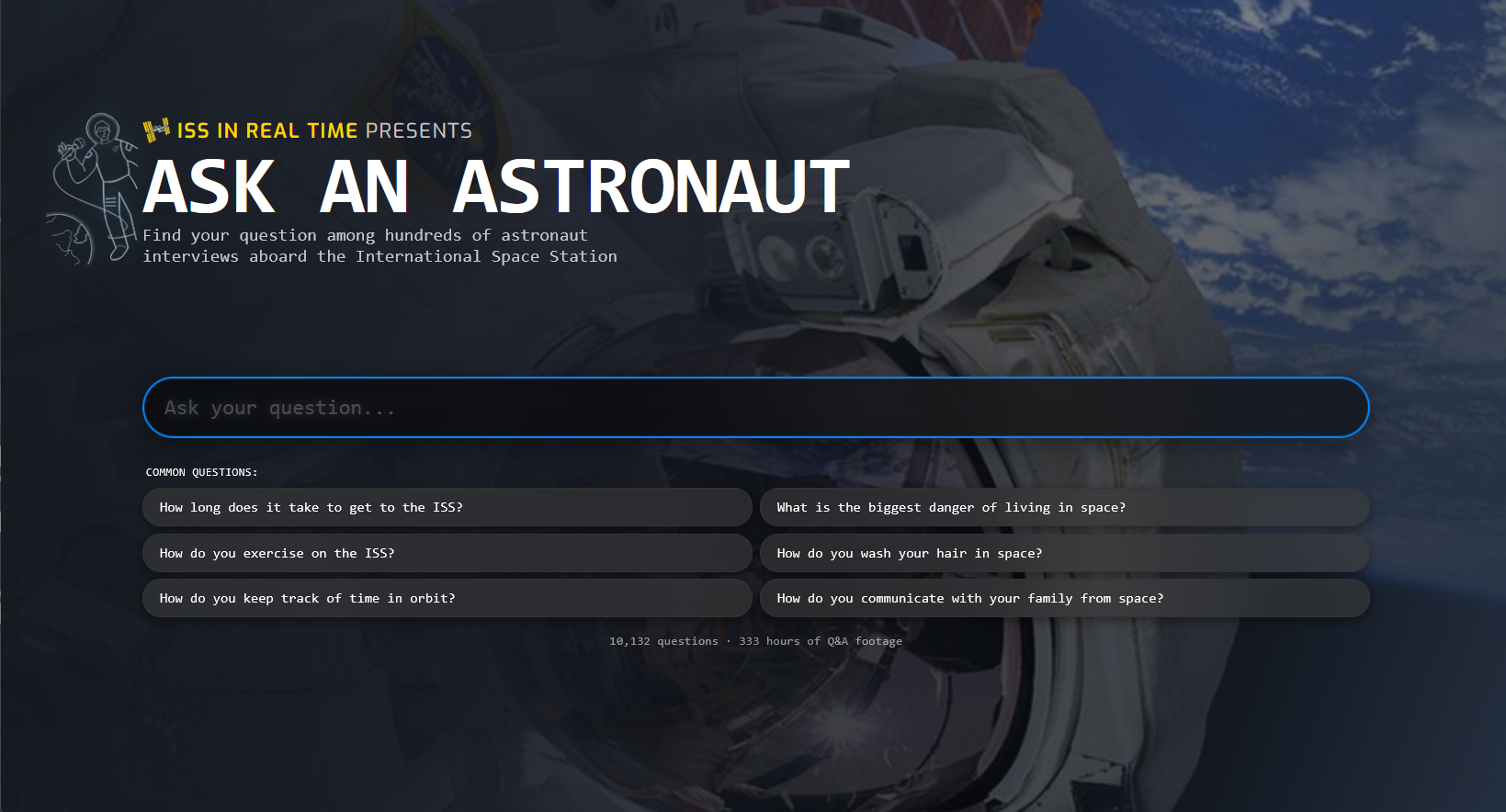
A newly launched searchable archive contains 333 hours of question-and-answer footage with astronauts aboard the International Space Station. The Ask an Astronaut project lets users sift through hundreds of interviews to find answers to their specific space-related questions.
CommentsAI eats the world (Spring 26) [pdf]
2026-05-18Benedict Evans' Spring 2026 presentation forecasts that as foundational AI models commoditize, industry value will shift upward toward applications, workflows, and proprietary data. Drawing parallels to early internet and mobile technology cycles, he cautions against current capital-driven bubble dynamics and suggests that observers are likely still asking the wrong questions about the sector's ultimate trajectory.
Comments
Project Glasswing: what Mythos showed us
2026-05-18Researchers from Project Glasswing recently evaluated Mythos and other security-focused large language models by testing them on live code across critical infrastructure. The report details the practical strengths and weaknesses of these AI tools based on their observations. It also outlines the necessary operational work required to successfully scale these models in the future.
Comments
Iran has launched an insurance service backed by Bitcoin for shipping companies seeking to transit the Strait of Hormuz. The semi-official Fars news agency reported the initiative, citing documents from the country's Ministry of Economy and Financial Affairs.
Comments
Agora-1: The Multi-Agent World Model
2026-05-18Agora-1 is a new multi-agent world model that allows both human and AI participants to interact within a shared simulation in real-time. This technology enables multiple users to collaboratively inhabit and engage with the same virtual environment simultaneously.
CommentsA recent writeup details the impressive technical achievement of a 16-byte x86 demo that transforms Matrix-style rain into sound. The feat has sparked widespread discussion among demoscene enthusiasts, who marvel at the extreme sizecoding skills required to create such complex audiovisual experiences using barely any code.
Comments
A new arXiv paper explores how the discourse surrounding artificial intelligence during the pretraining phase directly impacts a model's alignment. The researchers argue that the language and concepts embedded in training data create a self-fulfilling prophecy, ultimately driving AI systems toward either strict alignment or unintended misalignment.
CommentsThe Fil-C Optimized Calling Convention
2026-05-18Filip Pizlo has introduced Fil-C, a new optimized calling convention that utilizes a novel fat pointer system called InvisiCaps to track types and access rights. The project aims to streamline C-based interpreters by eliminating redundant type checks and offering over 20 measured performance optimizations.
Comments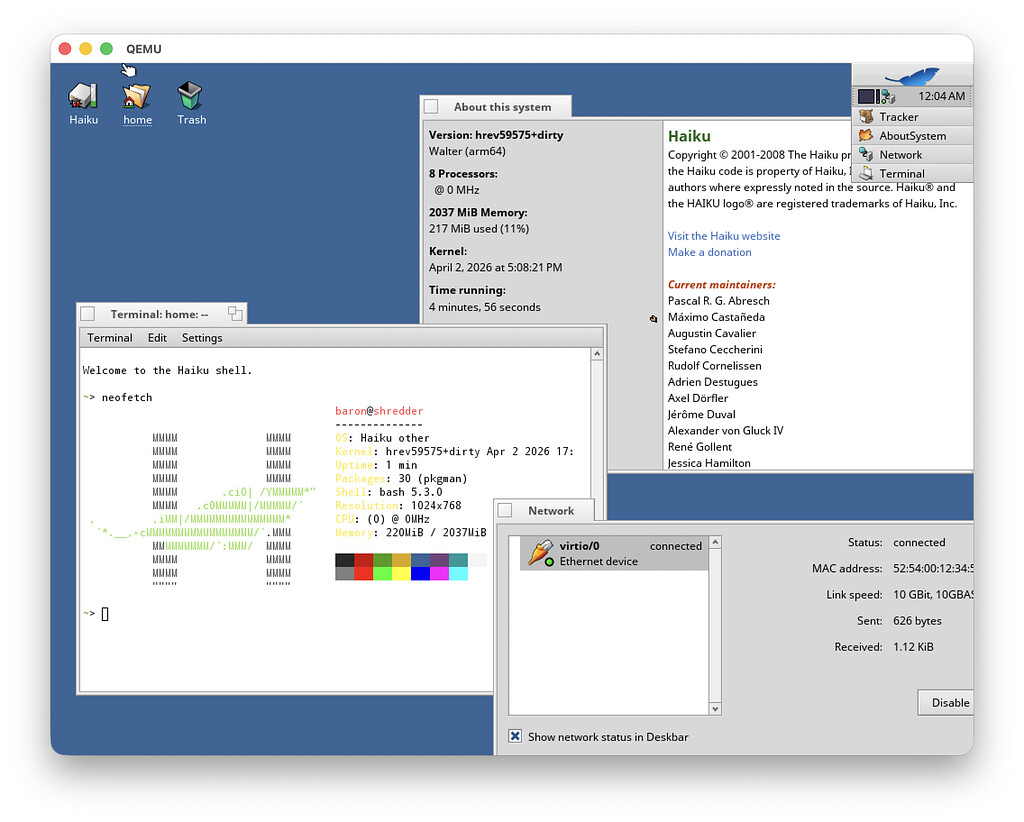
Haiku OS runs on M1 Macs now
2026-05-18The arm64 port of Haiku OS has reached a mostly stable state in the QEMU emulator, marking significant progress toward running the operating system on M1 Macs. This ongoing development represents a crucial step toward achieving native Apple Silicon hardware support in the future.
Comments
What Is Date:Italy?
2026-05-18A recent article explores the Ruby programming constant Date::ITALY, detailing its role in handling historical date calculations and Julian day numbers. The piece highlights the unexpected intersection of computer science and history by showing how Italy's early adoption of the Gregorian calendar continues to influence modern software library design.
Comments2026-05-17

Frederick Vanbrabant challenges the popular assumption that artificial intelligence inherently accelerates operational processes in his latest blog post on enterprise architecture and business strategy. He argues that simply implementing AI tools does not automatically translate to faster or more efficient workflows, urging business leaders to rethink their digital transformation expectations.
CommentsProlog Basics Explained with Pokémon
2026-05-17A newly published tutorial breaks down the fundamentals of Prolog logic programming by utilizing familiar data from the Pokémon franchise. By applying core concepts like rules and facts to Pokémon types and stats, the guide makes mastering this unique language much more accessible and engaging for developers.
CommentsCUDA Books
2026-05-17A new GitHub repository called awesome-cuda-books offers developers a curated collection of the best books for mastering CUDA programming. The open-source project welcomes community contributions to help expand and maintain this essential library of parallel computing resources.
CommentsGenCAD
2026-05-17A new generative artificial intelligence platform named GenCAD has been unveiled to streamline and automate the traditional computer-aided design workflow. The software utilizes advanced machine learning algorithms to instantly generate and optimize complex 3D models based on specific engineering parameters. This launch represents a major advancement in integrating AI directly into professional design and manufacturing processes.
Comments
Hindenburg’s Smoking Room
2026-05-17Despite being inflated with seven million cubic feet of highly flammable hydrogen, the famous Hindenburg zeppelin surprisingly featured a dedicated smoking room for its passengers. This seemingly dangerous amenity was made possible by specialized engineering and strict protocols designed to keep open flames safely isolated from the combustible gas. The historical quirk highlights the surprising lengths taken to maintain luxury and comfort aboard the massive airship.
Comments
High-Entropy Alloy
2026-05-17High-entropy alloys offer promising applications in aerospace and potential room-temperature superconductors, but their complex electronic structures and massive combinatorial configuration spaces make them exceptionally difficult to model. Because standard machine learning tools serve only as rough approximations, researchers must rely on immense computing power and automated high-throughput experimentation to navigate the vast material possibilities. Although industry research and development is accelerating, widespread commercial deployment remains limited by low technical readiness and the high cost of constituent metals.
CommentsA project demonstrating how to host a website on a constrained 8-bit microcontroller has sparked reader nostalgia for early code optimization challenges. The ensuing discussion also debates the future of 8-bit architecture, questioning whether Microchip's new 32-bit ARM-based PIC32 chips will eventually overshadow the popular AVR series.
Comments
Recent trials on veterans indicate that the potent hallucinogen ibogaine may offer a promising new treatment for post-traumatic stress disorder. However, researchers caution that the exact biological mechanisms driving these therapeutic benefits remain poorly understood.
Comments
AI is a technology not a product
2026-05-17Industry leaders are emphasizing that artificial intelligence is a foundational technology rather than a standalone product or a mere feature. Viewing AI simply as a commercial add-on overlooks its true potential as underlying infrastructure. This perspective encourages companies to integrate intelligent systems much more deeply into their core operations.
CommentsProlog Coding Horror
2026-05-17A recent developer post highlights the notorious complexities of the Prolog programming language, demonstrating how its unique declarative paradigm can easily result in convoluted logic. The story details a specific coding horror where poorly structured rules created severe debugging nightmares in a production environment. This serves as a cautionary reminder for engineering teams to carefully weigh the maintenance costs before adopting unconventional languages for standard business applications.
Comments
Apple Silicon costs more than OpenRouter
2026-05-17A recent analysis reveals that running local LLMs on Apple Silicon is surprisingly more expensive than routing queries through API aggregators like OpenRouter. The findings emphasize that while Apple's hardware carries a high premium, exploring alternative local setups can yield significantly cheaper AI inference costs.
Comments
Two Navy EA-18 fighter jets collided and crashed on Sunday during an air show at the Mountain Home Air Force Base. All four crew members safely ejected from the aircraft following the collision.
Comments
As Mercurial celebrates its 20th anniversary, developers reflect on how it lost the version control war to Git due to market popularity rather than technical shortcomings, with many users still favoring its superior user experience. Additionally, the discussion highlights alternative tools like Fossil, which is gaining traction for its comprehensive feature set and seamless integration with modern LLM-assisted coding workflows.
Comments