AI Tech Developments News Past 24 Hours June 2026
Artificial intelligence evolves so quickly that a single day can bring several major announcements. This section follows AI developments in a past-24-hours format, highlighting what changed around June 2026.
Typical stories include new language and image model releases, benchmark results, AI agents and developer tools, funding rounds for AI startups, chip supply news, and regulatory decisions affecting AI companies.
Tracking AI day by day helps readers separate meaningful progress from hype. Developers, product teams, investors, and policymakers use this coverage to keep up with a field that rarely slows down.
2026-10-26
While AI tools like LLMs can significantly accelerate software development, developers warn they often generate fragile, messy, or suboptimal code if not carefully managed. Industry professionals compare these AI models to power tools that require strong human expertise and rigorous code review to prevent technical debt and poor architectural decisions. Ultimately, to build truly ambitious and robust software, engineering teams must balance the speed of AI-generated code with a strict commitment to maintainability and performance best practices.
CommentsA dermatologist evaluating frontier large language models for skin cancer diagnosis found that advanced systems like GPT-6 Astra and Claude Fable 5.1 were surprisingly inaccurate. In contrast, a decade-old convolutional neural network significantly outperformed these modern AI models in correctly identifying the disease.
Comments
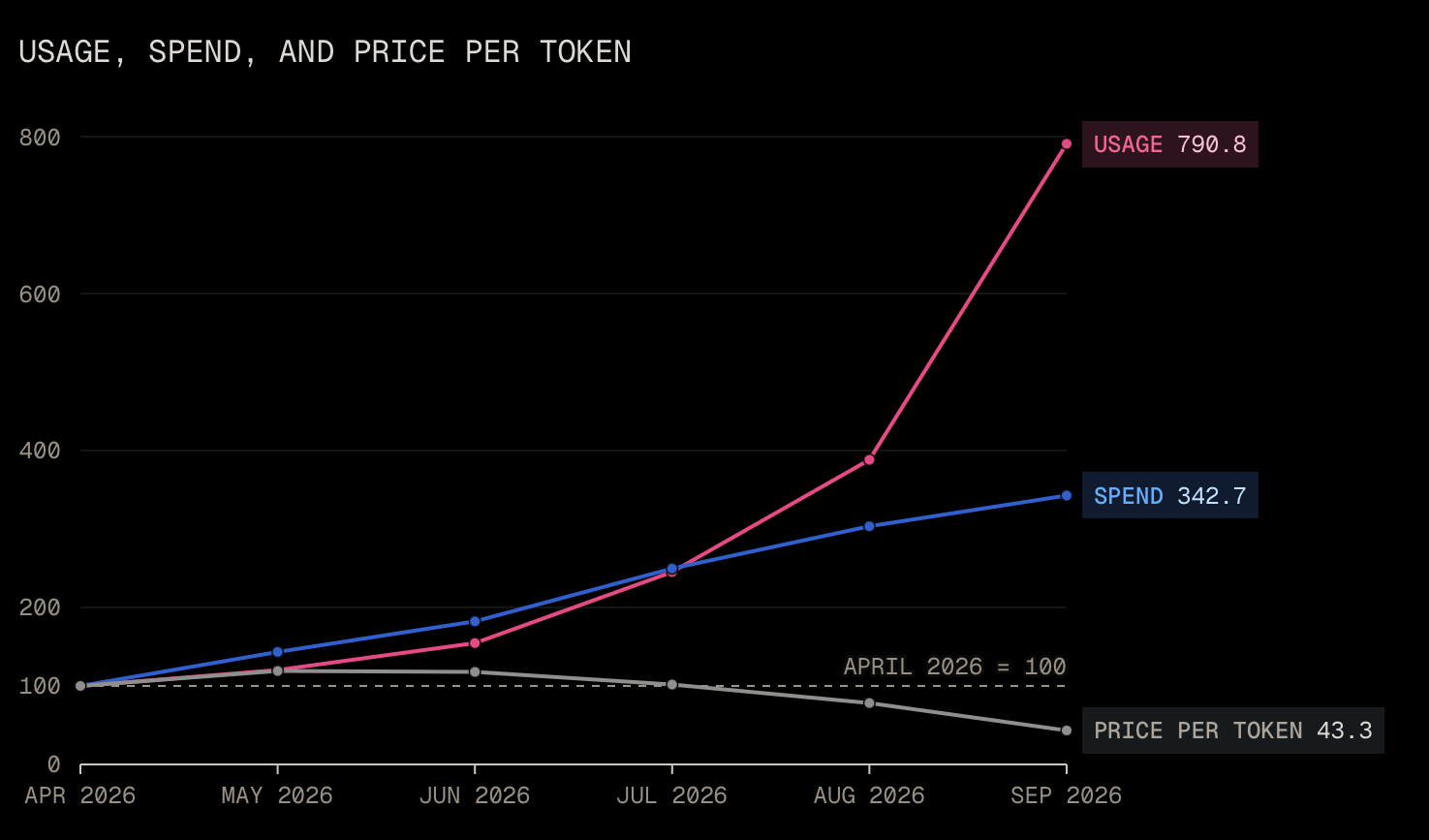
OpenAI and Anthropic have slashed their LLM prices by up to 80% over the past few months. This dramatic reduction highlights the rapidly declining true cost of generating a token as AI infrastructure becomes increasingly efficient.
Comments
The State of Context Engineering
2026-10-26Advancing AI models are introducing unexpected complexities for developers building applications and harnesses. In response, the practice of context engineering has evolved significantly this year, with new methodologies shaping its future trajectory.
Comments
IBM's CEO announced that open weight AI models are now highly competitive for on-premises deployment, delivering 90 percent of the performance of proprietary systems at just ten percent of the cost. By requiring only two or three server racks, these models offer enterprises an irresistible combination of high capability and significant affordability.
Comments
Attention Is Not What You Need (2025)
2026-10-26A newly published arXiv paper titled Attention Is Not What You Need challenges the foundational dominance of Transformer architectures by proposing alternative mechanisms that reduce or eliminate reliance on standard self-attention. This research highlights a growing shift in machine learning toward developing more efficient and scalable models that move beyond traditional attention-based paradigms.
CommentsReader discussions surrounding the displacement of human workers by AI highlight concerns over the loss of economic leverage and political power, rather than just wages. While some fear dystopian suppression of displaced populations, others argue that policies like universal basic income could actually foster greater civic engagement. Ultimately, the debate centers on whether AI is the true culprit behind these socioeconomic shifts or if broader policy failures and historical automation trends are to blame.
CommentsA new toolkit called ADRs4AI introduces deliberation records specifically designed to track human-AI collaboration by versioning them in Git. This framework allows developers to preserve their thought processes and ensure that decisions compound over time, bringing greater structure to the emerging practice of deliberative programming.
CommentsPaperPilot is a new open-source, local AI copilot that processes PDF documents entirely offline using a pure-Rust engine with WebAssembly and Model Context Protocol support. By eliminating cloud dependencies, it offers developers a secure, privacy-focused tool for document interaction that is now available on GitHub for community contributions.
Comments2026-10-25
Show HN: Steal My Bitcoin
2026-10-25A recent experiment offering a Bitcoin bounty to hackers has remained unclaimed, effectively debunking fears that autonomous AI agents will instantly and indiscriminately compromise every vulnerable website. Commenters note that the lack of automated attacks proves AI is not yet swarming low-value targets, while the relatively small payout also fails to incentivize human hackers due to the risk of exposure.
CommentsReaders of an article on software ambition highlight a shift toward building high-performance, native desktop applications in Rust instead of relying on Electron. They argue that while AI tools eliminate the coding bottleneck, development teams must also overhaul slow processes like code reviews to actually ship products. Furthermore, the community believes that AI-driven productivity gains will generate more work and opportunities rather than leading to developer layoffs.
CommentsThe Goose Programming Language
2026-10-25The newly introduced Goose programming language has sparked community debate after its creator revealed that artificial intelligence was heavily used to write both the code and its documentation. While critics question the reliability and human readability of machine-generated code, the creator defends the approach by highlighting the AI's ability to implement complex algorithms and eliminate memory errors. The discussion ultimately underscores a broader industry divide regarding the practical utility and skill required to effectively integrate AI into software development.
Comments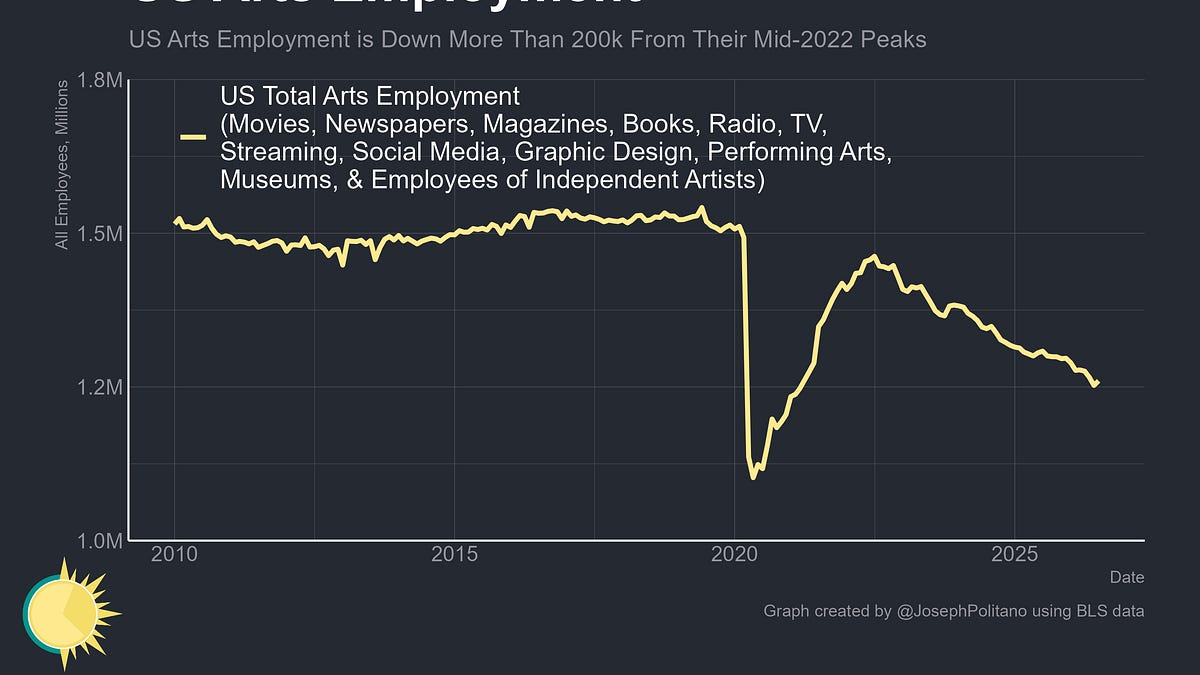
The United States has lost approximately 200,000 jobs across the media, film, and arts industries. Analysts are currently investigating the data to determine how much of this significant workforce decline is being driven by the rise of artificial intelligence.
CommentsA new practical guide by Daniel Ball explores the evolution of AI image generation, tracing the technology from foundational diffusion models to advanced autonomous agents. The resource breaks down the mechanics of these generative tools to help readers understand their current capabilities and practical applications.
CommentsA new open-source tool called gpu-unlock allows users to bypass Nvidia's artificial performance limits on 3000 series consumer graphics cards by unlocking their FP16 and BF16 instruction issue rates. This modification boosts the compute performance of these consumer GPUs to match their more expensive professional counterparts, providing a significant advantage for AI and machine learning workloads.
CommentsA new research paper explores the structural and cognitive reasons why humans often find AI-generated language difficult to read and comprehend. By investigating the specific linguistic patterns that make machine-written text feel unnatural, the study aims to help developers improve the readability of future large language models.
Comments
Cerebras has deployed trillion-parameter frontier AI models by mapping them across its WSE-3T wafers. This approach enables highly scalable inference, achieving impressive generation speeds of 1,000 to over 2,000 tokens per second.
Comments2026-10-24

Kimi K3.1 Pro and K3.1 Pro Highspeed
2026-10-24Kimi has introduced the K3.1 Pro and K3.1 Pro Highspeed, their most capable 3T-class open-weight models featuring a massive 1-million-token context window. These new models deliver significant performance upgrades specifically targeting advanced capabilities in coding, 3D modeling, and financial research.
Comments
Google has updated its privacy policy to allow the potential use of personal data from Gmail and Google Photos for targeted advertising. This change specifically applies to users who opt into the company's personalized AI features.
Comments
Dessa has unveiled a research preview of a full-duplex speech model designed to enable highly natural, simultaneous listening and speaking. By learning to converse primarily through listening, the system aims to deliver the most authentic AI vocal interactions to date.
Comments
LISP Comes of Age (1980)
2026-10-24This historical Byte magazine report from 1980 covers the Stanford LISP conference, which convened immediately following the AAAI Artificial Intelligence Conference. The article highlights the maturation of the LISP programming language and its growing importance in the early days of artificial intelligence research.
CommentsCorgi is a new multiplexer tool designed to manage both terminal sessions and AI agents from a single unified interface. It acts as a centralized helper to streamline developer workflows involving concurrent automated tasks. By combining terminal and agent management, the project aims to significantly reduce the overhead of running multiple background processes.
CommentsNo Source Code? No Problem
2026-10-24A recent discussion highlights how AI-driven agentic coding is enabling developers to successfully recreate legacy software without access to the original source code, a feat recently demonstrated by reviving the classic game No One Lives Forever. While this capability is celebrated for preserving retro projects and challenging corporate monopolies, critics warn it could stifle open-source innovation and force companies to adopt restrictive, online-only business models to protect their intellectual property.
Comments2026-10-23
NVIDIA has introduced OpenShell, a secure and private runtime environment designed specifically for managing fleets of autonomous AI agents. The platform provides a safe operational space for multiple AI systems to execute tasks simultaneously while maintaining strict data privacy and security standards.
CommentsResearchers asked twelve different AI models to generate their most controversial opinions about humanity. The results revealed a surprising consensus, with nearly all responses pointing to the exact same conclusion. The models overwhelmingly agreed that humans prioritize social belonging over the pursuit of truth.
Comments
Large language models are making formal software verification scalable by automating the proof of security properties in compiled code. For example, Claude successfully verified 123 open-source libraries and uncovered hidden bugs that had evaded detection for years.
CommentsA developer has published Hedra, a 3D open-world game they built entirely from scratch while in high school. The impressive project features a massive codebase of over 100,000 lines of code. The full source code is now publicly available on GitHub for the tech community to explore.
CommentsA new arXiv paper examines how the rise of artificial intelligence is driving the privatization of open scientific knowledge and data. Researchers warn that this enclosure of the scientific commons threatens global collaboration by locking essential resources behind corporate paywalls and proprietary systems. The study highlights the urgent need for policy interventions to protect open science from AI-driven monopolization.
CommentsRevisiting a 1978 critique of natural language programming, a recent discussion debates whether AI models function as modern compilers or simply replace human software developers. Critics argue that unlike traditional compilers that precisely preserve formal semantics, AI translation of natural language is inherently ambiguous and can yield multiple interpretations. Ultimately, the thread highlights that both human engineers and AI require highly detailed, iterative communication to accurately transform vague specifications into functional code.
CommentsA recent article comparing AI compute to oil has sparked debate among readers, with critics arguing that AI's exponentially improving efficiency makes the analogy flawed since its costs will eventually converge near raw electricity prices. While some skeptics compare the current data center boom to past tech hype cycles driven by financial engineering, optimists maintain that AI's growing practical utility will ultimately justify the massive infrastructure investments.
Comments