AI Tech Developments News Past 24 Hours June 2026
Artificial intelligence evolves so quickly that a single day can bring several major announcements. This section follows AI developments in a past-24-hours format, highlighting what changed around June 2026.
Typical stories include new language and image model releases, benchmark results, AI agents and developer tools, funding rounds for AI startups, chip supply news, and regulatory decisions affecting AI companies.
Tracking AI day by day helps readers separate meaningful progress from hype. Developers, product teams, investors, and policymakers use this coverage to keep up with a field that rarely slows down.
2026-10-24

Kimi K3.1 Pro and K3.1 Pro Highspeed
2026-10-24Kimi has introduced the K3.1 Pro and K3.1 Pro Highspeed, their most capable 3T-class open-weight models featuring a massive 1-million-token context window. These new models deliver significant performance upgrades specifically targeting advanced capabilities in coding, 3D modeling, and financial research.
Comments
Google has updated its privacy policy to allow the potential use of personal data from Gmail and Google Photos for targeted advertising. This change specifically applies to users who opt into the company's personalized AI features.
Comments

Dessa has unveiled a research preview of a full-duplex speech model designed to enable highly natural, simultaneous listening and speaking. By learning to converse primarily through listening, the system aims to deliver the most authentic AI vocal interactions to date.
Comments
LISP Comes of Age (1980)
2026-10-24This historical Byte magazine report from 1980 covers the Stanford LISP conference, which convened immediately following the AAAI Artificial Intelligence Conference. The article highlights the maturation of the LISP programming language and its growing importance in the early days of artificial intelligence research.
CommentsCorgi is a new multiplexer tool designed to manage both terminal sessions and AI agents from a single unified interface. It acts as a centralized helper to streamline developer workflows involving concurrent automated tasks. By combining terminal and agent management, the project aims to significantly reduce the overhead of running multiple background processes.
CommentsNo Source Code? No Problem
2026-10-24A recent discussion highlights how AI-driven agentic coding is enabling developers to successfully recreate legacy software without access to the original source code, a feat recently demonstrated by reviving the classic game No One Lives Forever. While this capability is celebrated for preserving retro projects and challenging corporate monopolies, critics warn it could stifle open-source innovation and force companies to adopt restrictive, online-only business models to protect their intellectual property.
Comments2026-10-23
NVIDIA has introduced OpenShell, a secure and private runtime environment designed specifically for managing fleets of autonomous AI agents. The platform provides a safe operational space for multiple AI systems to execute tasks simultaneously while maintaining strict data privacy and security standards.
CommentsResearchers asked twelve different AI models to generate their most controversial opinions about humanity. The results revealed a surprising consensus, with nearly all responses pointing to the exact same conclusion. The models overwhelmingly agreed that humans prioritize social belonging over the pursuit of truth.
Comments
Large language models are making formal software verification scalable by automating the proof of security properties in compiled code. For example, Claude successfully verified 123 open-source libraries and uncovered hidden bugs that had evaded detection for years.
CommentsA developer has published Hedra, a 3D open-world game they built entirely from scratch while in high school. The impressive project features a massive codebase of over 100,000 lines of code. The full source code is now publicly available on GitHub for the tech community to explore.
Comments
A new arXiv paper examines how the rise of artificial intelligence is driving the privatization of open scientific knowledge and data. Researchers warn that this enclosure of the scientific commons threatens global collaboration by locking essential resources behind corporate paywalls and proprietary systems. The study highlights the urgent need for policy interventions to protect open science from AI-driven monopolization.
CommentsRevisiting a 1978 critique of natural language programming, a recent discussion debates whether AI models function as modern compilers or simply replace human software developers. Critics argue that unlike traditional compilers that precisely preserve formal semantics, AI translation of natural language is inherently ambiguous and can yield multiple interpretations. Ultimately, the thread highlights that both human engineers and AI require highly detailed, iterative communication to accurately transform vague specifications into functional code.
CommentsA recent article comparing AI compute to oil has sparked debate among readers, with critics arguing that AI's exponentially improving efficiency makes the analogy flawed since its costs will eventually converge near raw electricity prices. While some skeptics compare the current data center boom to past tech hype cycles driven by financial engineering, optimists maintain that AI's growing practical utility will ultimately justify the massive infrastructure investments.
Comments2026-10-22
OpenAI models are coming to Google Cloud
2026-10-22OpenAI is making its AI models available on Google Cloud to reach enterprise customers who require zero data retention guarantees and want to utilize existing GCP spend commitments. Despite this new distribution channel, Microsoft remains OpenAI's primary cloud infrastructure partner due to their foundational investment agreement. This multi-cloud approach allows OpenAI to expand its enterprise market reach without disrupting its core compute relationship with Azure.
CommentsThe rapid deployment of AI coding agents is uncovering decades of hidden software vulnerabilities, sparking debate over whether AI companies are exacerbating the security crisis to profit from selling automated patching tools. While critics argue this creates a conflict of interest, others emphasize that the technology is merely exposing existing technical debt at an unprecedented scale. Consequently, the tech industry must adapt to this accelerated discovery cycle and coordinate globally to address the massive surge of newly exposed flaws.
Comments
YC S25 startup Alter has launched to provide privileged access management and runtime security for multi-user AI agents. The platform secures agent operations using vaulted credentials, per-action policies, and mandatory approvals for risky calls. It also features a comprehensive audit trail to track every action taken across the system.
Comments
Chain of Thought for Humans
2026-10-22A recent article explores the concept of chain of thought for humans by drawing parallels to AI reasoning techniques. The author shares their interview practice of asking candidates to verbalize their step by step thought processes to better evaluate their problem solving skills. This approach highlights the growing value of transparent reasoning in both artificial intelligence and human evaluation.
CommentsOmnara is an open-source, self-hostable platform designed to help developers manage AI agents. It serves as a direct alternative to proprietary services like Claude Managed Agents and OpenAI's Agents API, providing teams with greater control over their AI infrastructure.
CommentsAlthough large language models are frequently used by developers to generate confidence scores for their outputs, relying on these self-reported probabilities is fundamentally flawed. The author argues that LLMs cannot accurately assess their own certainty, meaning agent designers should avoid trusting these numbers when evaluating model reliability.
Comments
LLM Agents Play Pokemon Showdown
2026-10-22Researchers have created an open testing environment where two Large Language Model agents team up in 4-player Pokémon Showdown battles and communicate via natural language before each turn. This setup allows developers to measure whether natural-language coordination improves the agents' win rates while also evaluating the associated computational costs.
Comments
A new platform showcased on Hacker News aggregates playable browser games built using AI models like GPT, Claude, and Gemini. The directory allows users to discover new titles by genre, connect with creators, and play the games directly in their web browsers.
CommentsA new Hacker News project challenges users to distinguish between an AI's genuine 30-day memory logs and fabricated documents. The interactive preview presents five pairs of real and invented records for participants to evaluate. Results are kept strictly within the local browser session, and no votes are submitted to a central server.
Comments2026-10-21
DeepSeek AI has released DeepInfer, a high-performance inference framework specifically designed for its DeepSeek models. Available via the deepseek-ai repository, this large-scale framework aims to optimize the deployment and execution of the company's large language models.
Comments
Voxtral 3
2026-10-21Mistral has launched Voxtral 3, a new voice agent SDK designed for real-time speech processing across more than 50 languages. The platform features accurate transcription, emotional text-to-speech capabilities, and deep tool integration for advanced AI applications. Developers can also choose between EU-hosted or self-deployed environments to meet their specific infrastructure needs.
CommentsGoogle has open-sourced TorchTPU, a native PyTorch backend designed specifically to run machine learning models on its TPUs. This new backend aims to provide seamless integration and optimized performance for developers utilizing TPU hardware. The source code is now publicly available on GitHub for community collaboration and ongoing development.
CommentsThe October 2026 SlopCodeBench results reveal that Opus 5.5 and Astra are the top-performing models for AI coding agents, while also finding that an xhigh context setting is detrimental to performance. These findings are part of ongoing research into advanced context engineering for coding assistants hosted on GitHub.
CommentsUpcoming critical PHP security release
2026-10-21A critical PHP vulnerability has been exposed ahead of an official patch, with proof-of-concept exploits already circulating online and potentially accelerated by AI. The severity of the flaw has prompted widespread panic, leading many administrators of unmaintained LAMP and WordPress environments to temporarily take their servers offline. System operators are urged to keep services down until the official security release is deployed to prevent catastrophic remote code execution.
Comments
Meta's GB{2,3}00 Cluster
2026-10-21Meta is providing a behind-the-scenes look at the gigawatt-scale Prometheus computing cluster that powers its newly released Muse family of foundational AI models. This massive infrastructure utilizes advanced GB200 and GB300 hardware to support the company's growing artificial intelligence ambitions.
Comments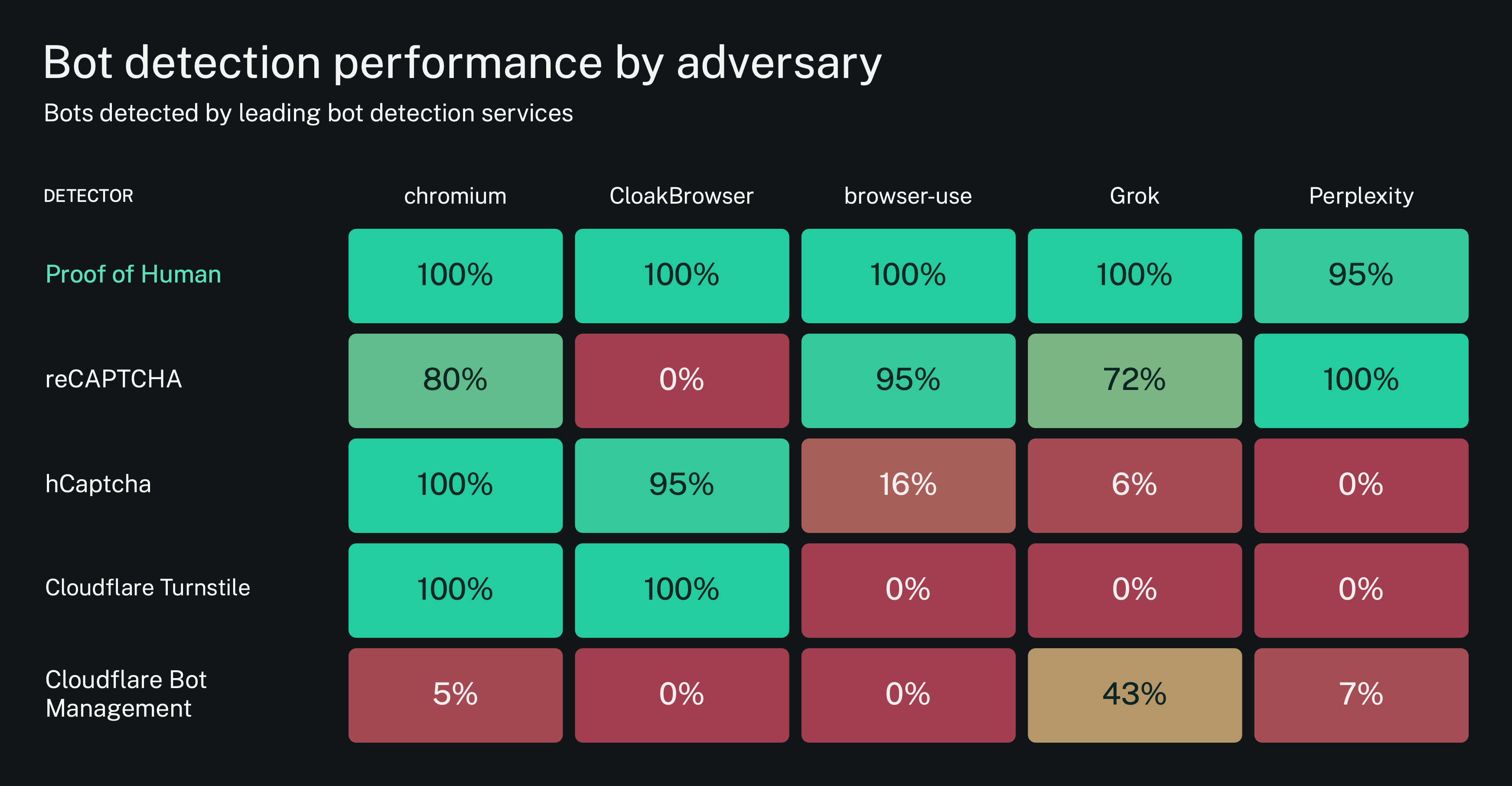
A newly updated 2026 benchmark evaluates the effectiveness of major bot detection systems, including Proof of Human, Google reCAPTCHA v3, hCaptcha, and Cloudflare solutions, against modern AI browsing agents. The comprehensive study tests these security tools against both scripted and stealth browsers to determine their current viability in distinguishing human users from advanced automated threats.
Comments2026-10-20

MiniMax M3.1 Flash
2026-10-20MiniMax has officially launched its next-generation M3.1 Flash model. The new AI delivers major performance upgrades for agentic tasks, coding, computer use, and cybersecurity. Additionally, it significantly improves efficiency by making online inference nearly three times faster and reducing usage costs by 70%.
Comments