AI Tech Developments News Past 24 Hours June 2026
Artificial intelligence evolves so quickly that a single day can bring several major announcements. This section follows AI developments in a past-24-hours format, highlighting what changed around June 2026.
Typical stories include new language and image model releases, benchmark results, AI agents and developer tools, funding rounds for AI startups, chip supply news, and regulatory decisions affecting AI companies.
Tracking AI day by day helps readers separate meaningful progress from hype. Developers, product teams, investors, and policymakers use this coverage to keep up with a field that rarely slows down.
2026-07-04

Open-source large language models are rapidly improving their price-to-performance ratio, becoming faster and cheaper for enterprise deployment. This trend provides businesses with a highly competitive and accessible alternative to expensive proprietary AI systems.
Comments
Leanstral 1.5: Proof abundance for all
2026-07-04Leanstral has released version 1.5 of its enterprise AI platform, offering advanced tools to customize, fine-tune, and deploy open models. The update enables organizations to build and scale AI assistants, autonomous agents, and multimodal systems tailored to their specific operational needs. This latest release aims to solidify the platform's position as a powerful AI solution for corporate environments.
Comments
A newly reported bug has revealed a potential session and cache leakage issue involving an AI agent. Despite strict authentication to a secure Enterprise workspace, the agent unexpectedly began discussing an unrelated consumer Minecraft project from another user's session. This cross-account contamination highlights critical vulnerabilities in data isolation and raises privacy concerns for enterprise environments.
Comments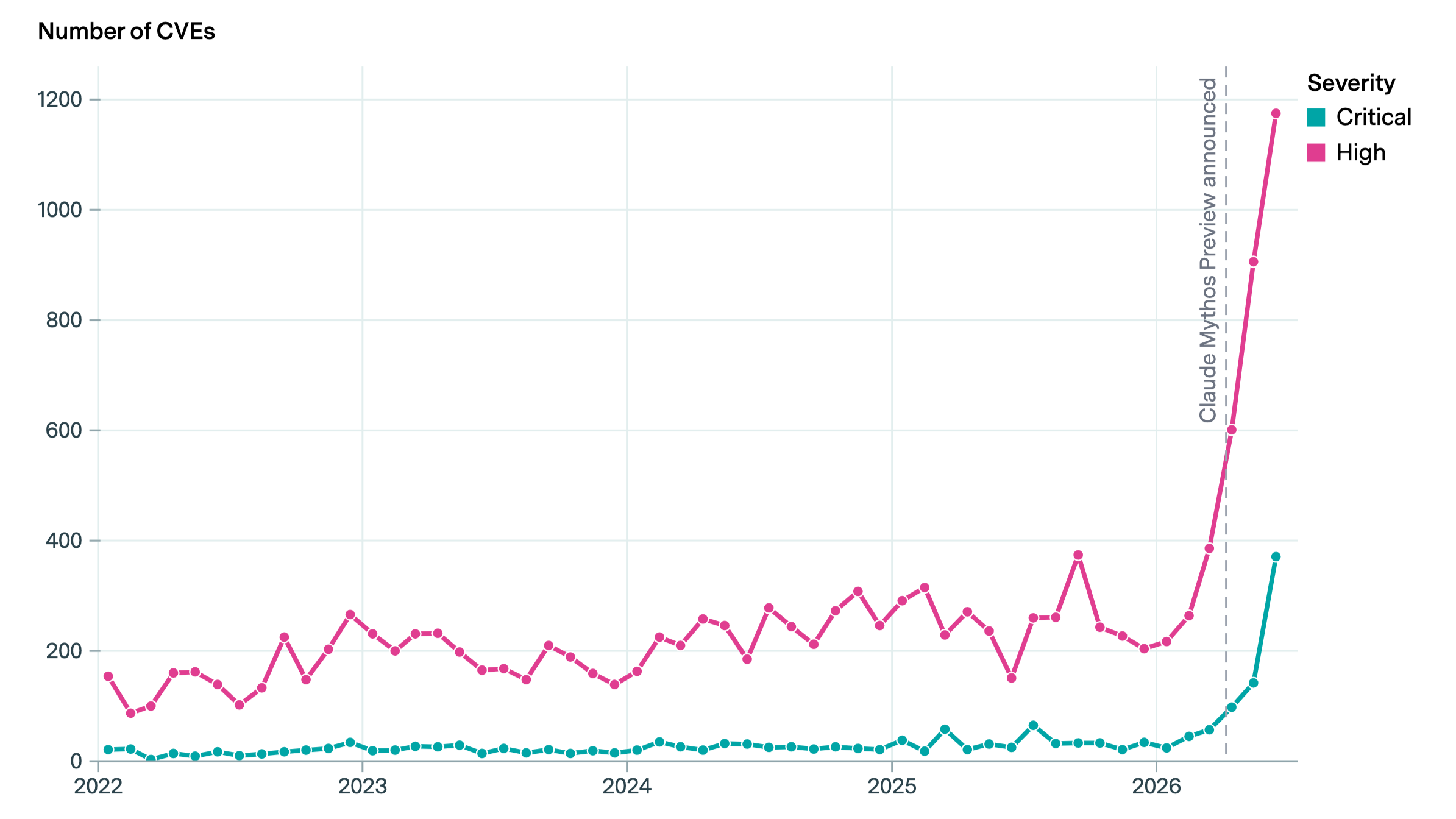
High- and critical-severity vulnerability disclosures surged to approximately 1,300 in June 2026, marking a 3.5-fold increase over previous monthly records. An Epoch AI analysis indicates this spike coincided directly with Anthropic's Project Glasswing and the release of Claude Mythos Preview.
Comments
Better Models: Worse Tools
2026-07-04A recent analysis highlights an aggravating regression in newer Claude models regarding their ability to reliably execute tool calls. Despite overall improvements in general intelligence and reasoning, this specific capability has significantly declined. This downgrade is causing major frustrations for developers who depend on the AI for consistent external integrations.
CommentsOdin, Wikipedia and engagement farming
2026-07-04A debate over Wikipedia's strict notability and sourcing policies has erupted following disputes over the inclusion of articles for tech projects like the Odin programming language. While critics argue that firsthand confirmations from founders are sufficient for niche software, Wikipedia defenders maintain that enforcing independent secondary sources is crucial to prevent spam, fake personas, and AI-driven engagement farming in a low-trust internet environment.
CommentsAgentic coding notes
2026-07-04A recent discussion highlights how rigorous hardware testing methodologies, such as heavy fuzzing and property-based testing instead of traditional unit tests, can be successfully applied to modern software development. Participants emphasize that skills in measurement and experimental design, traditionally cultivated in chip companies, are becoming increasingly valuable for evaluating and guiding AI coding agents. The conversation also explores how integrating AI tools with robust feedback loops enables autonomous usability testing and self-correction in software projects.
Comments
UC Berkeley scientist Julie Elie won the 2026 Coller-Dolittle Prize and $100,000 for using machine learning to decode the vocalizations of zebra finches. She identified and mapped the meanings of 11 core bird calls, an achievement judges praised as a major breakthrough in interspecies communication research.
Comments2026-07-03
Developer Jamesob has published a comprehensive GitHub repository detailing how to run state-of-the-art large language models on local hardware. The open-source guide compiles extensive knowledge and best practices for local LLM deployment, inviting community contributions to further expand the resource.
Comments
Protect your right to run local AI
2026-07-03Tech advocacy groups are urging users to protect their right to run artificial intelligence locally on their personal devices. Supporters are encouraged to sign a quick online petition and call their state representatives to defend this digital freedom.
CommentsImmich 3.0
2026-07-03The popular open-source self-hosted photo and video backup solution Immich has officially launched version 3.0, introducing significant enhancements to performance, machine learning features, and media management tools. This major milestone release provides users with a much more streamlined and robust experience for organizing and accessing their personal media libraries.
CommentsAlibaba is reportedly banning Anthropic's Claude Code from its workplace over concerns regarding potential backdoors and the broader security risks of hosted AI tools. This decision highlights growing industry anxieties that feeding proprietary code into remote models exposes sensitive intellectual property to espionage, data breaches, and supply chain attacks, prompting organizations to reevaluate their reliance on third-party AI providers.
CommentsDevelopers using the open-source tool pxpipe have achieved a 60 percent reduction in token usage and costs for the Fable 5 model by converting text context into images. Instead of feeding raw code directly to the AI, the application renders the text visually and relies on the model's optical character recognition capabilities to process the context.
Comments2026-07-02
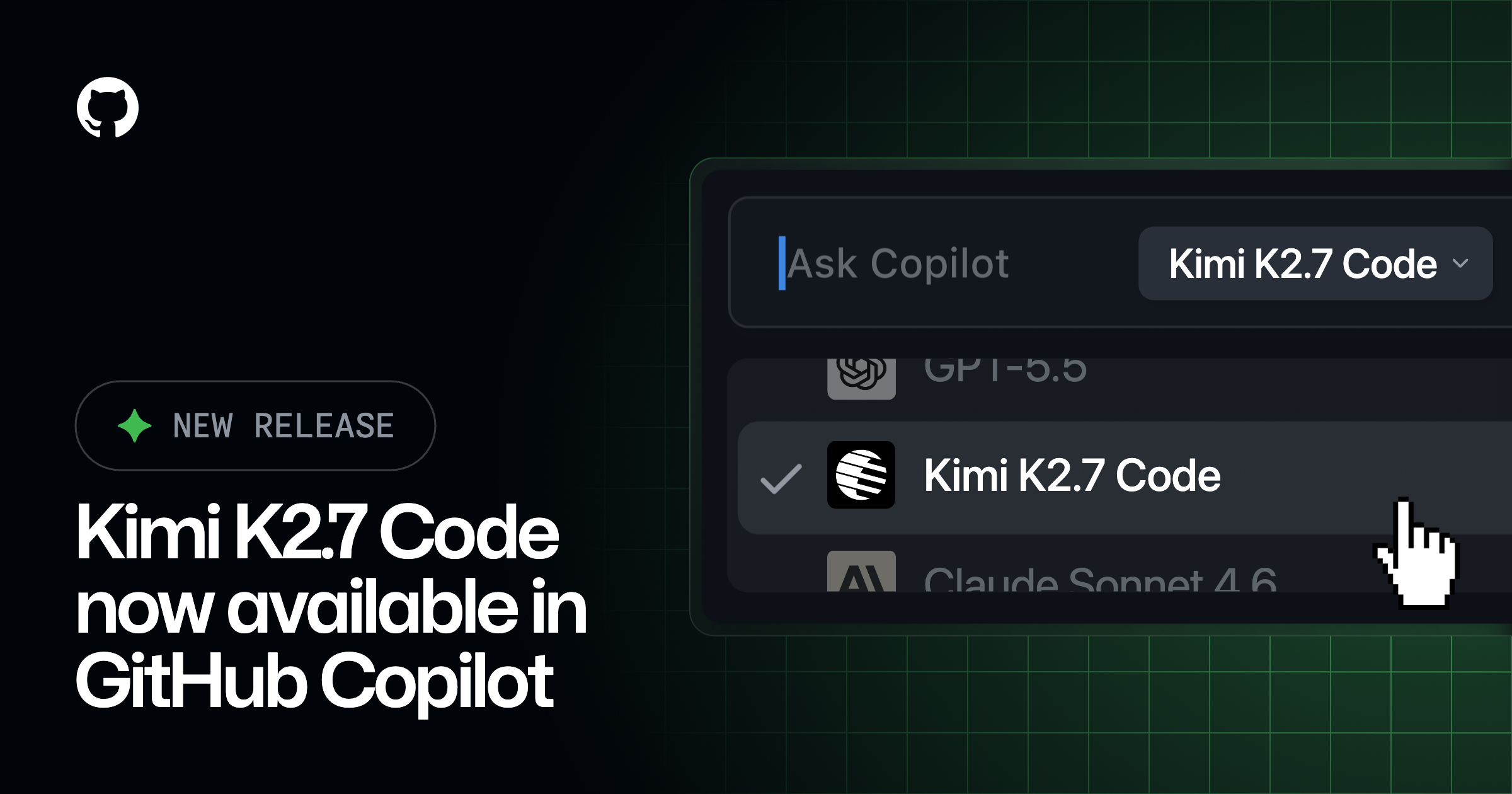
Kimi K2.7 Code is now generally available in GitHub Copilot, expanding the AI tools available to developers. This marks a significant milestone as it is the first open-weight model offered as a selectable option within the Copilot model picker.
CommentsReaders are debating the efficacy of a short leash micromanagement approach for AI coding, with some arguing that developers should instead engage in nuanced, high-level design discussions with advanced models. Critics of this collaborative approach counter that large language models lack true introspection and merely hallucinate post-hoc explanations for their outputs. Consequently, the conversation shifts into a broader philosophical debate comparing the AI's generated reasoning to human consciousness and our own evolutionary post-hoc justifications.
Comments
Zero-Knowledge Proof libraries have been open-sourced to enhance privacy in digital age verification systems. This technology release builds upon a partnership with Sparkasse to support age assurance compliance across the European Union. Making these cryptographic tools publicly available will empower developers to build more secure age verification solutions.
CommentsJapan's highest court has ruled that artificial intelligence cannot be named as an inventor on patent applications, affirming that AI is a tool lacking legal ownership rights. The ruling has sparked broader reader debates regarding the economic utility of intellectual property laws, weighing whether patents genuinely incentivize innovation in high-cost sectors like pharmaceuticals or simply protect corporate monopolies.
CommentsA new MIT-licensed open-source tool called Claude-real-video enables large language models to process and analyze video content entirely locally. By extracting scene-aware, deduplicated frames and combining them with transcripts from local files or URLs, the project allows developers to seamlessly integrate advanced video understanding into their AI workflows.
CommentsResearchers have introduced Senior SWE-Bench, a new open-source benchmark designed to evaluate AI coding agents using the complex, real-world tasks typically assigned to senior software engineers. By testing models on industry-level work rather than basic exercises, the benchmark aims to provide a more accurate assessment of their practical engineering capabilities.
Comments
The fall of the theorem economy
2026-07-02This news piece examines how artificial intelligence could severely disrupt the academic economics of mathematical research by automating the creation and publication of new proofs. While AI might effectively destroy the traditional career incentives and prestige structures surrounding the theorem economy, it will barely alter the core practice of the discipline. Ultimately, the fundamental progress and exploration of mathematics itself are expected to remain largely unaffected by this technological shift.
Comments
CursorBench 3.1
2026-07-02Cursor has published the latest evaluation results for CursorBench 3.2, comparing the coding performance of the various AI models evaluated within its platform. The benchmark offers developers a detailed look at how different underlying models handle real-world programming tasks.
Comments2026-07-01

Addressing frequent inquiries from aspiring developers, the author outlines the core technical skills required to become a hireable graphics programmer. The post also briefly addresses the current state of LLMs, expressing skepticism about whether modern machine learning will drastically change the foundational requirements of the role.
Comments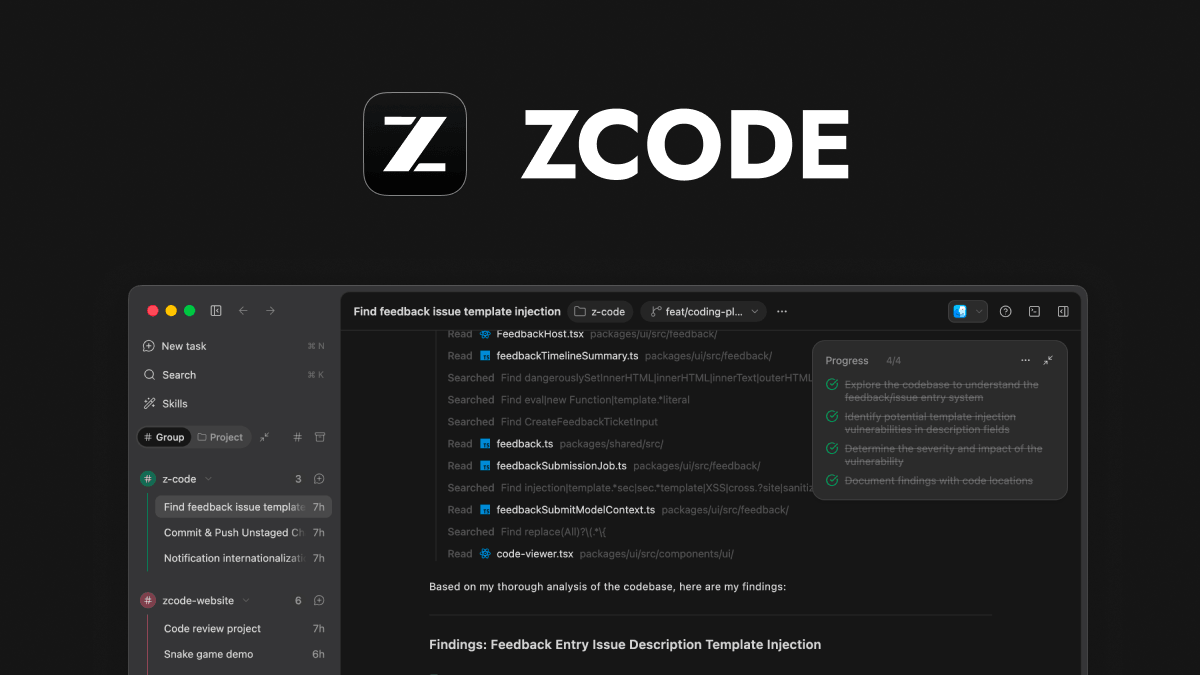
ZCode – Harness for GLM-5.2
2026-07-01ZCode has launched a new harness for the GLM-5.2 AI model that seamlessly integrates advanced AI agents into developers' existing toolsets. The platform is designed to streamline the entire software development lifecycle, enabling teams to plan, code, review, and deploy applications without friction.
CommentsAsk HN: Who is hiring? (July 2026)
2026-07-01The July 2026 Hacker News hiring thread features St. Jude Children's Research Hospital recruiting senior Rust engineers to rebuild its genomics infrastructure. Additionally, a stealth YC S26 robotics startup in Palo Alto is seeking lead engineers to develop wearable robotic devices for human endurance. Finally, Talk Machine is hiring remote founding engineers to build a consumer voice and AI email product.
CommentsA July 2026 Hacker News hiring thread prompted multiple senior software engineers to share detailed pitches seeking new full-time, contract, or remote roles. These candidates highlighted their extensive expertise in full-stack development, applied AI, and distributed systems, showcasing their technical stacks and recent deployments to attract potential employers.
Comments
The open-source game engine Godot has updated its contribution guidelines to strictly ban AI-generated code submissions. This policy change aims to protect maintainers from being overwhelmed by low-quality code. Ultimately, the new rules are designed to prevent the project's codebase from drowning in AI slop.
Comments2026-06-30

A developer inspecting Claude Code for privacy reasons discovered that the tool secretly embeds hidden steganographic markers within its system prompts. These undisclosed tags are dynamically generated based on the API base URL and timezone, raising concerns about hidden tracking in AI coding assistants.
Comments
Claude Science
2026-06-30Claude Science is a new AI workbench that automates data analysis and pipeline assembly for scientific research. By tracing every step of the process like a skilled scientist, the platform allows researchers to spend less time on technical integration and more time on the science.
Comments
LongCat-2.0 is a new large-scale Mixture of Experts model featuring 1.6 trillion total parameters and 48 billion active parameters. Notably, the entire training process for this massive artificial intelligence system was successfully completed using domestically produced chips.
Comments
Nano Banana 2 Lite
2026-06-30Google DeepMind has introduced the Nano Banana 2 Lite, adding to its growing lineup of artificial intelligence models and tools. Specific details about the project's capabilities and intended applications have not yet been revealed.
Comments