AI Tech Developments News Past 24 Hours June 2026
Artificial intelligence evolves so quickly that a single day can bring several major announcements. This section follows AI developments in a past-24-hours format, highlighting what changed around June 2026.
Typical stories include new language and image model releases, benchmark results, AI agents and developer tools, funding rounds for AI startups, chip supply news, and regulatory decisions affecting AI companies.
Tracking AI day by day helps readers separate meaningful progress from hype. Developers, product teams, investors, and policymakers use this coverage to keep up with a field that rarely slows down.
2026-06-28

An author shares their experience using Claude Code to analyze an MRI and obtain a second medical opinion on a shoulder injury. The experiment provides a fascinating glimpse into the future of AI in healthcare. However, the author cautions that it is currently difficult to have full confidence in the results.
CommentsUsers have submitted an open feature request for OpenAI Codex to prevent the AI agent from reading or transmitting sensitive files to the model. The proposed solution involves implementing both repository and global level ignore files to explicitly block confidential data. This issue remains unresolved as developers seek stricter data privacy controls for the coding assistant.
Comments
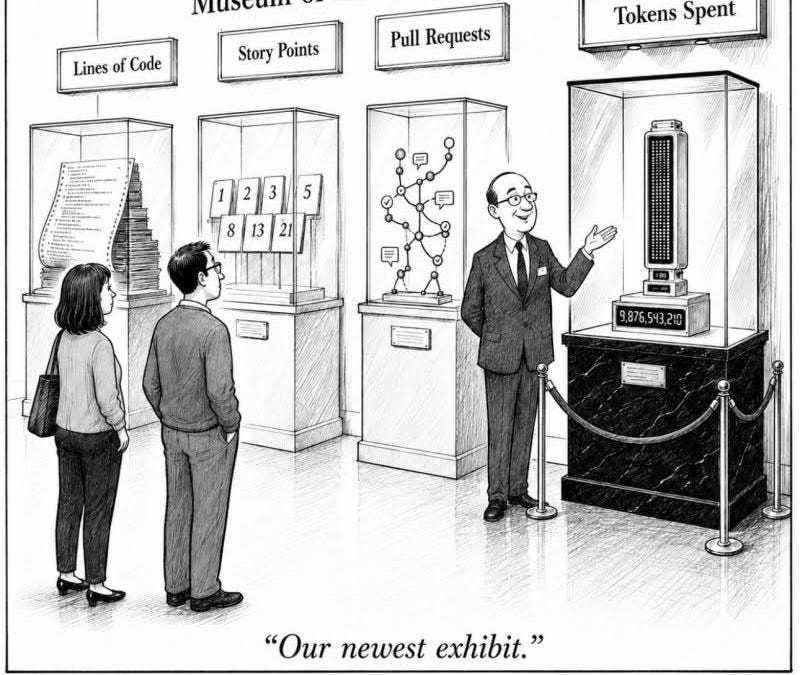
Despite recent claims that the AI industry is moving past the obsession with massive context windows, the practice of tokenmaxxing remains highly relevant. Developers continue to push the boundaries of large language model token limits, proving that reports of this trend's death are greatly exaggerated.
CommentsAMD Strix Halo RDMA Cluster Setup Guide
2026-06-28A new GitHub repository provides a setup guide for configuring an RDMA cluster using AMD's Strix Halo hardware to optimize vLLM toolboxes. Developers interested in high-performance AI inference are encouraged to visit the repository and contribute to its ongoing development.
Comments
A recent article argues that Robin Williams' deeply empathetic performance in Good Will Hunting serves as the ideal antidote to AI-generated content and digital noise. While readers debate whether authentic emotion requires direct lived experience or can be skillfully channeled through acting, the discussion highlights the irreplaceable value of genuine human empathy in storytelling. Ultimately, the conversation underscores that the profound emotional resonance of real human struggle cannot be replicated by artificial intelligence.
CommentsA new open-source command-line tool called Wayfinder Router has been released to deterministically route queries between local and hosted large language models. Developed by GitHub user itsthelore, the utility provides a simple way for developers to manage and distribute AI workloads across different computing environments.
Comments2026-06-27
DeepSeek continues to lead the AI research community by publishing detailed papers on accelerating large language model inference through speculative decoding and multi-token prediction. While other labs like Google are also developing these architectures, developers emphasize that bundling the speculative draft models directly with the main model significantly streamlines deployment. This integrated approach reduces layer duplication and allows tools like llama.cpp to achieve much higher token generation speeds.
Comments
The U.S. government has permitted Anthropic to release the Mythos AI model exclusively to trusted U.S. organizations. This clearance arrives on the same day as a simultaneous limited release of a new model from rival AI developer OpenAI.
Comments
AI learns the “dark art” of RFIC design
2026-06-27Artificial intelligence is drastically reducing the development timelines for radio frequency integrated circuits. By using reinforcement learning and diffusion models, the technology generates highly efficient and unconventional circuit layouts. This breakthrough is expected to supercharge the advancement of next-generation applications like 5G networks and radar systems.
Comments
Asian AI startups are launching new models with Mythos-like capabilities that bypass the threat of US export bans. As a result, American AI labs risk permanently losing their foothold in the massive Asian market to these unrestricted domestic alternatives.
Comments
New artificial intelligence systems are now capable of solving complex mathematical problems, proving theorems, and assisting with academic research. As these advanced tools continue to evolve, mathematicians are being forced to fundamentally rethink their traditional roles and contributions to the field.
Comments2026-06-26

Despite initially promising a hands-off approach to artificial intelligence, the Trump administration is increasing its oversight of the industry. As part of this shift, the U.S. government will now directly control and decide who is granted access to the advanced GPT-5.6 model.
CommentsA new analysis uses benchmark data to evaluate the ongoing performance gap between open-weight and closed-source large language models. Researchers are tracking these metrics to understand how quickly open-source capabilities are currently advancing. Ultimately, the study aims to predict exactly when an open-source model will finally match the capabilities of today's frontier proprietary models.
CommentsAlthough the author of an experiment where 2,000 people tried to hack an AI assistant via prompt injection concluded that such attacks are harder than expected, critics argue the findings are misleading. Commenters point out that an overly defensive AI might be rendered completely unusable in practice, and note the test pool likely lacked the seasoned experts needed to truly evaluate the system's security.
CommentsWorkweave has introduced an AI model router that automatically directs prompts to the optimal model for agentic systems in under 50 milliseconds. Compatible with platforms like Claude, Codex, and Cursor, the tool requires only a simple endpoint change to integrate and can reduce overall API costs by 40 to 70 percent.
CommentsReaders discussing the utility of nomograms highlight Fagan's nomogram for Bayes' theorem as a powerful tool for visually representing mathematical relations and making machine learning classifiers more explainable. Commenters praise these analog calculation methods for providing an intuitive physical understanding of complex probabilities that often surpasses modern digital visualizations. The conversation also expands to other historical computational aids like the Smith chart and recommends online resources exploring pre-computer mathematical tools.
CommentsApple plans to skip its high-end M6 Mac chips in favor of an AI-optimized M7 lineup designed to make local on-device language model inference highly efficient. While data center accelerators will still dominate heavy workloads, powerful consumer hardware paired with specialized software architectures could handle most everyday tasks without costly cloud subscriptions. This strategic pivot highlights Apple's intent to leverage its unique PC market position to challenge the subscription-based models of frontier AI labs.
Comments2026-06-25

Apple raises prices of MacBooks, iPads
2026-06-25Apple has raised the prices of its MacBooks and iPads due to surging memory and storage chip costs. The company stated it can no longer absorb these expenses, which are being driven by the AI industry's massive datacenter expansion.
CommentsAnthropic has accused Alibaba and associated Chinese resellers of illicitly extracting Claude's capabilities to sell heavily discounted AI tokens to users blocked by regional restrictions. These operators bypass payment and identity barriers using bot networks and fraud, while subsidizing their deeply discounted rates by harvesting and selling model reasoning traces to domestic AI labs for training data.
Comments
NVIDIA has introduced a novel cooling design for its latest AI servers that operates at 45 degrees Celsius. This counterintuitive approach uses coolant warmer than a hot tub to reduce data center water consumption to near zero. Ultimately, this strategy marks one of the most significant efficiency leaps in the history of data center operations.
CommentsThe Zig programming language community is enthusiastically praising a comprehensive devlog detailing new bitCast semantics and LLVM back end improvements. Readers expressed strong appreciation for the rigorous technical depth and ongoing language refinements, contrasting the high-quality post favorably against the low-effort and AI-generated content often found on tech forums.
Comments
GLM-5.2 is a step change for open agents
2026-06-25The release of GLM-5.2 marks a significant step change for open-source AI agents by crossing a critical capability threshold. This advancement represents a major leap forward in the overall performance and autonomy of open AI systems.
CommentsOpenKnowledge is a new open-source project offering an AI-first alternative to popular note-taking platforms like Obsidian and Notion. Functioning as an AI-native markdown IDE and LLM wiki, it integrates artificial intelligence directly into knowledge management and is currently available for development on GitHub.
Comments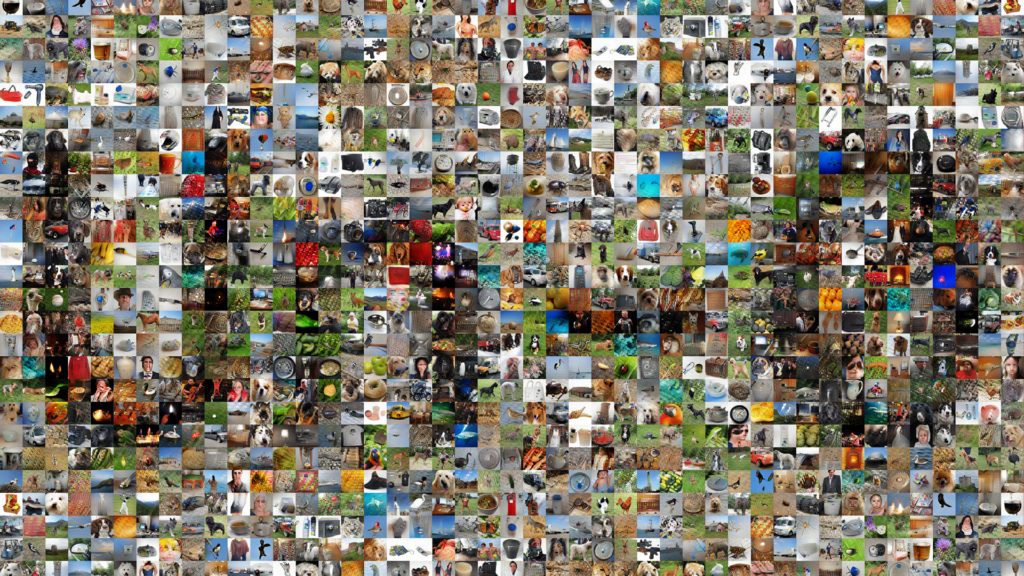
Researchers have introduced Un-0, an open-source image generator powered by a simulated network of coupled oscillators that achieves an FID score of 6.74 on the ImageNet 64x64 dataset. This performance matches the early benchmarks of leading conventional image generation methods, with all model weights and training code now publicly available.
CommentsFord is rehiring experienced human inspectors after its AI-driven quality control initiatives encountered significant issues, highlighting the limitations of relying solely on artificial intelligence. This costly misstep reflects a broader industry realization that blindly adopting AI to meet arbitrary usage metrics often compromises quality, proving that the technology is a supplementary tool rather than a magical replacement for human expertise.
Comments
Mixing Visual and Textual Code
2026-06-25A new arXiv paper introduces a novel framework that combines visual and textual code to enhance software development and AI code generation. By integrating visual diagrams with traditional text-based programming, the approach leverages multimodal machine learning to improve code comprehension. This innovation could lead to more intuitive programming environments and significantly streamline the workflow for developers.
Comments2026-06-24

OpenAI has unveiled Jalapeño, its first custom-designed processor built in collaboration with Broadcom. The new chip is specifically engineered to optimize the unique computational demands of the company's artificial intelligence inference systems.
Comments
RubyLLM is a new unified Ruby framework that connects developers to all major AI providers through a single interface. The platform enables the rapid development of chatbots, AI agents, RAG applications, and a wide variety of custom AI workflows.
Comments
Computer use in Gemini 3.5 Flash
2026-06-24The new Gemini 3.5 Flash model now includes a built-in computer use tool that allows the AI to directly interact with and control digital environments. This native capability enables developers to build more autonomous agents capable of executing complex, multi-step computer tasks.
Comments
Krea has released Krea 2, a state-of-the-art 12-billion parameter text-to-image model with open weights designed for creative exploration. This release provides developers with access to two distinct variants, K2 Raw and K2 Turbo, for advanced AI image generation.
Comments