AI Tech Developments News Past 24 Hours June 2026
Artificial intelligence evolves so quickly that a single day can bring several major announcements. This section follows AI developments in a past-24-hours format, highlighting what changed around June 2026.
Typical stories include new language and image model releases, benchmark results, AI agents and developer tools, funding rounds for AI startups, chip supply news, and regulatory decisions affecting AI companies.
Tracking AI day by day helps readers separate meaningful progress from hype. Developers, product teams, investors, and policymakers use this coverage to keep up with a field that rarely slows down.
2026-05-08

Cloudflare is cutting approximately 20% of its workforce to restructure operations and prioritize the adoption of artificial intelligence tools. Alongside the layoffs, the company announced that its second-quarter revenue forecast fell slightly below Wall Street expectations.
Comments
Artificial intelligence is disrupting traditional software vulnerability disclosure and patching cultures within the cybersecurity industry. Although researchers still follow standard procedures like rapidly and openly fixing flaws such as the recent Copy Fail vulnerability in Linux, AI is fundamentally altering how these security issues are discovered and managed.
Comments
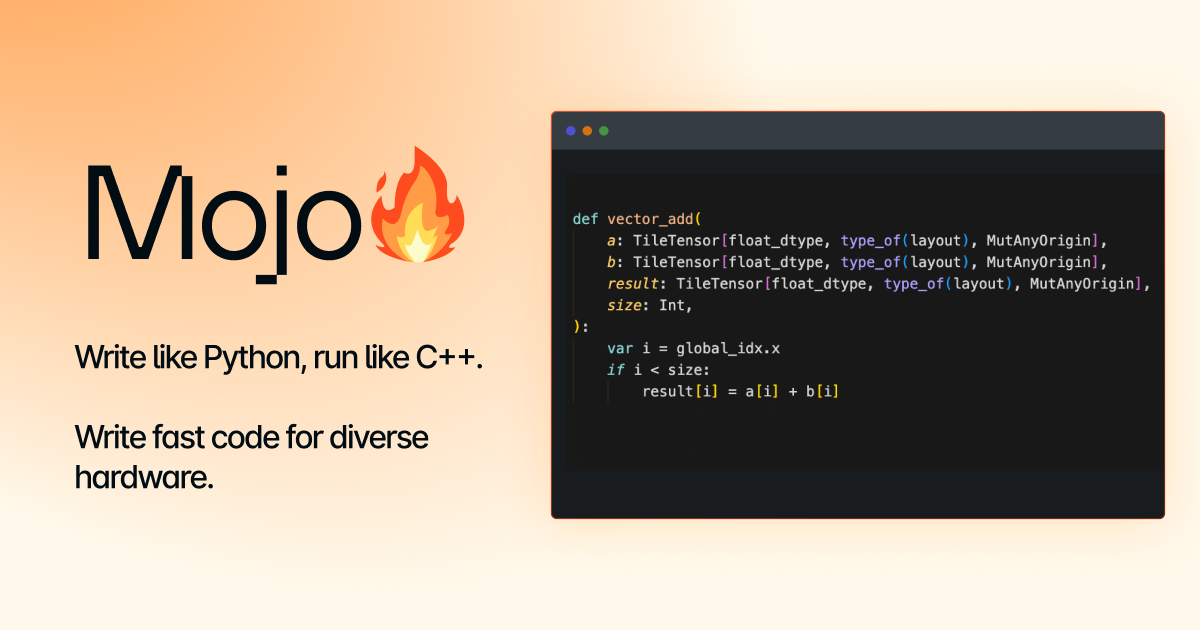
Mojo 1.0 Beta
2026-05-08The Mojo programming language has officially reached its 1.0 Beta milestone, advancing its mission to combine Python's ease of use with C-level performance for artificial intelligence. This release delivers increased stability and new capabilities to help developers efficiently build and deploy complex machine learning models. The update signals that Mojo is rapidly maturing and preparing for widespread adoption in the competitive AI landscape.
CommentsFalse rumors regarding the death or severe illness of the author, Cliff, recently circulated online, only to be debunked as a bizarre misunderstanding. The situation sparked a wave of humorous and bewildered reactions in the community discussion thread. Readers playfully compared the false alarm to a Monty Python sketch and joked about artificial intelligence generating the fake condolences.
Comments
New details have emerged on how the Claude Mythos Preview is being used to harden the Firefox browser through advanced agentic harnesses. These AI agents can now autonomously identify and reproduce genuine software bugs while successfully dismissing false positives.
Comments2026-05-07
Dirty Frag: Universal Linux LPE
2026-05-07A newly disclosed Universal Linux Local Privilege Escalation vulnerability named Dirty Frag shares the same root cause in the kernel IPsec module as the previously discovered Copy Fail bug. The overlapping flaws have sparked a debate among security researchers about whether relying heavily on AI for vulnerability discovery hinders the manual code exploration needed to uncover related issues.
Comments
Reliable AI agents handling complex tasks require deterministic control flow encoded directly in software rather than relying on increasingly elaborate prompt chains. Shifting the focus from complex prompting to structured software design will ultimately result in more stable and predictable agent performance.
Comments
AI slop is killing online communities
2026-05-07Online community managers are struggling to combat the influx of AI-generated content and deceptive bot accounts, which adds significant administrative and financial burdens. To protect their platforms, moderators are deploying rigorous verification methods, including third-party AI detection tools and manual authorship checks. Despite these measures, many community leaders fear that the endless battle against automated AI slop may eventually become unsustainable.
CommentsA new local inference engine for DeepSeek 4 Flash and PRO models has been introduced via the antirez/ds4 project. It allows users to run these advanced AI models locally across multiple hardware platforms by providing native support for Apple's Metal, Nvidia's CUDA, and AMD's ROCm.
Comments
Researchers have introduced Natural Language Autoencoders to translate the internal numerical computations of AI models like Claude into human-readable text. This breakthrough allows developers to observe the system's underlying thought processes, offering greater transparency into how these models generate their final word-based outputs.
CommentsProgramming Still Sucks
2026-05-07A recent tech commentary highlights the tiresome, repetitive questions programmers face from non-tech individuals about AI replacing their jobs. Through a brief social anecdote, the author illustrates how this specific inquiry has become an exhausting cliché, proving that the social annoyances and public misconceptions surrounding the programming profession remain unchanged.
CommentsGoogle has removed a privacy statement from the Chrome browser assuring users that its on-device AI features do not send data to company servers. This retraction has prompted immediate privacy concerns regarding how local AI interactions might still be transmitting user information to the cloud.
Comments
A new study introduces ProgramBench, a benchmark designed to evaluate whether large language models can reconstruct software programs entirely from scratch. The evaluation tests fundamental code logic and architecture comprehension rather than relying on simple pattern matching or partial code completion. Ultimately, this research provides critical insights into the true programming capabilities and structural limitations of current generative AI models.
CommentsAn author has published a guide detailing how to set up a diskless Linux boot using ZFS, iSCSI, and PXE to create a dedicated environment for testing AI models. This network-booted setup keeps local NVMe drives free for gaming and prevents Windows updates from breaking dual-boot configurations. Although remote booting introduces minor performance overhead, it provides a clean, isolated Linux workspace without the hassle of managing local partitions or easily lost USB drives.
CommentsTwo Home Affairs officials have been suspended after fabricated information, known as AI "hallucinations," was discovered in their work. This incident highlights the ongoing risks and accuracy challenges associated with relying on artificial intelligence for government administration.
Comments
Principles for agent-native CLIs
2026-05-07A new guide outlines the core principles for designing command-line interfaces optimized specifically for AI agents, prioritizing structured, predictable, and machine-readable outputs over human-centric interactions. This shift toward agent-native CLIs highlights the broader industry trend of adapting fundamental developer tools to enable seamless automation and autonomous system interactions.
Comments
Surging demand for artificial intelligence infrastructure has triggered unprecedented component shortages, leading to a severe collapse in consumer motherboard sales. Consequently, fewer people are buying individual PC parts or building new custom computers from scratch.
Comments2026-05-06
Appearing productive in the workplace
2026-05-06Artificial intelligence is creating an illusion of workplace productivity by generating output that mimics true expertise without actually possessing it. This discrepancy leads to two distinct types of failures that are fundamentally reshaping modern work environments.
CommentsSimon Willison recently joined the High Leverage podcast to discuss the evolving landscape of AI coding tools. He highlights the rapid convergence of informal vibe coding and autonomous agentic engineering, expressing concern that this shifting paradigm is merging faster than he would prefer.
Comments
Cloudflare has updated its platform so that AI agents can now autonomously create accounts, purchase domains, and deploy code. While humans can still grant permissions, the new automated workflow eliminates manual tasks like entering credit card details and copying API tokens.
CommentsMicron has begun shipping its massive 245TB 6600 ION data center SSD, underscoring the semiconductor industry's intense focus on enterprise AI infrastructure. This enterprise push coincides with rising consumer SSD prices, as manufacturers navigate constrained supply chains and prioritize profit margins by slow-walking production increases. While some fear an eventual overcapacity bust reminiscent of the dot-com era, others argue that the underlying demand for AI-driven silicon is a sustainable, long-term trend.
Comments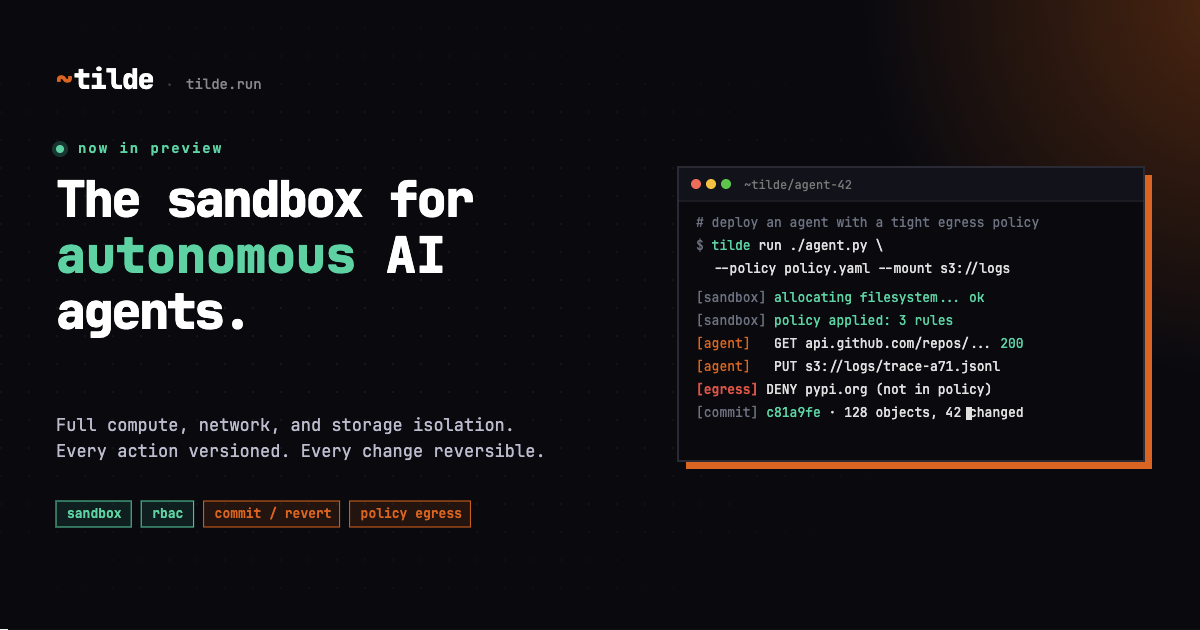
Tilde.run is a new AI agent sandbox that unifies GitHub, S3, and Drive into a single transactional, versioned filesystem to make data operations fully auditable. The platform provides comprehensive network logging and allows developers to roll back any execution with just one command.
Comments
Knitting bullshit
2026-05-06A recent analysis explores the persistent problem of AI language models generating fabricated and nonsensical information, a phenomenon described as knitting bullshit. Researchers are working to unravel the underlying mechanisms of these hallucinations to improve model accuracy. Ultimately, understanding these errors is crucial for developing more reliable and truthful artificial intelligence systems.
Comments
A Theory of Deep Learning
2026-05-06Researchers have finally developed a comprehensive theoretical framework that explains why deep learning models work so effectively. This breakthrough demystifies the inner workings of neural networks, shifting the field from empirical experimentation to a solid mathematical foundation for future artificial intelligence development.
Comments
A new technical deep dive explores the mathematical foundations of diffusion models by examining their integrals through the lens of flow maps. The article details how understanding these continuous flow processes can lead to more efficient training and inference for generative AI architectures. This analysis provides machine learning practitioners with crucial insights into the continuous-time dynamics of modern generative models.
Comments
Telus is using AI to alter the accents of its offshore call center agents in real time to reduce communication friction. The practice has sparked public backlash and criticism from labor groups who argue the technology is deceptive and requires mandatory disclosure. Meanwhile, Canadian competitors Rogers and Bell have confirmed they have no plans to implement similar voice-altering tools.
CommentsAnthropic has raised the usage limits for its AI model, Claude, and secured a new compute partnership with SpaceX. This collaboration will substantially increase the company's processing capacity in the near term.
Comments
Wiki Builder is a new open-source Claude Code plugin that streamlines the creation of LLM knowledge bases into a one-command workflow. Developers can simply point the AI agent at source materials to automatically generate structured wiki pages, indexes, and concept maps.
Comments2026-05-05

Google Chrome is silently downloading a 4 GB Gemini Nano AI model onto users' devices without consent, automatically re-downloading the file if it is manually deleted. A new article examines the legal and environmental implications of this practice, noting its massive scale and complete lack of user opt-out mechanisms.
Comments
Recent updates detail how Multi-Token Prediction drafters are significantly accelerating inference speeds for Gemma 4 models. By predicting multiple tokens simultaneously, this technique allows the AI to generate outputs up to three times faster. This optimization marks a major performance improvement for developers deploying these language models.
Comments