AI Tech Developments News Past 24 Hours June 2026
Artificial intelligence evolves so quickly that a single day can bring several major announcements. This section follows AI developments in a past-24-hours format, highlighting what changed around June 2026.
Typical stories include new language and image model releases, benchmark results, AI agents and developer tools, funding rounds for AI startups, chip supply news, and regulatory decisions affecting AI companies.
Tracking AI day by day helps readers separate meaningful progress from hype. Developers, product teams, investors, and policymakers use this coverage to keep up with a field that rarely slows down.
2026-04-15

Modern cybersecurity now resembles a computational proof of work model as defenders battle automated AI-driven threats. This new paradigm forces security teams to continuously outspend attackers in terms of processing tokens, raising critical concerns about the long-term sustainability of cyber defenses.
Comments
Cal.com is going closed source
2026-04-15After five years as an open-source project, Cal.com is transitioning to a closed-source model to better protect customer data. The company cites rising AI-driven security risks and increased vulnerability discoveries as the primary reasons for this shift.
Comments
Developed by Saffron Health, Libretto is a new AI toolkit designed to help developers build deterministic and reliable browser automations. The project addresses the common unpredictability of AI-driven web interactions by providing a highly stable framework for automated tasks.
CommentsA New York federal court has ruled that conversations with AI chatbots do not qualify for attorney-client privilege because sharing data with a third-party service eliminates the expectation of confidentiality. The decision relied on the terms of service to classify the interactions as discoverable personal notes rather than protected legal communications. This ruling highlights the growing legal gap between consumer expectations of digital privacy and the realities of using artificial intelligence tools.
CommentsAn article claiming Google's Gemma 4 runs natively on the iPhone with full offline inference has been heavily criticized by readers for lacking technical benchmarks. Critics argue the publication is entirely AI-generated and fails to mention significant hardware limitations like severe battery drain and thermal throttling. Ultimately, the backlash highlights growing frustrations with AI-written tech journalism that prioritizes catchy headlines over factual substance.
CommentsTech professionals are debating how large language models will reshape the software engineering profession and the broader job market. While some argue the role will transition from writing code to directing and verifying AI outputs, others warn that advanced models could eventually replace human engineers entirely. The discussion ultimately centers on the idea that future job security will rely heavily on human accountability and domain expertise rather than mere task execution.
CommentsAsk HN: Who is using OpenClaw?
2026-04-15Hacker News users are sharing diverse use cases for OpenClaw, an AI assistant integrated with tools like Obsidian and Telegram for daily life administration and automated memory tracking. While proponents praise the platform for preserving generational family histories and streamlining personal organization, critics argue that bots documenting intimate conversations feels invasive. The discussion ultimately highlights an ongoing debate over the ethical balance between leveraging AI for valuable archival purposes and preserving authentic human connections.
Comments2026-04-14

Chrome has introduced a new Skills feature that transforms users' favorite AI prompts into one-click tools for instant execution. This update allows users to easily discover, save, remix, and repeat complex AI workflows directly within the browser.
Comments
Write less code, be more responsible
2026-04-14This opinion piece examines the dual impact of AI-assisted programming, highlighting how automated tools allow developers to write less code while increasing their accountability for the final product. The author emphasizes that engineers must maintain strict oversight over code quality, security, and system architecture to responsibly manage AI-generated outputs.
CommentsLangAlpha is a new open-source project that adapts the AI capabilities of Claude Code specifically for the financial markets. Designed to function as a dedicated AI agent for Wall Street, the tool aims to assist with complex financial operations and data analysis. Developers can currently contribute to its ongoing development via the project's GitHub repository.
CommentsA new open-source, full-stack Python web framework called Plain has been introduced on Hacker News to streamline application development. Uniquely designed to support both human developers and AI agents, the project is now available for community contribution via GitHub.
CommentsPractitioners treating multi-agent software development as a distributed systems problem emphasize using sequential pipelines with strict verification gates to ensure overall reliability. By applying deterministic checks and quality boundaries between planning, designing, and coding stages, developers can effectively manage the inherent unpredictability of large language models. This approach transforms unreliable individual agents into a coordinated protocol that consistently preserves user intent across different artifact representations.
Comments
OpenAI is expanding its Trusted Access for Cyber program by granting vetted defenders access to its newly introduced GPT-5.4-Cyber model. The initiative also includes strengthened safety protocols to address the rapidly evolving capabilities of artificial intelligence in the cybersecurity landscape.
CommentsGAIA is a new open-source framework that enables developers to build and run AI agents directly on local hardware. Supporting both Python and C++, the tool provides a flexible foundation for creating localized artificial intelligence applications specifically optimized for AMD systems.
Comments2026-04-13

Building a CLI for all of Cloudflare
2026-04-13Cloudflare has introduced a new unified command-line interface called cf to streamline interactions with its nearly 3,000 API operations for both developers and AI agents. The release also includes Local Explorer, a new utility designed to help users debug local data.
Comments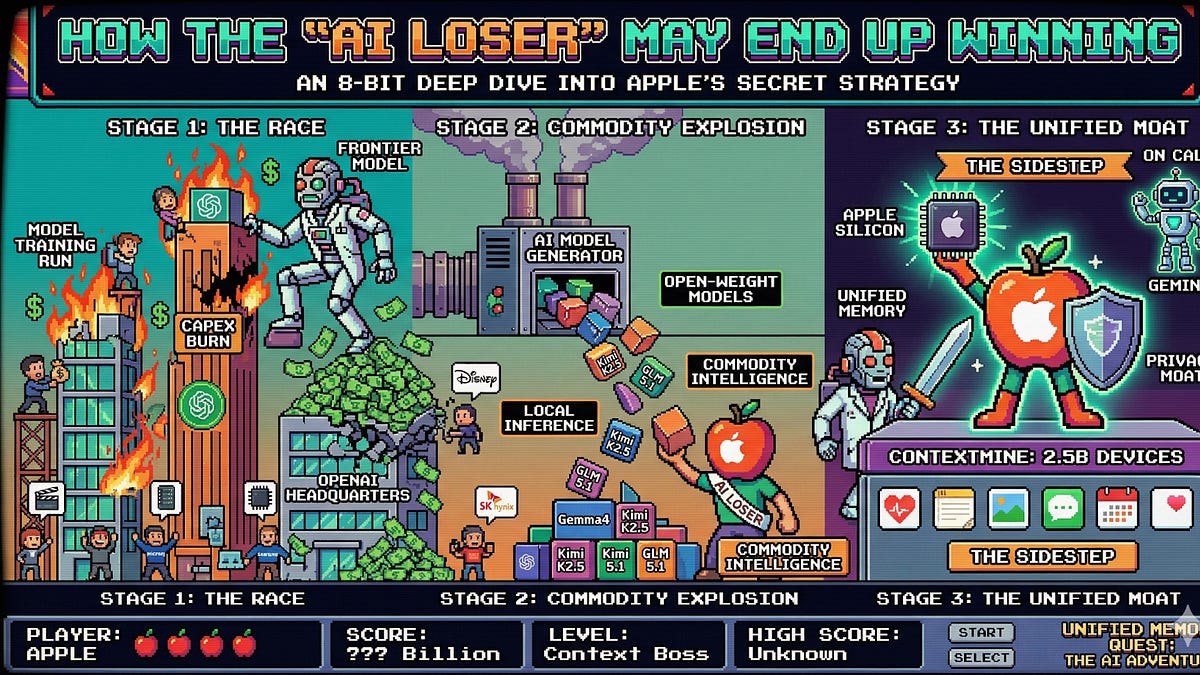
Despite current perceptions of Apple as an AI loser, the company's delayed entry into the generative AI race may actually provide a unique long-term strategic advantage. By leveraging its closed ecosystem and hardware integration to build an accidental competitive moat, Apple is positioned to ultimately win the consumer AI market.
CommentsMicrosoft is not removing its Copilot AI assistant from Windows 11, but is instead simply renaming the feature. Reader discussions surrounding the update largely diverge into broader debates about the overall user experience of Windows versus Linux for gaming. Many users express frustration with forced Windows integrations and advocate for alternative setups, such as dual-booting with Linux or using cloud gaming services.
CommentsA new benchmark called N-Day-Bench evaluates the ability of large language models to identify real-world vulnerabilities within actual codebases. The framework utilizes strict GitHub advisories and OpenRouter-backed models to rigorously test AI-driven security scanning capabilities.
CommentsReaders testing Gemma 4 locally report that while the model delivers exceptional inference speed and impressive one-shot coding performance rivaling top-tier proprietary AI, it struggles significantly with agentic tasks, tool use, and large context windows. Although early benchmarks were skewed by tokenizer and tool invocation bugs, corrected tests show the dense 31B variant actually outperforms the faster MoE model in overall quality. Ultimately, users praise its capabilities for specific local coding tasks on Apple Silicon but note that its limitations in iterative reasoning and context scaling prevent it from being a flawless autonomous coding assistant.
CommentsMichigan lawmakers withdrew proposed digital age legislation following backlash over its handling of consumer data privacy. Critics argued the bills relied on flawed opt-out mechanisms rather than requiring strict opt-in permission for data sales. The controversy highlights broader frustrations with tech companies using delayed consent models to harvest user data for AI training without explicit approval.
CommentsThe final installment of a tech series explores AI safety and alignment, arguing that trusting commercial or government entities to align AI systems with individual goals is inherently dangerous. Reader discussions highlight the adversarial nature of these power dynamics, emphasizing how concentrated institutional power actively undermines natural human cooperation to prioritize corporate and governmental interests.
Comments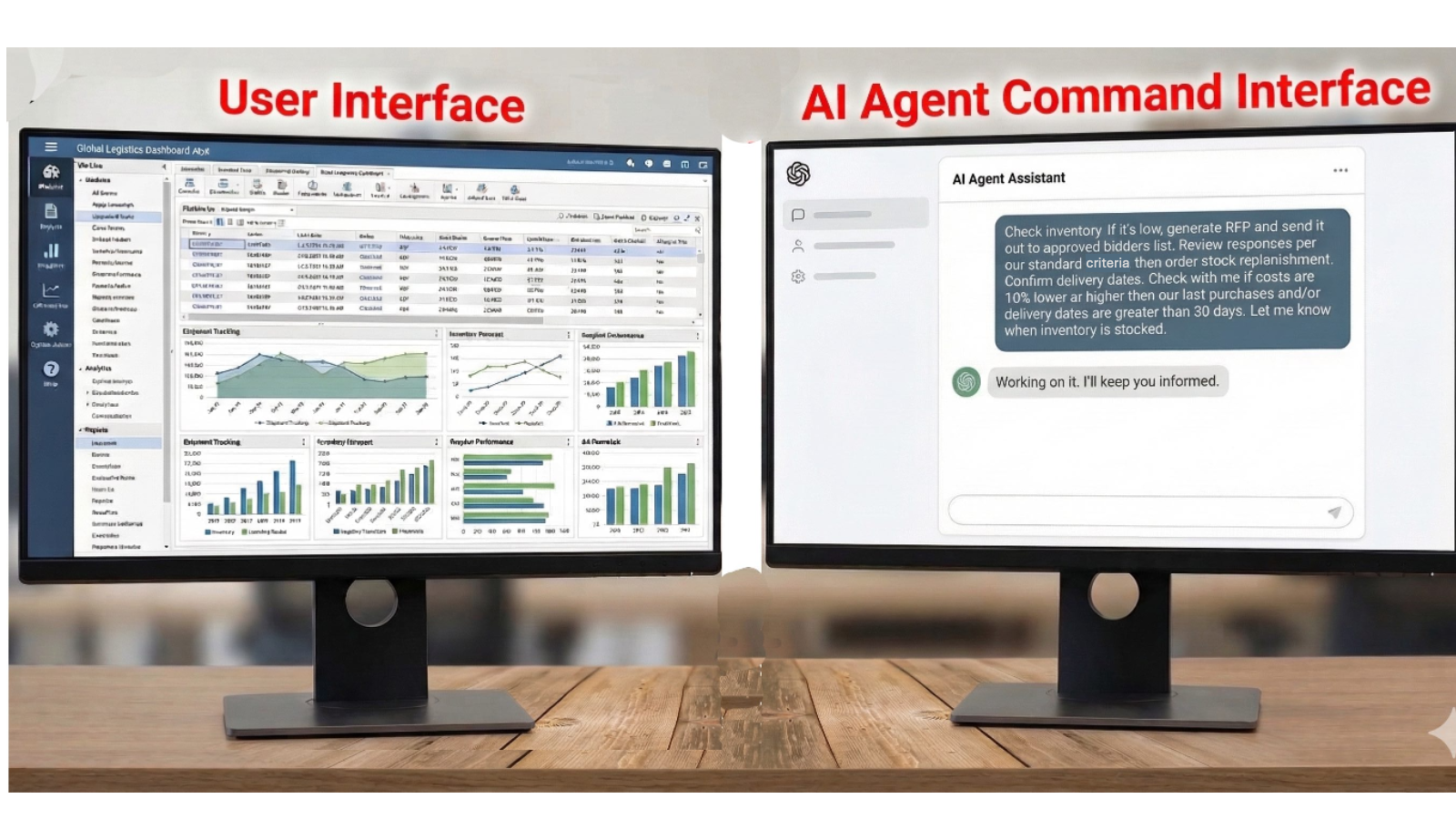
Tech startups founded more than two years ago are likely operating on outdated assumptions in a rapidly shifting market. To avoid failure, founders must pause their daily coding and fundraising efforts to reassess their core business strategies.
Comments2021-05-01

Spaghetti code doesn't just look bad, it makes code brittle and prone to bugs. A modular programming architecture decouples interdependency and makes your code more robust.
Comments2020-02-10

Shopping online is more popular than ever. Let's explore marketplace business models and payment methods for both regional and global services.
Comments