AI News Today Big Tech
The race to lead in artificial intelligence is being run largely by the biggest names in tech. Here you will find stories about AI models, products, partnerships, and strategy from companies such as Google, Microsoft, Meta, Amazon, and Apple. The section also covers the chips, data centers, and talent wars behind the headlines.
Expect news on frontier model launches, AI assistants being woven into operating systems and office software, and the enormous capital expenditures going into GPUs and data centers. Partnership and licensing deals between platform companies and AI labs are a recurring theme, as are high-profile researcher moves between rivals.
The stakes are unusually high because AI leadership could decide which of today's giants dominates the next computing era. Investors watch these companies' AI spending for market signals, developers build on their platforms, and policymakers study their moves when weighing how the technology should be governed.
2026-10-28
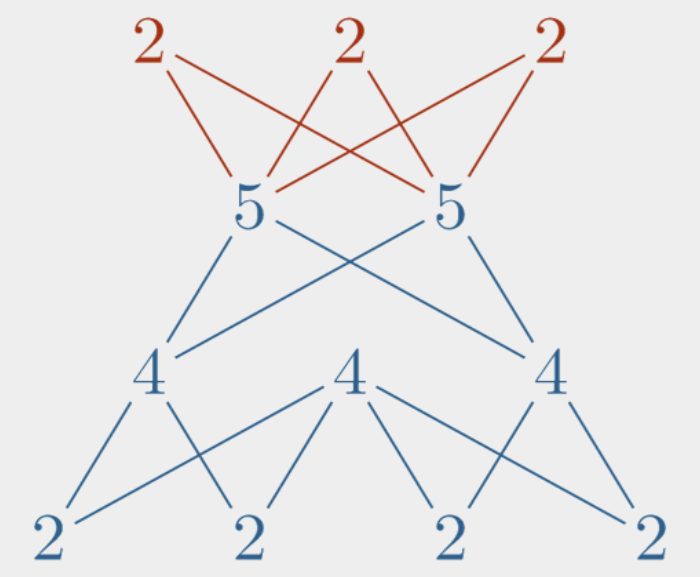
Start Doing Graph Theory
2026-10-28A new introductory textbook, Start Doing Graph Theory, aims to teach readers graph theory by applying it to puzzles, theorem proofs, and other problems. It presents the subject as a hands-on toolkit rather than abstract theory, covering a broad range of uses.
CommentsReaders are skeptical that Nvidia and Micron’s outsized contribution to U.S. earnings reflects broad economic strength, seeing it more as a bubble or temporary fluctuation masking a weak, K-shaped economy. The discussion highlights concentration in AI-driven profits and Baumol-style cost pressures, where lucrative tech sectors raise costs for other services while many businesses and workers struggle.
Comments
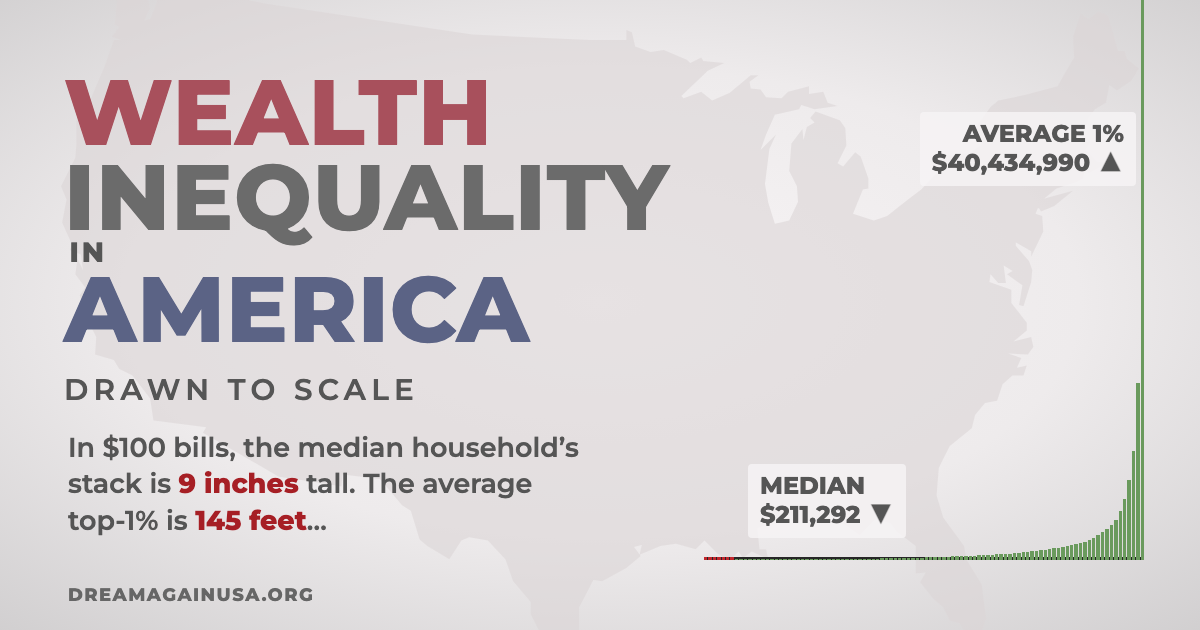
A visualization illustrates U.S. wealth inequality by showing median household wealth as a 9-inch stack of $100 bills, compared with a 145-foot stack for the average top-1% household. The scale highlights the enormous gap between typical families and the wealthiest Americans.
Comments
At least 10 people have died and scores more were injured in a high-speed train collision in Spain’s Toledo province. The accident occurred on the line connecting Madrid to southern Andalusia.
Comments
81 Jokes for the ZX81
2026-10-28Rob Manuel, creator of Fesshole and co-founder of B3ta, has created “81 Jokes for the ZX81,” an absurd self-set project featuring 81 jokes he wrote and illustrated himself for the vintage computer. The collection leans into the retro constraints of the ZX81 platform.
Comments
Artificial Analysis Intelligence Index v5 introduces two new benchmarks and three upgrades. For the first time, most of the index is built on private datasets.
Comments
Anthropic is expanding its partnership with GSA to bring its Claude AI to all levels of government. The company said the move supports its work building reliable, interpretable, and steerable AI systems for public-sector use.
CommentsA decompilation deep dive into Fast Food Tycoon 2 explains how the 2001 business sim rendered its rich, detailed city environments. The piece examines the game’s drawing techniques, offering a technical look at the tricks behind its visuals.
Comments
碁の国: Play Chess as Town Building
2026-10-28A new browser game called Go no Kuni turns standard Go into 3D diorama town-building, with placed stones becoming fortresses and surrounded territory becoming towns. Players can play instantly in the browser with AI, friends, or others.
CommentsA developer generated 327 distinct CI/CD workflows in under an hour using a GitHub Actions toolkit and was subsequently flagged by GitHub as a spammer. The incident highlights the platform’s anti-spam enforcement against rapid automated workflow creation.
Comments2026-10-27
Anthropic S-1
2026-10-27Anthropic's S-1 filing outlines massive long-term infrastructure commitments totaling hundreds of billions of dollars over the next decade with partners like Google, AWS, and SpaceX. This aggressive datacenter expansion strategy relies entirely on sustained market demand for its AI models to justify the enormous financial obligations and capacity buildouts. Additionally, the inclusion of short-notice cancellation clauses in certain agreements highlights the significant risks of overbuilding capacity if AI adoption unexpectedly stalls.
Comments
OpenAI has shared novel findings from its AI models regarding the Kakeya conjecture, the Exponential Time Hypothesis, and quantum chromodynamics. These breakthroughs span the fields of mathematics, computer science, and physics. The company has also provided methods for researchers to verify these results and build upon them for future scientific advancements.
CommentsGPT-6.1 Terra
2026-10-27OpenAI has released GPT-6.1 Terra, a cost-efficient middle-tier model aimed at automation and technical writing rather than pure software development. Despite its competitive pricing, users note its confusing market position due to overlapping performance with the larger Sol model and a highly convoluted planetary naming schema.
CommentsResearchers have published a paper claiming to disprove the Exponential Time Hypothesis, a major conjecture in computer science regarding the computational complexity of NP-hard problems. The mathematical development and proofs for this claim are being hosted on GitHub within OpenAI's dedicated math repository.
Comments
The Mythical Man-Month in the Age of AI
2026-10-27This article reevaluates Fred Brooks's classic software engineering principles to determine how artificial intelligence impacts modern development productivity. By examining whether Brooks's Law still holds true for developers augmented by AI, the piece offers an updated framework for managing software teams and estimating project timelines in the AI era.
Comments
Wikipedia is utilizing automated cleanup tools alongside human editors to combat the influx of AI-generated content. This joint effort focuses on identifying and removing subtle machine-written biases and fabricated citations. Ultimately, the initiative aims to protect the platform's integrity and ensure the encyclopedia remains a human-curated resource.
CommentsPython's experimental JIT to be removed
2026-10-27Python developers are removing the experimental just-in-time compiler that was recently introduced in CPython after it failed to deliver significant performance improvements. The core team will now redirect its efforts toward alternative optimization strategies for future releases.
CommentsA tech blogger recently documented their quest to discover the oldest Windows graphical user interface application that still functions on Windows 11. After testing various legacy programs, the author successfully identified a surprisingly old piece of software that remains fully compatible with Microsoft's modern operating system.
Comments
Ghostty 1.4.0
2026-10-27Ghostty 1.4.0 was released on October 27, 2026, introducing the latest updates to the software. The official release notes provide a detailed breakdown of the new features, enhancements, and fixes included in this version.
CommentsWebsites Should Be Printable
2026-10-27In a recent post on his personal blog, Brennen Puth argues that modern websites should be designed to be easily printable. The piece explores the enduring value of maintaining print-friendly web layouts for offline reading and archiving.
Comments
While widely celebrated for his foundational work in mathematics and physics, Blaise Pascal also invented the world's first fixed-route public transportation system near the end of his short life. This lesser-known civic innovation highlights the diverse technological contributions made by the renowned polymath before his death in his thirties.
CommentsPharo 14
2026-10-27The release of Pharo 14 has prompted developers to reflect on the unique benefits of Smalltalk's image-based workflows and its continued relevance in the AI era. While many note that AI coding tools have made them less particular about which programming languages they use, enthusiasts still champion environments like Pharo, Squeak, and Cuis for recreational programming and practical deployment.
CommentsLaw enforcement agencies are utilizing AI to pull over drivers for suspicious travel patterns based on comprehensive vehicle telemetry harvested by automakers. Manufacturers often require users to consent to sharing this data with third parties, including police, just to access basic features like remote start. This automated surveillance allows authorities to track detailed movement histories, raising significant privacy concerns.
Comments
Anthropic trained its Claude AI model on pirated books, leading to a $1.5 billion copyright settlement. The legal action stems from the company's unauthorized use of copyrighted works belonging to at least ten Stanford University professors.
CommentsType Server Protocol
2026-10-27Microsoft hosts the official documentation and issue tracker for Pylance, its Python language server, on GitHub. Developers can contribute to the project's development and report bugs directly through the microsoft/pylance-release repository.
CommentsIs my data used for model training?
2026-10-27Paying subscribers are raising concerns about Anthropic's privacy practices after discovering that dismissing feedback prompts in Claude Code might inadvertently be logged as training data. While some users suspect this is a deliberate loophole to bypass explicit data privacy promises, others argue it could simply be a sloppy implementation detail. The discussion highlights broader frustrations regarding corporate transparency, data surveillance, and the potential exposure of user intellectual property in AI models.
CommentsA newly optimized FAST feature detector brings accelerated computer vision to the low-cost ESP32-S3 microcontroller by leveraging 128-bit SIMD instructions. This optimization achieves roughly double the performance of the standard reference implementation, making advanced image processing highly viable on two-dollar hardware.
CommentsNietzschian Debugger
2026-10-27A new open-source tool called the Nietzschian Debugger offers an anti-AI approach to troubleshooting by using confrontational questioning to challenge developers. Instead of providing automated fixes, the project forces programmers to rigorously defend their logic based on the philosophy that what doesn't kill your code makes it stronger.
CommentsGforth 1.0
2026-10-27Gforth has reached version 1.0, solidifying its position as a fast, portable, and minimalist implementation of the Forth 2012 language. Community discussions highlight its ultra-thin architecture while exploring ways to improve its standard library and native executable compilation capabilities. Enthusiasts continue to champion Forth and its variants as engaging, logic-focused languages that preserve the art of programming in the age of AI.
CommentsFrigadeHQ has launched Hob, a free and open-source desktop application that serves as a local alternative to cloud-based AI tools like ChatGPT and Claude. The software allows users to run open-weight models directly on their Mac, Windows, or Linux computers. By processing data on-device, Hob ensures complete user privacy and functions entirely offline.
Comments