AI News Today Big Tech
The race to lead in artificial intelligence is being run largely by the biggest names in tech. Here you will find stories about AI models, products, partnerships, and strategy from companies such as Google, Microsoft, Meta, Amazon, and Apple. The section also covers the chips, data centers, and talent wars behind the headlines.
Expect news on frontier model launches, AI assistants being woven into operating systems and office software, and the enormous capital expenditures going into GPUs and data centers. Partnership and licensing deals between platform companies and AI labs are a recurring theme, as are high-profile researcher moves between rivals.
The stakes are unusually high because AI leadership could decide which of today's giants dominates the next computing era. Investors watch these companies' AI spending for market signals, developers build on their platforms, and policymakers study their moves when weighing how the technology should be governed.
2026-07-09
A developer has introduced Colibri, a lightweight engine that runs the massive 744-billion parameter GLM-5.2 AI model on consumer machines with just 25GB of RAM. Written in pure C with zero dependencies, the project achieves this feat by streaming model experts directly from disk instead of loading them entirely into memory. This innovation dramatically lowers the hardware requirements for running immensely large language models locally.
Comments
Show HN: 18 Words
2026-07-09A new daily word puzzle game called 18 Words has launched on Hacker News. The fast-paced browser game requires users to unscramble words against a timer, challenging players to correctly solve all 18 daily prompts.
Comments
The Federal Trade Commission and state attorneys general have secured a right to repair settlement with John Deere. Under the agreement, equipment owners will be allowed to independently fix their own machines without facing corporate restrictions.
CommentsGPT-5.6
2026-07-09OpenAI's developer guide for GPT-5.6 highlights improvements in intent understanding and image processing, emphasizing that shorter prompts now yield better performance and lower costs. Readers discuss the model's reduced default verbosity and compare its output to competitors like Claude, while also debating the technical distinction between context curation and actual machine learning.
CommentsHy3
2026-07-09Simon Willison's recent blog post evaluates AI image generation using his pelican test, prompting readers to question the benchmark's validity as models may be over-trained on his specific SVG examples. The community discussion also reflects on the broader impact of AI on software development, with some developers expressing a preference for hand-coding despite the industry's rapid shifts. Additionally, readers debated the current capabilities of local models, noting that Gemma4 and Deepseek 4 currently outperform GPT-OSS for coding tasks.
Comments
The United States Army's logistics network, optimized over the last two decades for uncontested environments and static bases, has become a critical vulnerability in modern warfare. As the military shifts toward large-scale multidomain combat, this fragile and efficiency-driven supply chain must now prioritize resilience to avoid collapsing in future conflicts.
CommentsA leap second will not be introduced at the end of December 2026 because Earth's rotational speed remains highly unpredictable due to environmental factors, geological activity, and human water management. Because maintaining highly accurate predictive models for satellites and other systems is increasingly difficult, the international community has agreed to completely phase out the practice of adding leap seconds by 2035.
Comments
Muse Spark 1.1
2026-07-09Meta is facing criticism over the benchmark performance of its new Muse Spark 1.1 model after it was discovered that evaluations exceeded strict CPU and RAM limits. Critics argue that overriding these resource constraints on the Terminal-bench-2.1 leaderboard invalidates the results and fails to measure real-world agent behavior. However, some defenders downplay the controversy, suggesting that relaxing limits is common industry practice aimed at preventing task timeouts rather than outright cheating.
CommentsA recent interview with Mitchell Hashimoto explores his pragmatic engineering decisions behind the Ghostty terminal emulator and his use of the Zig programming language. The ensuing discussion highlights his stance on open-source forking, where he argues that maintaining a custom fork to remove unwanted features is comparable in effort to maintaining a feature flag. This perspective sparked broader debates among readers regarding the synchronization burdens of forks, the open source project as a product mentality, and the potential for AI to automate downstream customizations.
Comments
A road to Lisp: Why Lisp
2026-07-09This article explores the enduring appeal and unique advantages of the Lisp programming language for modern software development. It highlights Lisp's powerful macro system, code-as-data philosophy, and significant historical influence on contemporary functional programming paradigms. Ultimately, the piece serves as a comprehensive guide for developers looking to understand why Lisp remains a highly respected and influential language today.
Comments
A possible future for Damn Interesting
2026-07-09The popular long-form storytelling website Damn Interesting has unveiled a strategic plan to ensure its long-term survival and financial sustainability. The announcement outlines the platform's future direction, though the author self-deprecatingly notes the post contains an awkward abundance of moist metaphors.
CommentsA recent article proposing a fast MPMC queue was corrected to clarify that its bounded waiting structure is not actually wait-free, sparking community discussions about the inherent trade-offs in concurrent queue design. Participants emphasized that developers must carefully weigh compromises between bounded memory, global FIFO ordering, and non-blocking behavior to select the data structure that best fits their specific system requirements.
Comments
An overlooked Apple accessibility feature originally designed for users with cognitive disabilities can transform a standard iPhone into the perfect dumb phone for children. Despite offering excellent parental control capabilities, this underutilized setup remains largely unknown to the general public.
Comments
A recent analysis explores the botched economics driving the exorbitant cost of ambulance rides in the United States. The article details how fragmented emergency care, opaque billing practices, and a complex mix of private and public providers create a system where patients bear the brunt of the financial burden. Ultimately, these systemic flaws in healthcare pricing make emergency medical transport uniquely and persistently expensive for American consumers.
Comments
Yamanote.fun is a new web experience that captures the complete audio soundscape of riding Tokyo's Yamanote train line. The project seamlessly weaves together every station's unique departure melodies, chimes, announcements, and ambient noise into one continuous journey around the city.
Comments
New Sweden was the smallest, least-populated, and shortest-lived colony in early American history, remaining largely obscure in modern times. Despite its brief existence, this overlooked settlement played a crucial role in shaping the birth of the United States 250 years ago.
CommentsY Combinator S26 startup Context.dev has launched a new web scraping API specifically designed to help AI agents extract structured data from the internet. The platform allows developers to scrape individual URLs into clean markdown or HTML, crawl entire websites, and process the information using a single REST API. This tool aims to streamline data collection and formatting for developers building AI-driven applications.
Comments
The open-weights AI model GLM 5.2 demonstrated near-human bookkeeping accuracy by processing a real quarterly UK VAT return. It completed 59 transactions in 68 minutes for just $2.73, yielding a final calculation within 7 pence of the human-prepared result.
Comments2026-07-08
A recently discovered obfuscated bash script printed on a novelty Uniqlo t-shirt has been decoded by the tech community, turning the apparel into a wearable piece of programming art. In response, legal experts are analyzing the garment to explore the intellectual property, technology, and commercial law implications of printing executable code on clothing.
Comments
Grok 4.5
2026-07-08Grok 4.5 has been introduced as SpaceXAI's most advanced model, specifically engineered to excel in coding, agentic tasks, and knowledge work. This latest release is designed to enhance professional productivity by executing complex, autonomous workflows with significantly improved intelligence.
Comments
Microsoft has released Flint, a new visualization language specifically designed for AI agents. This tool provides developers with a dedicated framework to visually map and understand the complex workflows of autonomous systems.
Comments
Security researchers at Noma Labs discovered a critical prompt injection vulnerability named GitLost within GitHub's new Agentic Workflows. This flaw enables unauthenticated attackers to silently extract data from private repositories by posting a specially crafted issue in a public repository belonging to the same organization.
CommentsSecurity researchers have identified a hidden authentication backdoor in multiple versions of Tenda firmware. This vulnerability allows attackers to bypass standard login credentials and potentially take full control of affected networking devices. Users should immediately update their equipment to the latest patched versions to prevent unauthorized access.
Comments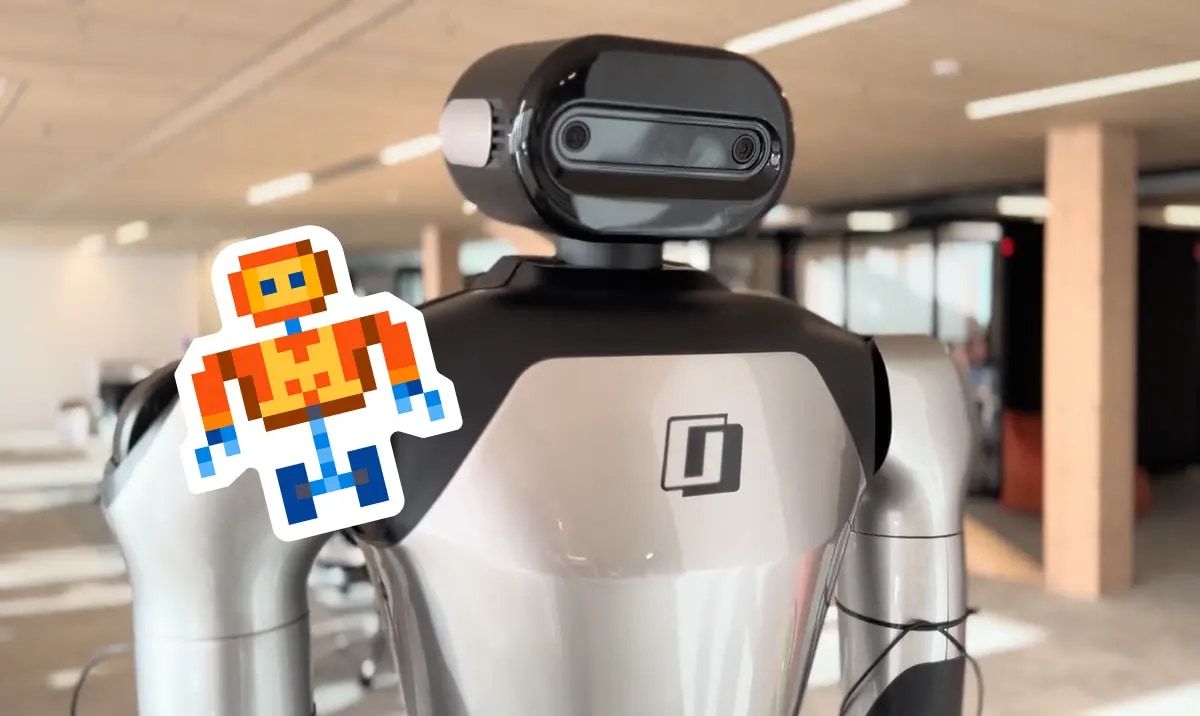
Mistral has introduced Robostral Navigate, an 8B robotics navigation model that achieves a 76.6% score on the R2R-CE benchmark. The state-of-the-art system simplifies hardware requirements by relying solely on a single RGB camera, completely eliminating the need for LiDAR, depth sensors, or multiple cameras.
Comments
TypeScript 7
2026-07-08TypeScript 7 is now available, marking a major milestone as the language transitions to a native port. This complete architectural overhaul delivers a massive performance upgrade, offering developers compilation speeds that are 10 times faster than previous versions.
Comments
The classic 1986 Structure and Interpretation of Computer Programs video lectures are now freely available online through MIT OpenCourseWare. This open platform provides permanent and global web access to virtually all of MIT's educational course content.
Comments
Fenris Creations has open-sourced EVE Online's Carbon engine to foster community collaboration and shared technological advancement. According to Ben Hunter, this decision will improve overall security and integrate modern tools like LLM coding and support from the Godot engine to benefit the broader developer ecosystem.
Comments
Canada's only watchmaking school, the École national d’horlogerie, has remained in operation for 80 years since it was founded after World War II to help veterans reintegrate into society. Today, the institution has evolved its mission and focuses on training professional watchmakers for the global market.
Comments
OpenAI has published a new analysis exposing critical flaws in SWE-Bench Pro, a widely used benchmark for assessing AI coding capabilities. These reliability issues cast significant doubt on the accuracy of how top artificial intelligence models are currently being tested and ranked.
Comments