AI News Today Big Tech
The race to lead in artificial intelligence is being run largely by the biggest names in tech. Here you will find stories about AI models, products, partnerships, and strategy from companies such as Google, Microsoft, Meta, Amazon, and Apple. The section also covers the chips, data centers, and talent wars behind the headlines.
Expect news on frontier model launches, AI assistants being woven into operating systems and office software, and the enormous capital expenditures going into GPUs and data centers. Partnership and licensing deals between platform companies and AI labs are a recurring theme, as are high-profile researcher moves between rivals.
The stakes are unusually high because AI leadership could decide which of today's giants dominates the next computing era. Investors watch these companies' AI spending for market signals, developers build on their platforms, and policymakers study their moves when weighing how the technology should be governed.
2026-06-21
The author reflects on a 2014 RailsConf presentation where they advised developers to prefer code duplication over creating incorrect abstractions. This specific piece of programming advice sparked surprisingly strong and mixed reactions within the development community, with some critics doubting the logic while many others strongly agreed.
CommentsApertus is a fully open foundation model designed to empower nations and organizations to build sovereign artificial intelligence systems. By providing complete transparency and unrestricted access, it allows users to develop localized AI technologies without relying on proprietary models. This initiative aims to democratize advanced machine learning and ensure long-term technological independence for its users.
Comments
A new privacy-focused iOS app called Loupe has been released to show users exactly what data native applications can access on their devices. Developed by researchers at mysk-research, the tool aims to raise awareness about mobile data visibility and empower Apple users to better protect their personal information.
Comments
Identity verification on Claude
2026-06-21Anthropic's implementation of identity verification for Claude is driving some international users away due to frustrations over US export controls and data privacy concerns. As affected subscribers begin migrating to alternative models like Mistral, the broader tech community is actively debating the company's underlying motives. Many question whether the new restrictions are merely a temporary compliance measure or a calculated strategy to achieve regulatory capture against open-weight AI.
Comments
15-minute at-home Lyme disease tick test
2026-06-21LymeAlert has introduced a rapid at-home test that can diagnose Lyme disease in just 15 minutes following a tick bite. The device is designed to save individuals from the high costs and lengthy wait times typically associated with emergency room visits.
CommentsRecent discussions emphasize that slow breathing techniques down-regulate the nervous system to lower heart rate and signal safety to the brain. This physiological modulation helps individuals overcome performance anxiety and manage risk behavior, enabling greater confidence and strategic thinking in high-stress scenarios ranging from public speaking to combat sports.
CommentsTownSquare is a new web tool that adds a shared virtual presence layer to websites. It creates an interactive space where visitors can see each other, walk around, and chat in real time. This integration aims to transform standard web pages into engaging, social environments.
Comments
JSON-LD explained for personal websites
2026-06-21A new guide explains how to implement JSON-LD on personal websites to improve search engine optimization. The resource covers key schemas like WebSite, Person, and BlogPosting to help search engines better understand site content. It also provides developers with ready-to-use code snippets for easy integration.
Comments
Large language models have significantly reduced software development costs, but they have not made it entirely free. This reality is fundamentally altering the traditional buy-versus-build calculus for modern businesses. Consequently, small software companies must now navigate a new minimum pricing threshold to remain profitable and survive in the LLM era.
Comments
Human brains evolved to prioritize danger, but the modern, relentless cycle of global negative news easily overwhelms this natural instinct. Rather than ignoring current events entirely, researchers recommend establishing healthier habits regarding how, when, and where we consume the news.
CommentsPeter Norvig's classic 2010 tutorial on building a Lisp interpreter in Python remains a highly recommended foundational resource for developers interested in creating programming languages. Hacker News readers continue to revisit and praise the guide, often comparing it to other popular educational projects like Crafting Interpreters and the language-agnostic Make-A-Lisp. While some prefer Make-A-Lisp as a litmus test for learning new languages, many still consider Norvig's step-by-step approach the best starting point for understanding interpreter design.
CommentsA 3D voxel game engine written in APL
2026-06-21A new open-source 3D voxel game engine built with Dyalog APL and SDL3 is now available on GitHub. The project, named avoxelgame, welcomes developers to create an account and contribute to its ongoing development.
CommentsA community discussion surrounding Proxmox VE microVMs highlights that recent orchestration improvements make this lightweight virtualization method more viable than past evaluations suggested. While users appreciate the rapid boot times and improved security isolation compared to LXC containers, challenges such as CUDA GPU passthrough and userspace initialization speeds remain. Consequently, the community is eagerly anticipating native, first-class microVM support directly within the Proxmox platform.
CommentsReader discussions highlight the enduring appeal of Proportional-Integral-Derivative controllers among programmers due to their intuitive balance of conceptual cleverness and ease of implementation in robotics projects. Although PID remains a staple for educational applications like line-following robots, practitioners note that tuning it for complex real-world motor control is highly challenging, leading some developers to adopt advanced alternatives like Active Disturbance Rejection Control.
Comments
Guide to the TD4 4-bit DIY CPU
2026-06-21A new guide details the experience of building and programming the TD4, a compact 4-bit DIY CPU kit sourced from Aliexpress. The hardware is quite limited, featuring just two registers, some indicator LEDs, and 16 bytes of program ROM. However, it remains a highly rewarding project that effectively teaches the fundamental principles of computer architecture.
CommentsProject Fetch: Phase Two
2026-06-21Anthropic's latest Project Fetch results reveal that the Claude Opus 4.7 model can independently perform sophisticated robotics tasks. Operating without human assistance, the AI completed the work approximately 20 times faster than the fastest human teams managed less than a year ago.
Comments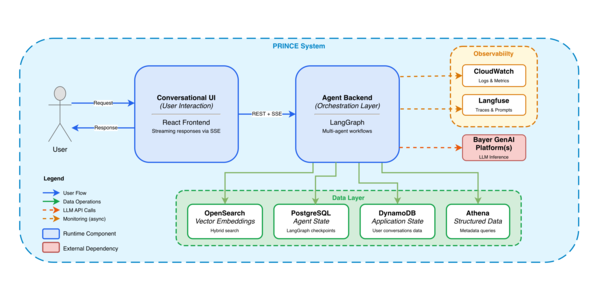
Building reliable agentic AI systems
2026-06-21Developers are building reliable agentic AI systems to help pharmaceutical researchers efficiently query decades of historical data buried in PDF reports. These advanced agents can autonomously navigate and extract critical insights from complex documents, significantly streamlining drug discovery and analysis.
CommentsA new open-source tool called Recall gives Claude Code persistent local memory that operates entirely offline. This prevents developers from wasting tokens by repeatedly explaining their project context at the start of every new session.
Comments2026-06-20

SMPTE has announced that its entire catalog of media technology standards is now freely available to the global community. This initiative provides media professionals, technologists, and engineers with unrestricted access to essential industry guidelines. Removing financial barriers to these resources is expected to foster greater collaboration and innovation across the sector.
Comments
Cloudflare has introduced Temporary Accounts on Cloudflare Workers to help AI agents bypass human-centric setup barriers and deploy live applications in seconds. By using a simple deployment command, automated agents can now provision infrastructure instantly without manual account creation.
CommentsAlthough simplified mathematical models assume idealized traffic patterns, real-world load-balanced systems must account for correlated bursts that require costly over-provisioning to ensure peak reliability. To avoid reliance on expensive cloud auto-scaling, engineers recommend adopting asynchronous architectures or intentionally shedding non-essential features during traffic spikes. The discussion also highlights the organizational dangers of management pushing for near-perfect server utilization, which mathematically guarantees system failure and degraded user experiences.
CommentsStartupWiki has launched as a free, AI-powered alternative to Crunchbase for tracking global startup ventures. The community-driven research directory covers diverse sectors including artificial intelligence, biotech, clean tech, and fintech to provide accessible data on emerging companies worldwide.
CommentsAlice is impatient
2026-06-20Traditional per-request latency metrics like averages and p99 often fail to capture the true user experience because they can mask severe performance issues affecting specific individuals. To ensure high reliability, developers are encouraged to shift toward measuring the percentage of unique users who encounter unacceptable delays. This user-centric perspective provides a much more accurate reflection of actual service quality than optimizing overall request times alone.
Comments
A marketing agency plagiarized John Koenig's Dictionary of Obscure Sorrows by republishing the entire book without permission, replacing the original artwork with AI-generated images, and adding fabricated definitions. The unauthorized website now outranks the official project in search engine results, highlighting the ongoing threat of AI-driven content scraping.
Comments
Egyptian Fractions (2006)
2026-06-20This retrospective piece from Mark Dominus's eclectic blog revisits a 2006 exploration of the algorithmic computation and mathematical history of Egyptian fractions. The article details how these ancient numerical systems, which express values as sums of distinct unit fractions, continue to offer valuable insights for modern computational problem-solving.
CommentsData Compression Explained (2012)
2026-06-20Community discussions revisiting Matt Mahoney's 2012 article explore the theoretical links between traditional data compression and modern artificial intelligence. Commenters debate Mahoney's premise that AI is necessary to model human data since universal compression is mathematically impossible, analyzing whether LLM training functions as lossy compression or mere memorization. The discussion ultimately highlights how the next-token prediction used in LLMs mirrors compression algorithms, despite modern AI being optimized for generating novelty rather than strict data reduction.
CommentsA Perceptron in Age of Empires II
2026-06-20Readers are debating a research paper's claim that studies asking whether large language models possess anthropomorphic traits inherently assume those traits exist. The discussion centers on the semantic distinction between questioning a possibility and making a logical assumption, highlighting the difficulty of evaluating AI without falling into logical fallacies. Ultimately, participants note that the lack of precise terminology for AI behavior forces researchers to rely on misleading human analogies that can confuse the public.
CommentsSouth Korea's defense industry is rapidly capturing global market share by offering highly effective weapon systems at nearly half the cost of American and European alternatives. A primary driver of this success is Seoul's willingness to transfer intellectual property, allowing client nations to establish domestic manufacturing and avoid the political restrictions often attached to US military exports. As a result, countries are increasingly turning to South Korean contractors to secure reliable, sovereign supply chains amid shifting geopolitical alliances.
CommentsThe Arch User Repository recently endured a sustained cyberattack that disrupted services across the Linux ecosystem. This incident, dubbed the AURpocalypse, has prompted maintainers to investigate the attacker. The community is now actively working to restore full platform stability and prevent future disruptions.
Comments
UC Irvine neuroscientist Oswald Steward has been awarded the 2026 Kavli Prize in Neuroscience for his groundbreaking research on memory formation. His pioneering discoveries have fundamentally shifted the scientific understanding of how the brain processes and stores information.
Comments