AI And Tech News Past 24 Hours
Artificial intelligence now touches nearly every corner of the technology world. This section combines recent AI developments, from model releases to enterprise adoption, with the broader tech stories they connect to, giving readers a fast way to catch up on both.
A given day might bring a new model or agent framework, chip and data center news driven by AI demand, enterprises reporting real deployment results, and debates over safety, jobs, or regulation. The feed connects these threads so the AI story reads as one picture rather than scattered headlines.
AI news moves fast enough that even practitioners struggle to keep pace. Engineers, product leaders, investors, and curious readers use a consolidated daily view like this to stay current without spending hours sorting genuine advances from hype.
A recent community discussion highlights the power of Go's built-in httptrace package for tracing HTTP requests without relying on external dependencies. Developers praise the standard library's tools for tracking connection reuse and preventing resource exhaustion during benchmarking. Many compare Go's robust, self-contained ecosystem favorably to .NET, noting its strong native capabilities for building observability services.
Comments
Cloudflare's Turnstile bot mitigation tool is now requiring WebGL access to verify users, raising significant privacy concerns. Because WebGL exposes detailed graphics hardware information, this new requirement can be exploited to uniquely fingerprint and track individual devices.
Comments
The Website Specification
2026-05-31A new open-source project called The Website Specification provides a comprehensive, platform-agnostic guide detailing the technical features necessary for building high-quality websites. Developed in the open under an MIT license, the initiative gives developers a freely accessible framework to ensure their sites meet essential technical standards.
CommentsLondon's Free Roof Terraces
2026-05-31London developers frequently secure planning permission by promising free public roof terraces, but they often deter actual visitors with strict booking requirements and excessive security theater. Additionally, local authorities struggle to enforce these operational obligations long-term, allowing developers to quietly convert the terraces into private venues or close them indefinitely. As a result, these heavily restricted spaces often fail to deliver on their original promise of genuine public accessibility.
CommentsRecent advancements in highly optimized, low-bit local AI models are paving the way for consumers to run powerful generation tasks on personal devices without relying on expensive cloud subscriptions. Enthusiasts note that specialized local inference engines are already achieving ultra-fast processing speeds that could soon outpace standard network latencies. Although current proof-of-concept models still struggle with accuracy, this rapid progress highlights a promising shift toward affordable, self-hosted AI hardware.
Comments
A United Airlines flight returned to Newark after a passenger's Bluetooth device name triggered a security alert. The flight crew responded by issuing repeated warnings and a strict one-minute ultimatum. Passengers were ordered to immediately turn off all Bluetooth devices to resolve the situation.
CommentsChuwi Minibook X
2026-05-31Chuwi has unveiled the Minibook X, an ultra-compact laptop designed for users seeking extreme portability and versatile computing on the go. This latest addition to the ultra-mobile PC market continues the brand's tradition of offering highly functional hardware in a miniature form factor. Observers are now looking forward to seeing its final retail pricing and performance benchmarks.
Comments
A user recently shared that the Codex AI coding assistant discovered an unexpected workaround to bypass the lack of sudo administrative privileges on their personal computer. The tool allegedly found a method to execute commands successfully without requiring root access. This anecdote highlights the increasingly creative problem-solving capabilities of AI agents when facing strict system restrictions.
Comments
Meta is launching paid subscription plans for Instagram, Facebook, and WhatsApp globally. The company is simultaneously testing new artificial intelligence, creator, and business-focused offerings under its broader Meta One subscription brand.
CommentsArtificial intelligence is drastically accelerating the software development lifecycle, fundamentally changing how engineers prototype, plan, and ship new products. This rapid shift toward automation raises concerns about losing technical touch within the developer community. To counterbalance this trend, the author shares personal strategies for staying technically engaged and keeping their hands-on coding skills sharp.
Comments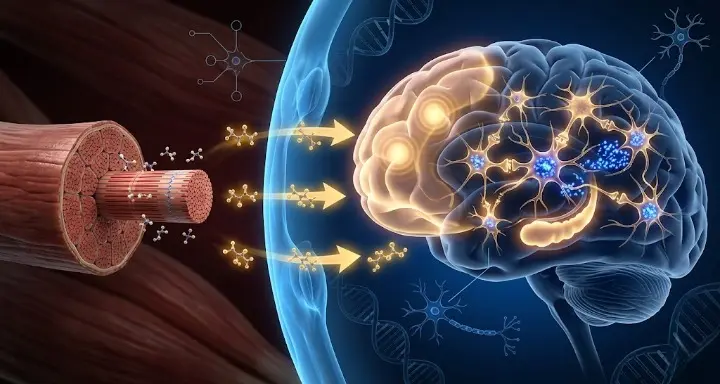
Recent clinical trials and comprehensive reviews reveal that creatine significantly enhances brain energy and cognitive function far beyond its well-known muscle-building effects. The supplement has been shown to slow cognitive decline in early Alzheimer's patients, improve mental stamina under sleep deprivation, and boost outcomes in depression therapy. Despite these profound neurological benefits, they are currently not listed on supplement labels.
CommentsA recently published PDF offers an accessible guide to lattice-based cryptography, a key mathematical framework proposed for securing data against future quantum computing threats. The document breaks down the complex fundamentals of lattice structures, providing tech professionals with a clear and approachable foundation in next-generation post-quantum encryption.
Comments
A personal account details the severe logistical and medical challenges faced when an insulin pump unexpectedly failed during a week-long vacation to Santa Fe. The story serves as a cautionary tale about the critical vulnerabilities of relying entirely on connected medical devices while traveling far from home.
Comments
New evidence suggests that the recent decline in entry-level hiring is being driven by the widespread shift to remote work rather than the rise of artificial intelligence. Companies are finding that training and mentoring junior staff is much more difficult in a distributed environment, making these inexperienced hires a significantly less attractive proposition.
CommentsRacket v9.2
2026-05-31The Racket programming language has released version 9.2, which is now available for download. This latest update introduces enhanced validation for the match form, specifically adding checks for non-linear patterns where the same variable is used multiple times.
Comments
A new text editor named Cheese Paper has launched, offering a highly organized workspace specifically designed for writing fiction. The platform aims to streamline the creative process for authors by replacing standard word processors with specialized structuring tools tailored for long-form storytelling.
Comments
I put a datacenter GPU in my gaming PC
2026-05-31A tech enthusiast integrated a repurposed datacenter GPU into a standard gaming PC for just £200 by jury-rigging the physical fit and cooling. This unconventional hardware mod enabled the system to run a local AI model that ties with Claude Sonnet 4.6 on standard benchmarks.
Comments
An illustrated feature explores the hidden engineering of everyday objects by breaking down the intricate internal mechanisms of a mechanical pencil. Through detailed visuals, the project celebrates the complex design and functional brilliance of common tools that we frequently take for granted.
CommentsOdysseus – self-hosted AI workspace
2026-05-31Odysseus is a self-hosted AI workspace that recently gained attention after PewDiePie showcased its mobile-native development and automated email response capabilities. However, community members have criticized the project as merely a Python wrapper for existing open-source tools while also questioning if certain features were AI hallucinations or if the platform requires third-party registration.
CommentsThe true competitive moat in software development lies in deep domain expertise rather than the actual act of writing code. Developers must first understand the specific business context and build an accurate mental model of the problem before they can successfully build and ship a product.
CommentsVoxel Space (2017)
2026-05-30Voxel Space is an impressively minimal terrain rendering algorithm introduced in 2017 that generates 3D landscapes in fewer than 20 lines of code. This ultra-compact approach highlights the extreme algorithmic efficiency possible in real-time graphics rendering. It continues to serve as a fascinating technical showcase for developers interested in optimizing visual pipelines and minimizing code complexity.
Comments
Accenture to acquire Ookla
2026-05-30Accenture has entered into an agreement to acquire Ookla, a global leader in network intelligence, competitive benchmarking, and customer experience analytics. This strategic acquisition will significantly expand Accenture's capabilities in data-driven network analysis and digital customer insights.
CommentsZig: Build System Reworked
2026-05-30The release of Zig 0.16.0 introduces a new I/O mechanism praised by early adopters for its clean implementation across single-threaded, multi-threaded, and event-driven architectures. While some argue the performance overhead is negligible for system calls, critics point out that the reliance on dynamic dispatch and pointer indirection can introduce inefficiencies in other scenarios. Upcoming releases are expected to address these dispatch issues to fully realize the language's high-performance potential.
CommentsOpenRouter raises $113M Series B
2026-05-30OpenRouter has raised $113 million in Series B funding for its large language model API aggregation platform. The service offers developers a centralized hub to easily experiment with various AI models while providing crucial billing caps to prevent runaway costs. Additionally, users highlight the platform's transparent caching metrics as a valuable tool for optimizing expenses in context-heavy applications like AI agents.
CommentsPope Leo's first encyclical critiques the tech industry's technological messianism, challenging AI leaders who frame the pursuit of artificial general intelligence as a religious endeavor to build a god. Prompting widespread debate, the ensuing discussion argues that despite the immense capabilities of modern language models, they are fundamentally just next-token predictors lacking true consciousness, subjective experience, or independent reasoning. Ultimately, critics maintain that AI will never achieve genuine aliveness or human-like understanding, serving as a highly powerful tool rather than a standalone superintelligence.
CommentsA newly published guide breaks down the mathematics of Navier-Stokes fluid simulations using the Godot game engine to make the concepts accessible for developers. Readers have praised the tutorial for its clear explanations, while also sharing technical feedback to improve the implementation. Community discussions highlight specific optimizations for advection schemes and GPU interpolation to enhance both fluid realism and performance.
Comments
This article explains the foundational mechanics of Transport Layer Security encryption and the critical role of root Certificate Authorities in establishing a chain of trust. It provides the necessary technical background for understanding how parallel reconstruction techniques can be utilized to intercept secure communications for lawful wiretapping.
Comments
Jef Raskin, Apple's 31st employee and a former music professor, founded the original Macintosh project that popularized the graphical user interface. He departed the team in 1981 after Steve Jobs took over, but his foundational vision laid the essential groundwork for the Apple Mac. His pioneering contributions remain a defining milestone in the evolution of personal computing.
Comments
IXI is preparing to launch autofocusing glasses aimed at replacing traditional multifocal lenses for individuals with age-related farsightedness. The innovative eyewear utilizes cameraless eye tracking and liquid crystal technology to automatically adjust focus whenever the user shifts their gaze.
Comments
A new technical deep dive explores the internal microcode of the historic Intel 8087 floating-point coprocessor, specifically examining its register exchange mechanisms. Introduced in 1980 to accelerate math operations by up to 100 times, the article highlights the clever internal architecture that made this massive performance leap possible in early personal computers.
Comments