YC News Updates
This section pulls together recent articles connected to Y Combinator. Coverage ranges from official program news and batch milestones to reporting on the accelerator's most successful graduates, giving a broad view of one of the most influential institutions in startups.
Recent stories in this vein tend to include Demo Day coverage, funding rounds for portfolio companies at every stage, and commentary on how the accelerator's advice and standard deal terms ripple through the wider industry. Occasional deep dives profile the people and decisions behind the program.
Few organizations touch as many corners of technology as a major accelerator does, from fresh graduates to companies now worth billions. Keeping up with this feed is a shortcut to understanding where early-stage tech has been and where its next chapter is likely heading.
Project Fetch: Phase Two
2026-06-21Anthropic's latest Project Fetch results reveal that the Claude Opus 4.7 model can independently perform sophisticated robotics tasks. Operating without human assistance, the AI completed the work approximately 20 times faster than the fastest human teams managed less than a year ago.
Building reliable agentic AI systems
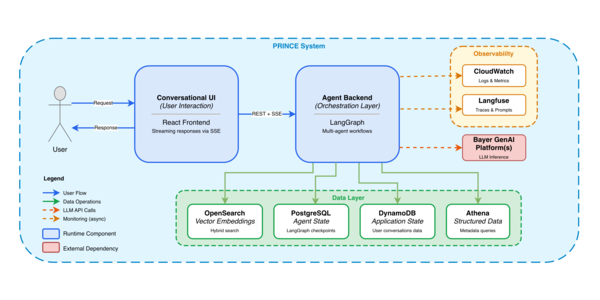
2026-06-21Developers are building reliable agentic AI systems to help pharmaceutical researchers efficiently query decades of historical data buried in PDF reports. These advanced agents can autonomously navigate and extract critical insights from complex documents, significantly streamlining drug discovery and analysis.
Show HN: Recall – Local project memory for Claude Code
2026-06-21A new open-source tool called Recall gives Claude Code persistent local memory that operates entirely offline. This prevents developers from wasting tokens by repeatedly explaining their project context at the start of every new session.
DOS Game "F-15 Strike Eagle II" reversing project needs DOS test pilots
2026-06-20A hobbyist developer is reverse engineering the original binaries of the 1989 DOS game F-15 Strike Eagle II to recreate its C source code. The project creator is currently seeking volunteer DOS test pilots to help playtest and verify the reconstructed software.

SMPTE Makes Its Standards Freely Accessible
2026-06-20SMPTE has announced that its entire catalog of media technology standards is now freely available to the global community. This initiative provides media professionals, technologists, and engineers with unrestricted access to essential industry guidelines. Removing financial barriers to these resources is expected to foster greater collaboration and innovation across the sector.
UHF X11: X11 Built for VisionOS and Apple Vision Pro
2026-06-20UHF X11 is a new native X11 server designed specifically for the Apple Vision Pro and visionOS. It enables users to run classic Unix and traditional workstation software seamlessly within spatial windows. This integration brings legacy computing environments directly into Apple's mixed-reality ecosystem.
CSSQuake
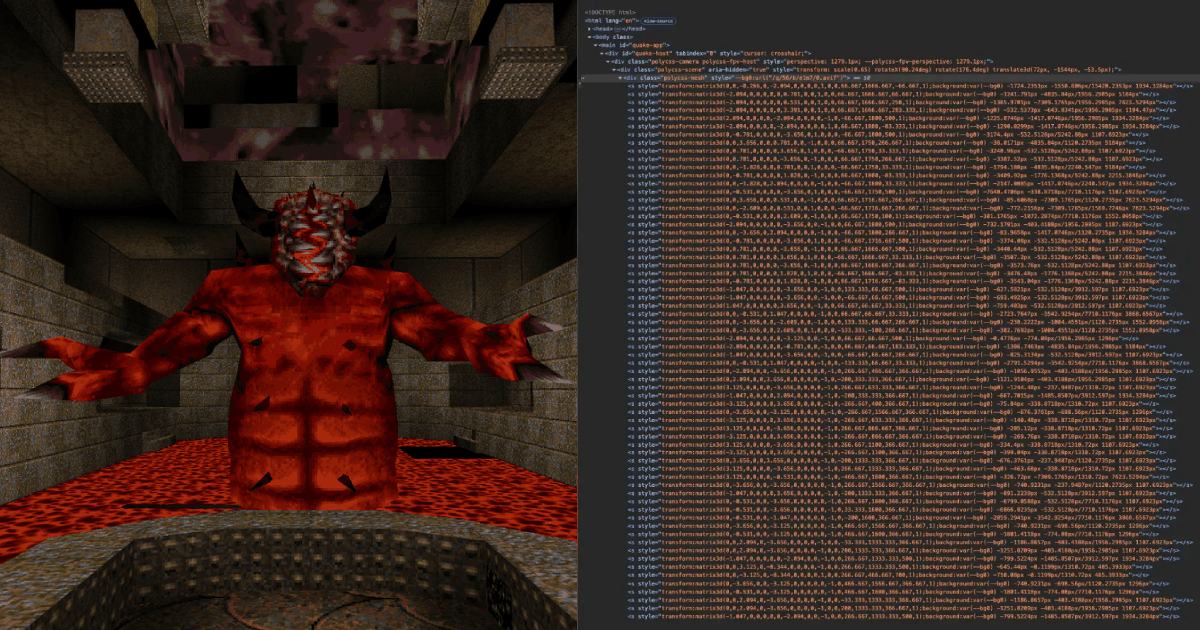
2026-06-20CSSQuake is a browser port of the classic game Quake that renders 3D geometry entirely through inspectable HTML and CSS. Powered by the PolyCSS framework, this innovative project delivers the gameplay experience without relying on traditional WebGL or canvas renderers.

Unauthorized alert sent to cell phones across Brazil
2026-06-20Hackers are suspected of sending unauthorized cell phone alerts with a mysterious message to multiple states across Brazil on Saturday morning. The Brazilian government is investigating the incident to determine how the unauthorized broadcast was executed.

Where to Find the Colors Your Screen Can't Show You
2026-06-20A comprehensive atlas maps the vibrant colors of the natural world that standard digital screens are physically incapable of reproducing. By cataloging this vast spectrum of natural hues, the project highlights the limitations of current display technology and the persistent gap between digital reproduction and physical vibrance.
GPT-5.5 hallucinates 3x more than MIT-licensed GLM-5.2
2026-06-20Recent evaluations reveal that GPT-5.5 hallucinates three times more frequently than the MIT-licensed GLM-5.2 model. This significant accuracy gap highlights a major reliability advantage for GLM-5.2, making it a compelling choice for developers prioritizing factual precision.

Can you see three trees?
2026-06-20A simple three-part test evaluates whether cities provide residents with adequate access to nature and green space. According to the assessment, the vast majority of urban areas currently fall short of these basic environmental standards.
I Stored a Website in a Favicon
2026-06-20A developer has successfully stored and rendered an entire website within the tiny image file of a browser favicon by leveraging data URIs and creative encoding techniques. This technical stunt bypasses traditional web hosting methods, highlighting the creative extremes of web development and the hidden capabilities of modern browsers.

Temporary Cloudflare accounts for AI agents
2026-06-20Cloudflare has introduced Temporary Accounts on Cloudflare Workers to help AI agents bypass human-centric setup barriers and deploy live applications in seconds. By using a simple deployment command, automated agents can now provision infrastructure instantly without manual account creation.
Surprising economics of load-balanced systems
2026-06-20Although simplified mathematical models assume idealized traffic patterns, real-world load-balanced systems must account for correlated bursts that require costly over-provisioning to ensure peak reliability. To avoid reliance on expensive cloud auto-scaling, engineers recommend adopting asynchronous architectures or intentionally shedding non-essential features during traffic spikes. The discussion also highlights the organizational dangers of management pushing for near-perfect server utilization, which mathematically guarantees system failure and degraded user experiences.
Linux eliminates the strncpy API after six years of work, 360 patches
2026-06-20After six years of effort and 360 patches, the Linux kernel has officially eliminated the strncpy API in the Linux 7.2 release. This deprecated function has long been considered error-prone and a potential source of security vulnerabilities. Its removal marks a significant milestone in improving overall code reliability and system safety.
Show HN: StartupWiki – A Free Alternative to Crunchbase
2026-06-20StartupWiki has launched as a free, AI-powered alternative to Crunchbase for tracking global startup ventures. The community-driven research directory covers diverse sectors including artificial intelligence, biotech, clean tech, and fintech to provide accessible data on emerging companies worldwide.
Alice is impatient
2026-06-20Traditional per-request latency metrics like averages and p99 often fail to capture the true user experience because they can mask severe performance issues affecting specific individuals. To ensure high reliability, developers are encouraged to shift toward measuring the percentage of unique users who encounter unacceptable delays. This user-centric perspective provides a much more accurate reflection of actual service quality than optimizing overall request times alone.

The Wholesale Plagiarism of Obscure Sorrows
2026-06-20A marketing agency plagiarized John Koenig's Dictionary of Obscure Sorrows by republishing the entire book without permission, replacing the original artwork with AI-generated images, and adding fabricated definitions. The unauthorized website now outranks the official project in search engine results, highlighting the ongoing threat of AI-driven content scraping.

Egyptian Fractions (2006)
2026-06-20This retrospective piece from Mark Dominus's eclectic blog revisits a 2006 exploration of the algorithmic computation and mathematical history of Egyptian fractions. The article details how these ancient numerical systems, which express values as sums of distinct unit fractions, continue to offer valuable insights for modern computational problem-solving.
Data Compression Explained (2012)
2026-06-20Community discussions revisiting Matt Mahoney's 2012 article explore the theoretical links between traditional data compression and modern artificial intelligence. Commenters debate Mahoney's premise that AI is necessary to model human data since universal compression is mathematically impossible, analyzing whether LLM training functions as lossy compression or mere memorization. The discussion ultimately highlights how the next-token prediction used in LLMs mirrors compression algorithms, despite modern AI being optimized for generating novelty rather than strict data reduction.