YC Demo Day News
Demo Day is the moment each Y Combinator batch presents its startups to investors, and this section gathers reporting around it. Expect stories on notable pitches, standout companies, funding momentum, and the trends that emerge when a new cohort of founders steps on stage.
Typical coverage includes batch recaps, lists of the most talked-about companies, and interviews with founders fresh off their presentations. You will also find pieces examining which sectors dominated a given batch, from AI infrastructure to healthcare, and how those choices reflect where early-stage attention is flowing.
Investors, founders, and industry watchers follow Demo Day because it works as an early signal of what the next wave of technology companies will look like. Ideas that debut on that stage often reappear months later as funded, growing businesses, which makes each batch worth studying closely.

Security researcher Nightmare-Eclipse alleges that Microsoft intentionally built a backdoor into Bitlocker encryption and released an exploit called YellowKey to prove the claim. The researcher explained that this unusual vulnerability can be reproduced by copying a specific FsTx folder.
Comments
The C++26 standard has introduced a new std::simd library that developers are criticizing as both unsolicited and practically inadequate. Analysis shows that the implementation fails to express 90% of real-world SIMD code. This severe limitation renders the new feature largely ineffective for most high-performance computing tasks.
Comments

AI labs are intentionally operating at a financial loss to serve enterprise customers under current subscription models. This unsustainable strategy creates a ticking time bomb for businesses relying on these services until pricing eventually adjusts to reflect true costs.
CommentsThe Third Hard Problem
2026-05-17This piece playfully builds on the classic computer science adage about cache invalidation and naming things to explore the third hard problem in modern software engineering. It highlights that today's developers face massive complexities and architectural challenges far beyond basic bugs like off-by-one errors.
Comments
Rural Vermont communities are reviving old-fashioned payphones powered by modern VoIP technology to bridge critical gaps in cellular reception and school communication. These restored booths allow residents to make free calls, providing a practical and nostalgic solution to rural connectivity issues.
Comments
Unknowable Math Can Help Hide Secrets
2026-05-17A graduate student has developed a powerful new cryptographic tool by harnessing the complexity of mathematical proofs. This approach utilizes highly advanced and unknowable math to create a robust new method for securely hiding digital secrets. The innovation represents a significant advancement in modern data encryption technologies.
CommentsA recent discussion regarding a new paper highlights the illusion of understanding in science, noting that researchers often mistake the predictive accuracy of mental models for true comprehension of underlying causal structures. While these simplified models are indispensable, the conversation warns that relying heavily on computational software can constrain how we conceptualize complex problem spaces. Ultimately, the discussion emphasizes that genuine scientific progress requires acknowledging the limitations of these models and avoiding dogmatic adherence when they inevitably fail.
CommentsThe World Health Organization declared a new Ebola outbreak a Public Health Emergency of International Concern, a rare designation just below a pandemic emergency. While traditional Ebola strains are highly lethal but relatively easy to contain due to low transmissibility, the specific strain driving this outbreak carries unknown transmission risks. This uncertainty has prompted experts to urge robust containment efforts, drawing on lessons learned from the early stages of the COVID-19 pandemic regarding global infrastructure and disease spread.
CommentsFrontier AI models are now dominating open CTF cybersecurity competitions, effectively disrupting the traditional event format. This surge in AI success has hollowed out leaderboards and made it difficult to distinguish human achievement from machine automation. As a result, competitive CTF performance is no longer a reliable indicator of elite human problem-solving skills.
CommentsSANA-WM is an efficient open-source world model featuring 2.6 billion parameters designed for advanced video generation. It can produce minute-long videos at 720p resolution while supporting precise camera controls.
CommentsA new article explores a developer's transition away from the utility-first framework Tailwind CSS in favor of a more structured, traditional CSS methodology. The piece details the challenges of unlearning framework habits and highlights the long-term benefits of mastering core styling principles. Ultimately, it serves as a practical guide for frontend engineers looking to improve their CSS architecture and write more scalable code.
Comments
Zerostack is a new Unix-inspired coding agent written entirely in pure Rust. The tool is now available on crates.io, the central registry for sharing Rust packages, allowing developers to easily integrate it into their own projects to enhance their workflows.
CommentsAccelerando (2005)
2026-05-16Reader discussions surrounding the 2005 sci-fi novel Accelerando highlight how its chilling predictions about artificial intelligence and technological dependency are rapidly coming to pass. Commentators note that our increasing reliance on autonomous AI agents is already causing human skills atrophy, while the book's vision of AI-run corporations endlessly consuming resources feels like a distressingly plausible future. Ultimately, the novel's foresight serves as a stark warning about humanity's growing vulnerability and loss of agency in an increasingly automated world.
CommentsWe've made the world too complicated
2026-05-16A recent discussion highlights how the abstract and highly layered nature of modern tech work often leaves employees feeling alienated compared to those in immediate, hands-on trades. While some suggest mitigating this by fostering direct customer interactions and clarifying end-user impact, the inherent complexity of large-scale software development frequently makes these feelings unavoidable.
Comments
Researchers have introduced δ-mem, a new framework presented in a recent arXiv paper that enables efficient online memory for large language models. This innovative approach optimizes how AI systems dynamically manage and retain contextual information during active use. By streamlining memory operations, this method could significantly improve the performance and resource efficiency of long-context AI applications.
Comments
OpenAI and the Government of Malta have partnered to provide all Maltese citizens with access to ChatGPT Plus. The initiative also includes dedicated training programs to help residents build practical AI skills and use the technology responsibly.
Comments
New research reveals how the avian retina, one of the most energetically expensive tissues in the animal kingdom, functions without utilizing the typical energy advantages of oxygen. Scientists have finally uncovered the biological mechanisms behind this remarkable evolutionary extreme in bird vision.
Comments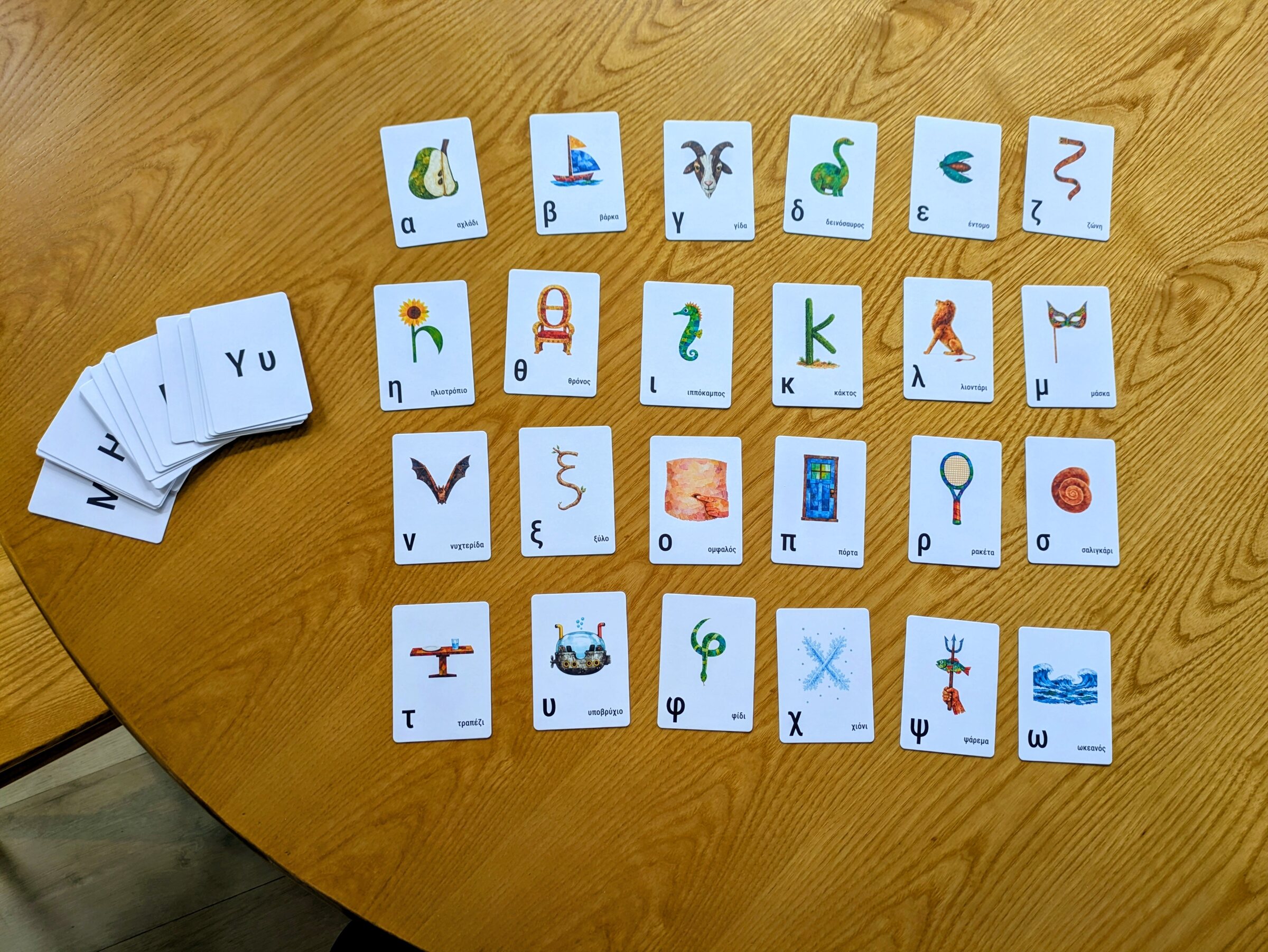
Greek Alphabet Cards
2026-05-16A parent has designed a new set of educational flashcards to help children learn the Greek alphabet through clever visual associations. The project features everyday objects morphed into the shapes of their corresponding letters, offering an engaging tool for early language acquisition.
Comments
Nearly five decades after the classic television sitcom debuted, the fictional WKRP in Cincinnati has officially become a real radio station. A local Cincinnati FM station formerly known as The Oasis acquired the WKRP call letters from a nonprofit broadcaster in North Carolina. This acquisition allows the iconic call letters to finally broadcast in the show's namesake city.
Comments
Naturally Occurring Quasicrystals
2026-05-16Quasicrystals are rare structures similar to regular crystals but featuring non-repeating patterns. They are incredibly uncommon and require extreme, violent events to form in nature. These unique materials are typically created by high-speed asteroid collisions, lightning strikes in sand dunes, or atomic explosions.
Comments
The illicit drug market has experienced a massive surge in methamphetamine production since 2009 due to the widespread adoption of the phenylacetone manufacturing method. Experts are currently investigating whether the distinct chemical composition of this P2P meth is directly linked to rising rates of schizophrenia and other severe mental health crises.
CommentsFuthark by example (2020)
2026-05-16The 2020 tutorial Futhark by example introduces developers to Futhark, a high-performance and purely functional array programming language. It demonstrates how the language enables efficient data-parallel execution across both GPU and CPU architectures through practical coding samples.
CommentsA new dual-view diffusion decoding method called Orthrus-Qwen3 has been introduced to achieve fast, lossless inference for the Qwen3 large language model. By generating up to 7.8 tokens per forward pass, the technique significantly accelerates processing speeds compared to standard methods. Crucially, it maintains an identical output distribution to the baseline model, ensuring no drop in accuracy.
CommentsThe newly announced Ploopy Bean external TrackPoint has received mixed feedback from enthusiasts, with critics arguing that relocating the pointing stick away from the keyboard defeats its core ergonomic purpose. Users also expressed disappointment over the device's lack of authentic features like comfortable soft rim caps and integrated scrolling buttons. However, supporters note that the highly customizable design could still serve as a valuable accessibility tool for individuals with physical disabilities who cannot use standard keyboards.
CommentsRocksky is a new music scrobbling and discovery platform built on the AT Protocol, despite being described in its launch as a next-generation social coding platform. Showcased on Hacker News, the application primarily allows users to track their listening habits and explore new music.
Comments
Clinical trials by Arizona State University demonstrate that fecal transplants significantly improve symptoms in individuals with autism. These findings highlight the potential of gut bacteria therapy as a novel and promising treatment for managing the condition.
CommentsMCP Hello Page
2026-05-16The article highlights a practical use of HTTP content negotiation to serve a helpful HTML guide when users browse a Model Context Protocol server endpoint directly. Community discussions also explore broader challenges with the MCP specification regarding authentication and gateways, though developers remain optimistic about the protocol's future for standardizing AI agent tools.
Comments
Kioxia and Dell have developed a high-density 2RU server capable of storing 10 petabytes of data. This massive storage capacity sparked online debates about its potential use in orbital data centers and satellite networks like Starlink. However, readers quickly dismissed the feasibility of deploying such hardware in space, citing severe challenges with radiation hardening, extreme power consumption, and heat dissipation.
CommentsAdditive Blending on the Nintendo 64
2026-05-16Commenters discuss a technical deep dive into why the Nintendo 64 lacked the vibrant visual effects seen on the original PlayStation, attributing it to hardware limitations with additive blending. The discussion draws parallels between this graphical constraint and audio mixing, explaining how preventing value overflow without dynamic compression forces lower overall brightness. Ultimately, fans debate whether the N64's muted explosions suffer from a lack of realistic light emission or simply deliver a more satisfying, stylized game feel.
Comments3D Gaussian Splatting in a Weekend
2026-05-163D Gaussian splatting is a machine learning technique that reconstructs 3D scenes from 2D image datasets by replacing traditional triangle primitives with unique Gaussian splats. The algorithm optimizes the model by iteratively rendering the scene from various angles and comparing it to ground truth photographs, offering a highly efficient method for rapidly generating realistic environments.
Comments