YC Alumni News
Graduates of the Y Combinator program often go on to build some of the most influential companies in tech. This section follows those alumni, gathering news about their later funding rounds, product milestones, leadership changes, and long-term impact on the startup landscape.
Coverage ranges from late-stage giants announcing new products or public listings to lesser-known graduates quietly reaching profitability. You will also find stories about second-time founders returning with new ventures, alumni becoming investors themselves, and reunions of teams that first met during a batch.
Alumni trajectories matter because they show what happens long after the accelerator hype fades. Watching how graduated companies mature, stumble, or reinvent themselves offers some of the most honest evidence available about which early-stage bets actually compound into lasting businesses.
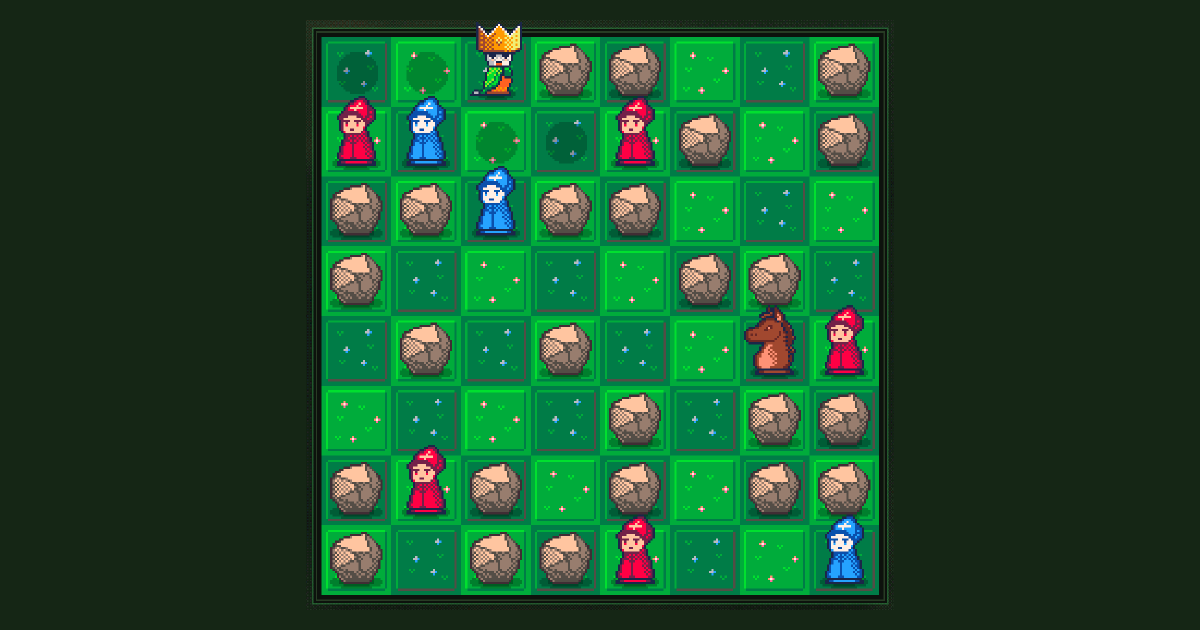
Show HN: Chess-Inspired Roguelike
2026-06-25A new chess-inspired roguelite showcased on Hacker News tasks players with guiding Prince Chazz across the board while dodging enemy pieces. The game features strategic pathfinding mechanics and includes a competitive per-seed leaderboard for players to race against others.
Zig's new bitCast semantics and LLVM back end improvements
2026-06-25The Zig programming language community is enthusiastically praising a comprehensive devlog detailing new bitCast semantics and LLVM back end improvements. Readers expressed strong appreciation for the rigorous technical depth and ongoing language refinements, contrasting the high-quality post favorably against the low-effort and AI-generated content often found on tech forums.

GLM-5.2 is a step change for open agents
2026-06-25The release of GLM-5.2 marks a significant step change for open-source AI agents by crossing a critical capability threshold. This advancement represents a major leap forward in the overall performance and autonomy of open AI systems.
Show HN: OpenKnowledge – open source AI-first alternative to Obsidian/Notion
2026-06-25OpenKnowledge is a new open-source project offering an AI-first alternative to popular note-taking platforms like Obsidian and Notion. Functioning as an AI-native markdown IDE and LLM wiki, it integrates artificial intelligence directly into knowledge management and is currently available for development on GitHub.
OS9Map
2026-06-25Developers have released OS9Map, a new OpenStreetMap viewer designed specifically for the legacy Mac OS 9 operating system. This innovative project allows retro computing enthusiasts to access modern geographical data directly on their decades-old hardware.
Blogging can just be stating the obvious
2026-06-25A new piece reflects on the nature of blogging about web development, suggesting that sharing technical insights often just involves stating the obvious. The author explores the big beautiful mess of creating things for the world wide web. The article serves as a reminder that even basic observations about this chaotic process hold value for the tech community.
You can't unit test for taste
2026-06-25A developer is building a new fitness app called "In the Long Run" that uses Strava integration to track virtual runs across famous global routes. Designed to provide sustained motivation, the platform allows users to gradually traverse country- and continent-spanning distances at their own pace.
Half-Life 2 in a Browser
2026-06-25Readers are discussing a web port that brings Half-Life 2 directly into the browser, alongside similar playable web versions of classic titles like Quake 3 and Ultima Online. The conversation highlights that while these browser games are impressive, they face compatibility hurdles such as Firefox lacking support for specific File System Access APIs. Consequently, users experience degraded performance and missing features when attempting to play the web port on Firefox compared to other browsers.

OAuth for all
2026-06-25Cloudflare has officially rolled out Self-Managed OAuth to all developers on its platform. The widespread release was made possible by a seamless, zero-downtime migration of the company's core authentication engine.
Hey Nico, you didn't vibe code your data room but stole it from Papermark
2026-06-25Papermark has accused entrepreneur Nico Laqua of stealing its open-source and enterprise-licensed data room code to build a competing product. The company is demanding the immediate takedown of the allegedly infringing software. The creators condemned the unauthorized use of their intellectual property as outright fraud.
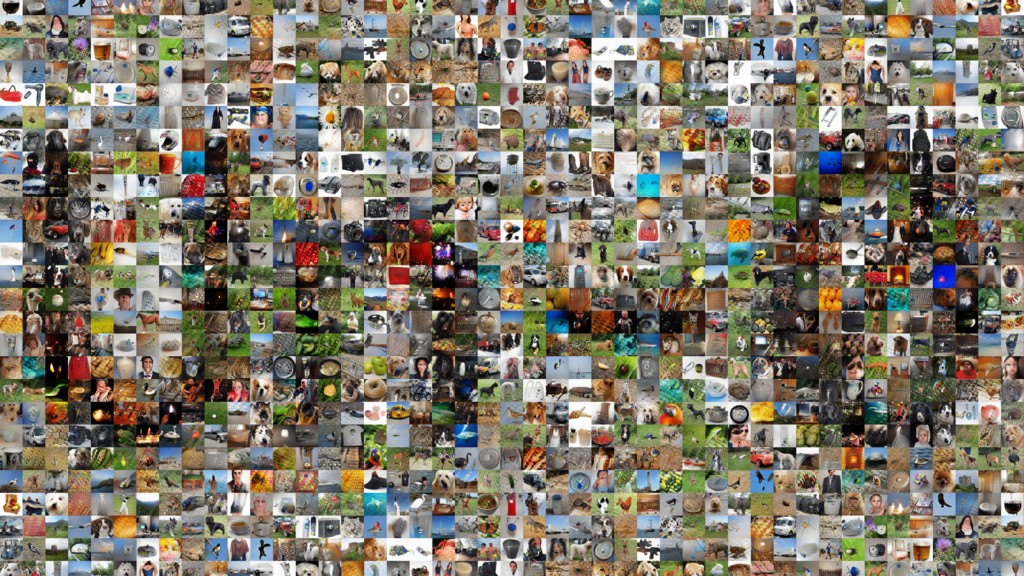
Un-0: Generating Images with Coupled Oscillators
2026-06-25Researchers have introduced Un-0, an open-source image generator powered by a simulated network of coupled oscillators that achieves an FID score of 6.74 on the ImageNet 64x64 dataset. This performance matches the early benchmarks of leading conventional image generation methods, with all model weights and training code now publicly available.
Show HN: I made Google Trends for Hacker News by indexing 18 years of comments
2026-06-25A developer has created a tool that functions as Google Trends for Hacker News by indexing 18 years of the platform's data. It allows users to search and chart the popularity of any topic, tool, or person across 45 million posts and comments. The tool also features an overlay option to visually compare the rise and fall of multiple terms over time.
The Doorman's Fallacy in action
2026-06-25The Doorman's Fallacy highlights the danger of businesses cutting unmeasurable soft assets like hospitality, intuitive design, and quality customer support in pursuit of short-term cost savings. In the tech sector, this flawed metric-driven approach often results in frustrating user interfaces and degraded digital experiences that ultimately harm long-term customer retention.

An oral history of Bank Python (2021)
2026-06-25This oral history explores the unconventional ecosystem of Python as utilized by major investment banks, detailing the custom distributions, strict security constraints, and legacy integrations required in the financial sector. It highlights how these specific institutional needs have created a distinct environment that differs significantly from the standard open-source community.
LuaJIT 3.0 proposed syntax extensions
2026-06-25Developers have opened an umbrella issue to discuss and document proposed syntax extensions for the upcoming LuaJIT 3 release. The community is invited to provide feedback on the design and semantics of these new features as the official documentation continues to evolve.

LastPass notifies users of yet another data breach
2026-06-25Password manager LastPass is alerting users to yet another data breach involving stolen personal information. Unlike previous incidents, this latest compromise occurred through one of the company's external partners.
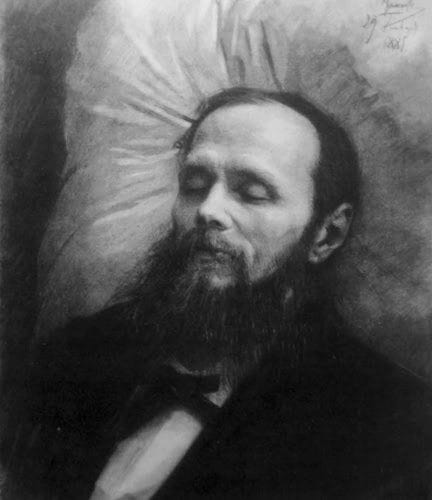
Dostoyevsky isn't difficult
2026-06-25This humorous piece argues that Dostoyevsky's literature is actually quite accessible and not inherently difficult to read. The only exception cited is the significant challenge readers face in navigating his complex character names.

The last Romans are still around
2026-06-25This piece explores the enduring legacy of the Roman Empire and examines when the ancient civilization truly ceased to exist. It highlights how the empire's expansion fundamentally shaped Europe and the modern world, suggesting that the Romans never completely disappeared.
Parallel Parentheses Matching
2026-06-25A highly optimized GPU implementation of parallel parentheses matching, based on bicyclic semigroups and binary search, is currently utilized in the Vello rendering engine. The creator is now seeking academic collaboration to formally publish the algorithm, which builds upon foundational research from 1985. Meanwhile, community discussion focuses on evaluating alternative data structures like Range Min Query Trees and debating the accurate use of asymptotic time complexity for parallel processing.
Medical students are using popular research tool to pump out misleading studies
2026-06-25Medical students are using a popular research tool to publish misleading studies, exposing significant flaws in the scientific training of clinical practitioners. The issue highlights systemic problems with scientific incentives and the tendency of physicians to apply scientific knowledge without mastering the rigorous scientific method. Consequently, this proliferation of flawed research threatens to further erode the public's already declining trust in the medical profession.