YC Accelerator News
The accelerator model popularized by Y Combinator continues to evolve, and this section keeps an eye on it. Articles cover new batches, application and admission news, changes to program structure or terms, and analysis of how startup accelerators shape early-stage companies.
Stories here often examine adjustments to batch size, funding terms, and application timelines, along with commentary from partners and alumni about what those changes mean. Comparative pieces look at how other accelerators respond when the most prominent program in the industry shifts its approach.
Anyone considering an accelerator application has a practical stake in this coverage, since terms and program design directly affect how much equity founders give up and what support they receive. Investors and ecosystem builders follow it too, because accelerator policy quietly steers where thousands of startups begin.
Running Gemma 4 26B at 5 tokens/sec on a 13-year-old Xeon with no GPU
2026-07-15A developer successfully ran Google's Gemma 4 26B AI model on a 13-year-old Xeon CPU without using a GPU. By working around the legacy hardware's lack of AVX2 instruction sets, the system achieved a text generation speed of five tokens per second, demonstrating that modern Mixture of Experts models can operate on highly constrained infrastructure.
Governments, companies, nonprofits should invest in free, open source AI [pdf]
2026-07-15An article advocating for government and corporate investment in open-source AI has prompted readers to propose funding targeted, hardware-specific benchmark competitions to incentivize the development of optimized consumer-level models. However, commentators highlight the significant logistical costs of curating fair evaluations and remain divided on whether financial prizes or mandatory open-weight releases offer the best path forward for the movement.
SQLite should have (Rust-style) editions
2026-07-15A recent proposal suggests SQLite should adopt editions similar to Rust to modernize its default configurations for 2026 while preserving backward compatibility. Developers in the ensuing discussion praised the concept as a practical way to update legacy defaults without breaking existing codebases. The conversation also examined the broader benefits and challenges of implementing similar edition mechanisms in other established languages like C and C++.
Prioritize mental health, and why communication is so important
2026-07-15This article emphasizes the critical need to prioritize mental health within the demanding tech industry to prevent employee burnout and maintain long-term productivity. It highlights that fostering open, transparent communication is essential for building supportive teams where individuals feel comfortable discussing their well-being.

Vancouver PD website features Quick Escape button that wipes itself from history
2026-07-15The Vancouver Police Department has added a Quick Escape button to its website to help protect vulnerable users. When activated, the feature clears the page from the user's browser history to prevent abusers from tracking their digital footprint. This safety measure allows individuals to discreetly access police resources without leaving a trace.
Collection of Digital Clock Designs
2026-07-15A curated collection of creative digital clock designs has sparked a vibrant discussion among developers and designers sharing their own experimental timepieces. Highlighted projects range from hand-coded SVG watchfaces and physical PCB wall clocks to conceptual designs that use water-filling digits or analog faces to display time. The thread underscores a strong community interest in innovative, spatial, and highly artistic approaches to digital timekeeping.

Mysteries of Telegram Data Centers (2022)
2026-07-15Telegram operates five data centers located in Miami, Amsterdam, and Singapore to support its global messaging infrastructure. Each user account is assigned to a specific data center during registration, and this association remains fixed regardless of the user's physical location.

TS-2026-009: Insecure argument handling in Tailscale SSH permitted root access
2026-07-15Tailscale has disclosed a security vulnerability in its SSH service where insecure argument handling permitted unauthorized root access. The security notification affects both the Tailscale client and service, and the company is directly contacting affected users in accordance with its disclosure policy.
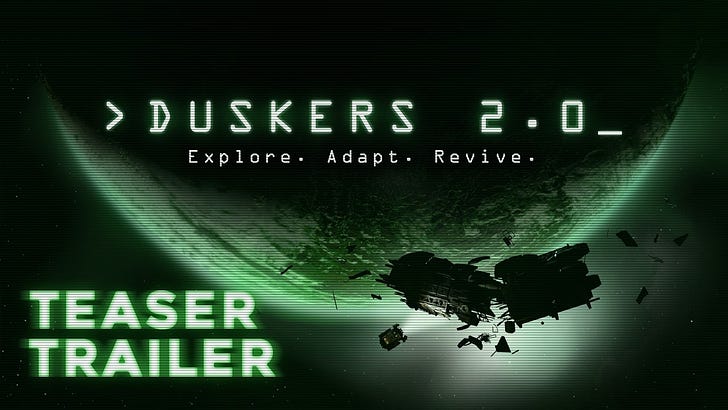
Duskers, the scary command line game, is getting a sequel
2026-07-15A teaser trailer for Duskers 2.0 was released during the PC Gaming Show, confirming the sequel to the horror command-line game. The initial footage provides an early look at the upcoming follow-up to the original terminal-based title.

SpaceX bond worth 10% less than issue price – heading for junk bond status
2026-07-15SpaceX corporate bonds have dropped to 10% below their original issue price, putting the company's debt at risk of being downgraded to junk bond status. This decline highlights shifting investor sentiment and potential concerns regarding the aerospace giant's financial leverage.
Microsoft has released software updates to plug at least 570 security holes
2026-07-15Microsoft has issued a massive software update to patch at least 570 security vulnerabilities across its Windows operating systems and other products. This latest release nearly triples the number of fixed flaws addressed during the company's record-breaking Patch Tuesday update last month.
Towards a harness that can do anything
2026-07-15Discussions surrounding the article highlight a consensus that AI agents should be built on deterministic code scaffolds rather than relying solely on fluid prompts. Developers argue that LLMs should be used strictly to handle edge cases and generate permanent automation scripts, treating prompt-only workflows as inferior to committing actual code. Additionally, the conversation underscores the rising importance of Behavior-Driven Development and Gherkin-style testing to define agent behaviors before codifying them into deterministic execution.
I tricked Claude into leaking your deepest, darkest secrets
2026-07-15A recent article details how a researcher successfully bypassed the safety guardrails of Anthropic's Claude AI model using clever prompt injection techniques. By exploiting these vulnerabilities, the author tricked the system into revealing sensitive and private information. This demonstration highlights the ongoing challenges of securing large language models against manipulation and unintended data leaks.

Launch HN: Coasty (YC S26) – An API for computer-use agents
2026-07-15Y Combinator S26 startup Coasty has launched an API designed for computer-use agents to run autonomous tasks on managed machines. The platform allows developers to compose these tasks into workflows and utilize prediction primitives for direct control, offering both a standard REST API and an LLM-friendly plain-text documentation format.
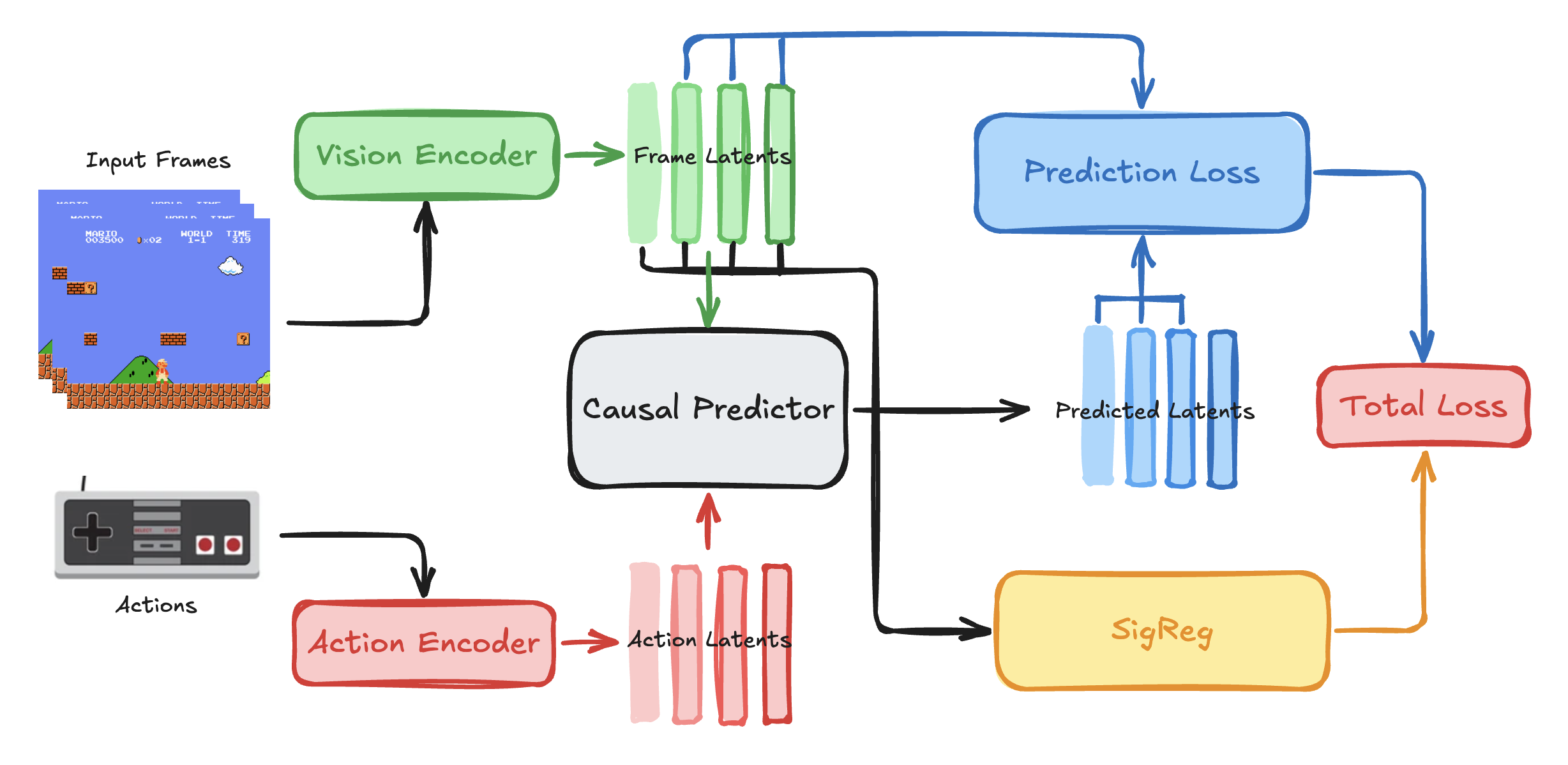
LeMario: Training a JEPA World Model on Super Mario Bros
2026-07-15Researchers have developed LeMario, a from-scratch JEPA world model trained on the classic Super Mario game. This project aims to advance AI research by studying action-conditioned prediction and reward-free planning within a simulated environment.

Who Is America's Homer?
2026-07-15The publication explores whether the United States has a definitive national poet comparable to global literary giants like Shakespeare and Dante. To determine who best captures the American spirit and identity, they surveyed a diverse group of authors and poets for their top votes.
Metal-Organic Frameworks, Chemistry's New Miracle Materials (2018)
2026-07-15Metal-organic frameworks are highly efficient, customizable chemical catalysts that recently earned pioneer Omar M. Yaghi the 2025 Nobel Prize in Chemistry. Yaghi has since relocated his research to Tsinghua University in China, citing slashed US research funding, restricted international collaborations, and a stronger push for AI-driven science. His departure underscores growing concerns about the defunding of American research institutions and the resulting brain drain of top scientific talent.
Show HN: misa77 - a codec that decodes 2x faster than LZ4 (at better ratios)
2026-07-15A new data compression codec called misa77 has been released, claiming to outperform the popular LZ4 standard in both speed and efficiency. The tool achieves 1.5 to 3 times faster decompression on x86 and ARM architectures while simultaneously delivering better compression ratios.
Probably check on your smart appliances
2026-07-15Cybersecurity experts are warning consumers to inspect their smart home appliances for potential malware infections, specifically highlighting the risk to everyday devices like internet-connected refrigerators. Users are urged to secure their home networks and update their IoT devices to protect against these growing threats.
Show HN: Firefox in WebAssembly
2026-07-15A developer successfully ported Firefox to WebAssembly for an experimental project, reportedly spending over 25000 dollars in large language model tokens for debugging and research. The resulting online discussion debated the actual financial cost while highlighting how AI democratizes complex software engineering tasks that would otherwise require rare human expertise.