YC Accelerator News
The accelerator model popularized by Y Combinator continues to evolve, and this section keeps an eye on it. Articles cover new batches, application and admission news, changes to program structure or terms, and analysis of how startup accelerators shape early-stage companies.
Stories here often examine adjustments to batch size, funding terms, and application timelines, along with commentary from partners and alumni about what those changes mean. Comparative pieces look at how other accelerators respond when the most prominent program in the industry shifts its approach.
Anyone considering an accelerator application has a practical stake in this coverage, since terms and program design directly affect how much equity founders give up and what support they receive. Investors and ecosystem builders follow it too, because accelerator policy quietly steers where thousands of startups begin.

SalesPatriot (YC W25) Is Hiring FDEs
2026-07-30YC W25 startup SalesPatriot is building an AI-native platform to automate and modernize legacy defense, aerospace, and industrial supply chain operations. The company, which has raised over $10 million and processes $50 million weekly, is hiring Founding Full-Stack Engineers to relocate to San Francisco and work directly onsite with clients to implement and scale the technology.
A Trampoline
2026-07-30A data scientist explores how digital environments act as a trampoline to propel and shape human behavior. The research highlights the mechanisms through which online spaces actively influence user actions and psychological outcomes.
Show HN: A local merge queue for parallel Claude Code agents
2026-07-30A new Hacker News project introduces a local merge queue designed for parallel Claude Code agents. The open-source tool safely queues code modifications to prevent file conflicts when multiple AI assistants work in the same repository. This allows developers to run concurrent AI coding tasks locally without overwriting each other's changes.

Some thoughts about Anthropic's new cryptanalysis results
2026-07-30Anthropic recently showcased the cryptographic capabilities of its unreleased Claude Mythos model by publishing new cryptanalysis results against the HAWK signature scheme and reduced-round AES. Alongside the technical findings, the company released a blog post detailing the research process behind these breakthroughs. Security researchers are now analyzing these results to understand the growing impact of advanced AI on cybersecurity.

Flume Water Monitor 915 MHz Security Is Pretty Good
2026-07-30Researchers using a Software Defined Radio successfully intercepted, demodulated, and decrypted the 915 MHz water usage messages transmitted by the Flume Water Monitor. Despite the encryption ultimately being broken, the device's overall security is still considered fairly robust.

Man and the Computer by John G. Kemeny (1972 book by the co-creator of BASIC)
2026-07-30A recent discussion examines John G. Kemeny's 1972 book Man and the Computer, noting that its vision of personal devices acting as terminals for centralized resources feels highly prescient in today's cloud computing era. The conversation also highlights Kemeny's pioneering efforts at Dartmouth College, where the Dartmouth Time-Sharing System successfully democratized early computer access decades before it became standard at other universities.

Commodification of Intelligence: Good, Bad, and Ugly Circular AI Deals
2026-07-30Rather than simply indicating a speculative bubble, circular AI deals mirror the traditional financing methods historically used by capital-intensive commodity industries. The piece explores the dual nature of these arrangements, examining when such circular investments are healthy business practices and when they are used to obscure underlying financial risks.
Launch HN: Tokenless (YC S26) – Automatic model switching to save money
2026-07-30YC S26 startup Tokenless has launched an AI model router that serves as a drop-in replacement for the OpenAI and Anthropic APIs. By automatically switching between models, the platform delivers equivalent output quality while cutting API costs by more than half.

Recursive Filters: SMA, EMA, Low‑Pass, and a Tiny Kalman
2026-07-30This technical guide provides a practical overview of recursive smoothing filters used in data processing. The article covers foundational techniques ranging from simple and exponential moving averages to low-pass filters and basic one-dimensional Kalman updates. It serves as a quick, hands-on resource for developers looking to implement efficient data smoothing algorithms.

Refactoring cuisine: how an Iraqi stew sailed to Singapore
2026-07-30Drawing a parallel between software engineering and cooking, this article details the culinary journey of an Iraqi stew as it is adapted for a Singaporean audience. The piece highlights the intricate sensory experience of global ingredients like the calamansi fruit to explore how tech-minded creators approach the evolution and refinement of traditional recipes.
The Rust on ESP Book
2026-07-30A new comprehensive guide titled The Rust on ESP Book has been published for developers using Espressif microcontrollers. The resource provides detailed instructions and best practices for integrating the Rust programming language with various Espressif System on Chips and modules. This release aims to streamline embedded software development for engineers working with ESP hardware.

Hamburg's Stadtpark: A Park Built to Be Used
2026-07-30Hamburg's Stadtpark was established in 1914 with a functional design philosophy that prioritized public utility over passive visual admiration. Over a century later, the space continues to successfully fulfill this original purpose as an active, heavily utilized community hub.
Codex Security
2026-07-29New SDKs and a command-line interface have been released for Codex Security to help developers integrate and manage security features. The open-source project is now available on GitHub, inviting community contributions to its ongoing development.
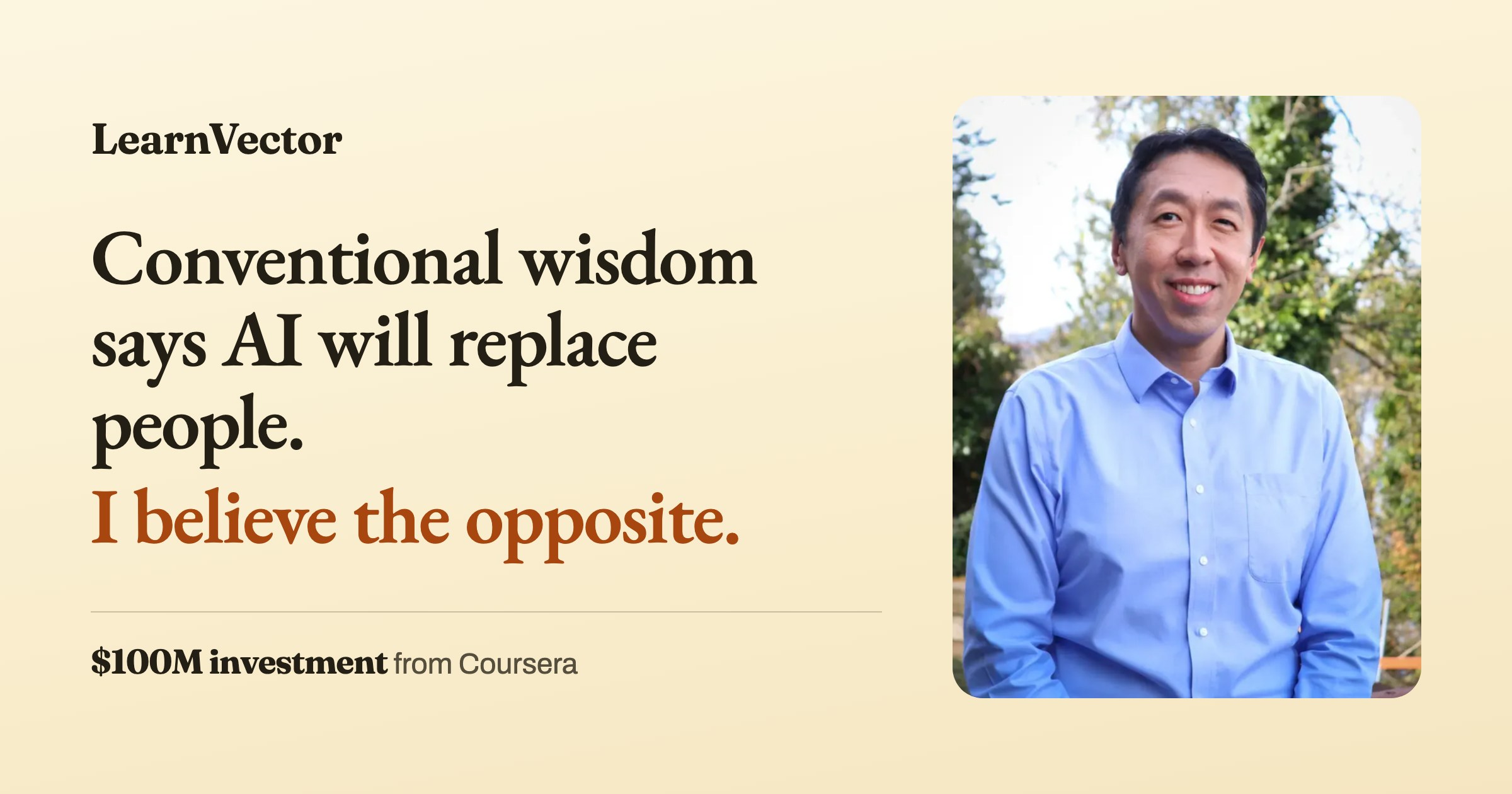
LearnVector – Andrew Ng's AI company building one‑to‑one learning experiences
2026-07-29AI pioneer Andrew Ng has launched LearnVector, a new education startup backed by a $100 million investment from Coursera. The company is developing personalized, one-to-one AI learning experiences designed to adapt to users until they fully master new skills.
Show HN: I was tired of opening 2 tabs for every HN link, so I made a userscript
2026-07-29A new lightweight userscript called HNewhere allows users to view Hacker News discussions directly on article webpages without needing to open a second tab. The tool seamlessly embeds community comments alongside the original content to streamline the browsing experience.
Half-Life ported to Mac OS 9
2026-07-29The classic video game Half-Life has been ported to Mac OS 9, allowing players to experience the title on legacy Apple hardware. This achievement is highlighted by a community dedicated to keeping early Mac computers usable today through software downloads, guides, and preservation hacks.

Substack writers, you need a website
2026-07-29While Substack offers a convenient platform, writers should treat it primarily as a distribution tool rather than a permanent home for their content. By hosting their work on an independently owned website with a domain they control, creators can secure long-term visibility and maintain full command over their digital presence.

Chip stocks slide in US and Asia as AI jitters rattle investors
2026-07-29Investor anxiety over artificial intelligence has triggered a widespread slump in chip stocks across the US and Asia. The downturn was particularly severe in South Korea, where trading on the Kospi index was temporarily halted following an 8% plunge.

Hubble: Open-source notetaking app for you and your agents
2026-07-29The new open-source notetaking application Hubble is designed for seamless collaboration between humans and AI agents. The platform allows automated agents to directly read, write, and organize notes alongside human users in a shared workspace. This integration bridges the gap between traditional productivity tools and automated machine workflows.
Truth is not a direction: a Tarski attack on LLM probes
2026-07-29Scientist Abel Jansma challenges current methods of evaluating factual accuracy in large language models by arguing that truth cannot be captured as a simple directional vector within neural networks. Drawing on Tarski's semantic frameworks, the analysis critiques existing LLM probing techniques and suggests that evaluating factual alignment in AI requires embracing higher-order interactions and complex information theory.