Tech Regulation News Today
Governments worldwide are writing new rules for the technology sector at a rapid pace. Here you will find news on legislation, regulatory proposals, and enforcement actions that affect software makers, online platforms, and AI developers, along with analysis of how companies are responding to a changing legal landscape.
Stories in this section range from draft bills on AI safety and data protection to platform accountability rules, content moderation requirements, and enforcement actions with hefty penalties attached. Coverage also follows lobbying pushes, public consultations, and the compliance deadlines that force companies to change products in visible ways.
Regulation now shapes technology as much as engineering does, deciding what features ship, which markets open, and how much risk a business model carries. Legal teams, founders, product leaders, and policy professionals track this coverage to stay ahead of rules that can rewrite their roadmaps.

A combination of incoming international investment and restrictive local regulations is causing market prices to rise much faster than supply can meet. This growing economic disparity presents ongoing challenges for scaling critical resources and infrastructure in the technology sector.
Comments
New internet regulations requiring age verification are effectively forcing Americans to undergo mandatory identity checks, ushering in a papers, please era of the web. Consequently, these measures will severely decimate online privacy for everyday users.
Comments
Apple decided against rolling out Siri in the European Union after regulators denied its request for an 18-month exemption to comply with local laws. While some observers view this withdrawal as a strategic play to generate consumer sympathy by blaming the EU, others praise the strict regulatory enforcement and Apple's choice to withhold the service rather than compromise on compliance.
Comments
Under new telecommunications regulations, the South Korean government is requiring all online forums to scan user-uploaded images and videos using AI censorship tools. This mandate aims to enforce stricter content moderation across the country's internet communities. However, the requirement will force platform owners to invest heavily in the hardware necessary to process such a massive volume of digital media.
Comments
President Trump signed a scaled-down executive order on artificial intelligence following weeks of policy reversals. This action comes after he postponed a broader, similar measure last month, resulting in a more streamlined approach to federal AI regulation.
CommentsPrivacy advocates warn that Big Tech is designing a two-track privacy system by introducing built-in browser tracking features that bypass the strict consent regulations required of third-party advertisers. By enabling these proprietary tracking tools by default and hiding opt-out options in browser settings, companies aim to eliminate annoying cookie banners while seamlessly retaining their ability to collect user data.
CommentsThe June 2026 Hacker News job-seeking thread features numerous tech professionals seeking remote roles, with a prominent focus on artificial intelligence, large language models, and full-stack software engineering. Candidates are actively pitching their ability to build scalable backend systems, develop AI-powered SaaS applications, and solve complex, regulation-heavy technical challenges for startups and enterprise clients worldwide.
Comments
The White House has proposed new Office of Management and Budget regulations that would give political appointees final approval over federal research grants. These proposed changes would render the federal research grant review process opaque.
CommentsA portentous reunion
2026-05-26A recent article addresses parental anxieties regarding a rapidly changing future, arguing that education should prioritize teaching children adaptability and emotional regulation over specific technical skills. The author also reflects on the irony of using an AI language model to discuss the dangers of technological dehumanization, emphasizing that the future will inevitably remain highly uncertain.
Comments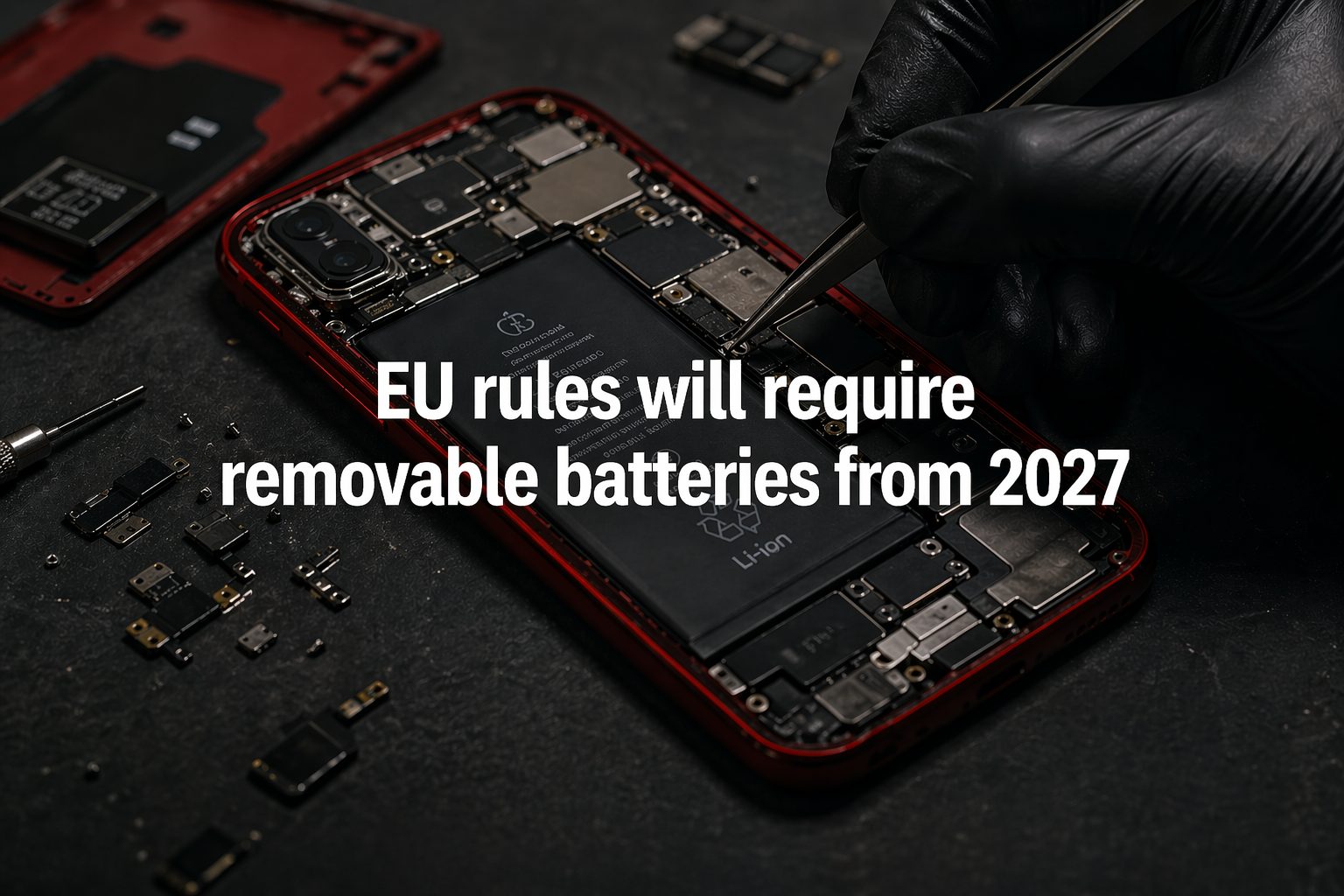
Beginning in 2027, a new European Union regulation will require all smartphones sold in the region to feature removable batteries. This mandate represents a major shift in modern device design for manufacturers. For users, the change means they will once again easily be able to swap out their own power cells to extend the life of their devices.
Comments
I built my own hair electrolysis machine
2026-05-03A maker has built a DIY hair electrolysis machine featuring voltage regulation and shared their build details and results with the community. The accompanying discussion explored technical questions about the device's hardware costs, pain levels, and procedural speed compared to professional treatments. Additionally, the thread highlighted the active trans community within the hacker scene, sparking humorous tangents about DIY hormone extraction.
Comments
California will begin issuing traffic tickets directly to the manufacturers of autonomous vehicles when their self-driving cars violate traffic laws. Under the new regulations, police will hold the automakers financially responsible for the infractions rather than the passengers inside the vehicle. This policy shift places the ultimate burden of safety and compliance squarely on the companies developing autonomous technology.
Comments
The debate over online age verification has emerged as a critical, non-negotiable battleground that will serve as foundational infrastructure for all future digital regulations. Because of its sweeping implications, tech stakeholders and everyday users are urged to recognize that this is a pivotal policy fight they cannot afford to ignore.
CommentsA new study examines how habitual coffee consumption alters the gut microbiome, physiology, and cognition, prompting users to share their personal experiences with long-term caffeine dependence. While many report long-term benefits from quitting such as stabilized appetite and improved memory, the initial withdrawal frequently causes severe, months-long mental health crashes and dopamine dysregulation.
CommentsMeta is implementing large-scale, active surveillance of employee mouse movements and keystrokes to gather data for AI training, prompting significant concerns over the loss of workplace privacy. Commentators warn that this shift from reactive monitoring to proactive tracking reflects a broader tech industry trend of treating workers as data assets rather than people. Consequently, this type of unchecked corporate data harvesting is expected to become the new normal in the US, even as similar practices face strict legal restrictions in parts of Europe.
Comments
Starting in 2027, all smartphones and tablets sold in the European Union must feature user-replaceable batteries. This new mandate is part of a broader sustainability initiative aimed at slashing electronic waste and extending device lifespans. Consequently, tech manufacturers will need to adapt their hardware designs to comply with the upcoming environmental regulations.
CommentsDiscussions surrounding the vital link between sleep, learning, and overall well-being reveal that mental stability and having a clear life purpose are foundational to maintaining healthy daily habits. Readers emphasize that understanding cognitive functions like ADHD is crucial for managing attention, emotional regulation, and executive dysfunction. Ultimately, adopting a process-focused rather than purely outcome-driven mindset helps prevent burnout and sustains long-term productivity.
Comments