Latest Tech News
Stay current with the latest developments across the technology world. This section aggregates fresh headlines on software, hardware, artificial intelligence, startups, and major industry moves. It is designed as a fast, wide-angle briefing for anyone who wants to know what just happened in tech.
The stories collected here run the full spectrum: AI research announcements, chip and device launches, cybersecurity incidents, venture funding, executive shakeups, and policy news from capitals around the world. Big platform changes and viral developer stories make the cut when they matter.
Technology news compounds quickly, and missing a few days can mean missing a genuine shift. Professionals who work in or around the industry, along with readers who simply enjoy following innovation, rely on a rolling briefing like this to stay oriented without hunting across many sources.
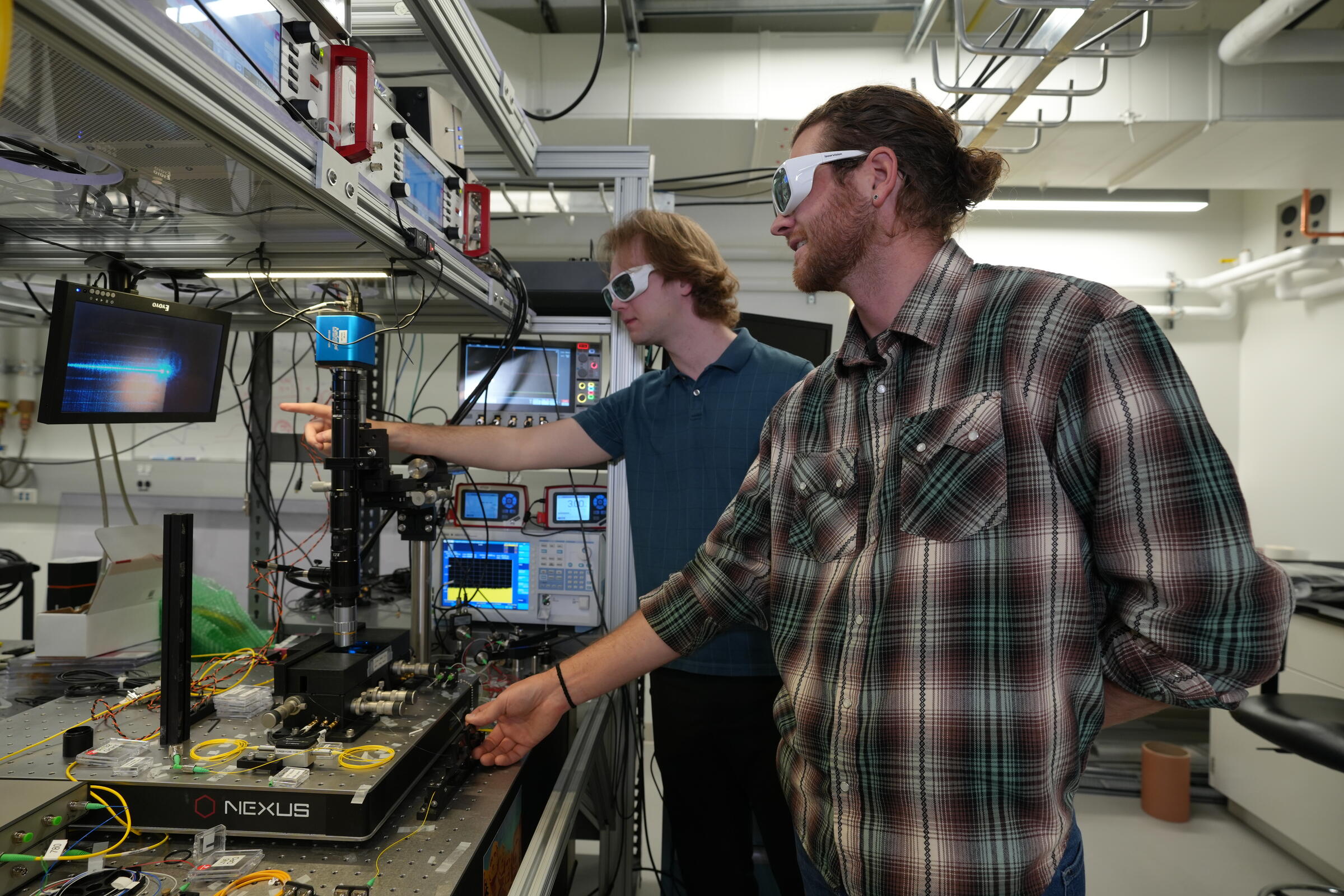
NIST scientists create 'any wavelength' lasers
2026-04-18NIST scientists and collaborators have pioneered a technique to manufacture integrated light circuits by depositing complex patterns of specialized materials onto silicon wafers. This innovation enables the creation of highly versatile lasers that can operate at any wavelength directly on standard silicon chips.

Michael Rabin has died
2026-04-18Renowned computer scientist Michael Rabin has passed away, prompting widespread tributes from developers and former students. The tech community is mourning his loss while celebrating his foundational contributions, particularly the Rabin fingerprinting algorithm used in data deduplication and the Rabin-Karp method used in threat scanning. Alongside his technical legacy, former students fondly remember him as a masterful and engaging lecturer at universities like Harvard and Columbia.
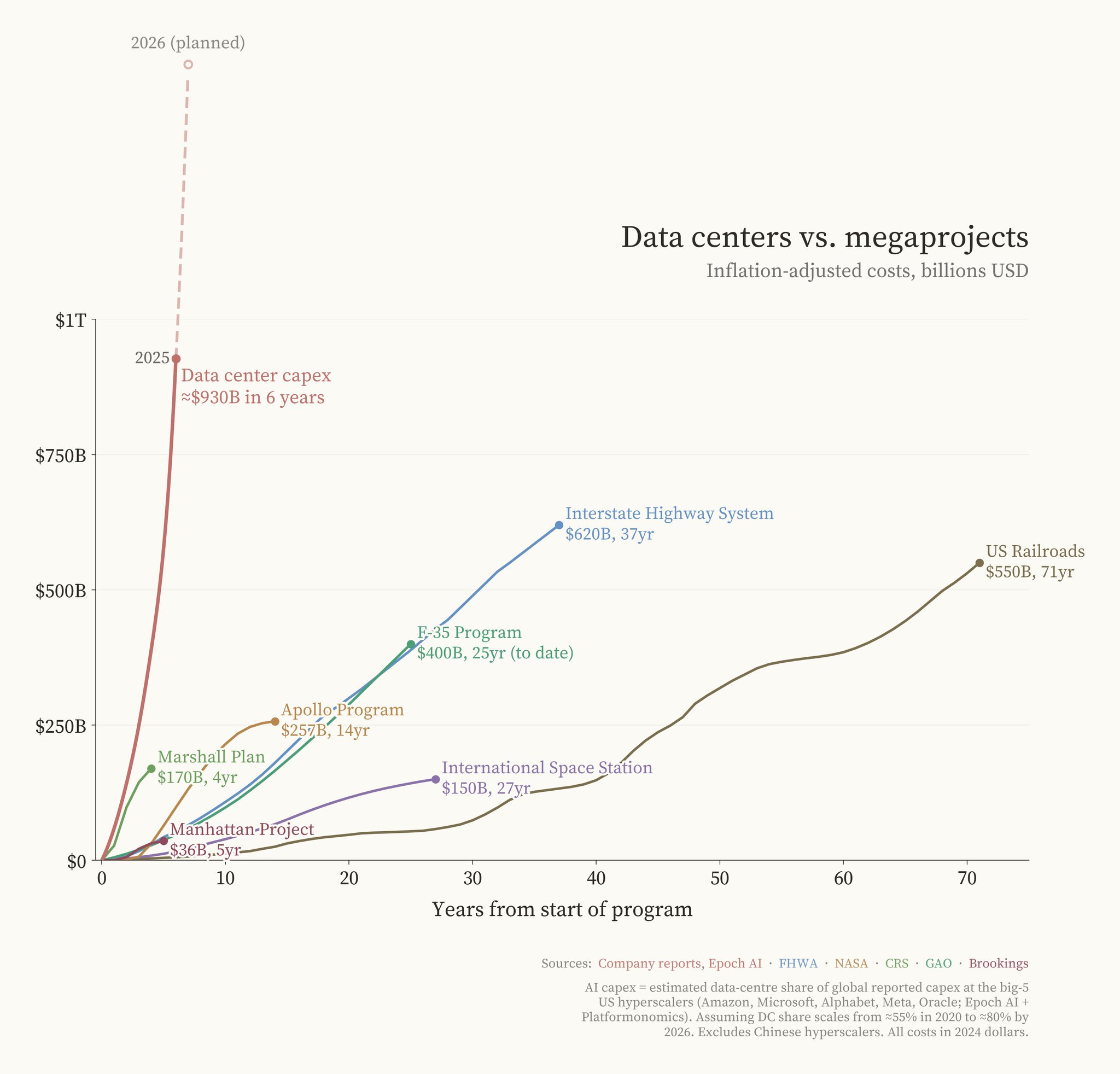
Hyperscalers have already outspent most famous US megaprojects
2026-04-18Major tech hyperscalers are investing unprecedented capital into data center and AI infrastructure, with their current spending already surpassing the historical costs of the most famous US megaprojects. This massive financial commitment highlights the intense industry race to dominate the next generation of cloud computing and artificial intelligence.

Brunost: The Nynorsk Programming Language
2026-04-18A developer has introduced Brunost, a new programming language that uses the Nynorsk written standard of Norwegian for its syntax. The creator humorously apologized to the tech community for adding yet another language to the already crowded programming landscape.
80386 Memory Pipeline
2026-04-18A detailed technical discussion examines the internal microcode of the classic Intel 80286 and 80386 processors, focusing on the mechanics of switching between real and protected modes. By analyzing vintage BIOS disassemblies and historical patents, the thread clarifies why the instruction prefetch queue must be immediately flushed via a control transfer after enabling protected mode to prevent processor triple faults.
Understanding the FFT Algorithm (2013)
2026-04-18Reader discussions surrounding an article on the Fast Fourier Transform algorithm debate the level of mathematical complexity required to truly understand such concepts. Beyond theory, participants highlight practical applications ranging from removing visual artifacts on color e-ink displays to analyzing network traffic. The conversation also explores using frequency domain techniques like the Lomb-Scargle periodogram to process unevenly sampled packet capture data.

The Unix executable as a Smalltalk method (2025) [video]
2026-04-18A presentation at the Onward! 2025 conference explores the concept of treating Unix executables as native Smalltalk methods to bridge the gap between the operating system and the programming environment. Joel Jakubovic from Charles University details this technical approach and discusses the broader implications for unifying Unix and Smalltalk.

4-bit floating point FP4
2026-04-18A new technical overview explores the growing utility of extremely low-precision 4-bit floating-point numbers in optimized computing environments. The analysis breaks down the specific numerical values represented by FP4 formats and examines the various architectural variations of this emerging standard.
NASA Force
2026-04-17NASA has officially launched a new specialized task force dedicated to advancing its core technological capabilities and future aerospace missions. This strategic initiative aims to streamline innovation across the agency by integrating next-generation computing and engineering solutions. The newly established group will also focus on expanding partnerships with private sector technology firms to accelerate deep space exploration.

NIST gives up enriching most CVEs
2026-04-17The US National Institute of Standards and Technology announced a new policy this Wednesday regarding the US National Vulnerability Database. Under this change, the agency will no longer enrich most CVEs with extended analysis. This shift represents a major change in how critical cybersecurity data is processed and distributed across the tech industry.
Reflections on 30 years of HPC programming
2026-04-17A summary of Brad's HIPS 2025 keynote reflects on the evolution of High-Performance Computing programming over the past three decades. The discussion highlights both the significant technological advancements and the enduring paradigms that have shaped the field since the early 1990s.
A Python Interpreter Written in Python
2026-04-17A new project called Byterun implements a Python interpreter written entirely in Python, sparking community debate over the architectural differences between self-hosting interpreters and compilers. While critics note that circular interpreters can create inefficient runtime chains compared to self-hosted compilers, supporters highlight the project's value for educational experimentation and demystifying language execution. The ensuing discussion also delves into the technical nuances of bootstrapping and the exact definitions of interpreters, JIT compilers, and PyPy's compiled RPython subset.
Introducing: ShaderPad
2026-04-17Programmer and designer Riley J. Shaw has introduced ShaderPad, a new project reflecting his commitment to repair and craft in technology. This release aligns with his broader mission to build transparent, remixable tools that promote a sustainable and accessible future.
Experiment with ICEYE Open Data
2026-04-17ICEYE has made a wealth of open data resources available for researchers and developers to experiment with. This initiative allows the tech community to freely explore and research the full potential of Synthetic Aperture Radar technology.

I built a 3D printing business and ran it for 8 months
2026-04-17A 3D printing enthusiast shares a firsthand business report detailing the practical realities of running their own 3D printing company for eight months. The account provides valuable insights for tech entrepreneurs regarding the operational challenges and financial viability of turning a hobby into a commercial enterprise.

Everything we like is a psyop?
2026-04-17This article examines the growing concern that TikTok's algorithmic feed is artificially shaping modern culture and consumer trends. It questions whether popular digital phenomena are the result of organic interest or manipulative growth hacking. Ultimately, the piece urges society to establish clear boundaries between legitimate marketing practices and inauthentic algorithmic manipulation.
IPv6 traffic crosses the 50% mark
2026-04-16Despite IPv6 traffic crossing the 50% mark, technical discussions highlight ongoing debates regarding its practical benefits and the internet's persistent reliance on NAT. While widespread adoption is recognized as crucial to combat IPv4 address exhaustion, many practitioners still prefer IPv4 for local network setups due to its cleaner architecture and the complexities of bridging the two protocols.
The future of everything is lies, I guess: Where do we go from here?
2026-04-16Readers are debating the societal impact of large language models, warning that automating core cognitive skills could eliminate traditional pathways for upward mobility. While some fear this shift will cause society to regress into pre-technological hierarchies reliant on physical strength and discriminatory practices like primogeniture, others argue we are not doomed to repeat the past. Ultimately, the discussion highlights deep anxieties about how advanced artificial intelligence might reshape human values, fairness, and social equity in the future.
FSF trying to contact Google about spammer sending 10k+ mails from Gmail account
2026-04-16The Free Software Foundation is seeking a direct human contact at Google to report a Gmail account responsible for sending over 10,000 spam emails. The organization is appealing to the tech community for help bypassing its standard abuse reporting forms, which have previously failed to generate any response or resolution.
AI cybersecurity is not proof of work
2026-04-16Tech community debates are questioning the validity of Anthropic's claims regarding its closed Mythos model and its advanced cybersecurity capabilities compared to open-source alternatives. Skeptics argue that without transparent testing setups, these assertions serve as marketing rather than proof, raising concerns about whether artificial intelligence genuinely discovers complex vulnerabilities or merely games benchmarks. The discussion also highlights broader disagreements over whether strong coding proficiency naturally translates to identifying arbitrary security flaws, emphasizing the need for practical and reproducible verification.