HR Tech News
Software now touches every part of how companies hire, pay, and manage people. This section gathers news on HR platforms, recruiting tools, payroll and benefits systems, and the growing use of AI in workforce decisions. It is aimed at HR professionals, founders, and anyone curious about the technology behind modern workplaces.
Coverage commonly includes funding and product news from HR software vendors, AI screening and interviewing tools entering the hiring process, and platforms that manage global payroll and contractor compliance. Studies and rules addressing bias in automated hiring decisions come up regularly as the technology spreads.
The stakes are high because these systems influence who gets hired, how much people are paid, and how performance is judged. HR leaders selecting software, vendors watching competitors, and employees who want to understand the systems evaluating them all have reasons to follow this space.
A new toolkit called ADRs4AI introduces deliberation records specifically designed to track human-AI collaboration by versioning them in Git. This framework allows developers to preserve their thought processes and ensure that decisions compound over time, bringing greater structure to the emerging practice of deliberative programming.
CommentsReader discussions surrounding the displacement of human workers by AI highlight concerns over the loss of economic leverage and political power, rather than just wages. While some fear dystopian suppression of displaced populations, others argue that policies like universal basic income could actually foster greater civic engagement. Ultimately, the debate centers on whether AI is the true culprit behind these socioeconomic shifts or if broader policy failures and historical automation trends are to blame.
Comments
PaperPilot is a new open-source, local AI copilot that processes PDF documents entirely offline using a pure-Rust engine with WebAssembly and Model Context Protocol support. By eliminating cloud dependencies, it offers developers a secure, privacy-focused tool for document interaction that is now available on GitHub for community contributions.
CommentsA retrospective look at behind-the-scenes photos of the historic NeXT Computer office has sparked deep nostalgia among tech veterans who celebrate the platform's monumental legacy, including its role in creating the World Wide Web and developing Doom. The ensuing discussion highlights a broader melancholy for the distinctive NeXTSTEP interface and the innovative, in-person collaborative culture of early tech pioneers compared to the modern remote workforce.
Comments
The Fall of Scientific American
2026-10-26A recent article explores the decline of Scientific American, attributing its fall to controversial editorial shifts and a departure from traditional objective science journalism. The historic publication has faced severe backlash and internal turmoil, including the resignation of its editorial board, over politically charged content that has significantly eroded its credibility and public trust.
CommentsShow HN: Steal My Bitcoin
2026-10-25A recent experiment offering a Bitcoin bounty to hackers has remained unclaimed, effectively debunking fears that autonomous AI agents will instantly and indiscriminately compromise every vulnerable website. Commenters note that the lack of automated attacks proves AI is not yet swarming low-value targets, while the relatively small payout also fails to incentivize human hackers due to the risk of exposure.
CommentsReaders of an article on software ambition highlight a shift toward building high-performance, native desktop applications in Rust instead of relying on Electron. They argue that while AI tools eliminate the coding bottleneck, development teams must also overhaul slow processes like code reviews to actually ship products. Furthermore, the community believes that AI-driven productivity gains will generate more work and opportunities rather than leading to developer layoffs.
CommentsThe Goose Programming Language
2026-10-25The newly introduced Goose programming language has sparked community debate after its creator revealed that artificial intelligence was heavily used to write both the code and its documentation. While critics question the reliability and human readability of machine-generated code, the creator defends the approach by highlighting the AI's ability to implement complex algorithms and eliminate memory errors. The discussion ultimately underscores a broader industry divide regarding the practical utility and skill required to effectively integrate AI into software development.
Comments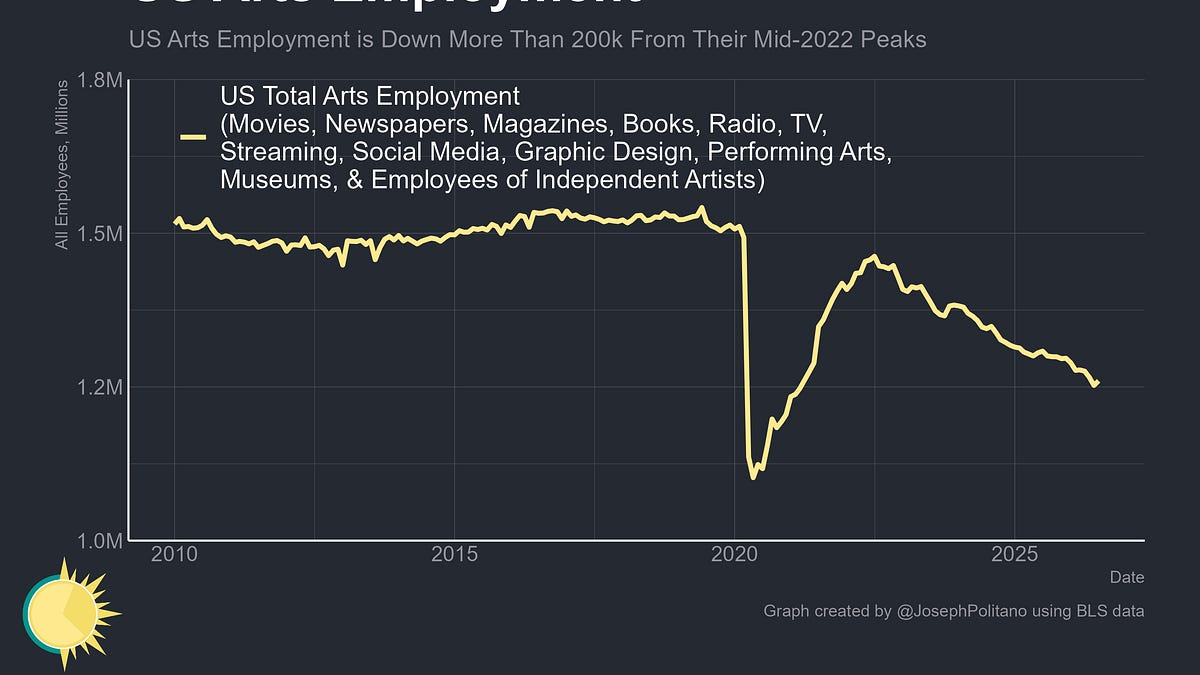
The United States has lost approximately 200,000 jobs across the media, film, and arts industries. Analysts are currently investigating the data to determine how much of this significant workforce decline is being driven by the rise of artificial intelligence.
CommentsReaders discuss the common struggle of understanding quantum physics through traditional conceptual explanations, suggesting that classical analogies like wave-particle duality often create unnecessary confusion. Instead, participants recommend learning the foundational linear algebra of qubits and share several accessible mathematical resources to help beginners intuitively grasp counter-intuitive quantum phenomena.
Comments
Physicists have successfully trapped a single antimatter positron for an entire month, marking a major breakthrough in particle physics. This unprecedented achievement enables scientists to perform quantum measurements on the particle for the very first time.
Comments
The Node2Shell vulnerability has evolved into a broader threat known as HTTP2Shell, exploiting a critical Brotli flaw to impact numerous HTTP libraries and applications utilizing Brotli or brotlicffi. Tracked as CVE-2026-111497, this issue requires developers to immediately check their software versions and apply the available security patches.
CommentsFreeDNS
2026-10-25While FreeDNS is appreciated for quick testing and experiments, users highlight significant drawbacks such as missing Public Suffix List entries, HTTPS certificate rate limits, and frequent domain blocking due to abuse. The community suggests alternative DNS services and engages in a broader debate regarding the technical complexities of cross-subdomain cookie handling and the potential for DNSSEC to resolve domain authenticity issues.
Comments
Roku has migrated its developer repositories from GitHub to GitLab. This transition shifts the primary hosting environment for the streaming company's channel-building community. Developers will now need to use the new GitLab platform to access and contribute to Roku's open-source projects.
CommentsDiscussions surrounding the performance limits of pure functional programming compared to C highlight how C's direct memory mutation and copy elision align perfectly with modern hardware's place-oriented architecture. While functional languages offer strong theoretical parallelism, their abstractions introduce indirection that hinders the spatial and temporal locality required for maximum CPU efficiency, making low-level hardware tuning essential for bridging the performance gap.
CommentsA new practical guide by Daniel Ball explores the evolution of AI image generation, tracing the technology from foundational diffusion models to advanced autonomous agents. The resource breaks down the mechanics of these generative tools to help readers understand their current capabilities and practical applications.
CommentsA new open-source tool called gpu-unlock allows users to bypass Nvidia's artificial performance limits on 3000 series consumer graphics cards by unlocking their FP16 and BF16 instruction issue rates. This modification boosts the compute performance of these consumer GPUs to match their more expensive professional counterparts, providing a significant advantage for AI and machine learning workloads.
Comments
A new research paper explores the structural and cognitive reasons why humans often find AI-generated language difficult to read and comprehend. By investigating the specific linguistic patterns that make machine-written text feel unnatural, the study aims to help developers improve the readability of future large language models.
CommentsA new harness called GVS5H allows five Qwen3.8-27B models to match the coding performance of Claude Fable 5 on the LiveCodeBench Hard benchmark. This breakthrough offers a highly cost-effective alternative, delivering top-tier coding capabilities at a fifth of the price. Additionally, the system is optimized enough to be deployed entirely on a single GPU.
Comments
Cerebras has deployed trillion-parameter frontier AI models by mapping them across its WSE-3T wafers. This approach enables highly scalable inference, achieving impressive generation speeds of 1,000 to over 2,000 tokens per second.
Comments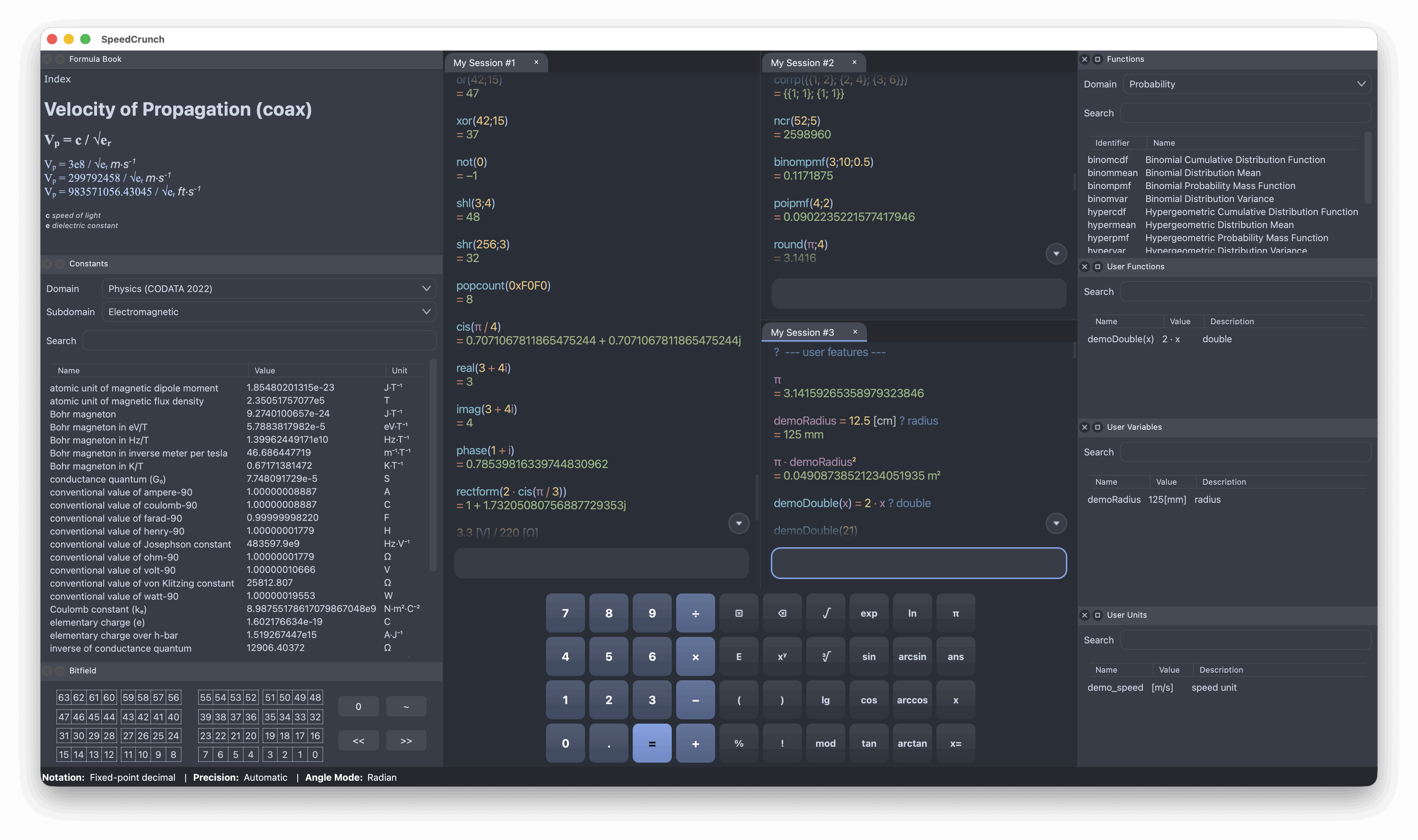
SpeedCrunch 1.1
2026-10-25SpeedCrunch has released version 1.1 of its free, open-source scientific calculator for Windows, macOS, and Linux. The cross-platform application provides advanced mathematical capabilities, including 50-digit precision, complex number support, and built-in unit conversion.
CommentsA new St. Helena 5 pence coin honors Jonathan, a roughly 190-year-old giant tortoise. In the accompanying discussion, readers highlighted recent incidents of tortoises getting stuck on their backs and humorously suggested modern technological fixes, such as belly sensors or miniature thrusters, to automatically right them.
CommentsBbtree: Fastest Ordered Map
2026-10-25Bbtree is a high-performance ordered map that serves as a direct drop-in replacement for the standard library's BTreeMap. It significantly improves execution speed by minimizing cache misses, instructions, and cache coherence traffic. The developers also outline the specific methods used to guarantee the new data structure's correctness.
Comments
A new neural chip technology can decode interactions between different brain regions, enabling closed-loop systems that detect and correct abnormal brain wave patterns. Readers discuss how this deep brain activity detection could eventually help manage conditions like ADHD by providing targeted neuromodulation to regulate dopaminergic circuitry. This approach could offer a more precise, implantable alternative to traditional psychiatric medications.
CommentsSmall Programs and Languages
2026-10-25A newly shared article and its accompanying discussion celebrate the art of writing highly optimized software and designing little languages within strict memory constraints. Community members highlight how working within tight technical limits, such as building tiny programs in uxn or minimalist operating systems, fosters deep creativity. Ultimately, these exercises in extreme constraint serve to rekindle a passion for software engineering among developers.
CommentsWhy Gopher in 2026?
2026-10-25Discussions surrounding the Gopher protocol highlight its appeal as a simple, anti-surveillance alternative to modern social media, though users criticize the network for lacking diverse content beyond meta-discussions and personal blogs. Consequently, while Gopher thrives as a charming digital niche, it struggles to gain mainstream traction because it prioritizes platform building over the compelling content acquisition needed to attract casual users.
Comments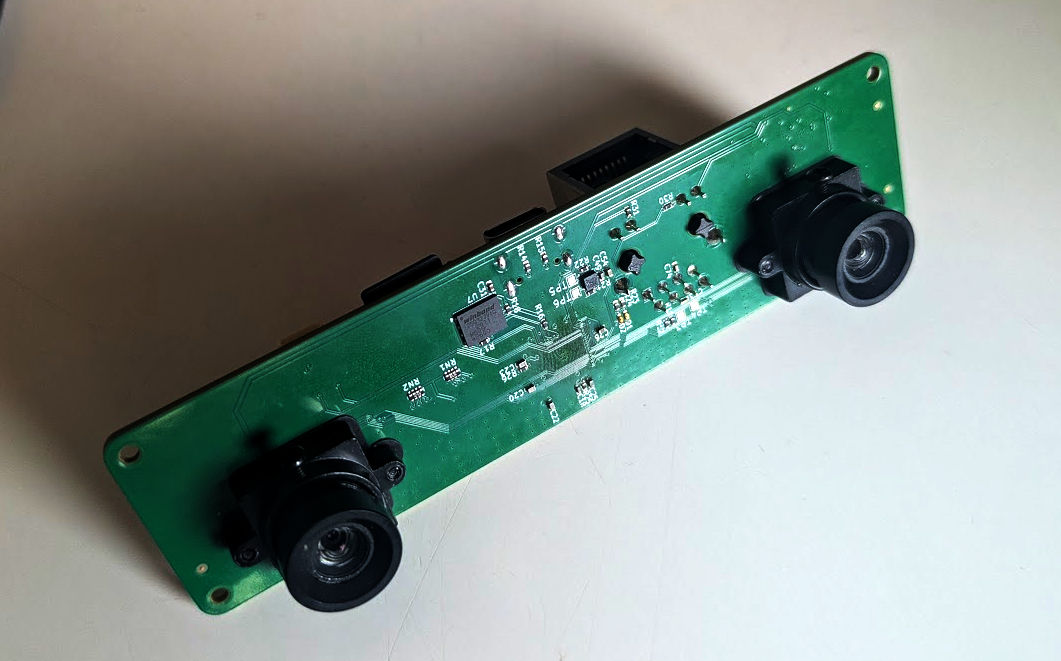
A maker has designed a custom stereo vision board powered by a Rockchip microprocessor. This newly developed board aims to bring advanced stereo vision capabilities directly to the hardware hacking community.
CommentsReader discussions surrounding the importance of limitations reveal that constraints actually foster creativity, deeper learning, and focused problem-solving by forcing individuals to think within strict boundaries. While the open-ended nature of the real world and modern software development can often lead to decision paralysis, structured rules provide a necessary framework for innovation. Ultimately, embracing these restrictions rather than avoiding them leads to more meaningful and successful project outcomes.
Comments
A recent study examines the social and economic dynamics of the medieval lead mining industry in England's Peak District between AD 600 and 1500. Researchers analyzed historical and environmental data to understand the widespread impacts of this toxic metal industry. The findings reveal how lead extraction and production significantly shaped local labor structures, community development, and regional trade over nearly a millennium.
Comments
How Japanese Dried Bonito Is Made
2026-10-25A historic Japanese workshop founded in 1882 continues to produce traditional dried bonito, known as katsuobushi, using authentic methods from the Edo period. This enduring craft preserves the meticulous, time-honored techniques required to prepare the fish. The resulting world-renowned culinary staple remains a vital ingredient in traditional Japanese cuisine.
Comments