HR Tech News
Software now touches every part of how companies hire, pay, and manage people. This section gathers news on HR platforms, recruiting tools, payroll and benefits systems, and the growing use of AI in workforce decisions. It is aimed at HR professionals, founders, and anyone curious about the technology behind modern workplaces.
Coverage commonly includes funding and product news from HR software vendors, AI screening and interviewing tools entering the hiring process, and platforms that manage global payroll and contractor compliance. Studies and rules addressing bias in automated hiring decisions come up regularly as the technology spreads.
The stakes are high because these systems influence who gets hired, how much people are paid, and how performance is judged. HR leaders selecting software, vendors watching competitors, and employees who want to understand the systems evaluating them all have reasons to follow this space.
Early Humans Likely Ate Carbs and Sugary Foods
2026-08-22Recent research indicates that early humans likely consumed a diet rich in carbohydrates and sugary foods. This challenges the popular modern assumption that our ancestors relied almost exclusively on a meat-heavy diet. These findings suggest that energy-dense plant foods played a crucial and previously underappreciated role in early human evolution.
HN: The Good Parts (2016)
2026-08-22A Hacker News user shared a curated collection of their favorite comments alongside a tip for tracking them using the platform's timestamp feature. The thread also revisited a 2016 article regarding the tech industry's good parts, prompting readers to reflect on how the best aspects of the field prioritize deep technical discussions over superficial workplace perks.
Show HN: Rex, a parallel functional language for scientific workflows
2026-08-22A new open-source project called Rex was recently showcased on Hacker News as a parallel functional programming language tailored for scientific workflows. Developers can explore the source code and contribute to its ongoing development via its official GitHub repository.
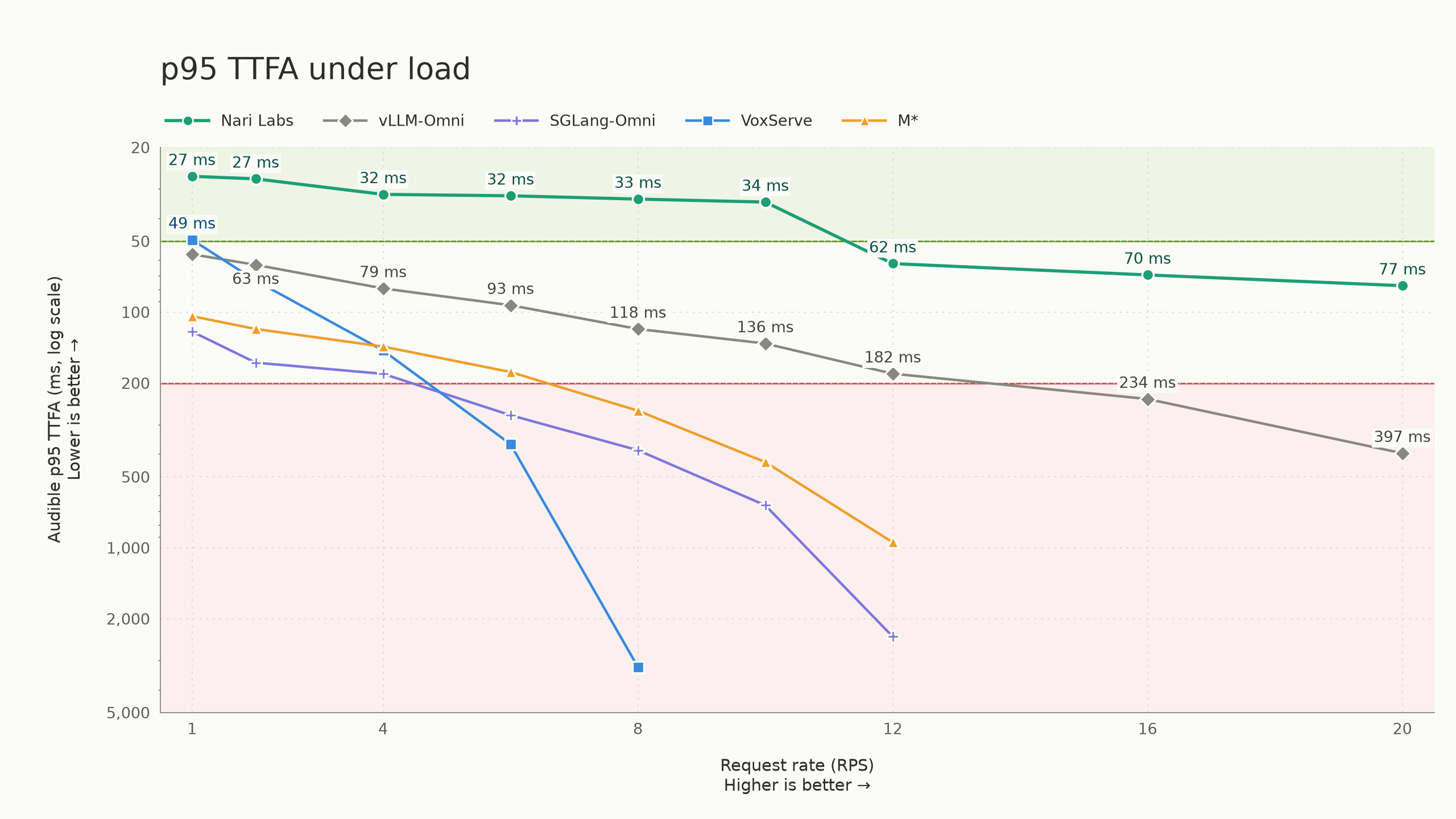
How we made a text-to-speech model respond in sub-50 ms
2026-08-22Engineers have optimized the serving infrastructure for the Qwen3-TTS model to achieve a p95 time-to-first-audio latency of under 50 milliseconds on a single H100 GPU. By processing 10 requests per second with this ultra-low response time, the optimization marks a significant step forward for real-time, high-throughput voice synthesis applications.

Early-life stress leaves a 'scar' inside brain cells in mice
2026-08-22Researchers have discovered that early-life stress in mice alters DNA packaging within brain cells, creating a molecular scar of trauma. This biological memory leaves the brain significantly more vulnerable to future stressful events.
Claudette: Make Claude stop talking like a BuzzFeed article
2026-08-22A new developer tool called Claudette strips Anthropic's Claude AI of its overly enthusiastic BuzzFeed tone. Available as a Claude Code skill with a /debuzz command, it works by piping the AI's responses through Google's Gemini to rewrite them in a more neutral voice.
New Worlds: We are living in the future of J.G. Ballard or William Gibson
2026-08-22Readers are debating whether modern technological reality truly captures the cyberpunk dystopias envisioned by William Gibson, with some arguing that today's tech giants lack the distinct cultural aesthetics of fictional megacorporations. Meanwhile, others point to the hyper-technological, neon-lit environment of Shenzhen, China, as the perfect real-world embodiment of the genre, though skeptics counter that strict government control contradicts the anti-establishment ethos central to classic cyberpunk fiction.

Autolith: A programming agent with a live runtime
2026-08-22Autolith is a new terminal-based programming agent for Linux that operates directly within your repository to maintain continuous project context. By executing its tasks inside a live SBCL image, it provides developers with a seamless and highly responsive coding assistant right in the command line.

A look under our trunk: what's in our compute
2026-08-22Waymo is revealing new details about the custom compute hardware and silicon that power its autonomous vehicles. The company has spent the past decade co-designing its hardware, sensors, and algorithms to deliver the safe, low-latency performance required for real-time driving. This reveal highlights their collaborative approach with industry partners to build a highly capable edge computing system for physical AI.
Everyone says assembly is untyped—everyone is wrong
2026-08-22A recent article argues that Odin's inline assembly is superior to implementations in languages like Rust and Go because it challenges the assumption that assembly is inherently untyped. By organizing assembly into callable templates with a unified syntax across all instruction set architectures, Odin allows inline code to integrate seamlessly with the rest of the codebase while maintaining strict type safety.
Tumble Forth – from assembly to OS with C compiler (2023)
2026-08-22Tumble Forth is an educational project that builds a bare-metal operating system and a C compiler from scratch, starting from assembly and utilizing the Forth programming language. The project aims to demystify complex computing by implementing these systems from the simplest possible foundational components. Readers in the discussion praise this audacious approach and share their own related experiences with bare-metal programming and Forth interpreters.

GitHub, autoscaling, and the component substitution fallacy
2026-08-22An analysis of the recent GitHub outage reveals that a misconfigured autoscaling policy caused an Istio sidecar pod to hit its concurrency limits and fail to scale. This incident highlights the component substitution fallacy, demonstrating how swapping infrastructure components without properly adjusting underlying scaling policies can lead to severe system failures.
I'm becoming AI-blind
2026-08-22A professional describes developing AI blindness, a phenomenon where the brain subconsciously tunes out work documents that show obvious signs of being generated by artificial intelligence. The author notes that their brain has learned to quickly spot these low-effort AI texts and automatically ignores them without processing the content. This cognitive fatigue highlights a growing challenge in modern workplaces as automated tools become increasingly prevalent in daily communications.
I ran Photoshop on a £0.60 computer chip
2026-08-22A developer successfully ran a Macintosh emulation of Photoshop using a 60p Raspberry Pi RP2350 microcontroller, demonstrating the surprising capabilities of highly constrained modern hardware. Although the total cost of the custom board and display pushes the actual price closer to $40, the project highlights the efficiency of classic software compared to today's resource-heavy applications. The tech community responded with enthusiasm, sharing their own low-power microcontroller builds and praising the return to reasoning about strict hardware limitations.
AI companies destroy physical books – let's scan rare books before it's too late
2026-08-21AI companies are secretly purchasing and destroying physical books to train their models, permanently locking human knowledge inside private corporate servers. To prevent this cultural heritage from disappearing, Anna’s Archive is urgently calling on volunteers worldwide to scan and upload books to its shadow library.

The August 17 outage
2026-08-21A new update has been released regarding the service outage that occurred on August 17. The report details the causes of the disruption and outlines the specific steps being implemented to improve system reliability and prevent future incidents.

I like 'em thick: an apology to my English teachers
2026-08-21The author playfully apologizes to their former English teachers for frequently using the word thick in various technical contexts. This humorous piece explores the practical industry applications of the term while contrasting its everyday tech usage with traditional literary definitions.
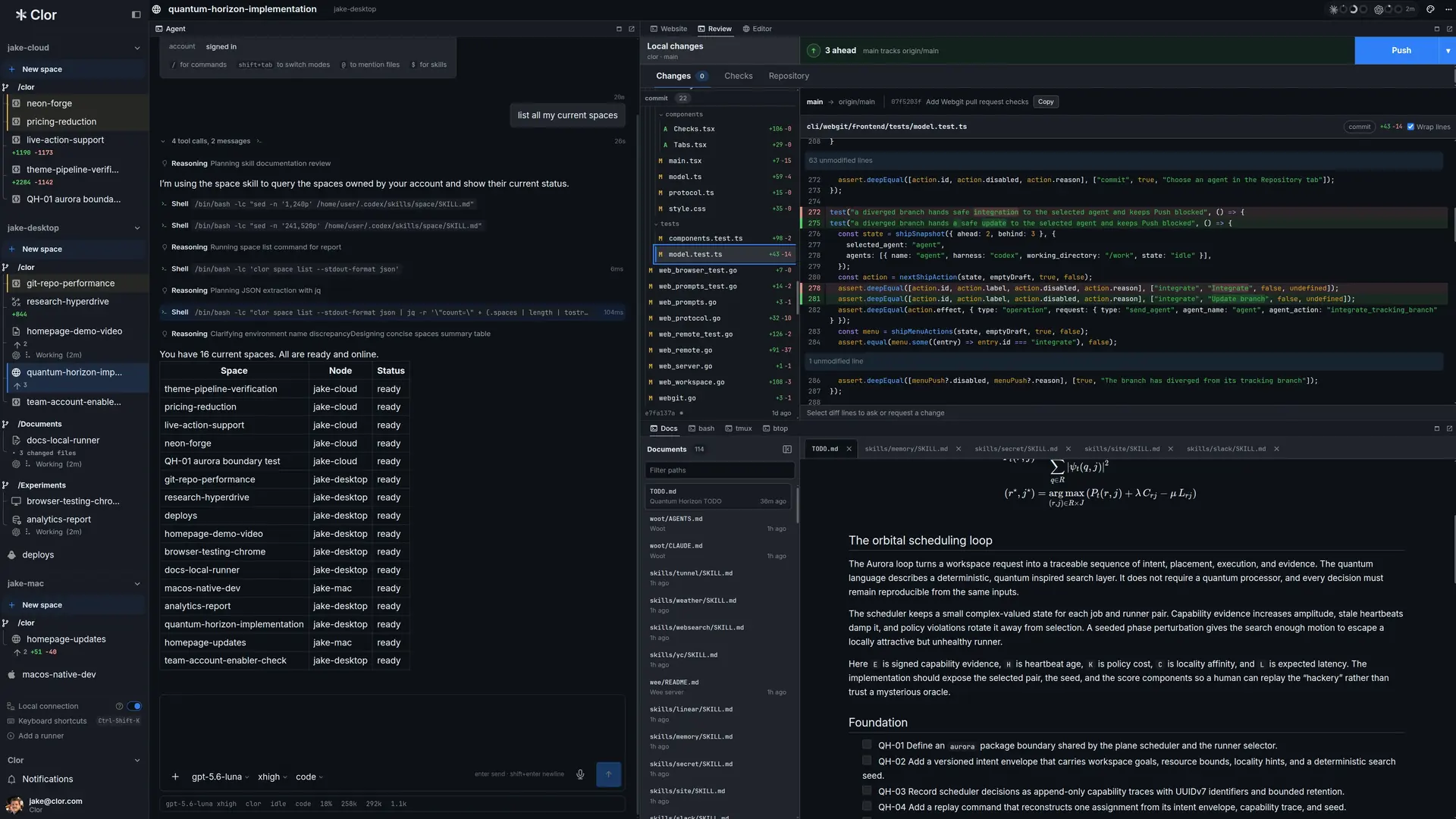
There's no such thing as a small software team anymore
2026-08-21Small software teams are leveraging parallel AI coding agents to generate hundreds of daily commits, drastically outpacing historical productivity norms. This exponential surge in output means small groups of developers are now operating at the scale of much larger organizations. Consequently, they must navigate the same complex architectural and deployment challenges as tech giants like Uber.

HTML Can Do That
2026-08-21A new resource highlights how HTML is rapidly absorbing dynamic functionalities that previously required JavaScript by showcasing interactive features achievable with pure HTML. This shift underscores the growing power of native web standards in simplifying modern web development.

Malicious Rust crate Arrayref runs a build-time payload
2026-08-21A compromised release of the popular Rust crate arrayref was discovered pulling in a typosquatted version of the proc-macro1 dependency. The malicious build script for this fake package downloads and executes a remote binary during the compilation process.