HR Tech News Today
HR departments run on software, and this section keeps track of it. Coverage includes recruiting platforms, payroll and benefits systems, employee engagement tools, and the rapid arrival of AI in hiring and people management. Funding rounds and product news from the HR tech market round out the picture.
Recent story patterns include AI screening and interviewing tools facing both adoption and scrutiny, payroll providers expanding into global employment services, consolidation among HR software vendors, and new regulations governing automated hiring decisions. Workforce analytics and skills-mapping products are a growing theme.
The systems covered here quietly decide who gets interviewed, how people are paid, and how performance is judged, affecting nearly every worker. HR leaders, talent acquisition teams, and vendors in the space follow this news to choose tools wisely and stay ahead of compliance changes.
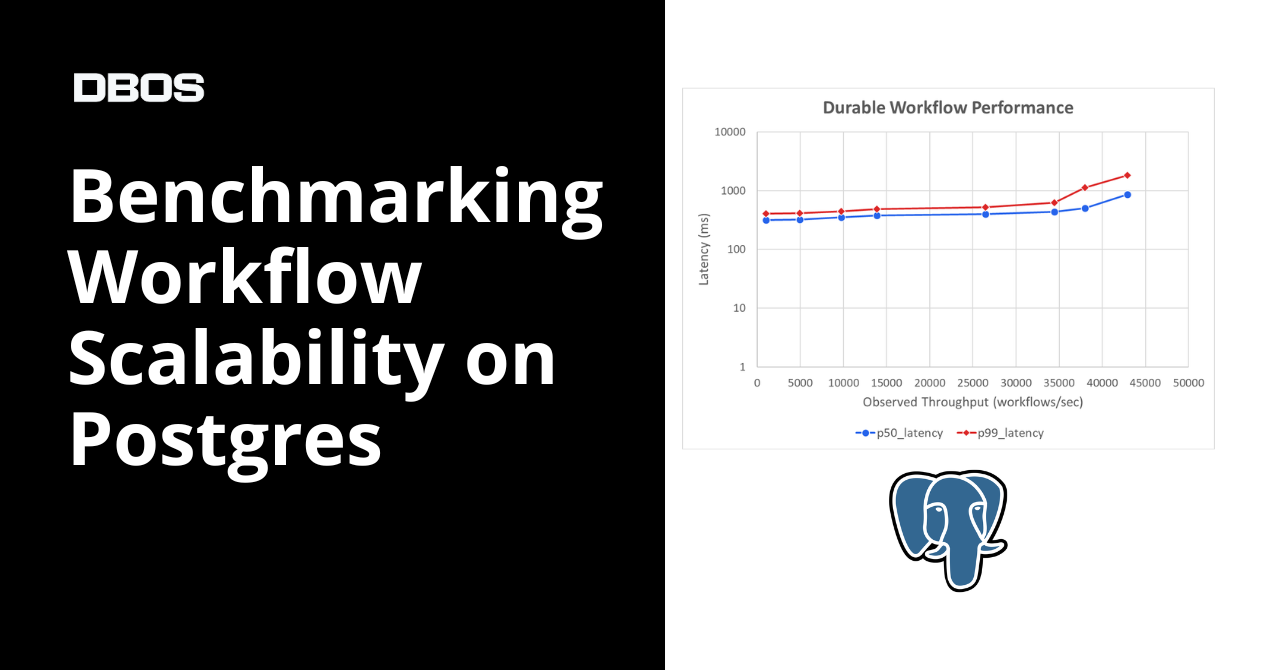
Does Postgres Scale?
2026-04-30New benchmarks evaluate the workflow execution and queueing scalability of a single PostgreSQL server to determine its operational limits. The findings reveal whether Postgres can effectively handle heavy workflow management workloads directly on a single node without requiring horizontal scaling.

Mike: open-source legal AI
2026-04-30Mike is a new open-source legal AI platform offering a zero-cost, self-hostable alternative to commercial tools like Harvey and Legora. It provides full feature parity while allowing law firms to completely own, control, and extend the technology to suit their specific needs.
Alignment whack-a-mole: Finetuning activates recall of copyrighted books in LLMs
2026-04-30Researchers have discovered that fine-tuning large language models can inadvertently reactivate the verbatim recall of copyrighted books, undermining previous alignment efforts. Dubbed alignment whack-a-mole, this vulnerability demonstrates that attempting to restrict a model from generating protected content can be easily bypassed through subsequent training adjustments. The researchers have released their official code to help the broader tech community better understand and mitigate this complex issue.

Meta in row after workers who saw smart glasses users having sex lose jobs
2026-04-30Meta and its subcontractor are disputing the reasons behind the sudden layoff of over 1,000 Kenya-based content moderators. The workers were reportedly dismissed after reviewing highly explicit footage from Meta's smart glasses, including videos of users having sex. The two companies currently disagree on the exact cause of these mass redundancies.

The Church Rock Uranium Mill Spill
2026-04-30The Church Rock uranium mill spill released 1.36 tons of uranium and radioactive contaminants into the Puerco River, severely contaminating the water supply used by the Navajo Nation. The disaster received significantly less media coverage and federal assistance than Three Mile Island, a disparity readers attribute to its rural location and the marginalization of the affected Native American community.

LinkedIn is scanning browser extensions
2026-04-30LinkedIn is scanning users' browser extensions, sparking privacy concerns over data collection. The company is expected to justify the practice by stating it is a necessary measure to combat fraud and ensure platform security.

London to Calcutta by Bus (2022)
2026-04-30Adventures Overland plans to launch a 70-day bus service covering 20,000 kilometers between New Delhi and London, routing east through Burma, China, and Russia to avoid regions with strict visa policies for British travelers. Online discussions highlight that modern geopolitical tensions, missing infrastructure, and regional instability make planning a practical route for such historic overland journeys incredibly difficult compared to the welcoming environments of the 1970s.

Zed 1.0
2026-04-29The code editor Zed has officially reached its 1.0 release, marking a major milestone for the project. This launch delivers the fully realized platform that its creators originally set out to build, completing their initial development goals.
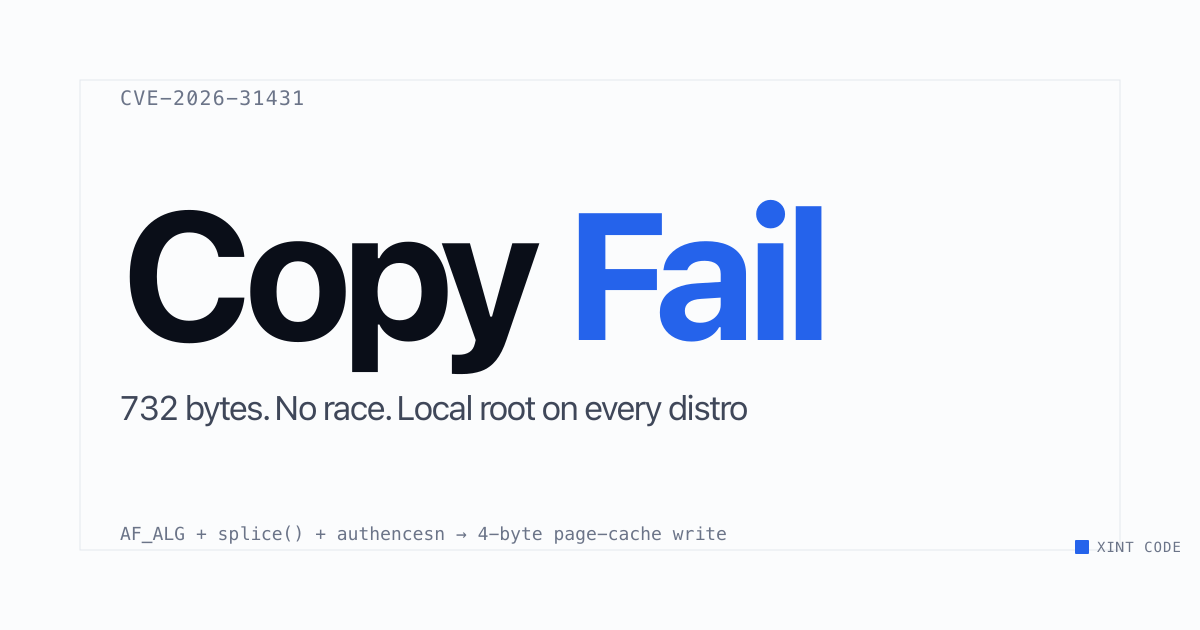
Copy Fail
2026-04-29Security researchers have identified CVE-2026-31431, a minimal 732-byte Linux local privilege escalation vulnerability dubbed Copy Fail that affects major distributions since 2017. The exploit uses a single Python script to bypass file-integrity tools and cross container boundaries without relying on race conditions or distribution-specific offsets. Discovered by Xint Code, this straight-line attack works universally across Ubuntu, Amazon Linux, RHEL, and SUSE environments.
HERMES.md in commit messages causes requests to route to extra usage billing
2026-04-29A bug in Claude Code routes API requests to extra usage billing instead of the included Max plan quota when the case-sensitive string HERMES.md appears in a git repository's commit history. This flaw has caused some developers to silently burn through hundreds of dollars in additional charges before realizing their standard subscription was bypassed.
FastCGI: 30 years old and still the better protocol for reverse proxies
2026-04-29Marking its 30th anniversary, the FastCGI protocol remains a superior choice for reverse proxies. Its unique architecture successfully avoids the inherent security vulnerabilities commonly associated with traditional HTTP reverse proxying setups. This enduring reliability makes it a highly secure and efficient foundation for modern web infrastructure.

Online age verification is the hill to die on
2026-04-29The debate over online age verification has emerged as a critical, non-negotiable battleground that will serve as foundational infrastructure for all future digital regulations. Because of its sweeping implications, tech stakeholders and everyday users are urged to recognize that this is a pivotal policy fight they cannot afford to ignore.

Bugs Rust won't catch
2026-04-29Despite the safety guarantees of the Rust programming language, an external audit has uncovered 44 vulnerabilities in uutils, the Rust reimplementation of GNU coreutils. Canonical disclosed these flaws ahead of the 26.04 LTS release, demonstrating that memory-safe languages cannot prevent all software bugs.
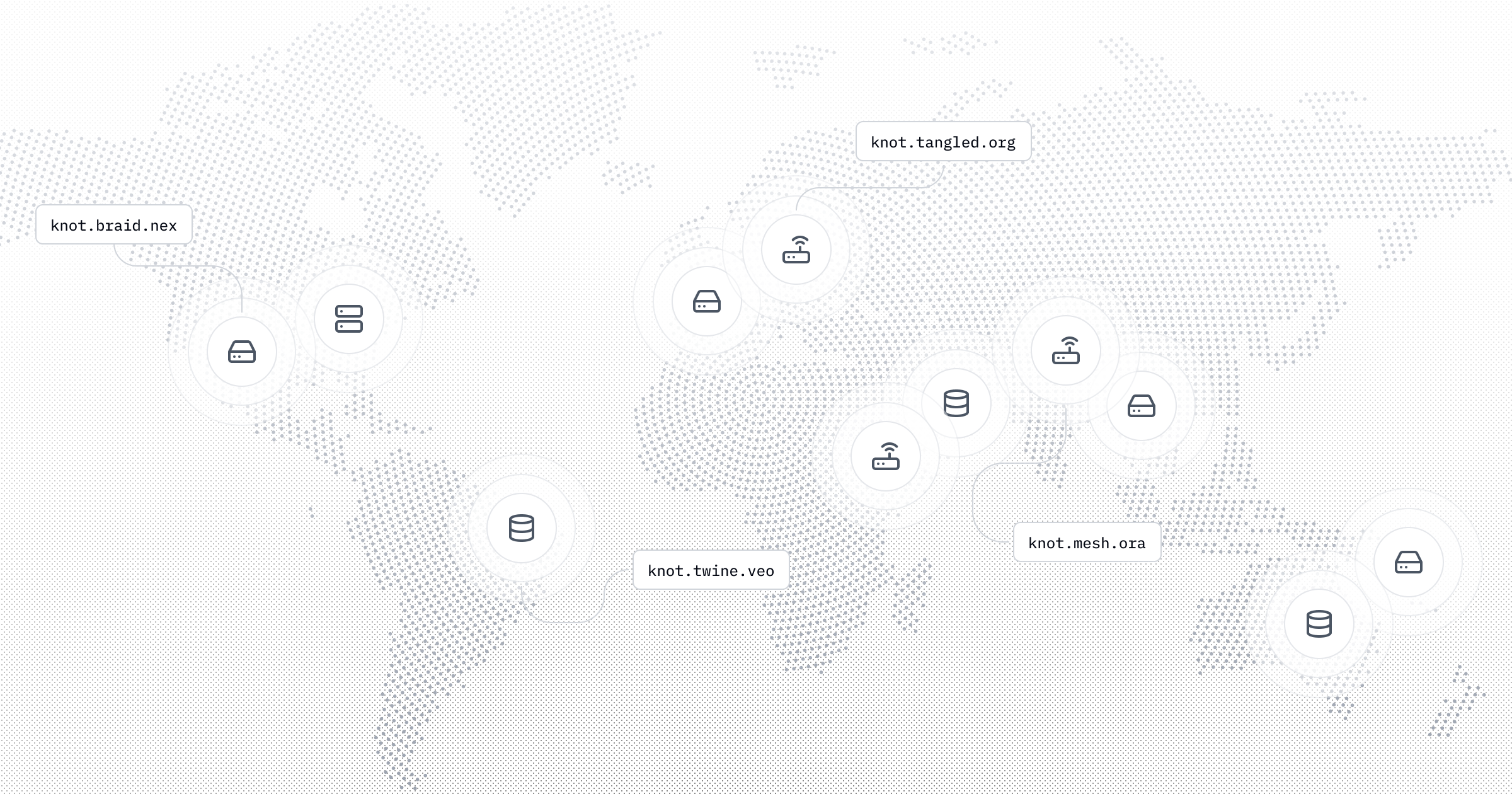
We need a federation of forges
2026-04-29Advocates are pushing for a decentralized federation of software forges to build a next-generation social coding platform. This proposed network would interconnect various open-source project hosting services, offering a distributed alternative to centralized repositories. By shifting away from single corporate entities, the federated model aims to give developers greater autonomy and control over their code.
An open-source stethoscope that costs between $2.5 and $5 to produce
2026-04-29An open-source, research-validated stethoscope has been developed that costs between $2.50 and $5 to produce. The GliaX/Stethoscope project provides the complete manufacturing plans entirely for free, aiming to drastically improve global access to essential diagnostic equipment.
How ChatGPT serves ads
2026-04-29OpenAI's new ChatGPT advertising platform utilizes a two-part system that injects structured ad objects directly into the AI's conversational response streams. On the merchant side, a dedicated browser tracking SDK called OAIQ monitors and reports user product views to complete the ad delivery loop.
OpenTrafficMap
2026-04-29A recent discussion on the feasibility of open-source mapping alternatives to Google and Waze highlights that while traffic congestion data is largely solved, maintaining accurate points of interest remains a significant challenge. Developers propose collaborative open platforms to streamline business data updates and reduce the workload for owners. However, participants acknowledge that overcoming the massive user bases and algorithmic moats of major tech monopolies will be highly difficult.

Laws of UX
2026-04-29The Laws of UX provides a curated collection of best practices for professionals building user interfaces. Designers can leverage this resource to apply proven principles that enhance usability and create more intuitive digital experiences across their software products.

Soft launch of open-source code platform for government
2026-04-29A new open-source code platform has been soft-launched for government organizations. This initiative enables these public sector bodies to collaboratively develop and independently publish software.

Warp is now open-source
2026-04-29Warp has officially transitioned to an open-source model, allowing the developer community to participate directly in the platform's ongoing development. Contributors will use an agent-first workflow managed by Oz, the company's cloud agent orchestration platform, to build and manage the project.