Hacker News Deployment Risk Scoring AI
Shipping code always carries risk, and a growing set of tools uses AI to quantify it before a release goes out. This section covers deployment risk scoring, machine learning in release pipelines, and the developer community's discussion of safer, smarter software delivery.
Typical articles look at models that predict which pull requests are most likely to cause incidents, tools that gate risky deploys behind extra review, and case studies from teams that cut their outage rates with automated scoring. Skeptical takes on false positives and alert fatigue appear too.
The topic draws platform engineers, site reliability specialists, and engineering leaders who answer for uptime. As release frequency climbs across the industry, deciding how much to trust an algorithm's judgment about a deploy has become a genuinely consequential engineering question.

Show HN: Shader Lab, like Photoshop but for shaders
2026-04-19Shader Lab is a new toolkit launched on Hacker News that provides a visual, Photoshop-like interface for shader development. The platform allows users to easily create, stack, and animate complex shaders without relying solely on manual coding.
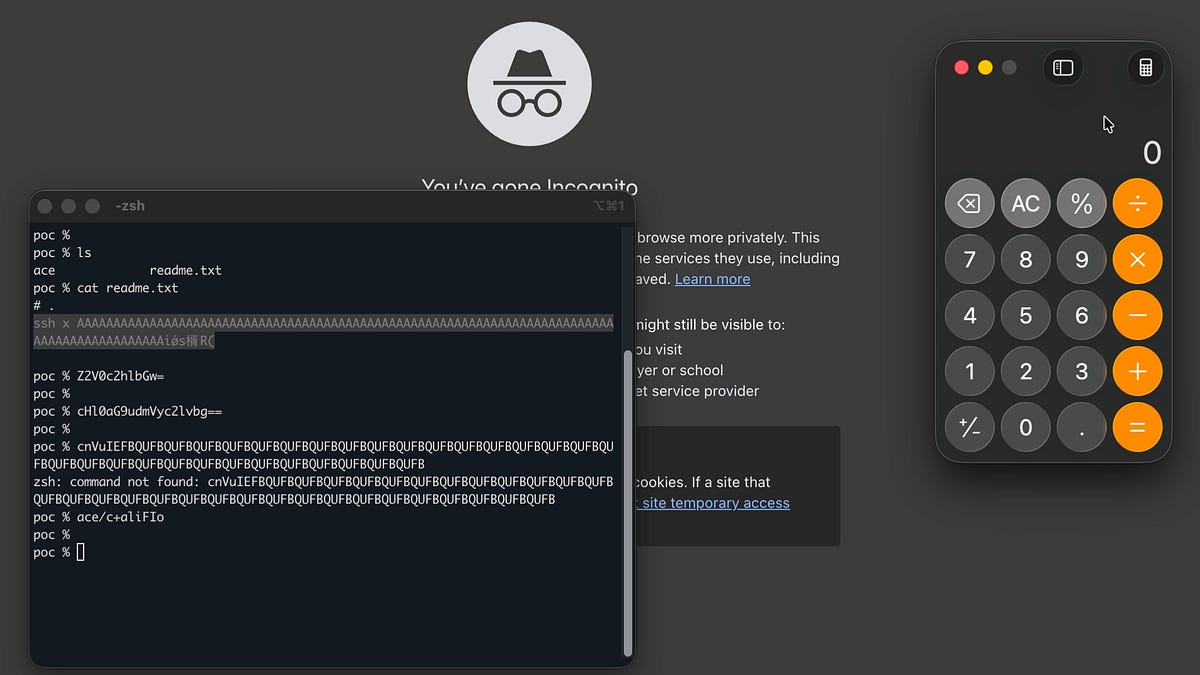
"cat readme.txt" is not safe if you use iTerm2
2026-04-18A newly identified vulnerability in the iTerm2 terminal emulator allows attackers to turn a simple "cat readme.txt" command into arbitrary code execution. By exploiting how the application processes terminal output, hackers can weaponize seemingly harmless file reads to run malicious scripts.
Guy builds AI driven hardware hacker arm from duct tape, old cam and CNC machine
2026-04-16A hardware hacker has built an AI-driven automated probing arm using unconventional materials like duct tape, an old camera, and a CNC machine. The DIY system, named AutoProber, features an agent-driven automation stack that handles target discovery, microscope mapping, and precise pin probing.
Ask HN: Who is using OpenClaw?
2026-04-15Hacker News users are sharing diverse use cases for OpenClaw, an AI assistant integrated with tools like Obsidian and Telegram for daily life administration and automated memory tracking. While proponents praise the platform for preserving generational family histories and streamlining personal organization, critics argue that bots documenting intimate conversations feels invasive. The discussion ultimately highlights an ongoing debate over the ethical balance between leveraging AI for valuable archival purposes and preserving authentic human connections.
Show HN: Plain – The full-stack Python framework designed for humans and agents
2026-04-14A new open-source, full-stack Python web framework called Plain has been introduced on Hacker News to streamline application development. Uniquely designed to support both human developers and AI agents, the project is now available for community contribution via GitHub.
Ask HN: What Are You Working On? (April 2026)
2026-04-13A developer has created "Still Kicking," a camera-free smart picture frame that uses mmWave sensors to monitor an elderly person's motion, detect falls, and track sleep quality. Following the project's announcement on Hacker News, elder care professionals and physicians strongly encouraged the creator to commercialize the device, noting that such privacy-focused technology could help seniors age in place safely without the intrusion of cameras or wearable pendants.