EU Tech Regulation News Today
Europe has become the world's most active technology regulator, and this section tracks the consequences. Coverage includes the Digital Services Act, Digital Markets Act, AI Act, GDPR enforcement, and new proposals from Brussels. Follow how EU rules affect big tech companies, startups, and users across the continent and beyond.
Stories typically cover formal investigations opened against designated gatekeepers, fines and compliance deadlines, AI Act implementation guidance, and the negotiations behind new digital legislation. Reactions from companies, member states, and trade bodies frequently feature, along with court challenges to the rules themselves.
Decisions made in Brussels often set de facto global standards, since companies frequently apply EU-compliant practices worldwide rather than maintain separate systems. Compliance officers, policy analysts, founders operating in Europe, and anyone watching the balance of power between states and platforms follow this beat closely.
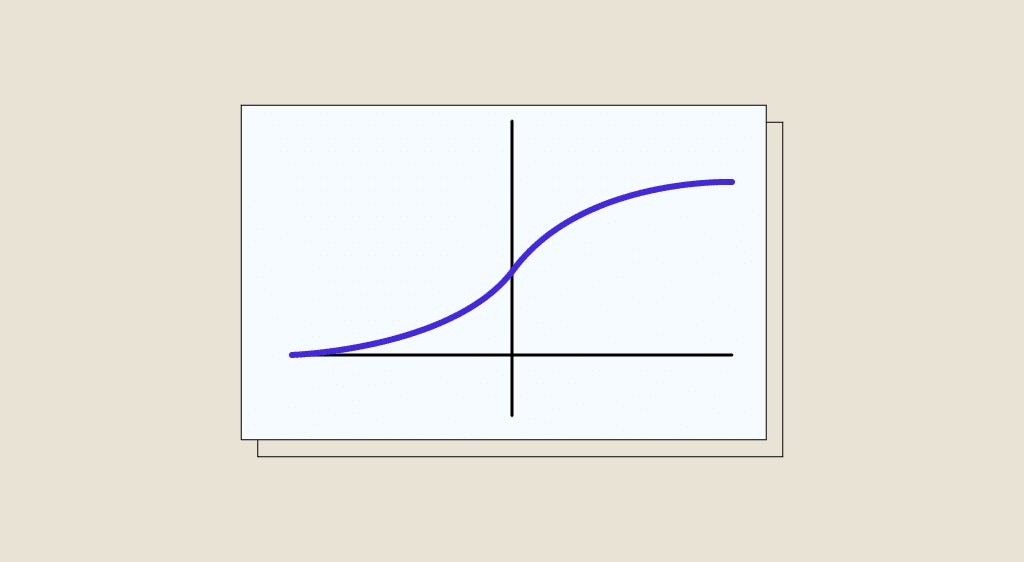
The sigmoids won't save you
2026-05-15A recent tech commentary warns that relying on traditional machine learning techniques like the classic sigmoid activation function is no longer sufficient for solving complex modern artificial intelligence challenges. The piece argues that developers and researchers must move beyond these outdated foundational models to embrace more advanced neural network architectures. Ultimately, it serves as a reality check for the industry to stop overestimating the capabilities of legacy algorithms in the current AI boom.
Comments
A new interactive project allows users to watch a neural network train itself to play the classic game Snake. While the AI can achieve near-perfect scores on a small grid, observers note that the model's performance eventually collapses. Users speculate this degradation is caused by numerical instability, flawed reward structures, or the snake getting trapped in an endless loop when it runs out of space.
Comments
Computer Hobby Movement in Canada
2026-05-14The York University Computer Museum (YUCoM) serves as a historical collection and research center dedicated to the history of computing in Canada. By focusing on the Canadian computer hobby movement, the museum preserves the nation's early technological milestones. It remains a vital resource for understanding the evolution and heritage of domestic computing.
Comments
I moved my digital stack to Europe
2026-05-13Driven by a desire for digital sovereignty, the author details their experience migrating their tech stack to European cloud providers. The piece examines this shift away from US tech giants and argues that Europe's cloud infrastructure has matured into a highly capable and competitive alternative.
Comments
A History of IDEs at Google
2026-05-13Laurent Le Brun's blog post details the evolution of Google's internal development environments, tracing the company's shift from relying on third-party tools to building bespoke, cloud-based IDEs tailored for its massive monorepo. This overview highlights how the immense scale and complexity of Google's codebase forced the tech giant to engineer highly customized, scalable software ecosystems rather than relying on commercially available tools.
Comments
A recent arXiv paper introduces a novel method for deterministic, fully-static whole-binary translation that completely eliminates the need for heuristics. By translating entire software binaries at compile time with strict predictability, this approach ensures exact cross-architecture code execution without relying on dynamic runtime analysis. This systematic technique promises to significantly improve software portability and performance across diverse hardware platforms.
Comments
This 2016 article explores the typographic techniques used to create futuristic text in movies, highlighting the classic use of the Eurostile Bold Extended font. It outlines six simple rules for designers to establish a convincing sci-fi aesthetic on screen. The guide emphasizes starting with clean, sans-serif typefaces as the foundation for future-forward text design.
Comments
Google DeepMind is transforming the traditional mouse cursor into a context-aware AI partner to streamline digital interactions. This innovation, starting with the Chrome browser, aims to replace the friction of standard text prompting with seamless, intuitive AI collaboration.
Comments
The European Union is investigating social media platforms like TikTok and Instagram over their addictive design features that target children. EU Commission President Ursula von der Leyen announced the crackdown to address how these apps allow minors to go down rabbit holes of harmful content.
Comments
Researchers at UCLA Health have discovered the first drug capable of fully replicating the brain-repairing effects of physical stroke rehabilitation in mice. By successfully mimicking physical therapy in animal models, this breakthrough treatment offers a promising pharmaceutical alternative that could eventually revolutionize human stroke recovery.
Comments
A new technical report details the launch of AMÁLIA, an open-source large language model specifically designed for European Portuguese. This release marks a significant milestone in regional AI development and sets a promising direction for the future of specialized language models across Europe.
CommentsTask Paralysis and AI
2026-05-10Individuals with ADHD are increasingly leveraging artificial intelligence tools to overcome task paralysis and manage overwhelming cognitive loads. By using AI to break down complex projects into actionable steps, neurodivergent users can bypass the executive dysfunction that typically halts their progress. This emerging trend highlights the growing potential of AI to serve as a personalized assistive technology for focus and productivity.
Comments
The One Dollar Counterfeiter
2026-05-10The article explores the case of Mister 880, a petty criminal who spent a decade passing fake one-dollar bills and inadvertently triggered the most expensive investigation in Secret Service history. Reader discussions question the disproportionate government manhunt for such a low-stakes crime while explaining the agency's original mandate to protect the nation's currency. The thread also highlights humorous personal anecdotes involving foolish fraud attempts and pedantic debates over the exact definition of counterfeiting.
Comments
While the Apple I and Altair 8800 are commonly cited as the first microcomputers, the actual pioneer was the transfluxor-powered Arma Micro Computer built in 1962. This obscure device predates the widely recognized founders of the personal computing industry by more than a decade.
Comments
The European Parliamentary Research Service has identified VPNs as a loophole that allows users to bypass online age-verification systems. The organization is urging policymakers to close this gap to ensure stricter enforcement of digital age restrictions.
Comments
Cloudflare is cutting approximately 20% of its workforce to restructure operations and prioritize the adoption of artificial intelligence tools. Alongside the layoffs, the company announced that its second-quarter revenue forecast fell slightly below Wall Street expectations.
Comments
Cartoon Network Flash Games
2026-05-08A newly curated web collection allows users to play classic Cartoon Network Flash games directly in their web browsers. The archive features nostalgic titles inspired by iconic animated series such as The Powerpuff Girls, Dexter’s Laboratory, and Samurai Jack, offering fans a seamless way to revisit early internet entertainment.
Comments
Researchers have developed a closed-form polynomial autoencoder that achieves fourfold compression of transformer embeddings while outperforming traditional PCA. By pairing a PCA encoder with a quadratic Ridge decoder, the method delivers superior accuracy without requiring neural networks or iterative training.
Comments
AlphaEvolve is a coding agent powered by Gemini that optimizes algorithms to accelerate scientific progress across multiple disciplines. By applying this technology to complex challenges in genomics, quantum physics, and global infrastructure, the tool aims to solve critical real-world problems at scale.
Comments
A Theory of Deep Learning
2026-05-06Researchers have finally developed a comprehensive theoretical framework that explains why deep learning models work so effectively. This breakthrough demystifies the inner workings of neural networks, shifting the field from empirical experimentation to a solid mathematical foundation for future artificial intelligence development.
Comments
As AI agents make code generation virtually costless, software development is undergoing a fundamental paradigm shift. This piece outlines essential guidelines for developers navigating the era of agentic coding and adapting their workflows to this new reality. Ultimately, it emphasizes that programmers must shift their focus from writing code to effectively managing, reviewing, and directing abundant AI-generated outputs.
Comments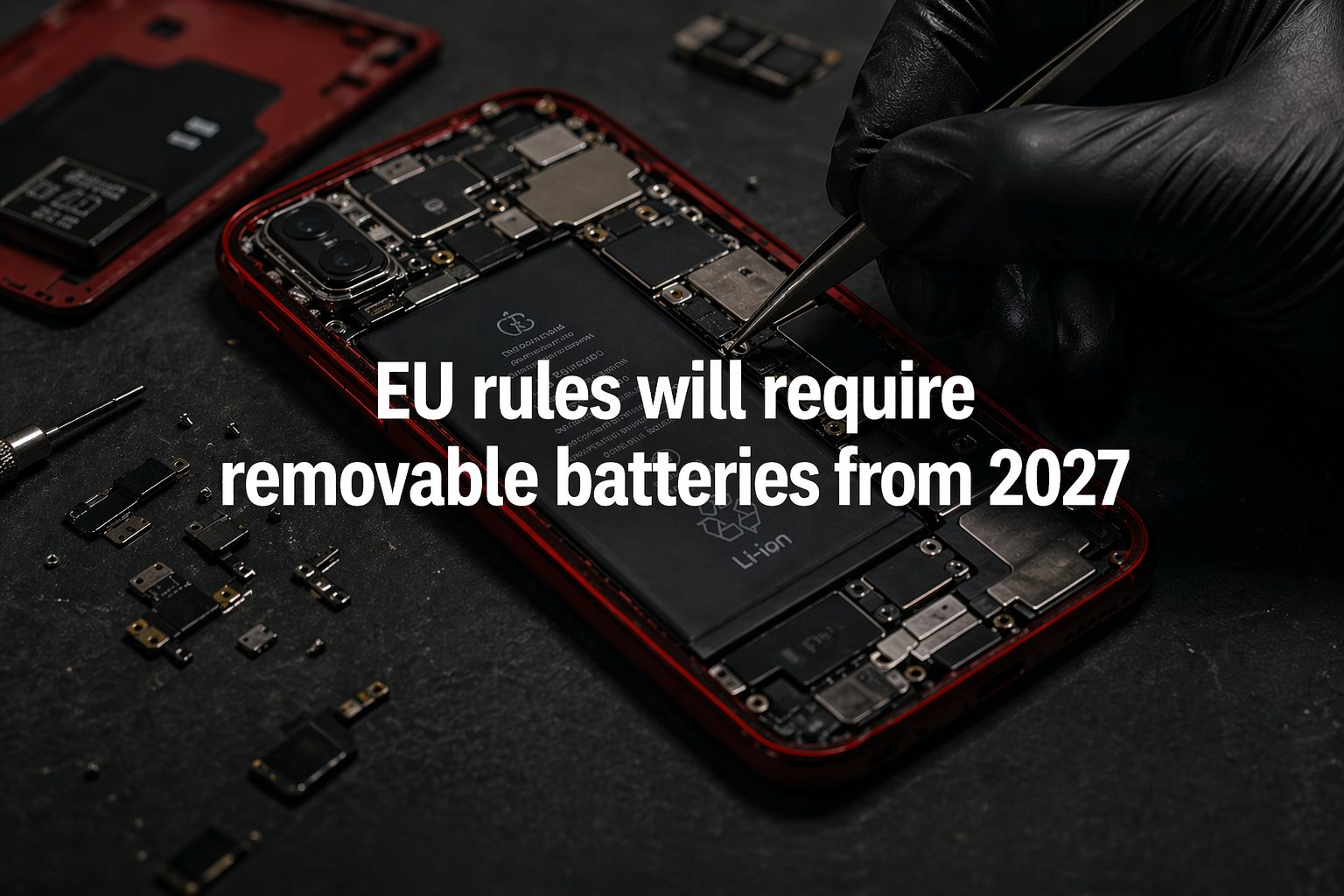
Beginning in 2027, a new European Union regulation will require all smartphones sold in the region to feature removable batteries. This mandate represents a major shift in modern device design for manufacturers. For users, the change means they will once again easily be able to swap out their own power cells to extend the life of their devices.
Comments
Heat pump sales rise across Europe
2026-05-04Residential heat pump sales across 11 European countries increased by 17% in the first quarter of 2026, according to the European Heat Pump Association. This growth was driven by soaring gas and oil prices following Iran's closure of the Strait of Hormuz in March.
Comments
A Stanford Medicine study demonstrates that analyzing individual brain scans rather than relying on group averages uncovers crucial differences in brain function. Researchers found that this individualized approach successfully identifies specific neural variations in children who struggle with goal-oriented tasks. These findings highlight the importance of utilizing personal brain data to accurately understand how the brain controls individual behavior.
CommentsAn energy-efficient underwater glider robot is tracking sperm whale conversations in real time, using buoyancy adjustments instead of propellers to withstand extreme deep-ocean pressures for extended periods. This continuous acoustic monitoring aims to gather long-term data that could yield unprecedented insights into complex marine communication and biological information processing.
CommentsDriven by surging global demand and a projected spike in end-of-life electric vehicle batteries, inventions for battery reuse and recycling have increased seven-fold over the past decade. Asia currently leads the development of these circularity technologies, while Europe is also experiencing significant innovation growth in the sector.
Comments
A new study published in Science Advances reveals that Neanderthals operated large-scale fat extraction sites around 125,000 years ago to maximize their caloric intake. By systematically processing animal bones to render and preserve fat, these early humans demonstrated a sophisticated understanding of resource management during periods of scarcity.
CommentsResearchers have discovered that large language models rely on a single, linear direction within their neural representation space to process and execute safety refusals. By identifying and manipulating this specific vector, they can easily bypass existing guardrails or alternatively strengthen safety mechanisms. This insight reveals both a critical vulnerability and a simple pathway for improving current AI alignment techniques.
Comments
Researchers in Rome have discovered a new manuscript of the earliest known English poem, which was composed by a farm labourer 1,300 years ago. The historic find was achieved by combining traditional sleuthing with modern technology to locate and verify the ancient text.
CommentsA new tutorial helps machine learning engineers master neural network fundamentals by explaining how to mathematically derive the Jacobian for the softmax function. The resource emphasizes practical learning by offering hands-on coding challenges to implement essential components like backpropagation entirely from scratch. This targeted practice ensures developers build a robust foundational understanding of the mechanics driving deep learning models.
Comments