EU Tech Policy News Today
Brussels sets rules that ripple across the global technology industry, and this section keeps track of them. It gathers current news on EU digital legislation, AI governance, competition enforcement, and privacy rulings. Readers get a focused view of how European policy decisions affect the companies and products they use.
Day to day, the feed carries enforcement decisions under the Digital Markets Act and Digital Services Act, milestones in AI Act implementation, data protection rulings, and the responses of the companies affected. Negotiations over new legislation and disputes between EU institutions and member states also feature.
For companies operating in Europe, these headlines translate directly into product requirements, compliance costs, and legal risk. Policy professionals track them by profession, but founders, developers, and informed users read along too, because EU decisions often preview rules that later spread to other jurisdictions.

Indian scientists have developed the most detailed 3D atlas of the human brainstem, providing an unprecedented map of this complex and poorly understood brain region. This groundbreaking achievement offers researchers a highly comprehensive visual guide expected to significantly advance future neurological studies and medical research.
CommentsA developer has introduced an experimental open-source project that enables querying Xarray datasets using standard SQL. Pushing the boundaries of the query language, the creator also successfully implemented a complete neural network entirely within SQL. The codebase is currently available on GitHub for community testing and contributions.
Comments

After finding a previous month-long trip too intense, the author and his wife completed a more relaxed seven-week Interrail journey across Europe. Utilizing a 15-day travel pass, the couple covered 6,379 kilometers and visited 13 countries at a comfortable pace. The comprehensive trip also included two ferry crossings, allowing them to fully enjoy the continent without the rush of their last adventure.
CommentsLARP is a satirical concept offering fake revenue infrastructure by pairing founders to exchange $10,000 and artificially book income without any actual cash changing hands. The premise pokes fun at the extreme measures entrepreneurs might use to inflate their metrics and fabricate traction.
Comments
An agent in 100 lines of Lisp
2026-07-12The author reflects on taking an artificial intelligence course at the University of Guelph around the year 2000, long before the rise of modern deep learning frameworks. They recall that the early curriculum focused heavily on writing algorithms in Lisp rather than the transformers and neural networks that dominate the field today.
CommentsResearchers in mechanistic interpretability are applying causality theory to large language models to determine if their internal operations reflect genuine reasoning or mere pattern memorization. By tweaking specific weights and activations, scientists aim to uncover how these networks process information, recently identifying shared underlying methodologies for tasks like calculating time and calendar dates. Although some argue that the immense complexity of neural networks makes them impossible to fully reverse-engineer, this approach seeks to translate encoded knowledge into human-understandable cognitive concepts.
Comments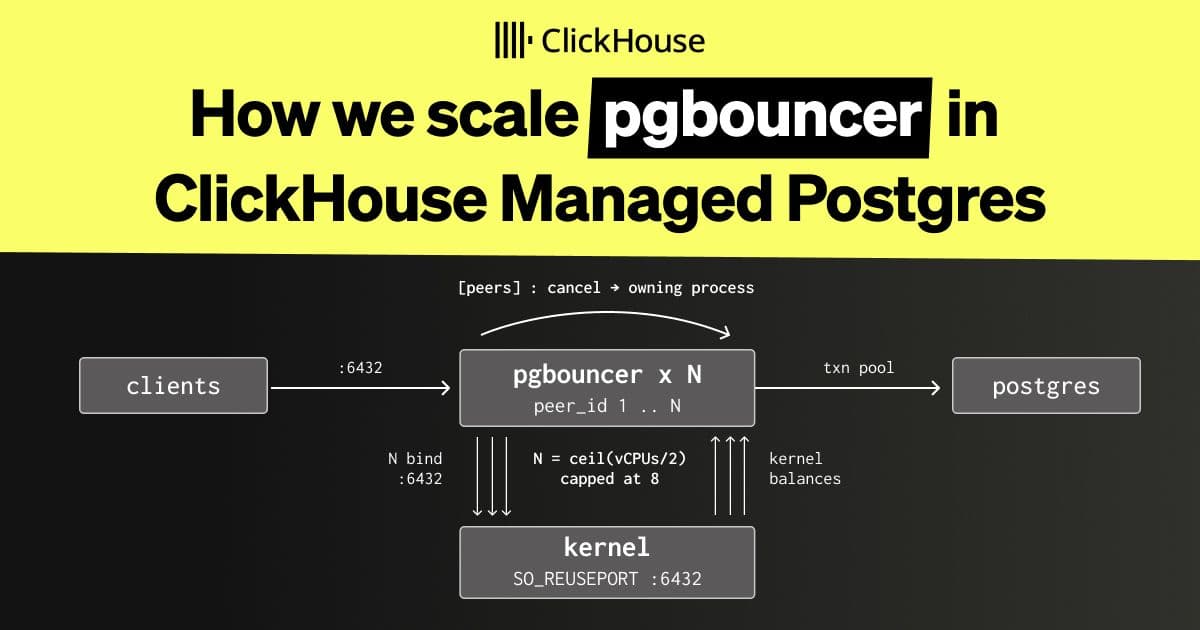
We scaled PgBouncer to 4x throughput
2026-07-11ClickHouse Managed Postgres overcame PgBouncer's single-threaded CPU limitations by deploying a peered fleet of processes utilizing the so_reuseport feature to scale across all available cores. This approach allows the connection pooler to fully utilize the entire CPU capacity of the host machine. Consequently, the team achieved a fourfold increase in throughput, as confirmed by recent performance benchmarks.
CommentsSilent speech with ultrasound
2026-07-11Researchers have developed a machine learning model that enables silent speech by predicting words from ultrasound video of the tongue without requiring the user to vocalize. The system generalizes across different individuals to decode open-vocabulary text, achieving a 15.6% word error rate.
Comments
The European Commission has ruled that Instagram and Facebook are in breach of the Digital Services Act due to their use of addictive design features. This regulatory action targets parent company Meta for implementing platform mechanics that prioritize user engagement over well-being. Consequently, the social media platforms will be required to modify their applications to fully comply with these European digital regulations.
CommentsThe European Parliament has greenlit the Chat Control 1.0 proposal following a controversial procedural maneuver by the European Commission to force a second-reading vote on previously defeated legislation. Critics argue this tactic undermines democratic norms by requiring an absolute majority to reject the measure, effectively bypassing prior parliamentary rejections to push through the surveillance initiative.
Comments
Meta has deployed a custom bridge chip across millions of new servers to reuse older RAM modules. This hardware innovation reduces the number of machines needed for specific inference workloads by 25%.
CommentsA recent article proposing a fast MPMC queue was corrected to clarify that its bounded waiting structure is not actually wait-free, sparking community discussions about the inherent trade-offs in concurrent queue design. Participants emphasized that developers must carefully weigh compromises between bounded memory, global FIFO ordering, and non-blocking behavior to select the data structure that best fits their specific system requirements.
Comments
The European Parliament has approved an urgent procedure to fast-track legislation reviving the expired Chat Control 1.0 rules. This decision brings the private message scanning measures one step closer to official reinstatement.
CommentsChat Control 1.0 and 2.0 Explained
2026-07-07This article explains the key differences between the EU's proposed Chat Control 1.0 and 2.0 regulations. It provides a clear overview of their respective legislative timelines and implementation goals. Finally, it details the current status of the legislation and where the ongoing debates stand today.
Comments
Under new European Union regulations, all new cars must be equipped with driver monitoring cameras to help prevent accidents caused by distracted driving. While the mandate aims to improve road safety, the privacy safeguards and data handling rules for these in-car systems remain largely unresolved.
Comments
Small language models are gaining traction in areas with unreliable internet by running locally on affordable devices like smartphones and drones. These lightweight AI systems bypass the need for cloud connectivity to deliver crucial real-time applications, such as rapid pill authentication and immediate crop disease alerts.
Comments
The Chat Control legislation has cleared its first round in the EU Parliament following a procedural maneuver by its proponents. This push comes just before the summer break and aims to reactivate the indiscriminate scanning of chat messages.
Comments
The Dutch government has established the Tulip Fund to attract top international researchers, including prominent talent leaving the USA due to declining academic freedom. A total of 34 leading scientists have been selected in the first round of nominations to relocate and continue their work in the Netherlands. This initiative aims to leverage their global expertise to significantly boost Dutch innovation and address urgent societal challenges.
Comments
Dua Lipa has opened the Manifesto Library inside Porto's Livraria Lello, a new space dedicated to housing banned and censored books. The collection specifically features literature that challenges power, censorship, exclusion, and dominant narratives.
Comments
A global workspace in language models
2026-07-06Anthropic researchers have published new interpretability findings detailing the internal reasoning processes of the Claude language model. The study reveals that the AI utilizes a mechanism akin to the human brain's global workspace to dynamically route information across its neural network. This discovery provides a clearer window into how large language models organize complex thoughts and manage internal attention.
CommentsHas_not_been_viewed_much
2026-07-06Developers are leveraging museum APIs to shine a spotlight on overlooked pieces in historical collections. By analyzing visitor data, these digital projects bring attention to the art that rarely gets viewed, bridging the gap between modern technology and physical gallery spaces.
CommentsMark Zuckerberg stated that the development of fully autonomous AI agents is progressing slower than expected. Although AI tools significantly increase the raw volume of code generated, engineers still require extensive human oversight and code review to ensure stability, demonstrating that unsupervised autonomous coding agents are not yet a reality.
Comments
Nintendo will begin releasing revised versions of its products in Europe with replaceable batteries starting in the summer of 2026. The move ensures the company's hardware complies with new European Union regulations that will mandate user-replaceable batteries by February 2027.
CommentsFull Writeup of the Windows GDID
2026-07-06A comprehensive technical writeup detailing the reverse engineering of the Windows GDID has been published on a new GitHub repository. The project aims to uncover and document the inner workings of this specific system component. Developers and researchers are encouraged to create an account on the platform to contribute to the ongoing analysis efforts.
CommentsMeta's Un-Stable Signature
2026-07-05Amid discussions about Meta's digital signature practices and new EU AI Act mandates, users are raising significant privacy and mass surveillance concerns over persistent AI watermarking and C2PA provenance tracking. Although these embedded identifiers are designed to authenticate media and clearly label AI-generated content, critics warn they could inadvertently expose sensitive personal data and tool usage in vulnerable contexts. In response to these controversies, developers are already creating specialized applications designed to detect and strip these embedded digital watermarks from images.
Comments
The European Union Council has fast-tracked Chat Control 1.0, allowing messaging platforms to scan user communications for illegal content by overriding a recently expired temporary exemption. Although the measure enables widespread chat scanning, the EU Parliament successfully blocked the more severe Chat Control 2.0, which would have compromised end-to-end encryption. Privacy advocates criticize the Council's maneuver, arguing that national governments are forcefully pushing for increased digital surveillance and outsourcing policing to tech companies.
Comments
Former Member of the European Parliament Stelios Kouloglou was hacked with Pegasus spyware while serving on the committee investigating spyware abuses across Europe. Forensic analysis of his compromised device indicates that attackers potentially gained access to highly confidential documents and sensitive committee deliberations.
Comments
A new technical post explains how strict memory overcommit settings protect PostgreSQL databases from catastrophic out-of-memory kills. The authors also share their heuristic for determining the optimal memory limit after a one-character kernel bug temporarily forced them to disable the protection.
CommentsAlibaba is reportedly banning Anthropic's Claude Code from its workplace over concerns regarding potential backdoors and the broader security risks of hosted AI tools. This decision highlights growing industry anxieties that feeding proprietary code into remote models exposes sensitive intellectual property to espionage, data breaches, and supply chain attacks, prompting organizations to reevaluate their reliance on third-party AI providers.
Comments
Zero-Knowledge Proof libraries have been open-sourced to enhance privacy in digital age verification systems. This technology release builds upon a partnership with Sparkasse to support age assurance compliance across the European Union. Making these cryptographic tools publicly available will empower developers to build more secure age verification solutions.
Comments