EU Tech Policy News Today
Brussels sets rules that ripple across the global technology industry, and this section keeps track of them. It gathers current news on EU digital legislation, AI governance, competition enforcement, and privacy rulings. Readers get a focused view of how European policy decisions affect the companies and products they use.
Day to day, the feed carries enforcement decisions under the Digital Markets Act and Digital Services Act, milestones in AI Act implementation, data protection rulings, and the responses of the companies affected. Negotiations over new legislation and disputes between EU institutions and member states also feature.
For companies operating in Europe, these headlines translate directly into product requirements, compliance costs, and legal risk. Policy professionals track them by profession, but founders, developers, and informed users read along too, because EU decisions often preview rules that later spread to other jurisdictions.
Researchers have introduced PC-ALM, a local alternative to backpropagation that uses layer-local feedback control systems to distribute supervision credit throughout neural networks. Each layer is equipped with a dynamical system to propagate this credit without relying on global network dynamics. Despite this localized approach, PC-ALM can train deep residual networks up to 1000 layers while nearly matching the performance of traditional backpropagation.
Comments
Ubuntu 26.10 has finalized its transition to Rust-based core utilities, completing the migration of commands previously delayed by security concerns. This shift replaces traditional tools with memory-safe Rust alternatives to enhance the operating system's overall security and performance.
Comments
The Interim Computer Museum
2026-09-13The Interim Computer Museum in Seattle features an impressive collection of restored vintage computers and offers immersive, hands-on tours led by its passionate director. Visitors can spend several hours exploring the preservation efforts, playing classic games like Spacewar, and experiencing computing history firsthand. Conveniently located near the airport, the highly recommended museum pairs perfectly with a weekend visit to the nearby Connections Museum.
CommentsA technical article explores recovering 50 GB/s of memory bandwidth from the Apple Neural Engine by optimizing Direct Memory Access and memory address patterns. Despite these technical insights, reader discussions were overwhelmingly dominated by frustration over the host website's dark pattern of hijacking the browser's back button.
Comments
This article examines the microcode of Intel's pioneering 8087 floating-point coprocessor, focusing specifically on its scale instruction. It explores how this early chip helped resolve the chaotic and incompatible arithmetic standards that plagued the computer industry in the 1970s. Ultimately, the piece highlights the 8087 as a crucial milestone in the standardization of modern computing.
CommentsColliding the Sum Checksum (2019)
2026-09-13The sum command-line utility, included in BSD and GNU Coreutils, lacks cryptographic security. To demonstrate this vulnerability, a developer created a tool that manipulates file contents to generate checksum collisions. This new utility allows users to easily set the sum hash of any file to an arbitrary, predetermined value.
CommentsA foundational 2021 paper on mechanistic interpretability introduces a mathematical framework that reframes transformer attention mechanisms and highlights the residual stream as a large language model's central communication bus. Readers praise the research for providing a more intuitive understanding of neural network architectures by replacing traditional query, key, and value matrices with larger, mathematically equivalent structures. The discussion highlights the paper's enduring significance as a classic text in the field, despite frequent public confusion with electrical transformers.
CommentsProject Blinkenlights
2026-09-12Readers are reminiscing about the classic Blinkenlights pseudo-German warning sign and the nostalgic physical and auditory feedback of early computing. The discussion contrasts the silent nature of modern machines with vintage hardware sounds, while also celebrating enduring digital tributes like the long-running ASCII Star Wars telnet server.
CommentsResolveHQ is a newly launched open-source helpdesk and shared support inbox for small teams that was recently showcased on Hacker News. The application features a fully cloud-native architecture built entirely on the Cloudflare ecosystem, leveraging Workers, D1, R2, and Queues.
Comments
Anthropic is restricting access to its AI platform, Claude, exclusively to users aged 18 and older. Community discussions suggest this new age limit is a strategic maneuver to implement mandatory government ID verification under the guise of age compliance. Ultimately, the policy shift aims to significantly improve user analytics and identity tracking without directly asking for identification upfront.
Comments
Muse – Meta’s personal AI agent
2026-09-09Meta has introduced Muse, a new personal AI agent designed to assist users with a variety of everyday tasks. The tool aims to streamline daily workflows and boost overall productivity by seamlessly managing routine activities.
Comments
An AI-generated solution to the Navier-Stokes Millennium Prize Problem has been shared, accompanied by a detailed writeup. The submission also features a formal mathematical proof written in the Lean theorem proving language.
Comments
WeatherNext 3
2026-09-08WeatherNext 3 has been officially unveiled as the most advanced global weather AI model to date, representing a significant upgrade in artificial intelligence capabilities for worldwide meteorological forecasting. The new system is expected to deliver highly improved predictive accuracy and comprehensive environmental data analysis for users across the globe.
Comments
Decoding the NEC V20 Microcode
2026-09-08Building on the 2020 breakthrough that enabled highly accurate 8088 CPU emulation, developers have successfully decoded the microcode of the compatible NEC V20 processor. This achievement will allow for even more precise software emulation and better preservation of classic retro computing hardware.
CommentsCatching Crumbs from the Table (2000)
2026-09-08Hacker News readers are discussing Ted Chiang's 2000 essay Catching Crumbs from the Table and its implications for the future of human mathematicians in an AI-driven world. Commenters suggest that humans will increasingly act as interpreters, using hermeneutics to explore and explain AI-generated mathematical discoveries to one another. To achieve this effectively, commenters note that academia will need to adapt its core values and preserve mathematical culture.
CommentsAlternative Twitter front-ends Nitter and XCancel have resumed operations after temporarily suspending service to seek legal advice. The platforms are now back online, allowing users to access the alternative interfaces and developers to continue contributing to the projects via GitHub.
Comments
A 2011 report investigates the Black Hole of Los Alamos, a channel used for selling surplus nuclear research materials from the national laboratory. The piece sheds light on the broader challenges of managing, tracking, and disposing of excess scientific equipment and sensitive resources.
Comments
Every Novel Is Boring–Until It Isn't
2026-09-07A recent piece explores the immersive nature of reading, arguing that novels often feel tedious at first. However, books become completely engrossing once a reader experiences a mental switch that makes them unable to stop reading. This breakthrough typically develops organically during childhood, meaning those who missed it may never intuitively understand the compelling experience of novel reading.
Comments
Isar Aerospace made history on September 5 when its Spectrum rocket successfully reached orbit. This milestone marks the first time a private vehicle has launched into space directly from European soil.
Comments
The CHC5 open camera platform features a modular design that allows users to easily interchange various sensor PCBs. A recent overview compares the technical specifications of the multiple image sensors available for the system, highlighting the hardware flexibility developers have to customize their imaging setups.
Comments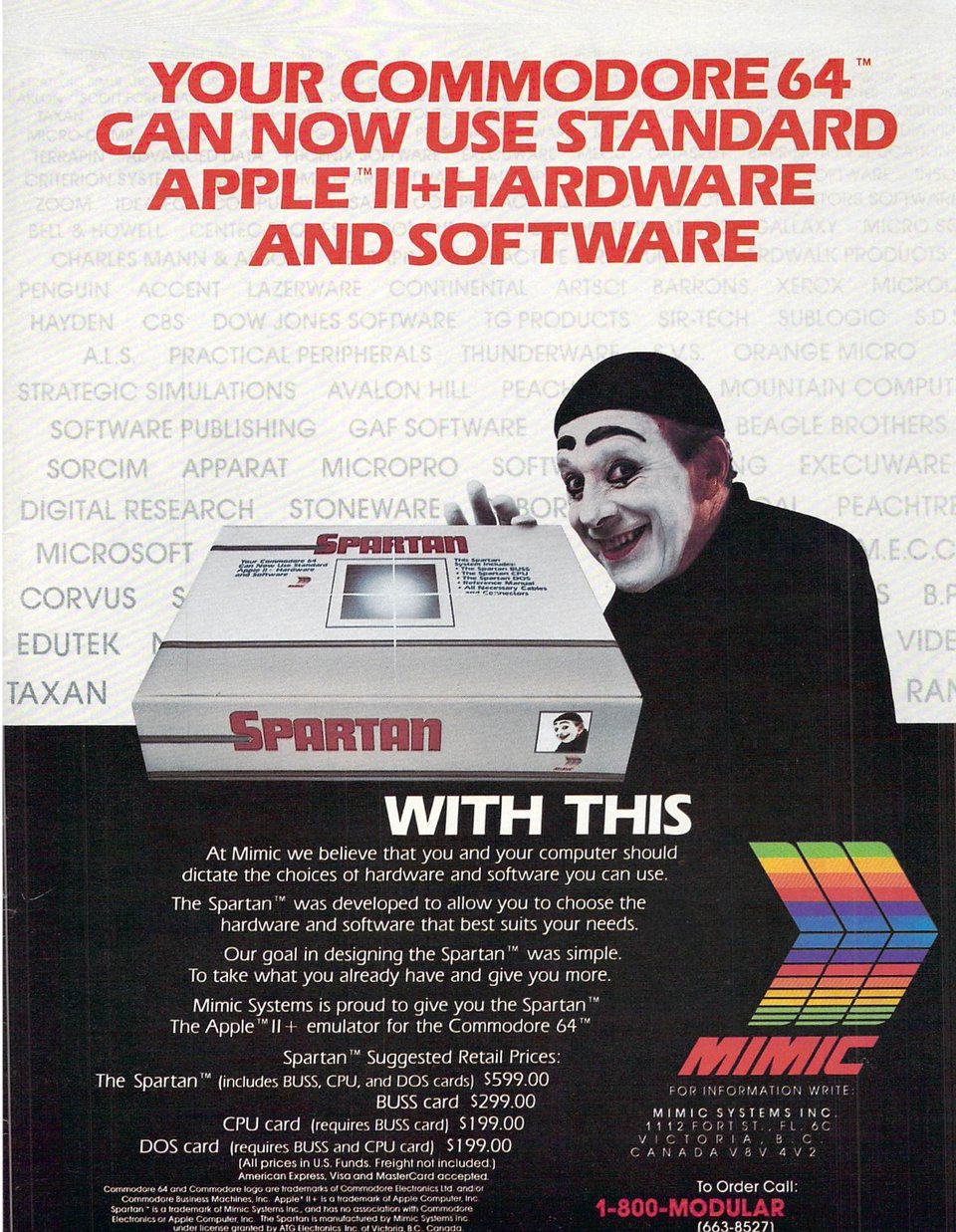
Mimic Systems spent two years promoting a bizarre Commodore 64 peripheral through a strange marketing campaign featuring a mime and poorly received advertisements. Consumers had to endure this prolonged period of nightmarish makeup and smiles before finally getting their hands on the actual product.
Comments
Statichost.eu is a new static site hosting platform designed for frontend developers who prioritize data sovereignty. The service offers seamless git push deployments and custom domain support for easy website management. Additionally, it runs entirely on European-owned infrastructure to ensure complete control over where web projects are hosted.
CommentsdeSEC – Free Secure DNS
2026-09-05deSEC is a free, EU-based DNS hosting service that prioritizes internet security by requiring users to enable DNSSEC for their domains. Community discussions highlight it as a highly recommended alternative to mainstream providers, praising its robust security features and tightly scoped API tokens for certificate validation. However, some users note minor friction regarding initial subdomain limits and past quirks with its web interface and API.
Comments
Users are expressing frustration over Mistral AI's confusing and shifting privacy policies regarding the use of customer prompts for model training. The discussion sparked a semantic debate over the contradictory phrase "opt-in by default" and how it misleads consumers about their actual privacy choices. Commenters contrasted Mistral's approach with competitors like Anthropic, which clearly disables data training by default for organizational tiers.
Comments
A recent arXiv paper explores how artificial neural networks spontaneously develop internal symbolic structures as they learn. The study bridges the gap between connectionist and symbolic AI paradigms by analyzing these hidden representations. Ultimately, the findings provide new insights into the interpretability and inner workings of deep learning models.
CommentsTech enthusiasts are increasingly scavenging second-hand markets to refurbish vintage, high-end test equipment like the Tektronix TDS7104 oscilloscope and Rohde & Schwarz signal generators for a fraction of their original cost. By repairing aging hardware and replacing obsolete components, hobbyists are breathing new life into these powerful tools for specialized engineering tasks and high-speed data analysis. Some creators are even taking these restorations a step further by gutting the classic chassis to build custom, retro-modern personal assistants powered by AI models.
Comments
Lion-man
2026-09-01Reader discussions surrounding the ancient Lion-man ivory sculpture explore its significance as potential early evidence of human cognitive evolution and the capacity for abstract thought. Commentators debate whether such Paleolithic artifacts represent complex mythological concepts or simply served as children's toys, while also examining the biological realities of the Eurasian Cave Lion. Ultimately, the conversation highlights the ongoing challenge of interpreting early human imagination without projecting modern assumptions onto ancient artifacts.
Comments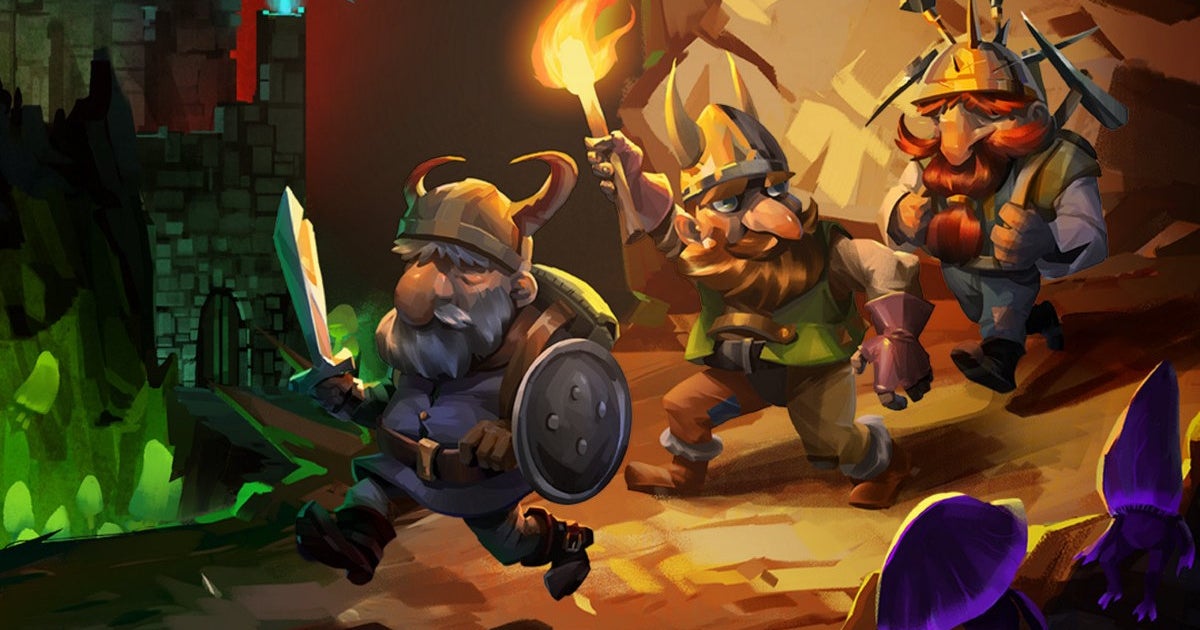
The infamously simulation-heavy colony builder Dwarf Fortress is receiving a major Myth and Magic update in late 2026. This new content will feature a dynamically generated sorcery system tailored specifically to each player's unique world.
Comments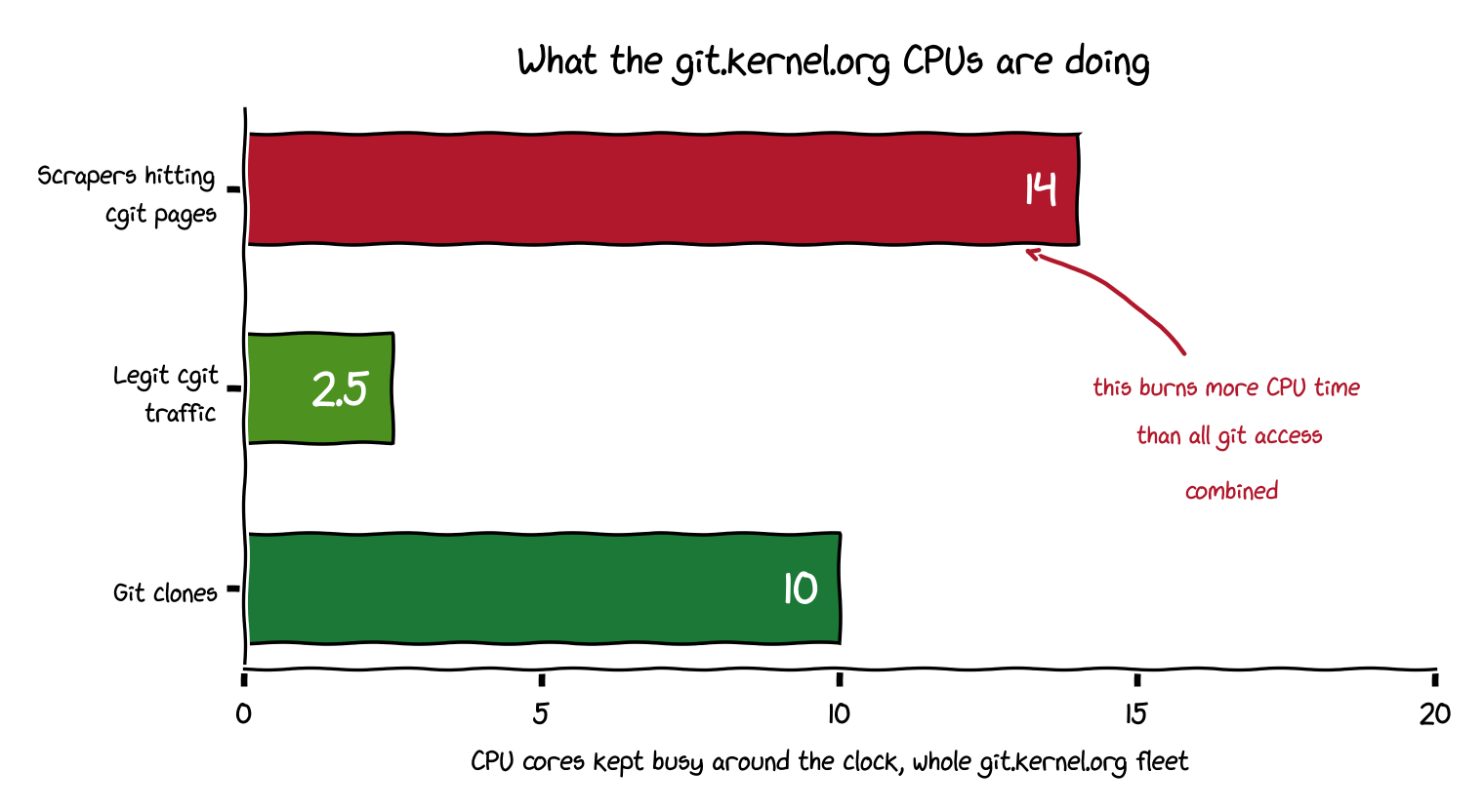
Creepy Crawlies
2026-08-31A recent analysis presents hard data detailing the significant impact of AI web crawlers on website infrastructure. The report demonstrates how these automated bots consume substantial bandwidth and server resources. This highlights the growing technical and financial burden they place on web publishers.
Comments
Vintage magnetic core memory modules once powered the computers aboard the 1980 Spacelab missions. These early computing components were essential for the reusable laboratory carried in the Space Shuttle's cargo bay. The hardware highlights the rugged, pioneering technology that supported early space exploration and scientific research.
Comments