EU Regulation Tech News
The European Union sets some of the world's most consequential technology rules. This section tracks news on the AI Act, Digital Services Act, Digital Markets Act, GDPR enforcement, and the investigations and fines that shape how companies operate in Europe.
Stories include implementation deadlines and guidance for the AI Act, designation decisions and compliance fights under the DMA, content moderation probes under the DSA, and the steady drumbeat of GDPR fines. Debates over simplifying or amending these rules also make regular appearances.
Because companies often apply EU-driven changes globally rather than maintain separate versions, Brussels effectively writes rules for users everywhere. Compliance teams, product leaders, and policy watchers follow this coverage to anticipate obligations before enforcement arrives.

Claude Sonnet 5
2026-06-30Claude Sonnet 5 has been released as the most agentic model in the Sonnet lineup to date. The new iteration delivers top-tier intelligence specifically optimized for complex coding tasks and everyday professional workflows. This launch significantly advances autonomous capabilities for developers and everyday users alike.
Comments
Nano Banana 2 Lite
2026-06-30Google DeepMind has introduced the Nano Banana 2 Lite, adding to its growing lineup of artificial intelligence models and tools. Specific details about the project's capabilities and intended applications have not yet been revealed.
Comments

European governments are introducing digital identity wallets to allow citizens to access public services and verify their age online. However, a major issue with this rollout is its heavy reliance on the safety services provided by Google and Apple.
Comments
The US ambassador in Belgium used local police to interrupt journalists reporting on a privately funded Freedom 250 celebration organized by American embassies. Reporters were stopped by law enforcement acting on the ambassador's behalf while attempting to cover the event. This incident has sparked immediate backlash from press freedom advocates over the diplomatic suppression of independent journalism.
Comments
A new non-invasive brain-computer interface technique leverages machine learning and EEG data to translate brain waves into text without surgery, offering incremental but notable improvements over existing methods. However, the technology has sparked intense debate over neural privacy and corporate data tracking, prompting experts to urge lawmakers to establish strict national regulations before such commercial mind-reading tools become widespread.
CommentsGovernments across the US, Europe, and Australia are introducing age verification regulations under the guise of protecting children. However, these new rules may actually serve as a stepping stone toward broader digital surveillance. Ultimately, this framework could act as a precursor to the automated tracking and attribution of all online speech.
Comments
A newly published arXiv paper provides an in-depth technical analysis of Apple's proprietary Neural Engine, detailing its underlying architecture, programming interfaces, and performance benchmarks. The study offers a comprehensive breakdown of the machine learning hardware found in Apple's custom silicon, providing valuable insights for developers and AI researchers.
Comments
The European ISP trade association EuroISPA is calling for rightsholders to be held financially accountable for damages caused by website overblocking. Currently, copyright holders can secure broad site-blocking orders without facing liability when legitimate content is accidentally restricted. EuroISPA argues that imposing this responsibility is essential to protect internet service providers and users from the negative impacts of excessive copyright enforcement.
CommentsHalvar's Guide to Entrepreneurship
2026-06-29Thomas Dullien has released a new guide focused on software and B2B SaaS entrepreneurship to help founders navigate the modern startup landscape. Titled Halvar's Guide to Entrepreneurship, the resource offers strategic advice and actionable insights for building and scaling successful enterprise software companies.
Comments
A recent technical article explores the challenges of running OpenBSD on the Lemote Yeeloong laptop and the creative workarounds used to bypass its hardware quirks. The piece highlights this achievement as a significant step toward realizing a completely free and unrestricted software environment.
CommentsThe European Union is advancing chat control legislation behind closed doors, prompting widespread concern that the policy will compromise end-to-end encryption for everyday citizens. Critics argue that forcing major messaging providers to implement message scanning will result in mass surveillance and privacy violations without effectively stopping criminals. Furthermore, users fear that upcoming EU interoperability mandates could ultimately be leveraged to enforce these surveillance backdoors across both centralized and decentralized communication platforms.
Comments
A recent teardown examines the intricate circuit boards from the Input/Output Processor of the Space Shuttle's five general-purpose computers. These critical computing systems were responsible for essential flight operations, such as controlling the engines and monitoring thousands of onboard sensors. The detailed look at this vintage aerospace hardware highlights the robust engineering required to support historic space missions.
CommentsThe BBC is shutting down its Long Wave radio service due to financial constraints, ending a highly reliable broadcast network that provided uninterrupted coverage across Europe. The closure has sparked widespread nostalgia among listeners who relied on the analog signal for iconic programming like the Shipping Forecast and Test Match Special. Many mourn the loss of the accessible technology, which also served as a foundational electronics project for generations of hobbyists.
CommentsUltrasound imaging of the brain
2026-06-26Researchers have successfully used ultrasound to capture the most detailed vascular image of a living human brain to date by imaging directly through the skull. The breakthrough also details the advanced technological pipeline required to process and generate these unprecedented high-resolution scans.
CommentsApple plans to skip its high-end M6 Mac chips in favor of an AI-optimized M7 lineup designed to make local on-device language model inference highly efficient. While data center accelerators will still dominate heavy workloads, powerful consumer hardware paired with specialized software architectures could handle most everyday tasks without costly cloud subscriptions. This strategic pivot highlights Apple's intent to leverage its unique PC market position to challenge the subscription-based models of frontier AI labs.
Comments
The author visited Oklahoma to deliver public talks, including a Friday evening lecture on horned dinosaurs. This event coincided with the launch of a temporary exhibit at the Sam Noble Museum titled Bizarre Headgear: Ceratopsians and the Evolution of Extraordinary Skulls.
Comments
Jolla Phone (October 2026)
2026-06-26Jolla is releasing a new limited batch of its independent European Linux smartphone in October 2026 following its initial July launch. Designed through a collaborative Do It Together model, the device allows its user community to directly shape the software and overall user experience.
Comments
An entire Herculaneum scroll sealed since the eruption of Vesuvius in 79 AD has been read from beginning to end without ever being physically opened. The artifact was virtually unwrapped to reveal its text. This achievement marks the first time a Herculaneum scroll has been recovered in full through this method.
Comments
Apple raises prices of MacBooks, iPads
2026-06-25Apple has raised the prices of its MacBooks and iPads due to surging memory and storage chip costs. The company stated it can no longer absorb these expenses, which are being driven by the AI industry's massive datacenter expansion.
CommentsAnthropic has accused Alibaba and associated Chinese resellers of illicitly extracting Claude's capabilities to sell heavily discounted AI tokens to users blocked by regional restrictions. These operators bypass payment and identity barriers using bot networks and fraud, while subsidizing their deeply discounted rates by harvesting and selling model reasoning traces to domestic AI labs for training data.
Comments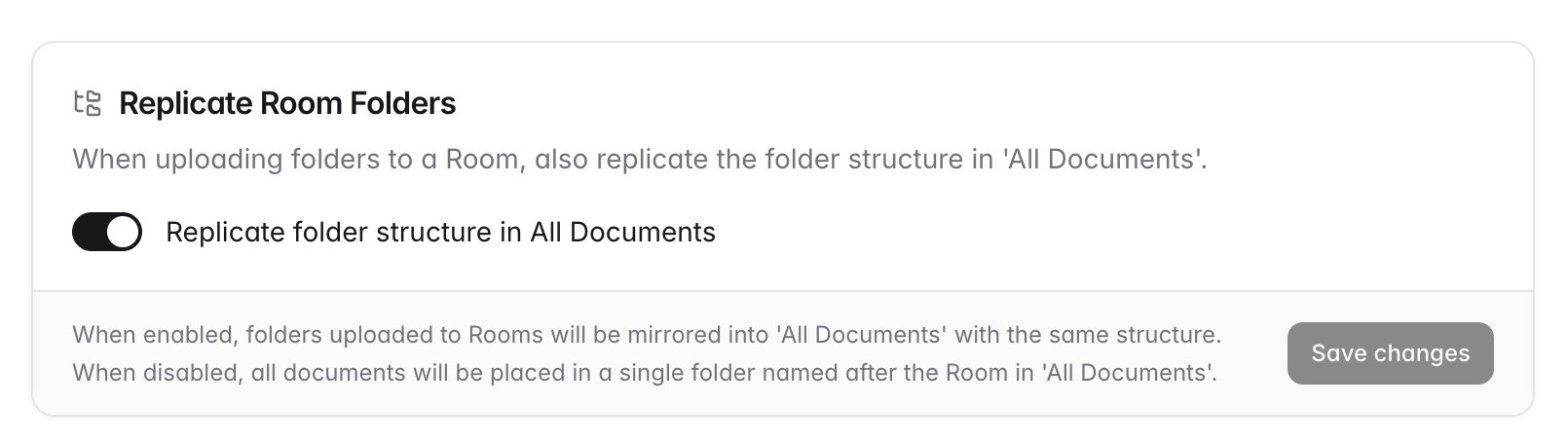
Papermark has accused entrepreneur Nico Laqua of stealing its open-source and enterprise-licensed data room code to build a competing product. The company is demanding the immediate takedown of the allegedly infringing software. The creators condemned the unauthorized use of their intellectual property as outright fraud.
Comments
The last Romans are still around
2026-06-25This piece explores the enduring legacy of the Roman Empire and examines when the ancient civilization truly ceased to exist. It highlights how the empire's expansion fundamentally shaped Europe and the modern world, suggesting that the Romans never completely disappeared.
CommentsQualcomm to Acquire Modular
2026-06-24Qualcomm is acquiring Modular, the AI compute company founded by Chris Lattner that is developing the Mojo programming language. While some in the developer community worry about the future of Mojo under Qualcomm and question its design choices, the company has confirmed that the language remains on track to be open-sourced later this year.
Comments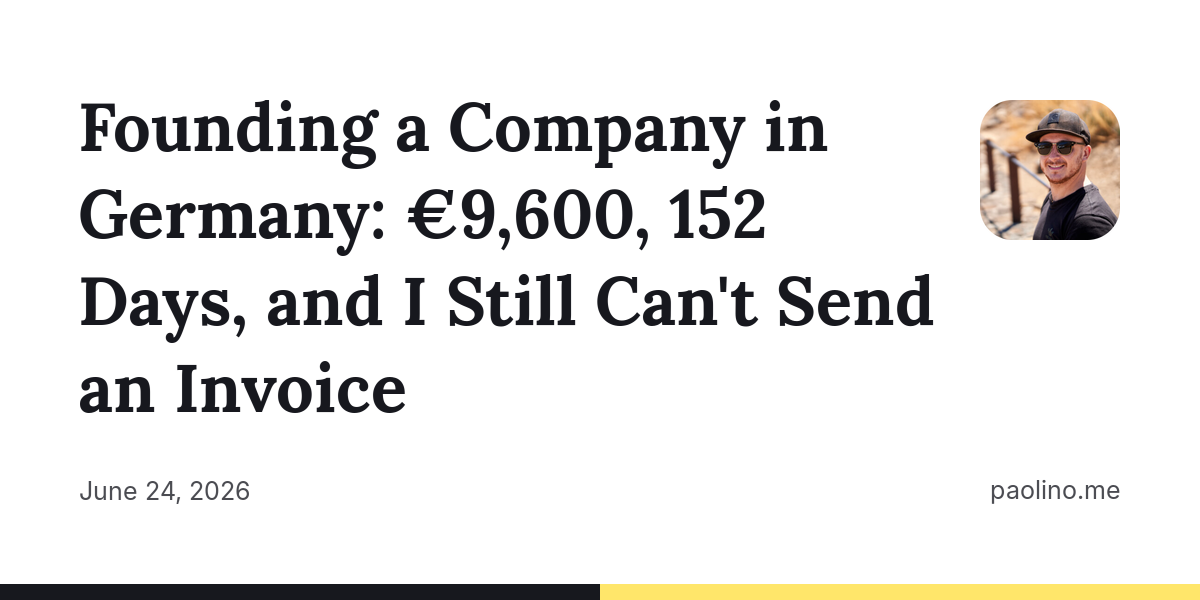
An entrepreneur reveals that starting a business in Germany cost them €9,600 and 152 days of navigating severe bureaucracy. Despite registering two separate companies over a five-month period, the founder is still unable to issue a single invoice, highlighting the country's notoriously complex company formation process.
CommentsPrinting Gaussian Splats
2026-06-23A newly highlighted industrial 3D printing technology utilizes UV inkjet CMYK resin to achieve unprecedented photorealistic fidelity that far exceeds standard hobbyist machines. These advanced commercial systems can produce incredibly lifelike objects, but they currently cost around $200,000 and remain largely restricted by corporate patents. However, more affordable prosumer alternatives from companies like HeyGears and EufyMake are beginning to emerge for early adopters.
CommentsHelp I accidentally a wigglegram
2026-06-22A recent tech discussion explores the evolution of wigglegrams and stereograms, highlighting techniques that range from dedicated multi-lens hardware to synthetic depth mapping on modern smartphones. While the original poster's accidental attempts lack the precise parallax of professional 3D rigs, commenters note that mobile features and generative AI are making pseudo-3D creation more accessible. In response, enthusiasts are sharing custom software libraries, DIY camera builds, and stereoscopic apps to revive these underrated visualization methods.
CommentsRecent discussions emphasize that slow breathing techniques down-regulate the nervous system to lower heart rate and signal safety to the brain. This physiological modulation helps individuals overcome performance anxiety and manage risk behavior, enabling greater confidence and strategic thinking in high-stress scenarios ranging from public speaking to combat sports.
Comments
Zigzag Decoding with AVX-512
2026-06-21The creator of the meshoptimizer library recently explored methods to accelerate AVX-512 vertex decoding. During this process, the developer discovered two interesting optimization techniques that were ultimately not used in the final implementation. This article explores these unused methods while teasing a future deep dive into the specific optimizations that actually made it into the codebase.
Comments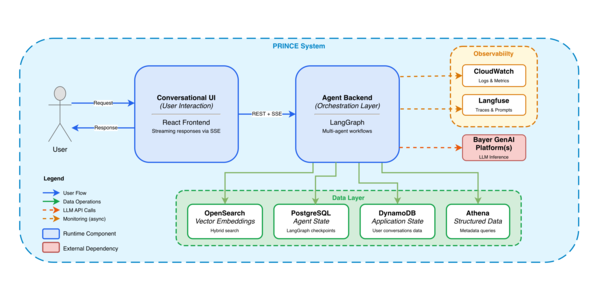
Building reliable agentic AI systems
2026-06-21Developers are building reliable agentic AI systems to help pharmaceutical researchers efficiently query decades of historical data buried in PDF reports. These advanced agents can autonomously navigate and extract critical insights from complex documents, significantly streamlining drug discovery and analysis.
CommentsA hobbyist developer is reverse engineering the original binaries of the 1989 DOS game F-15 Strike Eagle II to recreate its C source code. The project creator is currently seeking volunteer DOS test pilots to help playtest and verify the reconstructed software.
Comments