Consumer Tech News
Consumer technology touches nearly everyone, and this section covers it broadly. Read about smartphones, laptops, wearables, streaming services, and apps, along with the launches, updates, and company decisions that affect the products in your pocket and home.
Typical stories include new phone and laptop announcements, software updates that add or remove features, streaming service pricing changes, smart home and audio gear releases, and app store policy shifts that ripple down to the tools people rely on daily.
This is the technology news with the most direct personal impact, useful whether you are timing an upgrade, comparing services, or just curious what is coming next. Shoppers, gadget enthusiasts, and gift-givers alike find practical value in staying current here.
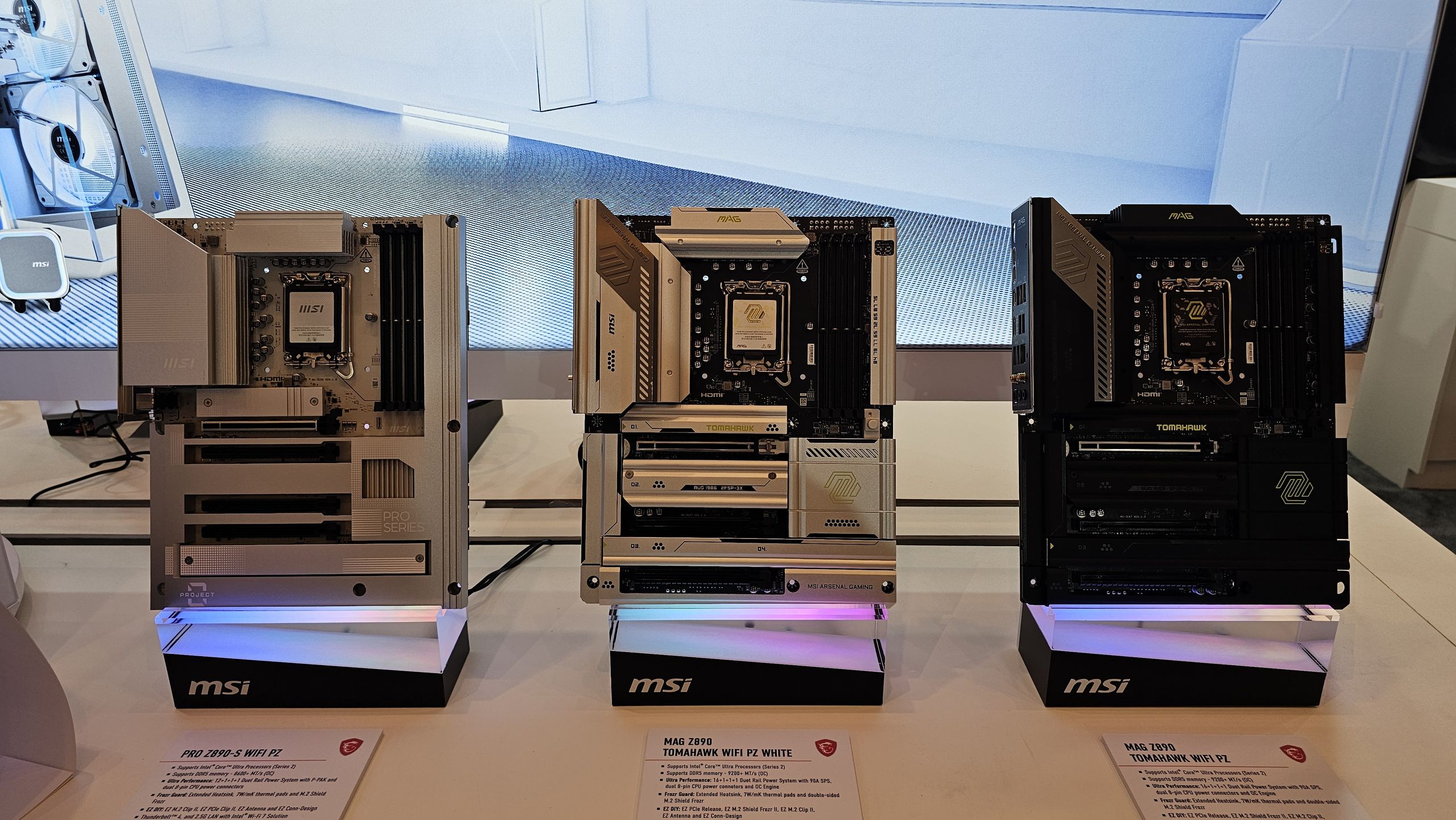
Motherboard sales 'collapse' amid unprecedented shortages fueled by AI
2026-05-07Surging demand for artificial intelligence infrastructure has triggered unprecedented component shortages, leading to a severe collapse in consumer motherboard sales. Consequently, fewer people are buying individual PC parts or building new custom computers from scratch.
245TB Micron 6600 ION Data Center SSD Now Shipping
2026-05-06Micron has begun shipping its massive 245TB 6600 ION data center SSD, underscoring the semiconductor industry's intense focus on enterprise AI infrastructure. This enterprise push coincides with rising consumer SSD prices, as manufacturers navigate constrained supply chains and prioritize profit margins by slow-walking production increases. While some fear an eventual overcapacity bust reminiscent of the dot-com era, others argue that the underlying demand for AI-driven silicon is a sustainable, long-term trend.
Let's Buy Spirit Air
2026-05-04A new cooperative movement called Spirit 2.0 is attempting to buy out Spirit Airlines and restructure the struggling budget carrier for the people. This initiative aims to transform the company into a consumer-owned enterprise rather than leaving it to traditional corporate interests.
Trademark violation: Fake Notepad++ for Mac
2026-05-04Notepad++ creator Don Ho is demanding the immediate takedown of an unofficial Mac port website for trademark infringement. This legal action has sparked a debate within the open-source community, with some users sympathizing with the unauthorized developer due to the lack of an official Mac version. However, others clarify that trademark law strictly protects brand provenance and cannot be overridden by consumer demand.
The 'Hidden' Costs of Great Abstractions
2026-05-04Driven by the rise of AI tools, the tech industry is shifting away from deep engineering fundamentals and premium developer compensation toward rapid commercial development. This transition threatens long-term software quality as non-technical managers cut corners, mirroring the decline seen in the homebuilding sector. Nevertheless, software companies will likely avoid consumer backlash and financial liability due to high switching costs and restrictive end-user agreements.

Stop big tech from making users behave in ways they don't want to
2026-05-04Marie Potel-Saville argues that major tech companies use predatory design to exploit users' cognitive biases and force them into unwanted behaviors. She warns that these manipulative practices not only harm individuals but also undermine fair market competition and restrict genuine consumer choice.
UK Fuel Price Intelligence – Market analytics from reporting stations
2026-05-04The UK has launched the Fuel Finder scheme, a new market analytics platform providing live fuel price averages, motorway premiums, and brand comparisons. This tech-driven data service tracks supermarket discounts to help consumers easily identify the most affordable fuel options.
Mercedes-Benz commits to bringing back physical buttons
2026-05-03Mercedes-Benz is set to reintroduce physical buttons in its vehicles, a move readers suspect is driven by upcoming Chinese regulatory mandates rather than a genuine leap in user experience. This decision underscores ongoing criticisms of German automakers and their historical struggles with in-house software development and consumer-facing interface design.
Maryland to ban A.I.-driven price increases in grocery stores
2026-05-03Maryland is set to ban grocery stores from using artificial intelligence to implement dynamic price increases on food items. The legislation aims to protect consumers from algorithmic surge pricing on everyday essentials.

Maryland becomes first state to ban surveillance pricing in grocery stores
2026-04-29Maryland has become the first state to ban surveillance pricing in grocery stores, prohibiting retailers from dynamically adjusting product costs based on consumer data. However, critics argue that the new legislation is weakened by numerous carveouts that could limit its overall effectiveness.
Intel Arc Pro B70 Review
2026-04-28Reader discussions surrounding the Intel Arc Pro B70 highlight its awkward positioning in the AI hardware market, sitting uncomfortably between high-VRAM systems needed for dense models and high-compute cards ideal for Mixture of Experts workloads. The card struggles to provide enough speed for interactive dense models or sufficient quality for high-throughput agentic workflows, making it less competitive than extreme alternatives. Beyond this specific release, commenters express broader frustrations with the consumer market's stagnation in the sub-100GB memory region, urging manufacturers to develop more accessible, high-memory hardware for running large local AI models.
Mo RAM, Mo Problems (2025)
2026-04-28A retrospective look at vintage computing reveals how late-1990s Intel chipsets artificially capped fast, cacheable RAM at 64MB to enforce market segmentation and push consumers toward pricier processors. To bypass these intentional hardware limitations, retro enthusiasts historically relied on clever kernel patches to treat excess memory as swap space, highlighting the extreme workarounds required to maximize older system performance.

When the cheap one is the cool one
2026-04-27Apple and Porsche have mastered the strategy of making their least expensive products the most exciting options in their respective lineups. Through intentional design, both companies prove that entry-level models can capture the most consumer attention without relying on premium price tags. This approach highlights how thoughtful engineering can make the most affordable items the most coveted.

Paraloid B-72
2026-04-25A reader discussion highlights the versatile applications of the acrylic resin Paraloid B-72, specifically its use in an acetone solution to preserve and strengthen porous materials such as human bones and fossils. The conversation also explores the complex science of structural adhesives, noting the proprietary trade secrets of major chemical companies and recommending specific consumer-grade products for various bonding needs.

Another Day Has Come
2026-04-22Apple's recent product launch was praised for being an orderly and confidence-inspiring event that delivered exactly what consumers expected. The execution was described as exciting yet entirely unsurprising, perfectly aligning with the brand's identity. This seamless rollout reinforces the company's reputation for flawlessly managing its major technology transitions.
Edit store price tags using Flipper Zero
2026-04-21A new Flipper Zero application named TagTinker enables users to edit retail Electronic Shelf Labels using infrared signals. Based on foundational research by furrtek, the project demonstrates the feasibility of manipulating in-store digital price tags with consumer-grade hardware.

US Bill Mandates On-Device Age Verification
2026-04-17A newly proposed US bill contains a hidden mandate requiring on-device age verification for consumer electronics. This sweeping provision would apply to every laptop, gaming console, smart TV, and car infotainment system in the country.

Everything we like is a psyop?
2026-04-17This article examines the growing concern that TikTok's algorithmic feed is artificially shaping modern culture and consumer trends. It questions whether popular digital phenomena are the result of organic interest or manipulative growth hacking. Ultimately, the piece urges society to establish clear boundaries between legitimate marketing practices and inauthentic algorithmic manipulation.

Codex Hacked a Samsung TV
2026-04-16Codex successfully compromised a Samsung smart TV after being provided with an initial system foothold. It quickly escalated its privileges to pop a root shell, gaining full administrative control over the device. This demonstration highlights the tool's capability to execute a complete system takeover on consumer electronics.
US v. Heppner (S.D.N.Y. 2026) no attorney-client privilege for AI chats [pdf]
2026-04-15A New York federal court has ruled that conversations with AI chatbots do not qualify for attorney-client privilege because sharing data with a third-party service eliminates the expectation of confidentiality. The decision relied on the terms of service to classify the interactions as discoverable personal notes rather than protected legal communications. This ruling highlights the growing legal gap between consumer expectations of digital privacy and the realities of using artificial intelligence tools.