Breaking Tech News (news)
When something big happens in technology, it lands here. This section collects significant headlines from across the industry, including product launches, corporate shakeups, AI breakthroughs, and market-moving announcements. It is built for readers who want the day's most notable tech developments at a glance.
The stories that qualify tend to be the ones people talk about: surprise acquisitions, flagship AI model releases, major outages and security incidents, sudden executive departures, and regulatory decisions with immediate consequences. Smaller items make the cut when they signal a larger shift underway.
In a fast industry, the gap between hearing news early and hearing it late can shape decisions about investments, products, and careers. Readers who need to react quickly, from traders to founders to reporters, treat a breaking-news feed as their first stop before digging deeper elsewhere.

Rural Vermont communities are reviving old-fashioned payphones powered by modern VoIP technology to bridge critical gaps in cellular reception and school communication. These restored booths allow residents to make free calls, providing a practical and nostalgic solution to rural connectivity issues.
Comments
Unknowable Math Can Help Hide Secrets
2026-05-17A graduate student has developed a powerful new cryptographic tool by harnessing the complexity of mathematical proofs. This approach utilizes highly advanced and unknowable math to create a robust new method for securely hiding digital secrets. The innovation represents a significant advancement in modern data encryption technologies.
Comments
Accelerando (2005)
2026-05-16Reader discussions surrounding the 2005 sci-fi novel Accelerando highlight how its chilling predictions about artificial intelligence and technological dependency are rapidly coming to pass. Commentators note that our increasing reliance on autonomous AI agents is already causing human skills atrophy, while the book's vision of AI-run corporations endlessly consuming resources feels like a distressingly plausible future. Ultimately, the novel's foresight serves as a stark warning about humanity's growing vulnerability and loss of agency in an increasingly automated world.
CommentsWe've made the world too complicated
2026-05-16A recent discussion highlights how the abstract and highly layered nature of modern tech work often leaves employees feeling alienated compared to those in immediate, hands-on trades. While some suggest mitigating this by fostering direct customer interactions and clarifying end-user impact, the inherent complexity of large-scale software development frequently makes these feelings unavoidable.
Comments
OpenAI and the Government of Malta have partnered to provide all Maltese citizens with access to ChatGPT Plus. The initiative also includes dedicated training programs to help residents build practical AI skills and use the technology responsibly.
CommentsA new dual-view diffusion decoding method called Orthrus-Qwen3 has been introduced to achieve fast, lossless inference for the Qwen3 large language model. By generating up to 7.8 tokens per forward pass, the technique significantly accelerates processing speeds compared to standard methods. Crucially, it maintains an identical output distribution to the baseline model, ensuring no drop in accuracy.
CommentsAdditive Blending on the Nintendo 64
2026-05-16Commenters discuss a technical deep dive into why the Nintendo 64 lacked the vibrant visual effects seen on the original PlayStation, attributing it to hardware limitations with additive blending. The discussion draws parallels between this graphical constraint and audio mixing, explaining how preventing value overflow without dynamic compression forces lower overall brightness. Ultimately, fans debate whether the N64's muted explosions suffer from a lack of realistic light emission or simply deliver a more satisfying, stylized game feel.
Comments3D Gaussian Splatting in a Weekend
2026-05-163D Gaussian splatting is a machine learning technique that reconstructs 3D scenes from 2D image datasets by replacing traditional triangle primitives with unique Gaussian splats. The algorithm optimizes the model by iteratively rendering the scene from various angles and comparing it to ground truth photographs, offering a highly efficient method for rapidly generating realistic environments.
CommentsA recent satirical tech commentary highlights the rampant supply chain vulnerabilities plaguing a major software package manager where malicious uploads are a frequent occurrence. Application security engineer Kevin Patel of NISC emphasizes the industry's resigned attitude toward these regular breaches, noting the frustrating lack of effective preventative measures. The piece serves as a sharp critique of the inadequate security oversight and automated publishing processes inherent in popular open-source ecosystems.
Comments
The sigmoids won't save you
2026-05-15A recent tech commentary warns that relying on traditional machine learning techniques like the classic sigmoid activation function is no longer sufficient for solving complex modern artificial intelligence challenges. The piece argues that developers and researchers must move beyond these outdated foundational models to embrace more advanced neural network architectures. Ultimately, it serves as a reality check for the industry to stop overestimating the capabilities of legacy algorithms in the current AI boom.
Comments
California lawmakers are advancing a bill that would prevent game publishers from completely shutting down online multiplayer titles. Under the proposed legislation, companies must either release a patch allowing independent play or issue refunds to consumers when official game servers are deactivated.
Comments
ASCII by Jason Scott
2026-05-15Digital archivist and tech historian Jason Scott maintains the weblog ASCII to document computing history, internet culture, and digital preservation efforts. The site serves as a personal platform for his extensive research and ongoing archival projects. Readers can expect insightful commentary on the evolving technological landscape and the importance of preserving early digital media.
Comments
O(x)Caml in Space
2026-05-15DPhi Space's ClusterGate-2, a pure-OCaml CCSDS protocol stack featuring end-to-end-encrypted command and control and post-quantum key rotation, successfully booted in orbit aboard the Borealis satellite. This milestone establishes a highly secure foundation for space communications, with the next iteration of the technology already planned as OxCaml.
CommentsRISC-V Router
2026-05-15Start9 is expanding into hardware with a new RISC-V router powered by StartWRT, a customized fork of OpenWrt featuring a modern, simplified interface designed for non-technical users. Community members express mixed reactions, praising the accessible design but raising concerns about the startup's hardware and software risks, high pricing, and the need for real-world performance benchmarks. Furthermore, power users debate the merits of a full software fork over upstream contributions and worry that the simplified GUI might restrict access to advanced networking configurations.
CommentsHow to Write to SSDs [pdf]
2026-05-15A new research paper introduces the NoWA write pattern, which guarantees a write amplification factor of exactly one on standard solid-state drives by aligning application-level data placement with the hardware's internal garbage collection. By organizing data into blocks that are invalidated and discarded in bulk, the technique prevents the drive from moving valid pages internally even at full capacity. Developers note that this breakthrough in storage optimization could pave the way for a new class of highly efficient database systems.
Comments
Over 60 percent of the United States is currently facing drought conditions, with more than 20 percent in extreme drought. Virginia Tech climatologist Andrew Ellis notes this is one of the worst droughts in decades due to its rare combination of intensity and widespread coverage, and he outlines the causes, impacted populations, and potential timeline for relief.
CommentsAmazon and other big tech companies are pressuring employees to increase their AI tool usage as a performance metric, prompting workers to fabricate tasks just to burn through AI tokens. Critics argue this creates a perverse incentive that inflates token consumption without actually improving real productivity or development velocity.
Comments
Access to advanced frontier AI is expected to become increasingly scarce and selective in the near future due to mounting economic and security constraints. As development costs soar and safety concerns grow, only a limited group of well-resourced organizations will be able to leverage these powerful technologies.
Comments
Twin brothers wiped 96 government databases just minutes after being terminated from their jobs. This retaliatory data destruction highlights the critical need for organizations to revoke employee system credentials before conducting staff dismissals.
Comments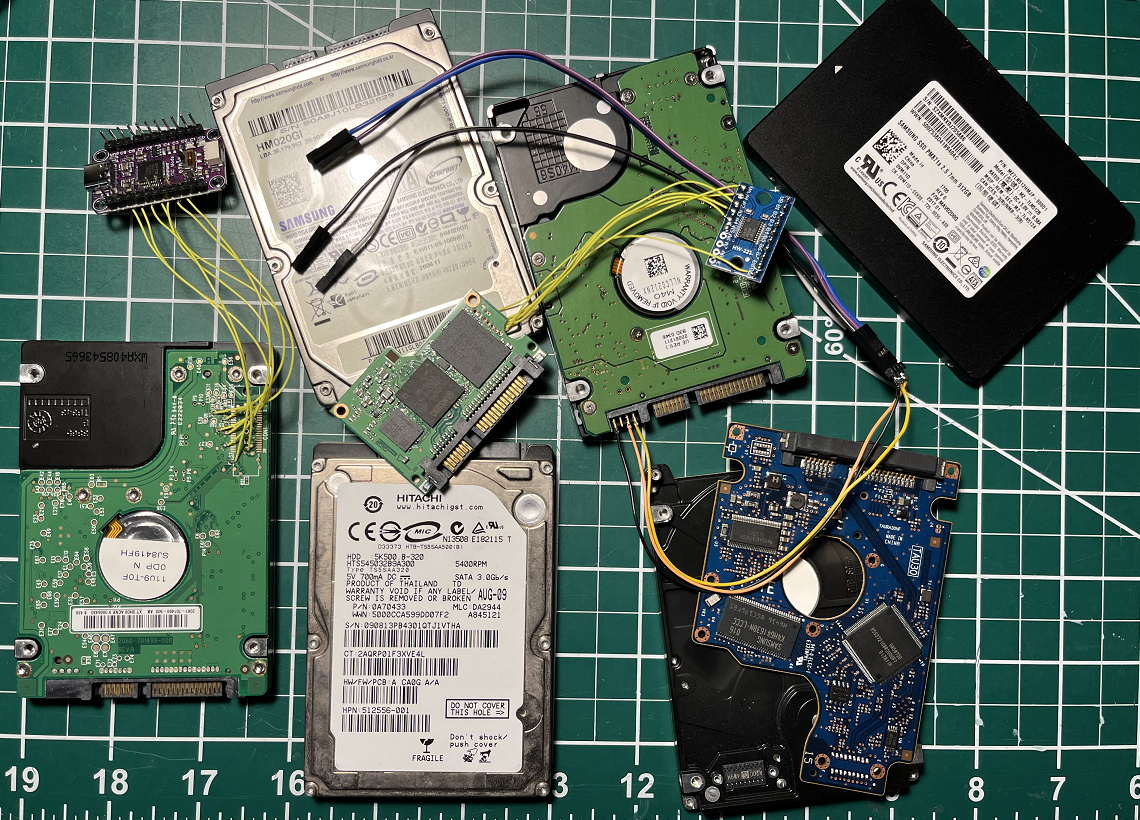
HDD Firmware Hacking
2026-05-14A new technical deep dive explores the inner workings of storage devices by dumping, reverse engineering, and modifying the firmware of various HDDs and SSDs. This hands-on project provides a comprehensive look at how hard drives function at the lowest software levels.
CommentsComputer Hobby Movement in Canada
2026-05-14The York University Computer Museum (YUCoM) serves as a historical collection and research center dedicated to the history of computing in Canada. By focusing on the Canadian computer hobby movement, the museum preserves the nation's early technological milestones. It remains a vital resource for understanding the evolution and heritage of domestic computing.
Comments
A newly discovered zero-day exploit named YellowKey is currently targeting Microsoft BitLocker encryption. Additionally, security teams are tracking a second zero-day vulnerability called GreenPlasma that enables local privilege escalation.
Comments
Meta is testing a new Threads feature that allows users to tag a Meta AI account to ask questions and receive answers. However, users do not have the option to block the AI account if they prefer not to interact with it.
CommentsSaying Goodbye to one line of APL
2026-05-14A discussion surrounding an article about saying goodbye to a classic APL one-liner sparked nostalgia for the dense, vector-oriented language and its chalkboard origins. Readers brainstormed modern ways to interact with the code, suggesting tablet-based stylus apps with live evaluation and exploring modern dialects like BQN. The conversation also featured a detailed technical breakdown of a complex one-liner that uses boolean algebra to efficiently reduce consecutive spaces in a string.
Comments
I moved my digital stack to Europe
2026-05-13Driven by a desire for digital sovereignty, the author details their experience migrating their tech stack to European cloud providers. The piece examines this shift away from US tech giants and argues that Europe's cloud infrastructure has matured into a highly capable and competitive alternative.
Comments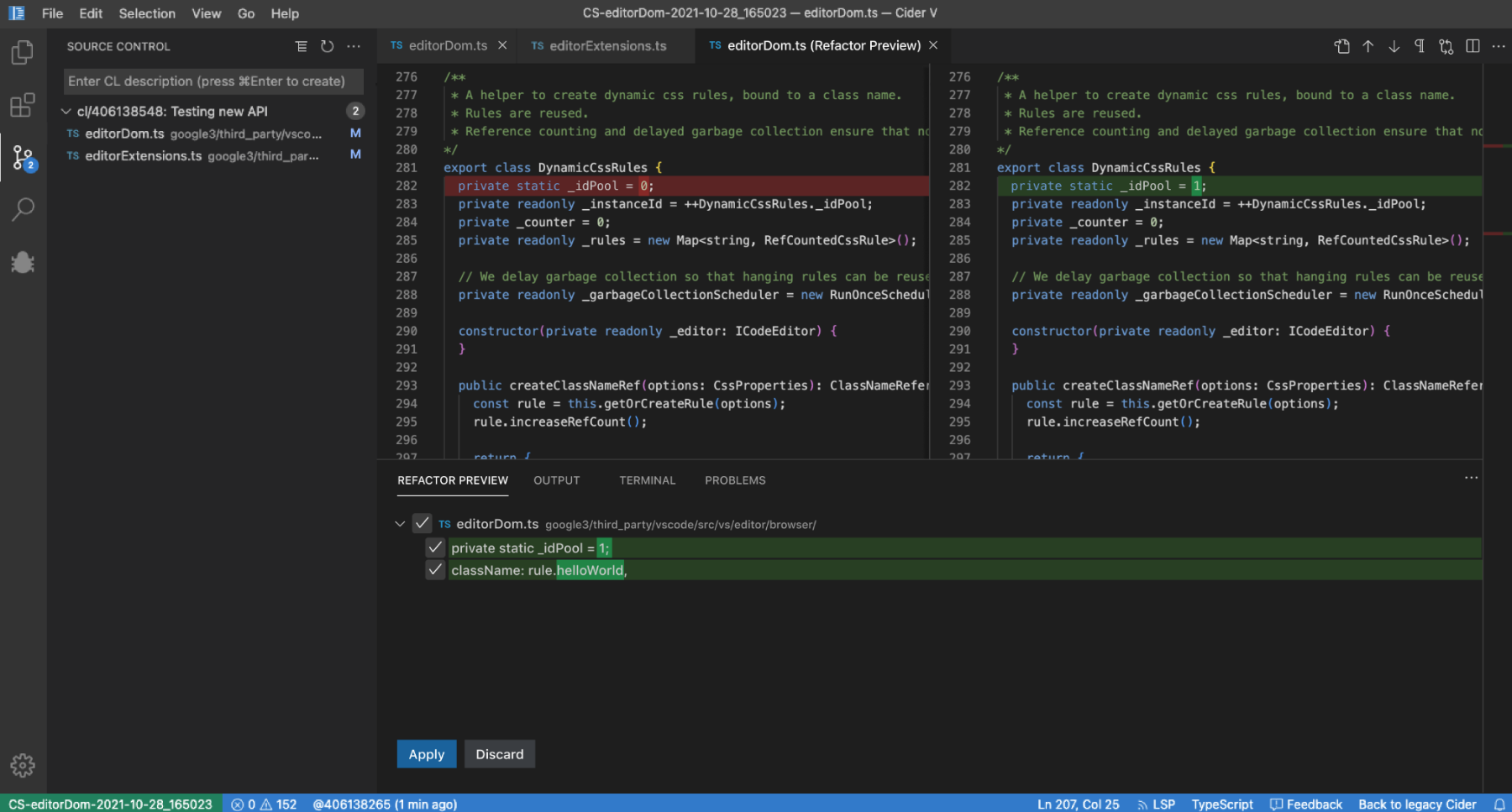
A History of IDEs at Google
2026-05-13Laurent Le Brun's blog post details the evolution of Google's internal development environments, tracing the company's shift from relying on third-party tools to building bespoke, cloud-based IDEs tailored for its massive monorepo. This overview highlights how the immense scale and complexity of Google's codebase forced the tech giant to engineer highly customized, scalable software ecosystems rather than relying on commercially available tools.
Comments
Leaving GitHub for Forgejo
2026-05-13A DevOps consultancy details its decision to migrate code repositories and development workflows from GitHub to Forgejo, prioritizing self-hosted and open-source solutions. This move reflects a growing trend among tech professionals to seek greater control, security, and operational continuity outside of proprietary platforms.
CommentsThe United States is securing its leadership in the global artificial intelligence race by dominating the most critical technological layers. While energy resources are important, America maintains a wide margin over competitors in cloud infrastructure, data, and commercialization.
CommentsTech enthusiasts recently dissected a classic chess puzzle requiring the placement of four queens and one bishop to attack every square on a chessboard. By utilizing Python scripts and constraint programming, the community discovered 388 possible solutions, explored alternative piece combinations, and highlighted the puzzle's counter-intuitive need for overlapping piece responsibilities.
Comments
Preserving Fisher-Price Pixter
2026-05-13Developer Dmitry.GR has successfully transformed the Fisher-Price Pixter from an unknown and obscure device into a fully documented and emulated product. This preservation effort ensures the vintage hardware is saved from digital oblivion and remains accessible for future tech enthusiasts.
Comments