Breaking Tech News (news)
When something big happens in technology, it lands here. This section collects significant headlines from across the industry, including product launches, corporate shakeups, AI breakthroughs, and market-moving announcements. It is built for readers who want the day's most notable tech developments at a glance.
The stories that qualify tend to be the ones people talk about: surprise acquisitions, flagship AI model releases, major outages and security incidents, sudden executive departures, and regulatory decisions with immediate consequences. Smaller items make the cut when they signal a larger shift underway.
In a fast industry, the gap between hearing news early and hearing it late can shape decisions about investments, products, and careers. Readers who need to react quickly, from traders to founders to reporters, treat a breaking-news feed as their first stop before digging deeper elsewhere.

Kode Dot is a new pocket-sized, modular device designed for makers, pentesters, and tech enthusiasts. Powered by ESP32-P4 and C5 chips, it features an AMOLED touchscreen, wireless connectivity, built-in sensors, and 16 programmable pins. Users can easily expand its capabilities by attaching custom snap-on modules.
CommentsA recent piece by artist pmjv explores the creation of the Prahou universe using the 9front operating system on vintage ThinkPads. The project highlights delightfully unconventional drawing techniques, such as using a physical ruler directly on a touchscreen and utilizing an old Windows XP disc. Ultimately, the work showcases an impressive blend of retro hardware, digital art, and creative world-building.
Comments

Against Usefulness
2026-07-12A recent New York Times Magazine feature explores the growing movement of physical computing and analog machines that prioritize the joy of creation over practical utility. By highlighting inventive projects like marble-powered paper computers, the article critiques modern technology's relentless obsession with optimization and celebrates the beauty of building fascinating, purely expressive devices.
Comments
Apple has filed a lawsuit against OpenAI, accusing the AI company of stealing its trade secrets. The legal action specifically targets former Apple employees who allegedly transferred proprietary information to OpenAI. The tech giant claims these ex-workers illegally obtained and shared confidential data to benefit OpenAI's development efforts.
Comments
AI neoclouds like CoreWeave and Nebius are experiencing soaring revenues and stock prices due to massive demand for GPU infrastructure. However, lacking the deep cash reserves of Big Tech, these companies are relying on complex, circular financing structures to fund their rapid expansion. This unconventional approach to securing capital has raised red flags regarding the long-term sustainability of their business models.
Comments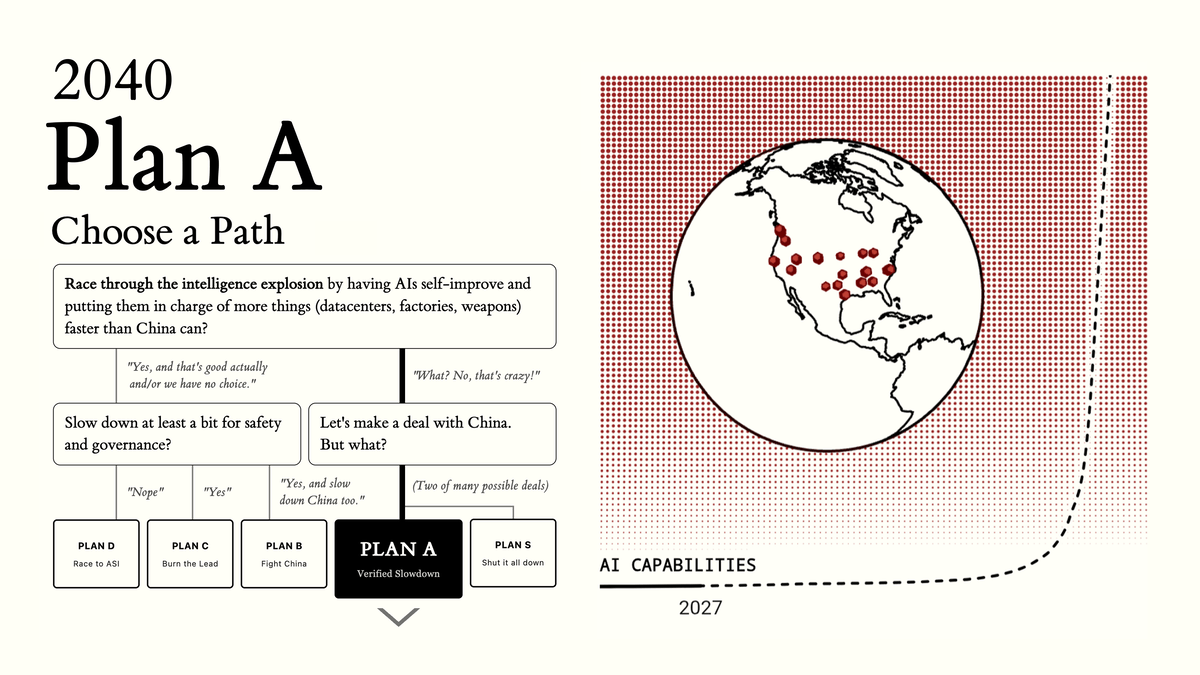
AI 2040: Plan A
2026-07-11The new report AI 2040: Plan A offers a detailed forecast and strategic recommendations for the United States, China, and the global community to navigate the impending era of artificial superintelligence. It outlines critical steps for international collaboration to manage the complex geopolitical and technological challenges associated with this transformative milestone.
CommentsRISCBoy is a completely open-source portable gaming console engineered from the ground up, featuring a custom CPU, graphics processor, and printed circuit board. The comprehensive hardware design and all associated project files are publicly available for developers and tech enthusiasts to explore and modify.
Comments
Google has introduced a new platform properties feature to Search Console, allowing content creators to track how users discover their social media profiles through search. This update provides website owners with deeper insights into their cross-platform reach and overall online discoverability.
Comments
A visual collection from Present And Correct highlights the striking aesthetic of vintage Soviet-era control rooms filled with analog dials and large physical buttons. The images offer a nostalgic look at complex, pre-digital technology long before the advent of modern computers and screens.
CommentsHow to hide from killer drones
2026-07-11Online discussions about hiding military assets from killer drones reveal that visual countermeasures like dazzle camouflage and strobe lights fail against multi-sensor machine vision. Instead, readers argue that attempting to confuse AI targeting simply makes vehicles more visible to secondary systems, making a 360-degree close-in weapon system the only viable defense against swarming drones.
CommentsGood Tools Are Invisible
2026-07-10The author argues that the best software tools should be completely invisible, criticizing the tech community for romanticizing the steep learning curves of programs like Vim as enjoyable puzzles. Ultimately, the piece emphasizes that software should prioritize seamless utility and efficiency to get out of the user's way rather than trying to be entertaining.
CommentsAn Indonesian solo developer named Rizky Nova has built a widely praised train simulation game using Unreal Engine on a low-spec machine with just 16GB of RAM. This impressive technical achievement has sparked extensive online discussions regarding how hardware limitations and resource constraints can foster creativity and drive innovative programming.
CommentsFollowing an early 2025 report on the AI scraper bot scourge, this update examines the evolving tactics used by automated bots to bypass website security. It specifically focuses on the continued exploitation of residential proxies and highlights the ongoing technological arms race between content publishers and sophisticated scraping operations.
CommentsThis 2017 oral history retrospective details the pioneering computer graphics and practical effects technology used to create the film Terminator 2. Through insights from the original crew, the piece highlights how the movie's groundbreaking visual effects permanently altered the trajectory of cinematic technology.
CommentsA lost city containing an ancient church has been discovered beneath Egypt's desert, providing new insights into the region's pre-Islamic history. The discovery highlights the late fourth to mid-seventh centuries AD, a period when Christianity was the dominant religion and Egypt was a wealthy Roman province. Discussions surrounding the find emphasize how these archaeological revelations challenge modern perceptions of the historical cultural and religious shifts across the Middle East.
CommentsA love letter to flashcards
2026-07-10In a personal reflection, the author highlights the enduring benefits of handcrafted flashcards and spaced repetition for memory retention. The piece explores how these intentional, low-tech study methods foster a deeper, more lasting understanding of complex subjects.
CommentsThe MiMo-V2.5 series introduces a comprehensive end-to-end inference optimization strategy designed to maximize Hybrid Sliding Window Attention efficiency. By implementing advanced techniques like tiered caching, SWA-aware prefix trees, and optimized processing pipelines, this engineering update significantly streamlines memory management and scheduling to deliver faster multimodal model inference.
Comments
Developers have built a real-time AI tutor designed to teach math and reading to children aged four to nine. Because young learners require immediate feedback and cannot read text interfaces, the team integrated early childhood pedagogy directly into the system's engineering. The article details the key architectural decisions and technical lessons learned from creating a fast and highly accurate educational model for young children.
CommentsWrite code like a human will maintain it
2026-07-10Large language models enable rapid code generation, tempting developers to bypass traditional best practices like the DRY principle. However, because humans ultimately maintain the software, relying on endless AI output creates significant long-term technical debt. Developers must therefore prioritize clean, readable code over the sheer volume of AI generation to ensure future maintainability.
CommentsA retrospective on the history of 3D Realms and Apogee Software has prompted readers to share nostalgic memories of the 1990s shareware era, early game modding, and snail-mail customer support. The discussion also sparked technical debates over the actual adoption rates of mid-90s modem speeds and how bandwidth constraints shaped software distribution. Additionally, commenters criticized the modern iteration of 3D Realms for taking down its legacy website, contradicting the current CEO's stated reverence for the original studio.
CommentsRecent advancements in AI enable the generation of highly optimized videos designed to maximally stimulate specific target brain regions. Readers warn that tech companies could exploit this capability to create surgically targeted, hyper-addictive content. This development raises severe concerns about unprecedented psychological manipulation and the evolution of digital media into perfectly engineered behavioral triggers.
Comments
While previous research has heavily focused on the negative effects of teen screen time, a new study examines how parental device use impacts the adolescent-caregiver attachment bond. The findings reveal that parents' technology habits can significantly disrupt their relationship with their teenage children, highlighting a critical and previously overlooked gap in psychological research.
Comments
Life with Hazard Ratios
2026-07-10This article explores the application of hazard ratios in survival analysis to help tech teams better evaluate product lifecycles and user retention. It provides practical methods for using these statistical metrics to accurately discount expectations and make risk-adjusted business decisions.
CommentsGPT-5.6
2026-07-09OpenAI's developer guide for GPT-5.6 highlights improvements in intent understanding and image processing, emphasizing that shorter prompts now yield better performance and lower costs. Readers discuss the model's reduced default verbosity and compare its output to competitors like Claude, while also debating the technical distinction between context curation and actual machine learning.
CommentsResearchers have discovered that spider venom can selectively eliminate devastating varroa mites without harming honeybees. Beekeepers currently rely on complex and labor-intensive management techniques, such as brood cycle interruption and chemical deterrents, to combat these destructive pests. This new targeted approach could offer a highly effective and streamlined solution for protecting honeybee colonies.
Comments
For more than six decades, the public has been promised that computers will revolutionize and solve complex national and international political issues. SimPolitics explores the history of this technological optimism and its frequent collision with the messy realities of actual governance.
CommentsA recently discovered obfuscated bash script printed on a novelty Uniqlo t-shirt has been decoded by the tech community, turning the apparel into a wearable piece of programming art. In response, legal experts are analyzing the garment to explore the intellectual property, technology, and commercial law implications of printing executable code on clothing.
Comments
Rewriting Bun in Rust
2026-07-08The developers behind the Bun JavaScript runtime are rewriting the project's core codebase from Zig to Rust. A new article explores the strategic motivations driving this major transition and provides a technical breakdown of the migration process.
Comments
Fenris Creations has open-sourced EVE Online's Carbon engine to foster community collaboration and shared technological advancement. According to Ben Hunter, this decision will improve overall security and integrate modern tools like LLM coding and support from the Godot engine to benefit the broader developer ecosystem.
Comments