AI Tech News
Artificial intelligence remains the fastest-moving story in technology. Here you will find news on model releases and research, the labs and companies competing for the frontier, enterprise adoption, and the debates over safety, jobs, and regulation that AI continues to raise.
Typical stories include new model launches and benchmark claims, massive infrastructure and chip investments, AI features arriving in mainstream products, research papers that shift the field's direction, and enterprise deals that show where adoption is real rather than experimental.
AI now sets the agenda for the rest of the technology industry, steering capital, talent, and strategy at nearly every major company. Developers, executives, policymakers, and workers wondering how their jobs will change all have reasons to follow it closely.

Palantir loses legal challenge against Swiss investigative magazine
2026-06-12Palantir, the Peter Thiel-chaired data intelligence group, has lost a legal challenge against a Swiss investigative magazine. The company had sued the publication over reports claiming that Switzerland rejected its business approaches.

How we made hit video game Prince of Persia
2026-06-12The creator of the hit video game Prince of Persia reveals the low-tech methods used to achieve its groundbreaking animation before modern software existed. To capture the fluid character movements, he filmed his brother performing stunts like running and climbing in a local car park.
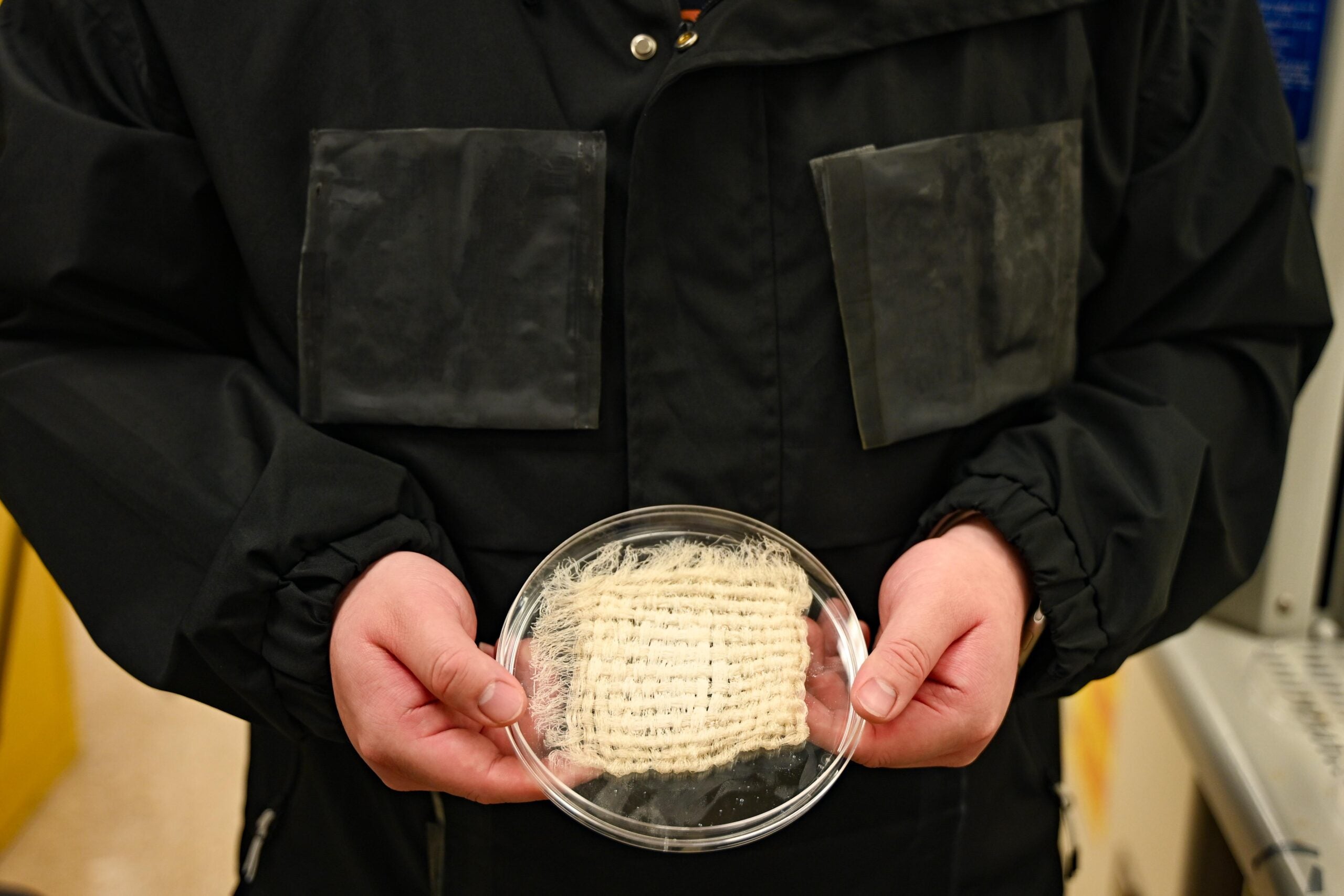
A jacket that harvests drinking water from the air
2026-06-12Researchers at The University of Texas at Austin have developed a wearable jacket that extracts drinking water directly from the surrounding air. This innovative technology utilizes advanced materials to capture atmospheric moisture, providing a portable hydration solution for arid environments and outdoor activities.

"Don't You Just Upload It to ChatGPT?"
2026-06-12Many users assume ChatGPT can seamlessly replace human translators, but a freelance linguist proves otherwise with a humorous Ottawa anecdote. The story highlights specific instances where AI failed to grasp cultural nuance and context. Ultimately, it serves as a reminder that professional human judgment remains irreplaceable in the translation industry.

Maxproof
2026-06-12A recent arXiv paper introduces MaxProof, a new framework for scaling mathematical proof generation in AI systems. The methodology combines generative-verifier reinforcement learning with population-level test-time scaling to enhance automated reasoning. This approach aims to significantly improve the ability of models to solve complex mathematical problems.

Reading for pleasure is sharply down among schoolkids, report shows
2026-06-12A new report from the Education Department reveals a sharp decline in recreational reading among schoolchildren. The data highlights double-digit percentage point drops in the shares of 9- and 13-year-olds who read for fun almost every day. This steep decrease in daily reading habits signals a significant shift in youth media consumption amid a highly digital landscape.

Launch HN: BitBoard (YC P25) – Analytics Workspace for Agents
2026-06-12BitBoard, a Y Combinator-backed startup, has launched a new analytics workspace designed to help teams collaborate with AI agents. The platform enables users to connect their data and transform AI-driven analyses into durable, traceable, and shareable dashboards.
Introduction to UEFI HTTP(s) Boot with QEMU/OVMF
2026-06-12Reader discussions surrounding an article on UEFI HTTP and HTTPS boot with QEMU/OVMF highlight the practical benefits of using HTTP over traditional TFTP for broader server compatibility. However, critics warn that adding HTTPS introduces unnecessary complexity and potential vulnerabilities, citing buggy OpenSSL implementations and the impracticality of BIOS vendors managing WebPKI root certificates. Despite the theoretical confidentiality benefits of TLS, many maintain that post-download validation via Secure Boot remains the only truly reliable security measure.

Kimi K2.7-Code: open-source coding model with better token efficiency
2026-06-12The newly released Kimi K2.7-Code is an open-source coding model designed to provide better token efficiency. Its launch aligns with the broader mission to advance and democratize artificial intelligence through open source and open science.

Adaptive PDFs
2026-06-12A new concept called Adaptive PDFs proposes a dual-purpose document format that maintains a standard visual layout for human readers while simultaneously exposing a clean markdown structure. This design allows large language models and automated extractors to easily parse the text without compromising the original visual presentation.

AUR packages compromised with Infostealer and Rootkit
2026-06-12A malicious actor impersonated a trusted maintainer to adopt and compromise over 408 AUR packages. The attacker injected infostealers and rootkits into the modified software in a widespread supply chain attack. The breach was recently reported, prompting the community to begin mitigating the compromise.

I Am Not a Reverse Centaur
2026-06-12Miguel Grinberg reflects on his experience with AI coding assistants, explaining why he rejects the reverse centaur model where AI does the cognitive heavy lifting while the developer merely reviews the output. Instead, he advocates for a collaborative workflow where programmers maintain full agency and use AI strictly as a tool to accelerate their own problem-solving.
Making a vintage LLM from scratch
2026-06-12A developer's project to build a vintage large language model from scratch sparked debate after they admitted to using AI tools to write portions of the code. While critics argued this undermined the DIY premise, the author defended the work by emphasizing the extensive manual effort required for data preprocessing and cleaning messy, multilingual datasets. The discussion highlights the shifting boundaries of modern software development, as programmers increasingly rely on AI assistants for boilerplate code while focusing their personal efforts on data curation and high-level architecture.
If you are asking for human attention, demonstrate human effort
2026-06-11The rise of AI-generated code, documents, and debug reports is sparking a new workplace etiquette debate about sharing automated output with colleagues. Tech teams are questioning when it is appropriate to forward raw AI work to human readers, emphasizing that individuals should demonstrate genuine human effort when requesting a peer's attention.
MiMo Code is now released and open-source
2026-06-11The release of the open-source MiMo Code has been praised by readers as a positive step toward commoditizing AI coding assistants and reducing consumer switching costs. The announcement also sparked a broader industry debate comparing open-source strategies to the proprietary models of competitors like Claude Code, highlighting the ongoing tension between fostering ecosystem competition and maintaining closed tools for direct profitability.

Lines of code got a better publicist
2026-06-11A new article argues against measuring AI-assisted engineering productivity with vanity metrics like lines of code. Instead, tech leaders should focus on evaluating actual business and technical outcomes to accurately determine the true impact of AI development tools.

Anthropic apologizes for invisible Claude Fable guardrails
2026-06-11Anthropic has apologized for implementing invisible safety guardrails in its Claude Fable system without adequately informing users. The company acknowledged the importance of transparency and committed to making its distillation guardrails just as visible as its other safety measures moving forward.

Pokémon Go Scans Trained the Navigation Tech for Military Drones
2026-06-11Data from 30 billion Pokémon Go scans has been utilized to train advanced spatial navigation technology for military drones. The massive crowdsourced dataset provides highly detailed mapping capabilities that are now transitioning from mobile gaming to the defense sector. This military application was made possible through a strategic partnership between Niantic Spatial and Vantor.
Emacs appearances in pop culture
2026-06-11A blog post detailing the appearances of the Emacs text editor in popular culture has gained significant traction online. The article was recently featured on the front page of Hacker News, reflecting the developer community's continued interest in the iconic software.

Show HN: FablePool – pool money behind a prompt, and Fable builds it in public
2026-06-11FablePool is a new platform that enables communities to crowdfund AI-built software projects by pooling funds behind specific prompts. Users can transparently track the development process as AI agents build the software in public, displaying visible milestones, spending logs, and final outputs.