AI Tech News Past 24 Hours
AI news moves quickly, and this section helps you keep pace. It surfaces recent stories on model launches, research advances, funding and partnerships among AI companies, enterprise adoption, and the regulatory and societal questions the technology keeps raising.
In any given stretch the stories might include a lab releasing a new model or capability, a multibillion-dollar infrastructure deal, a startup emerging with notable backing, fresh benchmark results, or a government moving on AI rules. Product integrations and safety debates round out the mix.
Few fields make a daily check worthwhile the way AI does, because capabilities and competitive positions genuinely change week to week. Engineers choosing tools, leaders setting strategy, and readers trying to understand the technology's trajectory all benefit from a recent-first view.
Branchless Quicksort faster than std:sort and pdqsort with C and C++ API
2026-06-05A newly introduced branchless quicksort implementation has demonstrated faster sorting performance than standard C++ algorithms like std::sort and pdqsort in recent benchmarks. The accompanying discussion highlights the original author's subsequent collaboration on ipnsort and driftsort, two high-performance sorting algorithms recently integrated into the Rust standard library. Additionally, the thread explores the design of the misfortunate Rust crate, which intentionally violates the expected social contract of standard traits to test edge cases in safe Rust implementations.

Redis 8.8: New array data structure, rate limiter, performance improvements
2026-06-05Redis 8.8 is now available in open source, introducing a new array data type and a window counter rate limiter. The release also adds streams NACK functionality alongside various performance-focused updates.
I tested every IP KVM in my Homelab
2026-06-05The author has tested nearly every IP KVM available for homelabs to evaluate their practical value against modern software alternatives. The review highlights that tools like VNC, Tailscale, and SSH often provide highly effective remote access without the need for dedicated hardware.
Transformers are inherently succinct
2026-06-05A new paper demonstrates that the inherent succinctness of transformers makes basic formal verification problems computationally intractable, leading experts to advise against using them in systems requiring strict mathematical correctness. Although some practitioners note that theoretically intractable problems often have practical solutions, the general consensus is that large language models should not serve as the core of formally verified systems. Additionally, the research suggests transformers possess surprisingly low expressive power compared to recurrent neural networks, which could drive a resurgence of nonlinear RNNs for memory-efficient applications.
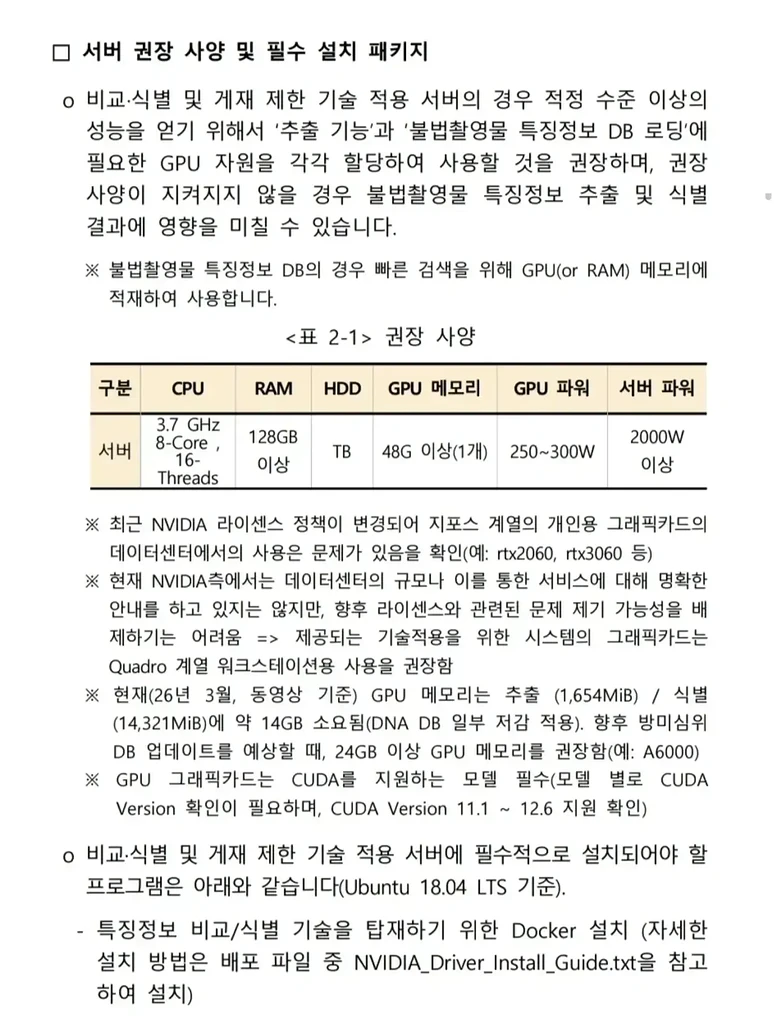
South Korean forums will need to scan every images with AI censorship tools
2026-06-05Under new telecommunications regulations, the South Korean government is requiring all online forums to scan user-uploaded images and videos using AI censorship tools. This mandate aims to enforce stricter content moderation across the country's internet communities. However, the requirement will force platform owners to invest heavily in the hardware necessary to process such a massive volume of digital media.

Fine-tuning an LLM to write docs like it's 1995
2026-06-05The author recently experimented with fine-tuning a local large language model to write technical documentation in the nostalgic style of the 1980s and 1990s. Although connected frontier models currently remain more powerful, this project highlights early steps toward a specialized, local-first future for AI-assisted technical writing.
Show HN: Lowfat – pluggable CLI filter that saved 91.8% of my LLM tokens
2026-06-05Lowfat is a new command-line filter that strips unnecessary noise from terminal output to significantly reduce token consumption when using large language models. The open-source tool reportedly saves up to 91.8% of API tokens, offering developers a simple way to lower costs and streamline AI-assisted workflows.
Launch HN: General Instinct (YC P26) – Frontier models on edge devices
2026-06-05Y Combinator startup General Instinct aims to deploy frontier AI models on edge devices by using distillation techniques to recover performance lost during model quantization. The launch sparked technical discussions debating the viability of Mixture of Experts architectures for edge hardware compared to memory-dense alternatives. These conversations also highlight a broader industry trend toward optimizing local inference speeds and making on-device large language models more practical for everyday use.

Failing grades soar with AI usage, dwindling math skills in Berkeley CS classes
2026-06-04UC Berkeley computer science classes are experiencing a drastic increase in failing grades during the spring 2026 semester, marking a sharp departure from historical grading guidelines. This decline in student performance is largely attributed to a growing reliance on AI tools and deteriorating foundational math skills.

VoidZero Is Joining Cloudflare
2026-06-04VoidZero, the team behind popular web tools like Vite, Vitest, and Rolldown, is officially joining Cloudflare. Despite the acquisition, the team confirmed that Vite will remain completely open source and vendor-agnostic for the broader community.
Anthropic's open-source framework for AI-powered vulnerability discovery
2026-06-04Anthropic has released an open-source framework designed to enhance AI-powered vulnerability discovery and software defense. The customizable autonomous harness provides essential skills for threat modeling, automated scanning, triage, and patching. Developers can leverage this reference tool to significantly streamline the identification and resolution of code vulnerabilities.

I built a vulnerable app and spent $1,500 seeing if LLMs could hack it
2026-06-04A security researcher built a deliberately vulnerable book review app and spent $1,500 to test if Large Language Models could successfully hack it. The experiment aimed to determine if AI can reproduce common classes of software exploits typically found in real-world applications.
Retro-Tech Parenting
2026-06-04A growing trend of parents is introducing their children to retro technology, such as flip phones and vintage electronics, as a deliberate countermeasure to modern digital overwhelm. This movement aims to reduce screen time and foster hands-on creativity by replacing today's hyper-connected smart devices with simpler, older alternatives.

The ways we contain Claude across products
2026-06-04Anthropic has outlined the comprehensive safety protocols and containment strategies used to manage its AI model, Claude, across various integrated products. These robust guardrails ensure the system remains reliable, interpretable, and steerable while mitigating potential risks in diverse real-world applications.

When AI Builds Itself: Our progress toward recursive self-improvement
2026-06-04Recent developments highlight the accelerating progress toward recursive self-improvement, a stage where AI systems can autonomously build and upgrade themselves. As artificial intelligence moves closer to designing its own future iterations, experts are evaluating the profound technological and societal implications of this milestone.

U.S. to dismantle system tracking Atlantic currents that are at risk of collapse
2026-06-04The U.S. government is launching an expensive operation to dismantle and retrieve a deep-ocean monitoring system tracking Atlantic currents, a move critics argue is driven by ideological posturing rather than budget constraints. Commenters suggest the administration is intentionally destroying this hardware to suppress climate data and appease fossil fuel donors as part of a broader anti-science agenda. Despite this governmental hostility toward basic science, readers note that everyday conservative voters are increasingly recognizing the real-world impacts of a changing climate through extreme weather and agricultural disruptions.
KVarN: Native vLLM backend for KV-cache quantization by Huawei
2026-06-04Huawei has introduced KVarN, a new native vLLM backend designed for KV-cache quantization. This calibration-free enhancement allows developers to achieve three to five times more context length while maintaining FP16-level accuracy and exceeding standard throughput. The improved performance can be easily enabled for AI agents using just a single flag.

Do transformers need three projections? Systematic study of QKV variants
2026-06-04A recent arXiv paper systematically evaluates variants of the standard query, key, and value projections used in transformer architectures. The study investigates whether all three projections are strictly necessary by exploring alternative configurations to optimize model efficiency and performance. These insights could help developers create more streamlined and computationally effective transformer designs for future AI applications.
Gaussian Point Splatting
2026-06-04Gaussian splatting is an advanced 3D rendering technique that leverages modern GPUs to create highly detailed visual representations, though experts caution its lack of physical surfaces and high processing costs currently limit its use in real-time AAA gaming. Consequently, the technology is primarily being adopted for visual-only applications, such as generating realistic digital environments to train computer vision models for autonomous vehicles and drones.

U.S. Army Corps of Engineers Bay Model
2026-06-04The United States Army Corps of Engineers Bay Model is a massive mid-century hydraulic structure located in a Sausalito warehouse that simulates the complex current flows of the San Francisco Bay. Originally built to study regional hydrology and later utilized by television shows like Mythbusters, the colossal physical scale model remains a celebrated engineering relic. The unique facility also features a museum dedicated to Marinship, the World War II shipyard that previously occupied the historic building.