AI Tech News Last 24 Hours
Artificial intelligence moves quickly, and this section captures its most recent developments. Coverage includes new model releases, research milestones, AI product launches, startup funding, and the policy debates surrounding the technology. It is a convenient briefing for anyone trying to keep pace with AI's constant stream of news.
A single day can bring a frontier model announcement, benchmark disputes, an enterprise adoption deal, a lab safety controversy, and a nine-figure funding round, and this section aims to catch them all. Coverage spans research labs, chip suppliers, application startups, and the regulators trying to keep up.
No area of technology compresses more change into less time, and staying a day behind in AI can mean missing something genuinely important. Engineers building with these models, executives planning around them, and researchers tracking the field use a rolling AI briefing to keep their bearings.

Researchers have published a new study analyzing the computational costs of AI coding agents by quantifying exactly where language model tokens are consumed during agentic software engineering tasks. The paper breaks down token usage across various developmental phases to identify major cost drivers and help developers optimize the efficiency of automated programming systems.
Comments
Ahead of its planned IPO, SpaceX has signed a 32-month agreement to lease compute capacity to Google using xAI data centers. Under the terms of the deal, Google will pay SpaceX $920 million per month for the infrastructure.
Comments
Win16 Memory Management
2026-06-07A reader discussion on Win16 memory management highlights how the operating system's bi-modal design forced developers to navigate complex segmented addressing to maintain compatibility with older processors. Compared to OS/2 and Classic Mac OS, Windows introduced unique hurdles like globally shared DLL data and manual code segmenting to conserve limited RAM. Despite the tedium of managing these strict hardware limitations, developers recall that the overall system was much simpler to comprehend than today's complex cloud environments.
Comments
Equine cloning has transformed from a rare novelty into a dominant, mature industry within the Argentine polo scene. While these high-performance horse replicas have revolutionized the sport, their widespread use continues to raise significant ethical concerns.
Comments
A brazen daytime copper theft has knocked the 100,000-watt FM radio station WDGG in Ashland, Kentucky, completely off the air. Kindred Communications detailed the severe incident, which severed the broadcast infrastructure and caused major disruptions across the Ohio Valley.
Comments
My Software North Star
2026-06-07In a recent blog post, Loris Cro shares his guiding philosophy and core principles for software development, which he calls his software north star. The article details how these foundational beliefs influence his approach to building tools, contributing to the open-source community, and shaping the future of programming.
Comments
Biohub has released a comprehensive world model of protein biology featuring the newly introduced ESMFold2, ESMC, and ESM Atlas AI models. These advanced systems support a wide range of scientific applications and are specifically designed to accelerate the design of therapeutic molecules.
Comments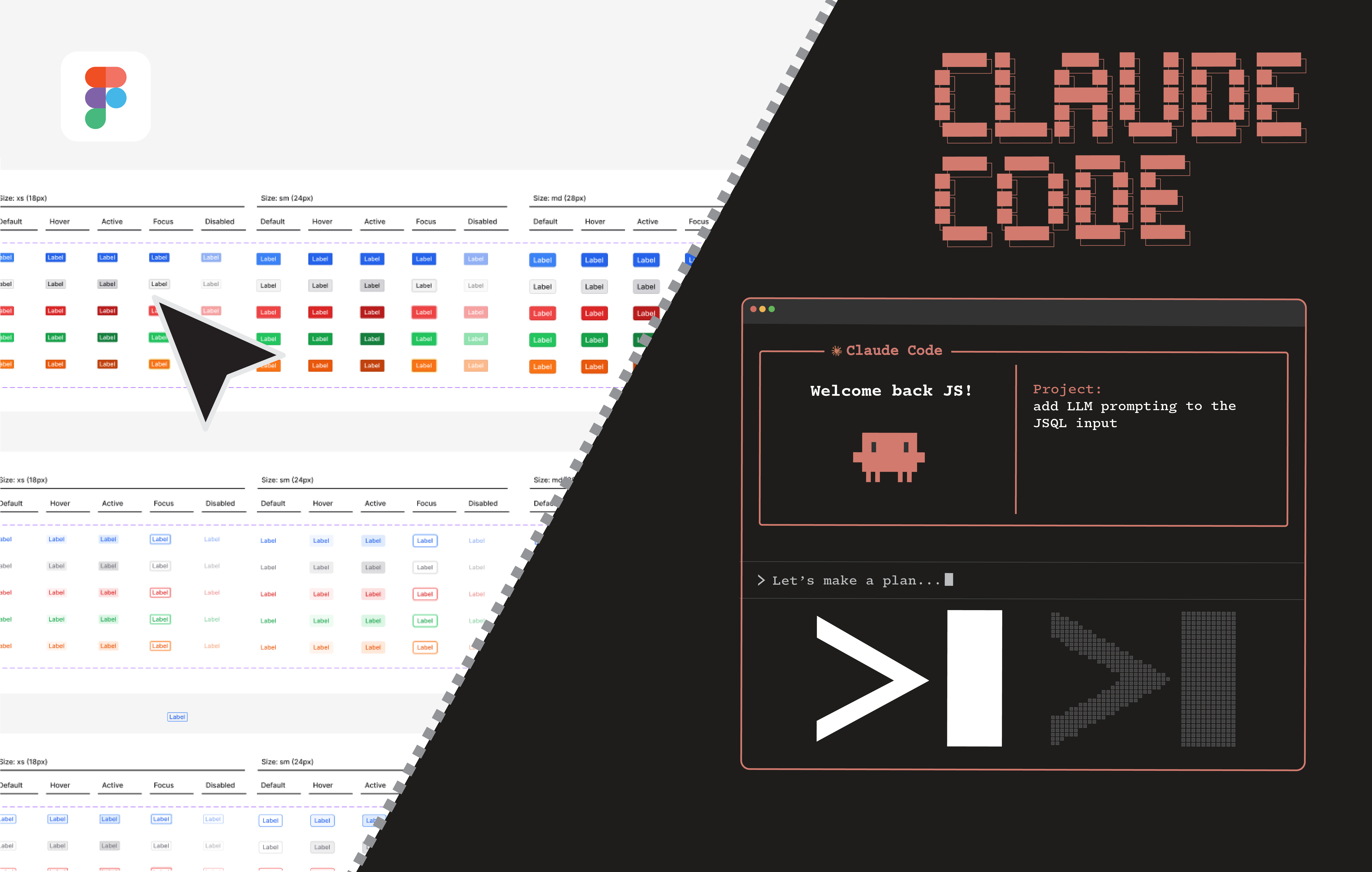
I design with Claude more than Figma now
2026-06-07A designer explains how their workflow has shifted from traditional tools like Figma to relying heavily on the AI model Claude for product design after initial skepticism toward large language models. Won over by the utility of AI coding assistants, the author now uses conversational AI to rapidly generate and iterate on user interfaces, highlighting a growing trend of generative AI disrupting conventional design software.
Comments
A new technique called Speculative KV coding enables the lossless compression of AI model KV caches by up to four times. By leveraging a cheaper predictor model to drive an arithmetic coder, the method significantly reduces memory overhead for large language models without sacrificing data integrity.
Comments
Podman 6 will introduce significant usability improvements to its machine function to address existing architectural limitations. These updates are designed to streamline the setup and management of container environments for developers.
CommentsMy automated doubt development process
2026-06-07A new article details an automated doubt process that restores developer trust in AI-assisted coding by front-loading rigorous scrutiny through multi-agent validation. By proactively verifying AI-generated outputs with multiple validation agents, this methodology shifts the workflow from blind reliance to systematic error prevention.
Comments
A recent analysis explores the internal mechanics of large language models, revealing how they execute mathematical calculations by manipulating high-dimensional matrices rather than traditional numerical processing. By translating arithmetic into complex pattern recognition, the piece highlights the fundamentally different way AI systems approach computation.
CommentsHow LLMs work
2026-06-06This guide provides a comprehensive, ground-up walkthrough of the underlying mechanics behind modern Large Language Models. It breaks down the complex architecture step-by-step, starting with basic tokenization and exploring the inner workings of transformer blocks. The piece concludes by explaining the continuous next-token prediction loop that ultimately drives text generation.
Comments
SpaceX has been rejected from the S&P 500 index, a decision that simultaneously blocks major AI companies like OpenAI and Anthropic from gaining entry. Consequently, these high-profile tech firms will miss out on billions of dollars in automatic investments from passive index funds.
Comments
Meta has patched a security flaw that allowed attackers to compromise thousands of Instagram accounts by tricking the Meta AI chatbot. The vulnerability enabled unauthorized individuals to reset passwords and take over any accounts that did not have two-factor authentication enabled.
CommentsHacker News users shared remarkable examples of using generative AI to reverse-engineer undocumented hardware protocols and recover bricked digital pianos by decompiling an app to decrypt firmware. These technical feats sparked a broader discussion on whether AI will make technology feel like incomprehensible magic, though others argued that everyday users have long treated complex digital systems as black boxes without understanding basic computing fundamentals.
Comments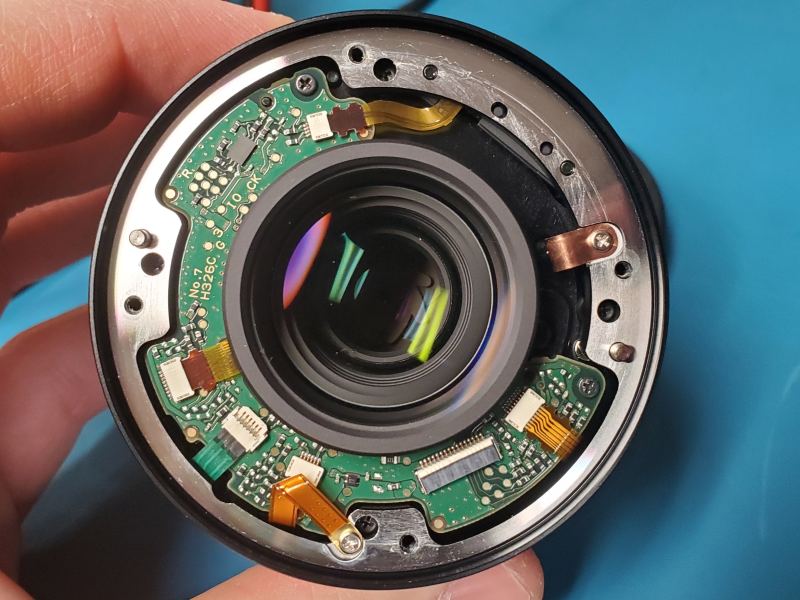
After purchasing a broken Sigma 45mm f/2.8 Art lens for just $58.65, an enthusiast successfully restored the optic for use with L-mount cameras and published a comprehensive guide on the process. The article details the intricate disassembly techniques required to open the modern lens and provides a deep dive into the complex PCB repair processes needed to restore its functionality.
CommentsReader discussions surrounding the announcement of Zeroserve quickly pivoted to debating the sunsetting of the Techempower web server benchmarks and the launch of a new competitor, http-arena. Much of the conversation focused on criticizing the new leaderboard user interface, with users complaining that its color palette and overall design look heavily AI-generated. In response, the developer acknowledged the rough design and implemented changes like zebra-striped tables to improve readability.
Comments
The Pentagon has raised its counterintelligence threat level for Israel to the highest tier amid growing concerns over increased espionage activities. According to current and former U.S. officials, this significant escalation highlights mounting alarms regarding spying by America's top Middle Eastern ally.
CommentsAsk HN: Why is the HN crowd so anti-AI?
2026-06-06Hacker News users debate the perception that the community is anti-AI, concluding that the platform simply reflects broader societal divisions regarding the technology. While many developers appreciate the productivity benefits of generative AI, experienced engineers caution against the trend of vibe coding by emphasizing that generating raw code is not a substitute for proper software architecture. Ultimately, the discussion highlights a nuanced perspective where practitioners recognize the strengths of large language models but remain highly critical of their current limitations in handling complex, production-level projects.
CommentsA new infinite canvas note-taking app utilizes a non-Euclidean Poincaré disk to organize exponentially growing knowledge trees in hyperbolic space. Users praise the interface's intuitive spatial navigation for visualizing complex data and mapping knowledge effectively. The community also discussed potential enhancements, suggesting geometric text distortion, grid overlays, and offline stylus support to improve the overall experience.
CommentsSem is a new code analysis tool that maps code dependencies as graph entities on top of Git using the tree-sitter parser. While developers praise its ability to quickly identify transitively affected files and tests, its setup process sparked community debate over user-friendliness and the creator's response to uninstall complaints.
CommentsBenchmarks in Leipzig
2026-06-06A new arXiv preprint titled Benchmarks in Leipzig has published its abstract online for the research community under the identifier 2606.05818. The document introduces new evaluation metrics and performance standards, with the full details and methodology available on the abstract page.
CommentsAn article detailing a 19-year analysis of GPS cryptographic signals has sparked discussions regarding the aging US navigation infrastructure compared to newer global systems. Readers highlighted the delayed modernization of GPS signals, the surprising operational longevity of older satellites, and the constellation's lesser-known role in the US nuclear monitoring network.
Comments
You Can Run
2026-06-06The article You Can Run details the extraordinary and perilous upbringing of the daughters of a notorious cocaine smuggler. It chronicles their fugitive childhood spent constantly on the move to evade law enforcement.
Comments
A viral tech joke highlighting the notoriously steep learning curve of C++ has gained traction online after a user joked about abandoning the language's definitive book after just looking at the back cover. The punchline about skipping the required reading perfectly captures the intimidation many developers feel toward the language. This humorous observation continues to resonate with programmers who frequently struggle with the dense syntax and complex documentation of C++.
CommentsA reader discussion on building Rust procedural macros emphasizes the importance of choosing declarative macros to avoid significantly slowing down compilation times. While procedural macros remain necessary for complex tasks like parsing types and annotating structs, developers hope that upcoming improvements to the declarative macro system will reduce this reliance. Ultimately, the debate mirrors long-standing programming language design discussions about balancing metaprogramming power with compilation speed and code maintainability.
Comments
Lockdown Mode
2026-06-06A new Lockdown Mode feature has been introduced to mitigate data exfiltration risks caused by prompt injection attacks. By restricting system access to the web and external services, it prevents malicious inputs from leaking sensitive information. This enhancement provides a crucial security safeguard for applications relying on external integrations.
Comments
"Maybe later" was a feature
2026-06-06A newly shared developer insight highlights the importance of software minimalism, suggesting that the most valuable code is often the code a team chooses not to write. By deferring unnecessary features and avoiding codebase bloat, engineers can maintain cleaner repositories and focus on delivering true user value. This approach champions simplicity and restraint over constant feature expansion in modern software development.
Comments
A GrapheneOS user recently shared on the official discussion forum that they were reported to law enforcement authorities simply for using the privacy-focused mobile operating system. The incident underscores the ongoing friction between advanced privacy tools and mainstream institutional security systems. This event has sparked a broader conversation within the community about the real-world risks of utilizing highly secure devices in daily life.
Comments