AI Tech News Last 24 Hours
Artificial intelligence moves quickly, and this section captures its most recent developments. Coverage includes new model releases, research milestones, AI product launches, startup funding, and the policy debates surrounding the technology. It is a convenient briefing for anyone trying to keep pace with AI's constant stream of news.
A single day can bring a frontier model announcement, benchmark disputes, an enterprise adoption deal, a lab safety controversy, and a nine-figure funding round, and this section aims to catch them all. Coverage spans research labs, chip suppliers, application startups, and the regulators trying to keep up.
No area of technology compresses more change into less time, and staying a day behind in AI can mean missing something genuinely important. Engineers building with these models, executives planning around them, and researchers tracking the field use a rolling AI briefing to keep their bearings.
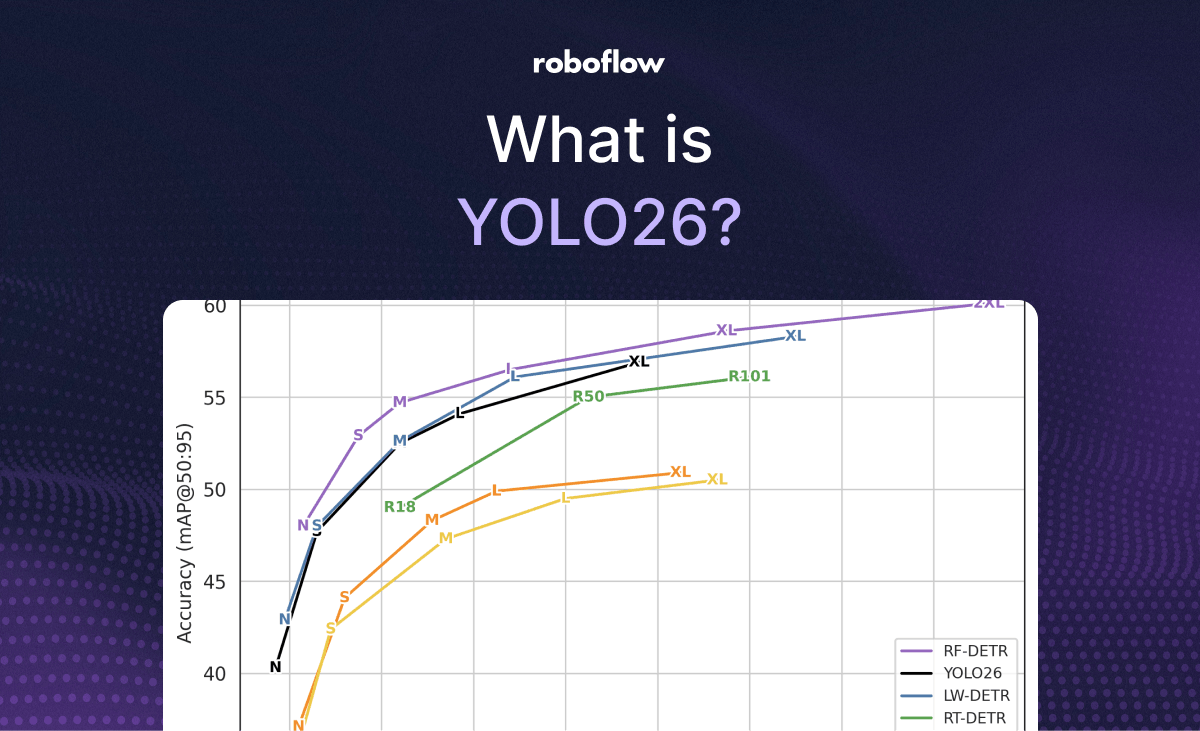
An Introduction to YOLO26
2026-06-23YOLO26 is a newly introduced, edge-optimized object detection model that eliminates Non-Maximum Suppression to achieve 43% faster CPU inference. A comprehensive overview details the model's performance benchmarks across various sizes and outlines its specific licensing terms. Additionally, the report provides a direct performance comparison between YOLO26 and the competing RF-DETR architecture.

Steam Machine launches today
2026-06-22The Steam Machine officially launches today, marking a highly anticipated release for the platform. This update provides all the necessary details on how to sign up to get started. It also explores the development journey and background that led to this major milestone.

Deno Desktop
2026-06-22Deno Desktop enables developers to build self-contained desktop applications directly from Deno projects. The tool streamlines the development workflow with features like framework auto-detection, hot reloading, and native windowing. Additionally, it simplifies deployment by providing built-in cross-platform distribution and automatic updates.
Help I accidentally a wigglegram
2026-06-22A recent tech discussion explores the evolution of wigglegrams and stereograms, highlighting techniques that range from dedicated multi-lens hardware to synthetic depth mapping on modern smartphones. While the original poster's accidental attempts lack the precise parallax of professional 3D rigs, commenters note that mobile features and generative AI are making pseudo-3D creation more accessible. In response, enthusiasts are sharing custom software libraries, DIY camera builds, and stereoscopic apps to revive these underrated visualization methods.

GLM-5.2 – How to Run Locally
2026-06-22Z.ai has released instructions for running its new GLM-5.2 model entirely on local hardware. This development allows users to deploy the advanced AI on their own machines without relying on cloud infrastructure. The guide provides detailed instructions for setting up and optimizing the model for offline use.
Moebius: 0.2B image inpainting model with 10B-level performance
2026-06-22Moebius is a newly introduced image inpainting framework that operates with a lightweight 0.2 billion parameters. Despite its compact size, the model achieves performance levels comparable to much larger 10 billion-parameter systems. This development offers a highly efficient and accessible solution for high-quality image restoration.
There is minimal downside to switching to open models
2026-06-22Tech community discussions suggest there is minimal downside to switching to open-weight models, as they are only a few months behind their proprietary counterparts. Additionally, user suspicions regarding silent performance degradation in paid services make open-source and local inference alternatives increasingly appealing for developers.

Canada plans 'nuclear renaissance' with up to 10 reactors built by 2040
2026-06-22The Canadian federal government is planning a nuclear renaissance by constructing up to 10 new reactors over the next 15 years. This major infrastructure expansion will be completed by 2040 to significantly boost national energy production. The initiative will also diversify the power grid by building at least one of these new facilities outside of Ontario.
My Mathematical Regression
2026-06-22The author shares a candid personal reflection on their declining mathematical proficiency and a growing difficulty with numerical concepts. They express frustration over this cognitive regression as they struggle to retain basic computational skills. Ultimately, the writer bluntly summarizes this mental deterioration by concluding that they are simply becoming stupider.
Show HN: Oak – Git alternative designed for agents
2026-06-22A new project called Oak was recently showcased on Hacker News as a Git alternative specifically built for AI agents. The tool provides a version control system tailored to machine-driven workflows, allowing autonomous coding agents to efficiently manage and track changes in codebases.
Codex logging bug may write TBs to local SSDs
2026-06-22A critical Codex logging bug that threatened to write terabytes of data to local SSDs has been resolved by developers. The team merged three pull requests to address the issue, successfully reducing the excessive log output by 85 percent. These fixes are now available in the latest software release.
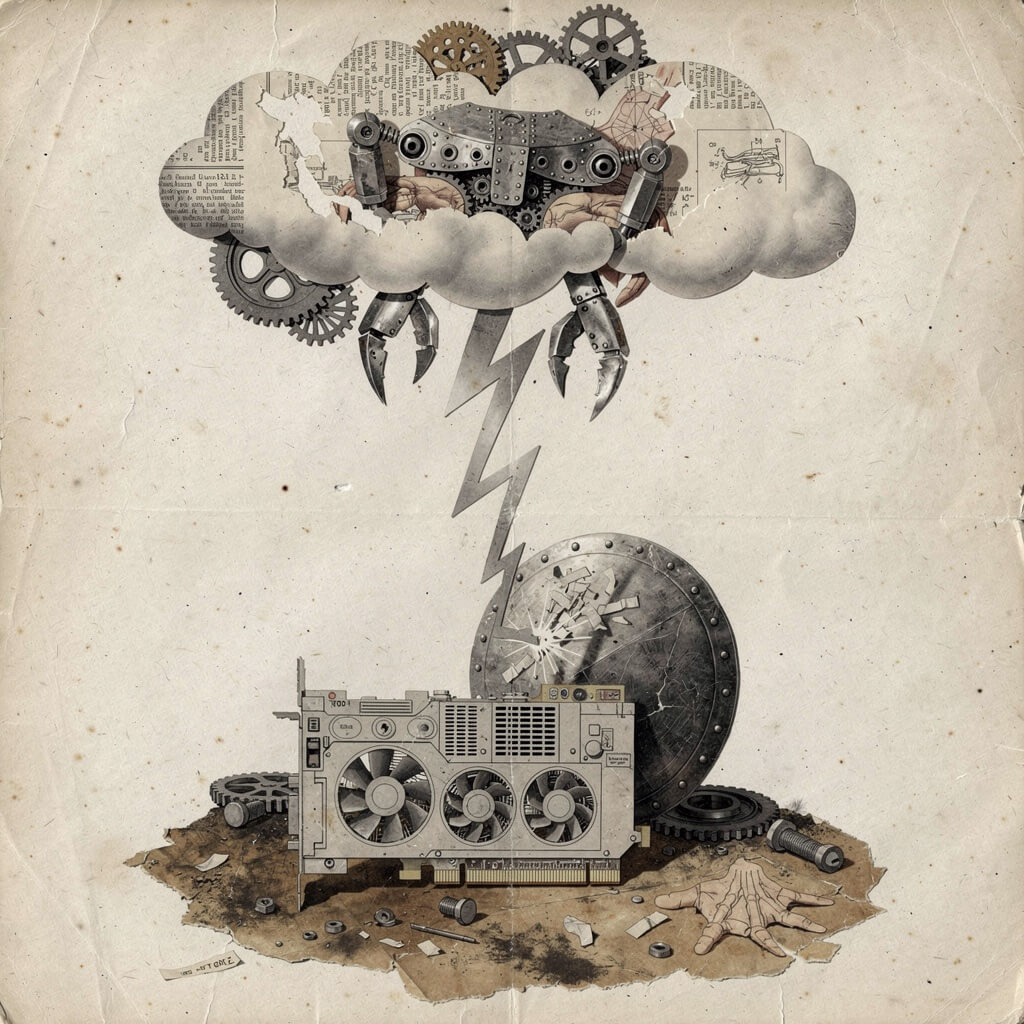
GLM 5.2 vs. Opus
2026-06-22A new real-world test pits the hyped GLM-5.2 model against Claude Opus by challenging both to build a 3D platformer game from scratch using raw WebGL. This head-to-head comparison aims to reveal whether the capabilities of GLM-5.2 are genuinely impressive or merely optimized to ace standard AI benchmarks.
Optocam Zero: a Pi Zero based digital camera made using off the shelf components
2026-06-22The Optocam Zero is a compact digital camera project built around the Raspberry Pi Zero using entirely off-the-shelf components. This accessible DIY design provides makers with a straightforward blueprint to assemble their own custom digital photography gear.

Show HN: Got sick of ads, so I made my own logic puzzle site
2026-06-22A developer frustrated with online advertising has launched Puzzle Lair, a free, ad-free website dedicated to logic puzzles. The platform aggregates multiple game types like Sudoku, Kakuro, and Nonograms into a single clean interface. Users can solve daily challenges, track their personal statistics, and compete against others on global leaderboards.

Finding the best dog treat with statistics
2026-06-22A dog owner ran a pairwise-choice experiment to rank their Greyhound's favorite treats and measure the dog's side bias. By analyzing the resulting data, they successfully transformed a simple bedtime snack routine into an engaging statistics problem.

Sakana Fugu
2026-06-22Sakana Fugu is a newly launched model interface that enables the seamless coordination of specialized AI agents. By routing multiple distinct models through a single OpenAI-compatible API, it significantly simplifies the development and deployment of complex multi-agent systems.
Memory Safe Inline Assembly
2026-06-22A recent discussion on Fil-C's memory-safe inline assembly highlights a debate over its choice to use runtime panics instead of compile-time errors for unsafe code, which critics argue merely delays crashes to production. However, supporters defend the approach as a practical way to port legacy C applications without full rewrites, noting that the feature's implementation was notably accelerated by using AI to parse x86_64 assembly.
How I play video games with spinal muscular atrophy
2026-06-22A personal account of gaming with spinal muscular atrophy has prompted community discussions highlighting the vital role of open-source assistive hardware and adaptable controllers like the Xbox Adaptive Controller. Commenters praised nonprofits like GOAT for providing life-changing accessibility equipment, while also recognizing major tech companies like Microsoft and Valve for their extensive gaming accessibility tools. The conversation underscores the remarkable progress in assistive technology and the ongoing push for more cohesive, integrated control systems for disabled gamers.
The text in Claude Code’s “Extended Thinking” output
2026-06-22Readers discussing the mechanics behind Anthropic's Extended Thinking feature note that major AI companies intentionally hide their models' raw reasoning processes to protect proprietary research. Exposing these internal mechanics would allow competitors to easily replicate their advanced thinking workflows by training on the exposed data. Consequently, companies choose to summarize or postprocess these cognitive outputs to maintain a competitive edge in the AI market.

Never Give Them Your Face
2026-06-22This article argues against the use of facial recognition for age verification, warning that it creates a permanent biometric identity checkpoint in public life. The author urges users to refuse installing these invasive systems on their personal devices to protect their digital privacy.