AI Tech News Last 24 Hours
Artificial intelligence moves quickly, and this section captures its most recent developments. Coverage includes new model releases, research milestones, AI product launches, startup funding, and the policy debates surrounding the technology. It is a convenient briefing for anyone trying to keep pace with AI's constant stream of news.
A single day can bring a frontier model announcement, benchmark disputes, an enterprise adoption deal, a lab safety controversy, and a nine-figure funding round, and this section aims to catch them all. Coverage spans research labs, chip suppliers, application startups, and the regulators trying to keep up.
No area of technology compresses more change into less time, and staying a day behind in AI can mean missing something genuinely important. Engineers building with these models, executives planning around them, and researchers tracking the field use a rolling AI briefing to keep their bearings.

Researchers at KAIST have developed SweepLED, an affordable technology that uses a smartphone's LED and artificial intelligence to detect hidden cameras with a 94% accuracy rate. By utilizing a low-cost LED device, this innovation provides users with a highly effective and accessible tool for protecting their everyday privacy.
CommentsThe proliferation of cheap GPS jammers is creating widespread navigation dead zones, exposing the vulnerabilities of an aviation industry that has decommissioned older ground-based backup systems to save money. By removing redundant networks like VOR and LORAN, aircraft have become overly reliant on easily disrupted satellite navigation, highlighting the dangers of prioritizing cost savings over flight safety.
Comments

A suspected cyberattack on military commissary freezers has unexpectedly turned the frozen pizza aisle into a national security risk. This incident underscores the growing vulnerabilities of internet-connected appliances and the potential for hackers to disrupt military supply chains.
CommentsChatGPT Work Tool and Skill Reference
2026-09-01A new comprehensive reference guide has been published detailing the tools and full skill definitions available for ChatGPT's Codex Work sessions. This documentation provides users with a complete overview of the platform's technical capabilities to help optimize their daily AI workflows.
CommentsSnakes and Ladders
2026-09-01A reader discussion on cooperative board games highlights the frustration of dominant players turning collaborative play into a rigid optimization problem. Participants argue that games featuring hidden information or chaotic elements are more engaging because they prevent a single person from dictating the group's strategy. The conversation also notes that classic games like Snakes and Ladders remain uniquely valuable for teaching children social skills and how to handle collective loss.
Comments
Google has completed its multi-year transition by removing all remaining Manifest V2 extensions from the Chrome Web Store. This final milestone impacts popular tools like the ad-blocker uBlock Origin, requiring users to adopt newer Manifest V3 alternatives.
Comments
No country for mediocre mathematicians
2026-09-01In a reflective essay, a struggling geometer critiques the exaggerated claims surrounding artificial intelligence's capabilities in mathematical reasoning and warns against the deceptive narratives pushed by tech companies. The piece explores how the growing pressure to adopt these overhyped AI tools is impacting average mathematicians and fundamentally reshaping the academic landscape.
CommentsYC S26 startup Almanac has launched an autonomous AI agent designed to act as a comprehensive knowledge base for companies. The system operates on its own dedicated computer and is signed into existing tools to understand internal workflows. Employees can simply text the agent their tasks, and it will notify them once the work is completed.
CommentsYC S26 startup Hebbian Robotics has launched hflow, an SDK designed to help robotics teams build scalable data pipelines for AI model training. The platform enables developers to easily verify and maintain the high quality of the datasets used to train their robotic systems.
Comments
“I just chose words carefully”
2026-08-31This blog post explores the principles of software craftsmanship and code quality by emphasizing the importance of precise communication in development. The author argues that carefully choosing words and naming conventions is just as critical to writing clean, maintainable software as the underlying logic. The piece highlights how thoughtful terminology directly impacts overall project clarity and long-term success.
Comments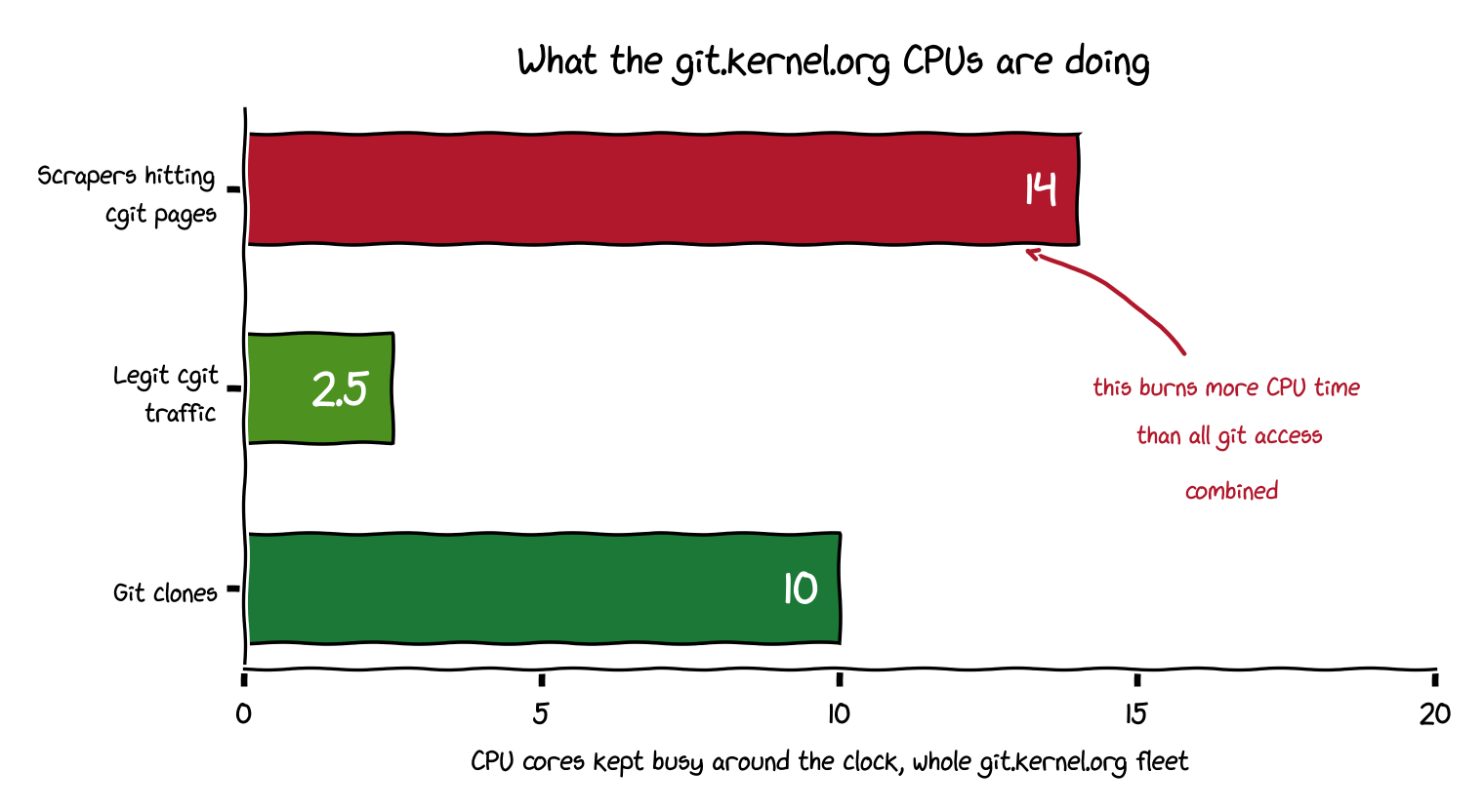
Creepy Crawlies
2026-08-31A recent analysis presents hard data detailing the significant impact of AI web crawlers on website infrastructure. The report demonstrates how these automated bots consume substantial bandwidth and server resources. This highlights the growing technical and financial burden they place on web publishers.
Comments
Understanding ChatGPT Work
2026-08-31OpenAI recently launched ChatGPT Work, a powerful yet complex tool that has seen rapid updates since its July 9th announcement. This article breaks down the confusing features of the new product to help users understand its capabilities and practical applications.
Comments
Matrox: Graphics for Professionals
2026-08-31Matrox is reinforcing its position in the professional graphics market by highlighting specialized solutions designed for demanding enterprise and creative workflows. The company continues to focus on delivering high-performance, multi-display hardware tailored specifically to the rigorous needs of professional users.
CommentsHaiku R1/beta6 has been released
2026-08-31Haiku has officially released version R1/beta6, marking the first major update for the operating system in approximately two years. The new beta arrives just a week after the project celebrated its 25th anniversary.
Comments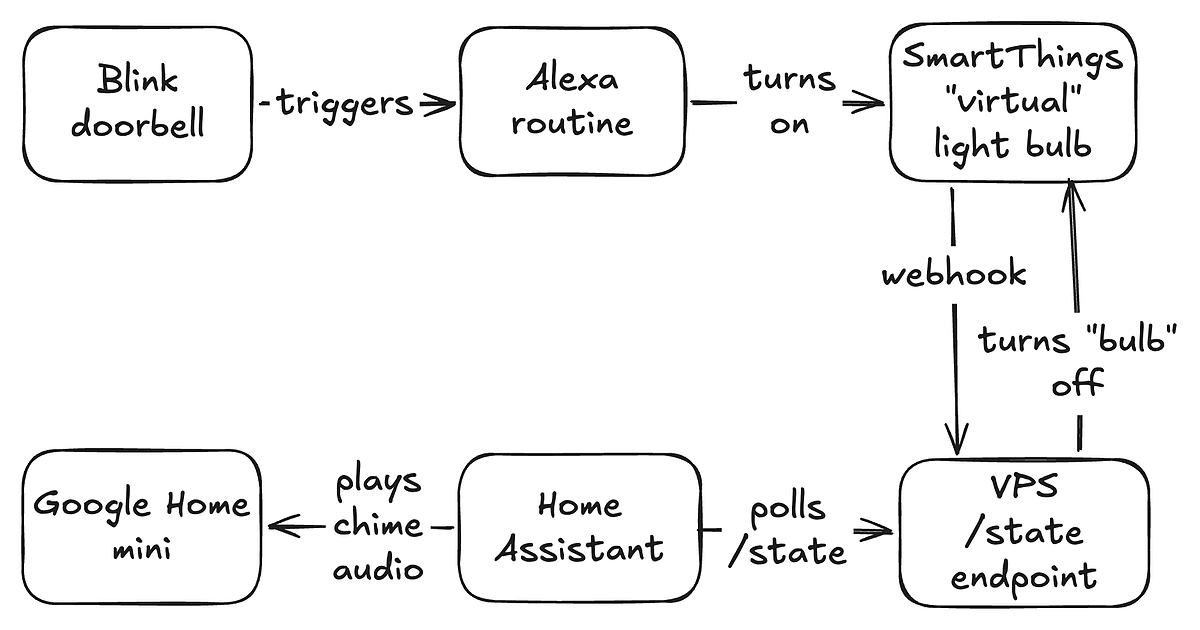
Prompted by a local burglary, a homeowner upgraded their security system only to discover their smart doorbell requires five separate cloud services just to send a notification. This overly complex setup highlights the frustrating fragmentation and heavy cloud dependency prevalent in modern smart home ecosystems.
CommentsA community discussion on losing passion for software development reveals that the influx of AI-generated code is shifting the focus from craftsmanship to mass production, leaving maintainers burned out by a tsunami of low-quality pull requests. Commenters argue that AI disrupts the gradual learning curve of coding and advise developers to ruthlessly protect their time from poor submissions while focusing on rediscovering a love for the actual programming process.
CommentsSort branches by last commit date
2026-08-31A recent community discussion highlights various methods for sorting Git branches by their last commit date to streamline developer workflows, including custom terminal aliases, fuzzy finder integrations, and dedicated terminal user interfaces. Additionally, configuring Git globally to sort by committer date is highly praised for automatically prioritizing recently rebased or actively worked-on branches.
CommentsHow to build a diffusion language model
2026-08-31A newly released guide provides a comprehensive introduction to diffusion language models and the research advances driving them. Adapted from major machine learning conferences, the resource details the core building blocks of modern open-source implementations. It covers essential techniques including masking diffusion, iterative refinement, post-training, and variable-length generation.
Comments
Continuous diffusion language models are making a significant comeback after several years of being overshadowed by fully discrete methods. This renewed interest signals a potential shift in how researchers approach natural language processing and generative AI.
CommentsHacking IKEA Furniture
2026-08-31After moving into a new home, a maker customized standard IKEA furniture to build a dedicated office setup when their exact desired pieces were unavailable for purchase. This DIY project highlights the popular maker culture trend of hacking affordable furniture to create personalized tech environments.
Comments
A 2011 article examines the reasons why commercially available bicycle generators are not considered a truly sustainable energy source. The piece is hosted on a unique solar-powered website that occasionally goes offline when solar energy is insufficient.
CommentsIn a creative emoji flipbook presentation, Alex Komoroske compares organizational dynamics to slime molds to explain how corporate inefficiencies emerge. The presentation illustrates how systemic coordination headwinds can lead to widespread dysfunction even when every individual employee is behaving well.
Comments
Researchers have published an arXiv paper detailing the computational algorithms used to calculate the longest unbroken straight-line paths across the Earth's continuous landmasses and oceans. By leveraging advanced optimization techniques and great-circle navigation, the study highlights the complex intersection of geographic data analysis and algorithmic problem-solving.
Comments
Electric rain can eat through metal
2026-08-31New research reveals that water generates an electrical charge as it slides down smooth surfaces. This newly discovered electrification accelerates the corrosion process, explaining how rain can gradually eat through metal.
Comments
FreeCORE TrueNAS Core – Continued
2026-08-30FreeCORE is an independently maintained continuation of the TrueNAS CORE 13.3 operating system built on the FreeBSD platform. The project ensures continuity for current users by supporting seamless in-place upgrades directly to version 15.0.
Comments
Tether: iMessage, SMS, etc. on Linux
2026-08-30Tether, a tool enabling iMessage and SMS on Linux, recently switched to a permissive MIT license after community feedback highlighted the drawbacks of using copyleft for interoperability protocols. The developer's quick response sparked a broader discussion among readers debating the merits of open-source licensing, corporate exploitation, and the impact of AI on code creation.
Comments
A $1 fee added to Texas car insurance policies to combat catalytic converter theft has instead funded the expansion of the Flock surveillance camera network. Lawmakers are now pushing back, stating that using these millions to build out the camera system was never the original legislative intent.
Comments
This piece examines how professionals can effectively leverage a bias toward action when starting a new role. The author emphasizes that true decisiveness requires gathering sufficient context first, warning against the pitfalls of rushing into action unprepared.
CommentsA developer has released Defragger, a new Linux filesystem defragmenter built with Rust and a user interface powered by Qt Quick and Kirigami. The project was inspired by the creator's nostalgia for the classic visual of moving blocks seen in older disk optimization tools. It offers a modern, open-source alternative for maintaining Linux storage performance.
CommentsSQLite as a Document Database (2020)
2026-08-30Readers discussing the use of SQLite as a document database share practical strategies for storing JSON, managing backups, and implementing change data capture. The conversation also sparks a broader debate on data modeling, contrasting the natural, self-contained hierarchy of document databases with the analytical power of relational structures. Ultimately, participants note that the term document database has evolved to simply mean a JSON blob, shifting away from its original meaning of self-contained, non-relational data.
Comments