AI Tech News Last 24 Hours
Artificial intelligence moves quickly, and this section captures its most recent developments. Coverage includes new model releases, research milestones, AI product launches, startup funding, and the policy debates surrounding the technology. It is a convenient briefing for anyone trying to keep pace with AI's constant stream of news.
A single day can bring a frontier model announcement, benchmark disputes, an enterprise adoption deal, a lab safety controversy, and a nine-figure funding round, and this section aims to catch them all. Coverage spans research labs, chip suppliers, application startups, and the regulators trying to keep up.
No area of technology compresses more change into less time, and staying a day behind in AI can mean missing something genuinely important. Engineers building with these models, executives planning around them, and researchers tracking the field use a rolling AI briefing to keep their bearings.

Solar panels that plug into your wall
2026-10-13California has passed new legislation to simplify the installation of plug-in balcony solar panels that connect directly to standard wall outlets. Renewable energy experts predict this highly accessible technology is poised for rapid mainstream adoption.
CommentsThe latest release of the OpenAI Codex CLI has sparked user concern by installing a persistent, self-updating background daemon by default. Developers are now requesting that this auto-start feature be changed to an opt-in setting or require explicit user consent prior to installation.
Comments

After a 60-year scientific search, researchers have finally uncovered the genetic secret behind the unique behavior of orange cats. The findings confirm what pet owners have long suspected, explaining the biological reasons why these distinct felines are truly built differently.
CommentsA 2001 interview with programmer Giles Goddard details the immense technical hurdles of transitioning to true 3D game development during the creation of Super Mario 64. Community discussions highlight how the title's pioneering analog controls and immersive world design revolutionized the industry, cementing its legacy as a foundational masterpiece of the 3D console generation.
CommentsA new retrospective examines Kevin Kelly's 2016 artificial intelligence predictions a decade after they were made. The review notes his accurate foresight regarding the rise of dominant tech giants in the AI space. It also highlights his enduring advocacy for open weights as a crucial counterbalance to industry consolidation.
Comments
Muse Wonder
2026-10-13Meta has unveiled Muse Wonder, a frontier AI model designed to help users achieve their personal and professional goals. By leveraging Active Memory and Active Focus, the system continuously tracks and prioritizes the specific information that matters most to each individual.
CommentsIn response to Rich Hickey's argument that AI is not a tool, a new article asserts that automation and traditional tool use can successfully coexist. The author emphasizes that effectively wielding large language models still requires significant human skill, continuous feedback, and careful judgment.
CommentsWhatever became of holography? (2011)
2026-10-12Despite early promises of high-density data storage and immersive 3D experiences, holographic technology has struggled to achieve mainstream consumer adoption. While researchers continue to advance 3D volumetric displays, scaling these innovations for everyday commercial use remains a distant engineering challenge. Meanwhile, the hobbyist holography community is navigating supply chain disruptions and high equipment costs as they transition to alternative photopolymer materials.
CommentsFingerprints are the new cookies
2026-10-12As browser fingerprinting replaces cookies for user tracking, readers note that standard anti-fingerprinting tools often make users more identifiable by standing out from the crowd. While spoofing common browser configurations or restricting hardware access can improve privacy, many argue that banning third-party ads is the only definitive solution. However, completely eliminating fingerprinting remains difficult since it is still necessary to differentiate legitimate users from bots and prevent platform fraud.
CommentsA growing divide among software developers over large language models pits those who embrace rapid, unreviewed AI-generated code against those who insist on strict human oversight. While the speed-focused camp accepts occasional AI mistakes for massive productivity gains, cautious engineers warn that skipping code review leads to hidden bugs, skill atrophy, and severe long-term maintenance issues that could ultimately negate those early benefits.
Comments
Google has been issued an order at two data center construction sites after illegally clearing forested land. The enforcement action was taken because the tech giant failed to conduct mandatory environmental impact assessments before beginning development.
CommentsTerence Tao: Math 2.0 [pdf]
2026-10-12Readers are debating mathematician Terence Tao's recent presentation on the future of AI, specifically focusing on his hypothetical example of an AI-discovered cancer drug that functions without a human-understandable mechanism. While some medical professionals argue this example is poorly informed and misrepresents how doctors would actually adopt such treatments, others defend his underlying warnings about AI misalignment and the dangers of blindly delegating complex reasoning to machines.
Comments
A new free Mac app uses local indexing to help AI agents locate code more efficiently, significantly reducing tool calls and token usage. The tool enables semantic and exact-word searching across local files, git repositories, and AI coding sessions by leveraging MCP context.
Comments
Researchers have introduced MASS, a framework that enables a single language model to achieve recursive self-improvement through collective intelligence. The system autonomously solves tasks, designs workflows, and evaluates results across multi-agent executions to continuously learn and optimize. This approach marks a significant step toward AI systems capable of independently refining their own operational processes.
Comments
Passkeys are a trap
2026-10-12While tech companies promote passkeys as a seamless replacement for traditional passwords, this article warns everyday internet users about the hidden pitfalls of passwordless authentication. The piece explains in simple terms how relying on these systems can lead to frustrating account lockouts, platform restrictions, and unexpected privacy risks. Ultimately, the industry's aggressive push toward passkeys is framed as a deceptive trap rather than a convenient security upgrade.
CommentsJohn Berger's 1972 book Ways of Seeing explores how the mass reproduction of art has fundamentally changed the way society encounters visual media by altering its original context and meaning. Drawing on Walter Benjamin's theories, this foundational perspective on mechanical replication remains highly relevant to understanding modern digital content distribution.
CommentsNew York City's Click to Cancel rule is now in effect, but critics warn that companies like Adobe may circumvent the regulation by enforcing strict one-year contracts with hefty early cancellation fees. Some users suggest exploiting a 14-day subscription change window to bypass these penalties, while others anticipate more businesses will adopt similar long-term commitment strategies. Meanwhile, the broader tech community is discussing open-source alternatives to Adobe's software, highlighting a new Rust-based project called ArtCraft and debating the future of Affinity products under Canva's ownership.
Comments
A recent technical finding reveals that the tilde character in the PATH environment variable does not always resolve to the user's home directory outside of standard shell contexts. When processed by certain sandboxing utilities, the tilde is treated as a literal string rather than expanding to the actual home path. This discrepancy can trigger unexpected security warnings and highlights the importance of using fully resolved absolute paths in environment configurations.
CommentsThe newly released ClickHouse C is a minimalist, header-only library designed to bring database connectivity to embedded systems. It enables developers in resource-constrained environments to communicate directly with ClickHouse using its native binary protocol.
CommentsBuild your own decision model
2026-10-11A new technical guide explores how to build System one decision models that infer and respond with calibrated probabilities for every allowed answer. It demonstrates how developers can use Structured Output to constrain everyday language models into generating guaranteed valid JSON in a single pass.
Comments
A developer spent 500 billion AI tokens to decompile and accurately recreate a popular first-person shooter game. Despite achieving a stable and feature-complete version, the project and its related blog posts were removed following legal intervention from the game's corporate publisher.
Comments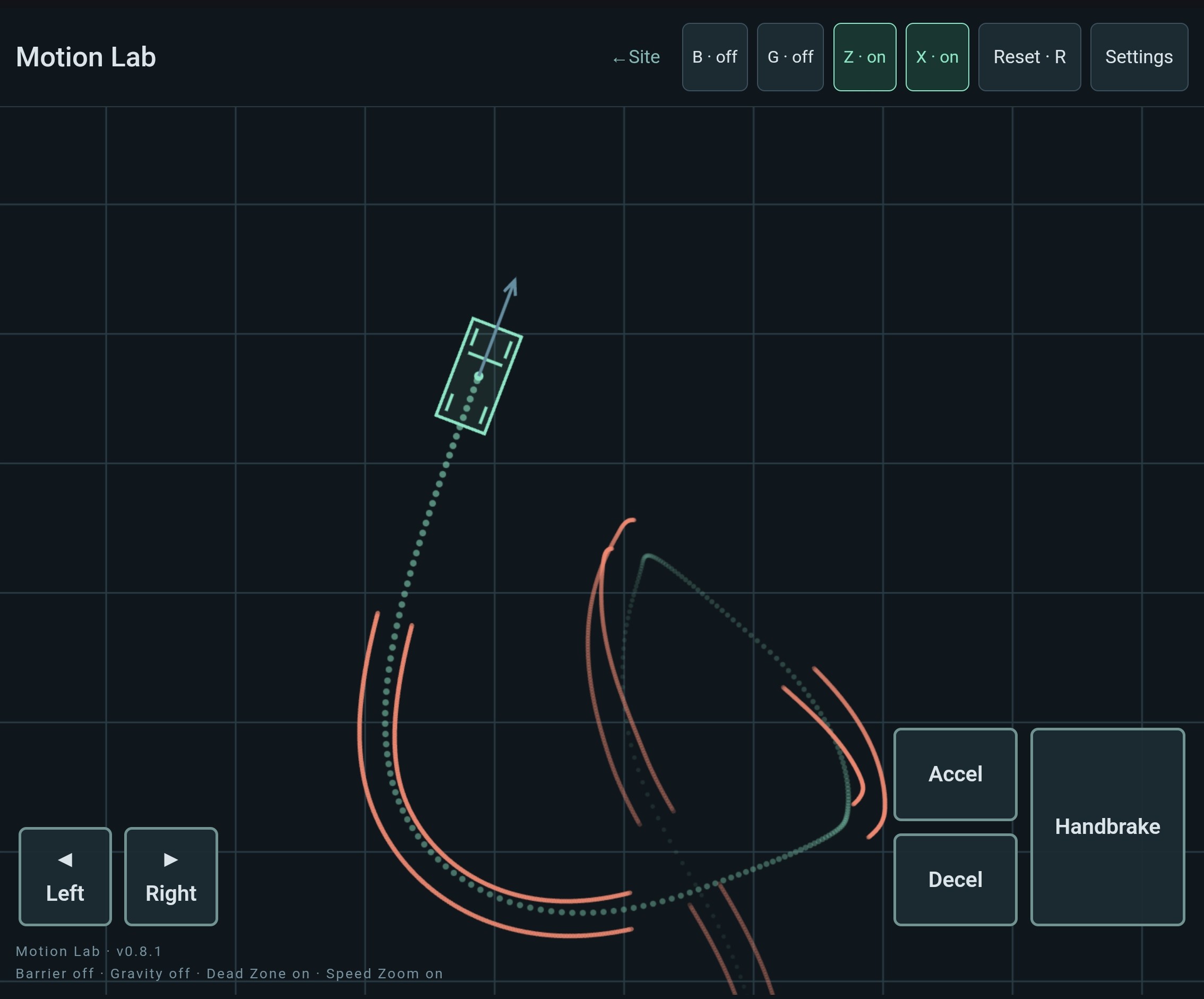
2D Vehicles
2026-10-11This tech retrospective explores the history of a 2D vehicle physics prototype originally developed in 1996. The article details the project's evolution over the years, culminating in its modern remaster released as Motion Lab.
CommentsDevelopers have launched Veda, billed as the first agentic-native hobby operating system designed to integrate AI agents directly into the core computing experience. The open-source project is now live on GitHub, inviting the community to contribute to its ongoing development.
CommentsNix wrote half of my debugger
2026-10-11A developer details their experience using Rewind VM, a deterministic virtual machine that treats Nix builds as pure functions to effortlessly isolate and resolve race conditions. The tool has practically built its own advanced debugger features, rapidly expanding to include thread lanes, stack frames, and enhanced GDB support. Despite its powerful capabilities, the author questions why this deterministic approach to debugging complex build environments remains largely underutilized.
Comments
Why DuckDB 2.0 is faster
2026-10-11DuckDB 2.0 alpha introduces significant performance upgrades over version 1.5.5, achieving up to a 90x speedup for recursive CTEs, 6x faster VARIANT processing, and improved S3 async I/O. The update explores the specific architectural changes responsible for these gains and provides practical advice on data modeling to help developers fully leverage the enhanced speed.
Comments
Cockroach Labs developed MOLT Sinai, an AI coding teaching hospital that treats software bugs like patients and manages coding agents as a medical team. After five months of refining this clinical framework, the company successfully shipped IBM Db2 migration support in under two days.
CommentsTalorys is a self-hosted personal AI agent that runs entirely on Cloudflare's free tier without collecting any telemetry. The single-user platform provides chat, memory, task management, and scheduled reminders, and can be easily deployed with a single command.
Comments
Microsoft has released version 1.0.0 of its Execution Containers to address the security risks posed by AI agents requiring broad system access. Previously, organizations faced a difficult choice between maximizing agent productivity and maintaining strict security controls. This new tool resolves the dilemma by providing a secure, isolated environment for autonomous tasks.
Comments
Unikernels were hard. key word: were
2026-10-11Former MirageOS developer Justin Cormack explains that unikernels are experiencing a resurgence because the historical friction that made them difficult to use has disappeared. With traditional operating systems now viewed as design debt, unikernels offer a compelling and highly secure alternative for modern software deployment.
Comments
Researchers have introduced byteification, a novel method that retrofits existing subword-based large language models to operate directly on raw byte encoding with minimal extra training. This approach overcomes previous performance limitations, enabling byte-level models to match traditional systems while excelling at the fine-grained character-level reasoning required for complex scientific data like computer code and biological sequences.
Comments