AI Tech News Last 24 Hours
Artificial intelligence moves quickly, and this section captures its most recent developments. Coverage includes new model releases, research milestones, AI product launches, startup funding, and the policy debates surrounding the technology. It is a convenient briefing for anyone trying to keep pace with AI's constant stream of news.
A single day can bring a frontier model announcement, benchmark disputes, an enterprise adoption deal, a lab safety controversy, and a nine-figure funding round, and this section aims to catch them all. Coverage spans research labs, chip suppliers, application startups, and the regulators trying to keep up.
No area of technology compresses more change into less time, and staying a day behind in AI can mean missing something genuinely important. Engineers building with these models, executives planning around them, and researchers tracking the field use a rolling AI briefing to keep their bearings.
The Future of Obsidian Plugins
2026-05-12Obsidian has unveiled a redesigned Community website and a dedicated developer dashboard to streamline and support its growing plugin ecosystem. These new tools aim to improve plugin discovery for everyday users while providing third-party creators with enhanced management and analytics features.
CommentsThey Live (1988) inspired Adblocker
2026-05-12A developer has created an open-source adblocker inspired by the 1988 cult film They Live that replaces standard web advertisements with the movie's iconic subliminal slogans. The project is currently available on GitHub for users who want to browse the internet while seeing hidden messages like consume and obey.
Comments
Learning Software Architecture
2026-05-12A recent article responds to an inquiry from a research physicist seeking guidance on learning software architecture. The piece outlines practical strategies and resources for mastering software design skills tailored to those with a scientific background.
Comments
Kraftwerk's radical 1976 track
2026-05-12Celebrating its 50th anniversary this month, Kraftwerk's 1976 single Radioactivity remains a groundbreaking milestone in electronic music. Over the decades, the pioneering track evolved into the German band's most significant political protest song.
Comments
Google DeepMind is transforming the traditional mouse cursor into a context-aware AI partner to streamline digital interactions. This innovation, starting with the Chrome browser, aims to replace the friction of standard text prompting with seamless, intuitive AI collaboration.
Comments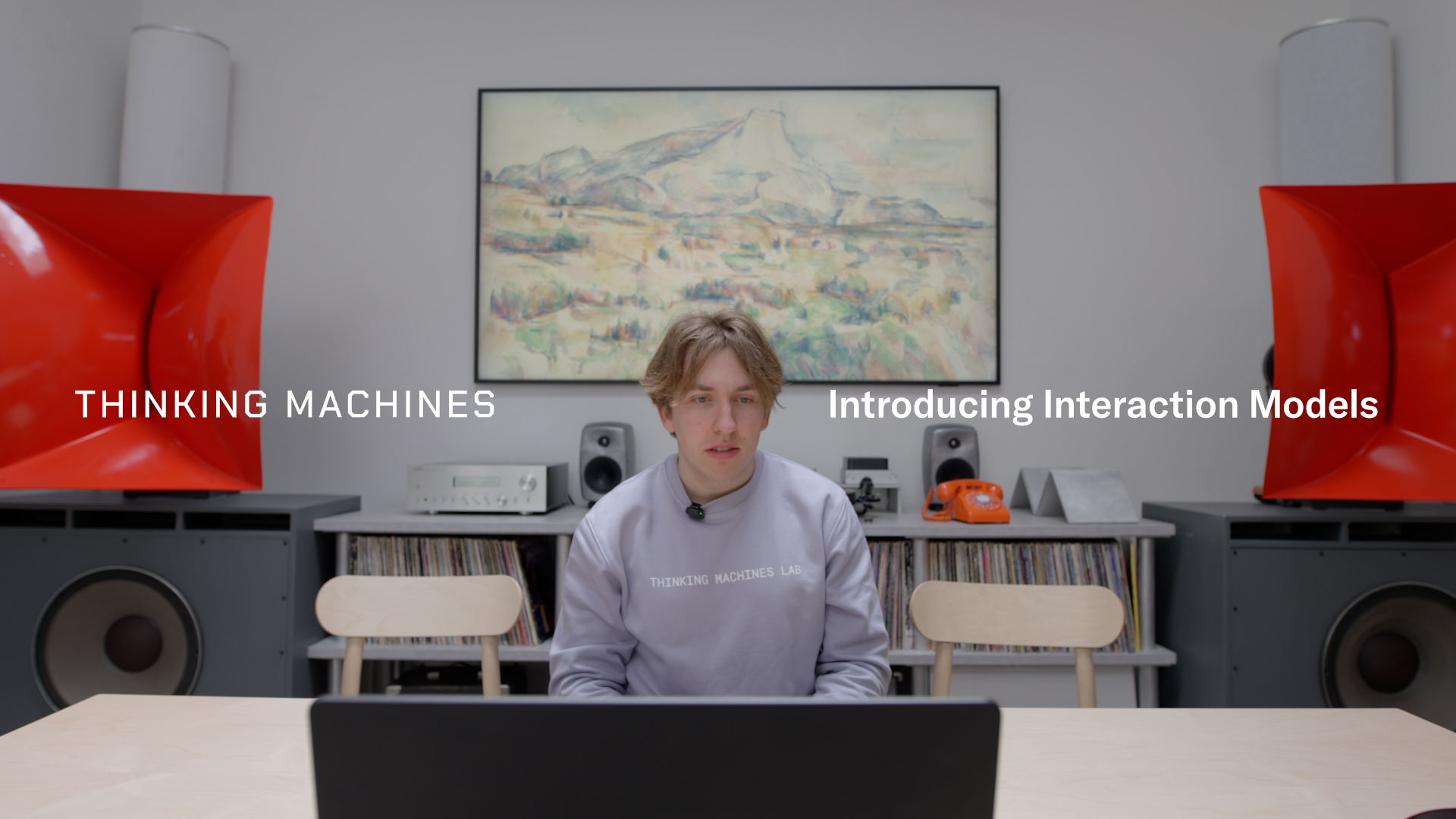
Interaction Models
2026-05-12Interaction models are advancing artificial intelligence by replacing traditional turn-based interfaces with native multimodal support. By seamlessly processing audio, video, and text in real time, these new systems enable much more dynamic and natural human-computer collaboration.
Comments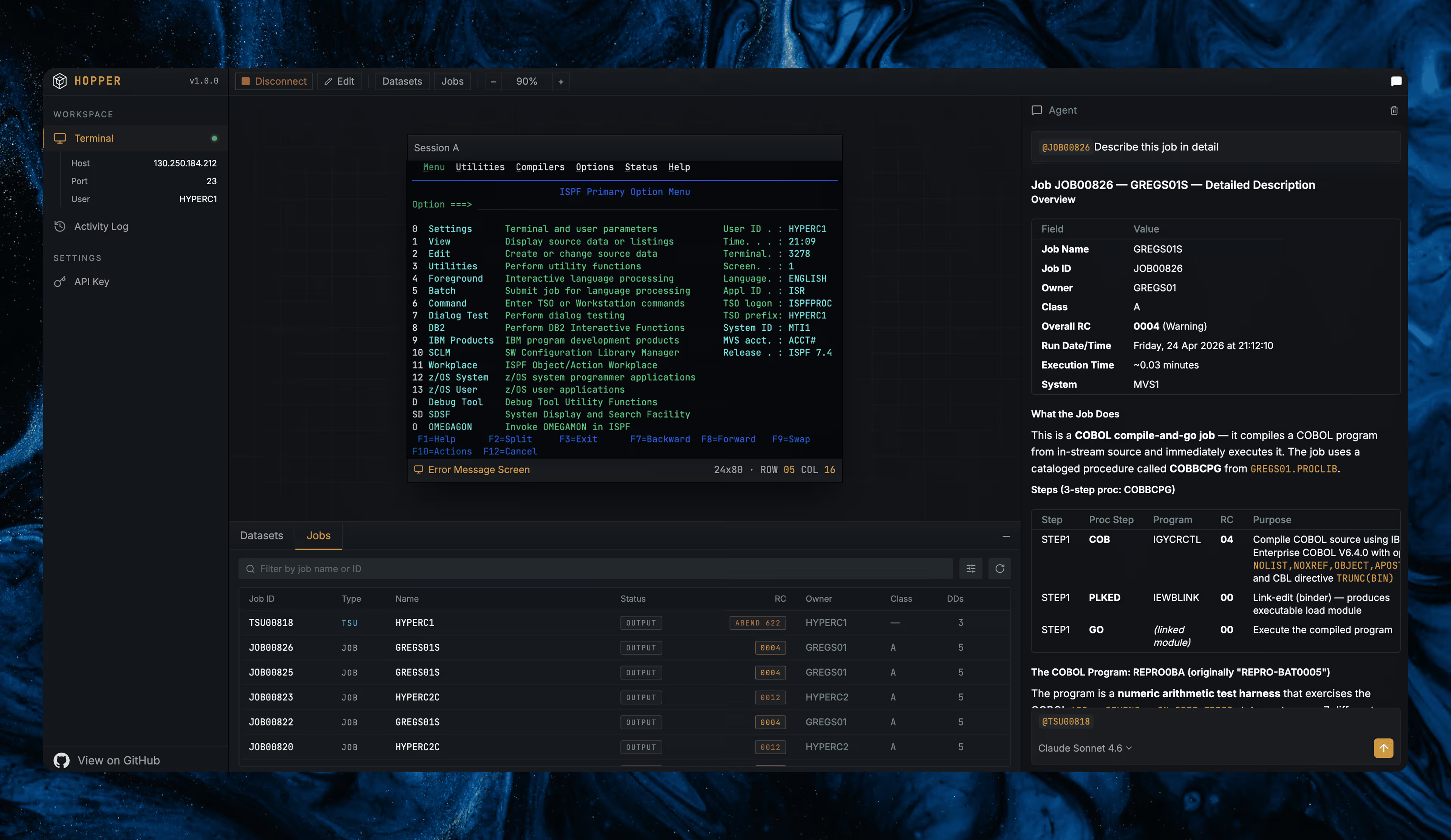
Hopper is a new agentic TN3270 terminal emulator that brings modern AI capabilities to legacy mainframe and COBOL environments. The tool allows AI agents to autonomously navigate ISPF, write column-strict JCL, debug failed jobs, and query VSAM directly within z/OS.
Comments
Claude Platform on AWS
2026-05-12The Claude Platform on AWS is now generally available, providing customers with seamless access to its full suite of features. This integration streamlines enterprise deployment by natively supporting existing AWS authentication, billing, and commitment retirement processes.
CommentsSoftware Internals Book Club
2026-05-12The Software Internals Book Club engages hundreds of developers in deep technical discussions on complex software books via a dedicated mailing list. Reader discussions highlight community interest in accessing archived comments and joining future cohorts, while also sparking technical debates about the complexities of email validation and the need for updated networking literature.
Comments
This piece highlights the importance of crafting clear and helpful error messages to improve the everyday online user experience. It emphasizes that effective error handling is a collaborative team effort that can transform frustrating system failures into positive user interactions.
CommentsY Combinator Summer 2024 startup Voker has launched an analytics platform designed to help developers monitor and improve AI agents in production. The tool eliminates the need to manually sift through logs, enabling teams to proactively identify and resolve agent issues before they impact end users.
CommentsGigacatalyst is an embedded AI builder that allows SaaS customers to generate custom frontend user interfaces on the fly using natural language prompts. The tool sandboxes the generated code to keep it independent of the core application, ensuring safe and easy sharing of new features without relying on third-party plugins. Currently serving over 2,000 daily users, the platform reflects a broader industry shift toward highly customizable, AI-driven enterprise software.
Comments
Research indicates that scientists tend to produce less disruptive and groundbreaking work as they age. Instead of challenging established paradigms, older researchers typically focus on incremental advancements within their existing fields. This trend explains why major scientific progress is largely driven by younger minds and highlights the need for a continuous influx of new talent to sustain innovation.
Comments
Education technology company Instructure paid a ransom to hackers after its Canvas learning management system was breached twice. In exchange, the cybercriminals returned the compromised personal data of 275 million users across more than 8,800 institutions. Instructure assured its users that no customers will face further extortion from this incident.
CommentsIntroduced on Hacker News, Statewright is a new open-source project that uses visual state machines to implement guardrails for AI agents. By restricting behaviors to defined operational states, the tool aims to make autonomous AI systems more reliable. Developers can find the source code and contribute to the project on GitHub.
CommentsThe autonomous security agent XBOW has uncovered a critical unauthenticated remote code execution vulnerability in the Exim mail server. Tracked as CVE-2026-45185, this use-after-free flaw allows attackers to execute arbitrary code without requiring authentication. The finding highlights the growing competition between human security researchers and AI-driven autonomous exploit development during the disclosure process.
Comments
A sophisticated supply-chain attack compromised 42 TanStack packages on the npm registry after an attacker exploited GitHub Actions vulnerabilities to publish 84 malicious versions. The breach chained a pull request exploit with cache poisoning and OIDC token extraction, prompting developers to review the official postmortem and audit their dependencies.
CommentsI'm going back to writing code by hand
2026-05-11In a piece about returning to manual coding, the author and readers criticize AI code generators for lacking the human judgment required to adapt architectural constraints over time. Without exhaustive, line-by-line human review, AI tools often contort software to fit outdated rules or hide catastrophic mistakes that eventually render the codebase unmaintainable. Consequently, developers are finding that the intense oversight needed to prevent hidden errors makes writing code by hand a more reliable and practical approach.
Comments
Researchers at UCLA Health have discovered the first drug capable of fully replicating the brain-repairing effects of physical stroke rehabilitation in mice. By successfully mimicking physical therapy in animal models, this breakthrough treatment offers a promising pharmaceutical alternative that could eventually revolutionize human stroke recovery.
Comments
A recent experiment explores the performance of running local AI models on a standard MacBook equipped with an M4 chip and 24GB of memory. The study aims to determine if this accessible hardware configuration can consistently produce practical and usable outputs for everyday tasks.
Comments
Nullsoft, 1997-2004 (2004)
2026-05-11America Online has effectively dismantled its Nullsoft division by purging the team down to just three remaining employees. This drastic downsizing marks the abrupt end of an era for the prolific branch that significantly contributed to the software landscape between 1997 and 2004.
Comments
Google has introduced a new verification step for Gmail registration that requires users to send a text message. To create an account, users must now scan a QR code with their smartphone, which automatically triggers an SMS to Google to verify their phone number.
Comments
An 80-second rocket launch clip featuring James Burke continues to be celebrated as the greatest shot in television 45 years after its original broadcast. Because Burke only had a single chance to capture the scene perfectly, viewers often need multiple viewings to fully appreciate the technical mastery of the footage.
CommentsWhile some developers report that AI coding agents reduce maintenance costs by modernizing legacy code and automating testing, others warn that generating poorly understood code actually increases outages and technical debt. Consequently, participants emphasize that maintainability must remain a core engineering responsibility to ensure AI genuinely decreases rather than exacerbates long-term software maintenance burdens.
Comments
Mythos Finds a Curl Vulnerability
2026-05-11Anthropic withheld its new AI model, Mythos, from public release due to its exceptional ability to identify security vulnerabilities in source code. Demonstrating this advanced capability, the model has now successfully discovered a security flaw in curl.
Comments
A new technical guide demonstrates how to optimize large language model training in Swift by drastically accelerating matrix multiplication. By exploring ten handwritten implementations ranging from plain C and Swift to Apple's Metal API, the tutorial shows how developers can push performance from gigaflops per second up to teraflops per second.
CommentsGoogle's threat intelligence group reported that criminal hackers likely used an AI model to discover and weaponize a major software vulnerability, citing the exploit script's textbook formatting and hallucinated details as evidence. However, readers note that while these markers strongly indicate the code was generated by an AI, they do not definitively prove the model was used to find the underlying bug.
Comments
After experiencing frequent sleep disruptions, an author utilized AI development tools to build a custom application that tracks and identifies the causes of nighttime awakenings. This project highlights how AI is lowering the barrier to entry, allowing individuals to easily create personalized tech solutions for everyday quality-of-life issues.
CommentsNvidia has introduced cuda-oxide, an official compiler that enables developers to write and compile GPU device code directly in Rust. Rather than replacing host-side libraries like cudarc, the new tool complements them by generating embedded PTX code from Rust source files for execution via existing CUDA APIs. Additionally, cuda-oxide leverages Rust's strict memory and type safety models to provide robust guardrails against common undefined behaviors in GPU kernel programming.
Comments
Despite the rise of AI code generators, industry professionals emphasize that software engineering is primarily about problem-solving, architecture, and understanding requirements rather than simply typing code. While developers who view their roles strictly as code writers may face obsolescence, those who adapt will transition into more complex roles where AI serves as a tool for rapid experimentation. Ultimately, delivering functional software still requires human critical thinking and contextual understanding that current AI models cannot fully replace.
Comments