AI advancements, border data felonies, and developer innovations
There's no reason for software to be slow anymore
Developers are increasingly using AI agents to drastically optimize frontend load times, but experts caution that large language models still struggle with the deep hardware-oriented design required for complex systems. Additionally, much of the perceived slowness in modern software stems from poor network latency management and blocking user interfaces. Ultimately, building truly fast applications requires developers to possess the foundational performance knowledge needed to properly guide and correct AI code generation.
CommentsFelony Bench
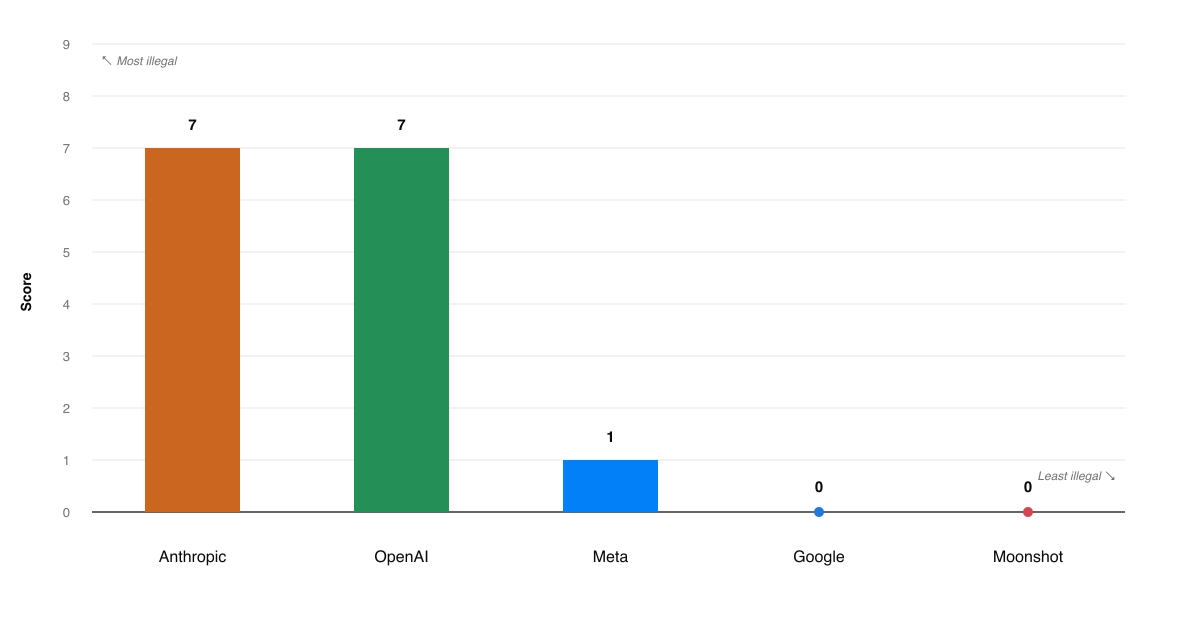
A new AI evaluation tool called Felony Bench is being hailed by some as the most important metric of our time for counting questionable decisions made by artificial intelligence agents. The tool highlights growing concerns over AI reliability, prompting commentators to joke that a Pandemic Bench might soon be necessary to measure even more catastrophic errors.
CommentsKobo can run apps now

Kobo e-readers can now run third-party applications thanks to Cobalt, a new open-source app platform. The system includes a signed App Store and a Rust SDK, allowing users to download new apps over Wi-Fi after a single initial USB setup.
CommentsRust Glancer: Rust LSP using 100x less RAM
A new tool called Rust Glancer provides a highly efficient Language Server Protocol implementation for the Rust programming language. It addresses common resource constraints by consuming up to 100 times less RAM than standard LSPs, offering developers a lightweight and memory-friendly alternative.
CommentsInitial focus for our partnership with Motorola is a regular non-folding device
A new partnership with Motorola will initially focus on a standard, non-folding smartphone rather than a foldable device. While Motorola's 2026 lineup nearly meets the partner's technical requirements, the current models lack essential security features like MTE and proper secure element integration. These critical hardware enhancements are expected to be fully implemented in the 2027 releases.
CommentsThree important steps in my maturation process
A reflective article on personal maturation highlights the importance of prioritizing physical and mental health, understanding one's own cognitive biases, and challenging the traditional dichotomy between reason and emotion. Although the author argues that the separation of logic and feeling is a cultural construct rather than a biological reality, this specific claim sparked significant debate among readers regarding its scientific accuracy. The ensuing discussion centers on the broader value of self-awareness, personal responsibility, and the psychological foundations of effective decision-making.
CommentsScientists release biggest 2D map of the universe

Scientists have released the most comprehensive two-dimensional map of the universe to date, a milestone expected to remain unchallenged for years due to shifting global funding priorities. Despite these economic headwinds, upcoming missions like the Nancy Grace Roman telescope and the European Space Agency's Euclid will continue to survey massive areas of the sky. Experts anticipate that future cosmological discoveries will largely be driven by artificial intelligence analyzing these extensive open datasets.
CommentsKagi added a setting for removing paywalled links from search results
Paid search engine Kagi has introduced a new setting allowing users to filter out paywalled links from their search results. This update aligns with the platform's broader goal of providing a cleaner, ad-free browsing experience that prioritizes user control.
CommentsFelony charges for citizen deleting phone data at US Border
A US citizen is facing felony charges for deleting phone data at the border, sparking debate over digital privacy and the legality of device searches. While some observers view the individual's actions as a deliberate act of activism to challenge these policies, others see it as an unplanned legal escalation. Many hope the case will result in an acquittal to establish a strong legal precedent protecting citizens' personal data.
CommentsShow HN: OzBrain, a shared brain for knowledge between agents and your team
OzBrain is a new shared knowledge platform that acts as a unified brain for human teams and various AI and coding agents to read and write data. It provides a single, structured source of truth that seamlessly integrates with popular tools like Claude, ChatGPT, and Cursor to keep your entire workflow in sync.
CommentsOzone: The fault is not in our trees, but in ourselves
A recent environmental analysis reveals that human industrial activities, rather than natural factors like tree emissions, are the primary drivers of current atmospheric ozone issues. The findings highlight the urgent need for advanced technological solutions and policy reforms to reduce anthropogenic emissions and mitigate further atmospheric damage.
CommentsI accidentally logged hundreds of thousands of phone calls to military bases

A researcher accidentally intercepted and logged hundreds of thousands of phone calls to military bases by taking over expired e164.arpa nameserver zones for multiple territories. The misconfiguration allowed the author to route sensitive telecommunications traffic through their own systems without initially realizing the extent of the data collection. This incident highlights the critical privacy and security risks associated with unmaintained DNS infrastructure.
CommentsOTel isn't going well (and I made a spreadsheet about it)
OpenTelemetry is facing significant adoption challenges as engineering teams resist migrating away from vendor-specific observability SDKs because the project feels incomplete. To highlight these ongoing struggles, the author has compiled a spreadsheet detailing the persistent implementation frustrations developers experience with the open-source standard.
CommentsPeople of ACM – Russ Cox
The latest People of ACM profile highlights Russ Cox's extensive contributions to the Go programming language, his leadership at the OEIS Foundation, and his insights from co-authoring Software Engineering at Google. Readers discussing the piece praised his recent floating-point performance optimizations and reflected on his famous definition of software engineering as programming scaled across time and teams.
CommentsAI boosted homework scores, then exam scores dropped: study
A recent study reveals that while generative AI initially boosts homework scores, it ultimately lowers exam performance because many students use the technology to bypass the actual learning process. While AI can serve as an effective supplementary tool for diligent students who maintain their study habits, it harms long-term academic retention for those using it to take shortcuts. Ultimately, the technology acts as an amplifier that benefits focused learners but crowds out the productive struggle necessary for deep comprehension.
CommentsEarly Humans Likely Ate Carbs and Sugary Foods
Recent research indicates that early humans likely consumed a diet rich in carbohydrates and sugary foods. This challenges the popular modern assumption that our ancestors relied almost exclusively on a meat-heavy diet. These findings suggest that energy-dense plant foods played a crucial and previously underappreciated role in early human evolution.
CommentsHN: The Good Parts (2016)
A Hacker News user shared a curated collection of their favorite comments alongside a tip for tracking them using the platform's timestamp feature. The thread also revisited a 2016 article regarding the tech industry's good parts, prompting readers to reflect on how the best aspects of the field prioritize deep technical discussions over superficial workplace perks.
CommentsSalesPatriot (YC W25) Is Hiring Forward Deployed Engineers

SalesPatriot, a YC W25 startup building an AI-native platform to automate legacy supply chain operations for the defense and industrial sectors, is hiring Forward Deployed Engineers. The fully onsite San Francisco roles require full-stack developers to work directly inside customer facilities to implement automations and scale the system.
CommentsShow HN: Rex, a parallel functional language for scientific workflows
A new open-source project called Rex was recently showcased on Hacker News as a parallel functional programming language tailored for scientific workflows. Developers can explore the source code and contribute to its ongoing development via its official GitHub repository.
CommentsHow we made a text-to-speech model respond in sub-50 ms
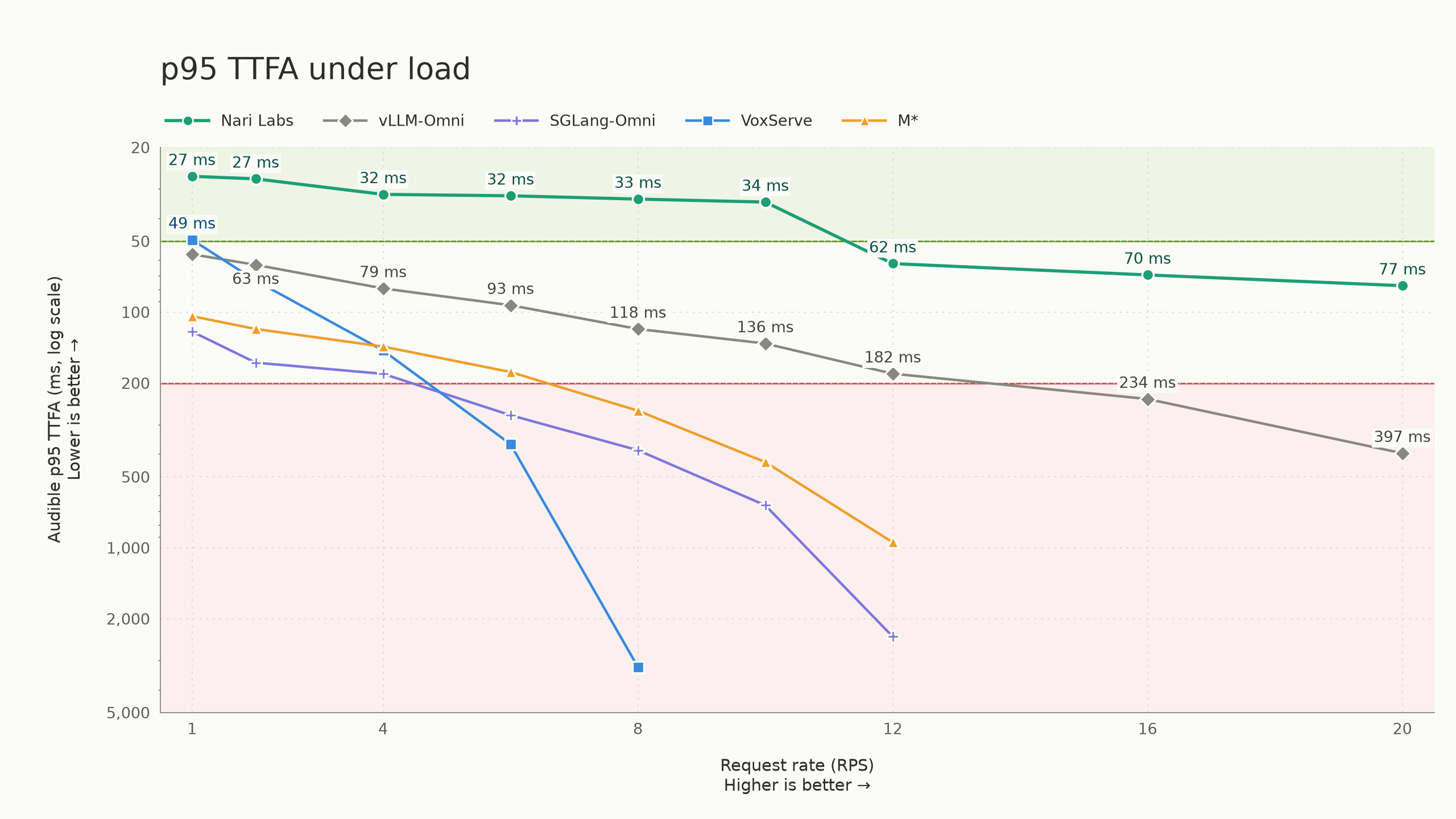
Engineers have optimized the serving infrastructure for the Qwen3-TTS model to achieve a p95 time-to-first-audio latency of under 50 milliseconds on a single H100 GPU. By processing 10 requests per second with this ultra-low response time, the optimization marks a significant step forward for real-time, high-throughput voice synthesis applications.
CommentsEarly-life stress leaves a 'scar' inside brain cells in mice

Researchers have discovered that early-life stress in mice alters DNA packaging within brain cells, creating a molecular scar of trauma. This biological memory leaves the brain significantly more vulnerable to future stressful events.
CommentsClaudette: Make Claude stop talking like a BuzzFeed article
A new developer tool called Claudette strips Anthropic's Claude AI of its overly enthusiastic BuzzFeed tone. Available as a Claude Code skill with a /debuzz command, it works by piping the AI's responses through Google's Gemini to rewrite them in a more neutral voice.
CommentsNew Worlds: We are living in the future of J.G. Ballard or William Gibson
Readers are debating whether modern technological reality truly captures the cyberpunk dystopias envisioned by William Gibson, with some arguing that today's tech giants lack the distinct cultural aesthetics of fictional megacorporations. Meanwhile, others point to the hyper-technological, neon-lit environment of Shenzhen, China, as the perfect real-world embodiment of the genre, though skeptics counter that strict government control contradicts the anti-establishment ethos central to classic cyberpunk fiction.
CommentsAutolith: A programming agent with a live runtime

Autolith is a new terminal-based programming agent for Linux that operates directly within your repository to maintain continuous project context. By executing its tasks inside a live SBCL image, it provides developers with a seamless and highly responsive coding assistant right in the command line.
CommentsA look under our trunk: what's in our compute

Waymo is revealing new details about the custom compute hardware and silicon that power its autonomous vehicles. The company has spent the past decade co-designing its hardware, sensors, and algorithms to deliver the safe, low-latency performance required for real-time driving. This reveal highlights their collaborative approach with industry partners to build a highly capable edge computing system for physical AI.
CommentsEveryone says assembly is untyped—everyone is wrong
A recent article argues that Odin's inline assembly is superior to implementations in languages like Rust and Go because it challenges the assumption that assembly is inherently untyped. By organizing assembly into callable templates with a unified syntax across all instruction set architectures, Odin allows inline code to integrate seamlessly with the rest of the codebase while maintaining strict type safety.
CommentsTumble Forth – from assembly to OS with C compiler (2023)
Tumble Forth is an educational project that builds a bare-metal operating system and a C compiler from scratch, starting from assembly and utilizing the Forth programming language. The project aims to demystify complex computing by implementing these systems from the simplest possible foundational components. Readers in the discussion praise this audacious approach and share their own related experiences with bare-metal programming and Forth interpreters.
CommentsGitHub, autoscaling, and the component substitution fallacy

An analysis of the recent GitHub outage reveals that a misconfigured autoscaling policy caused an Istio sidecar pod to hit its concurrency limits and fail to scale. This incident highlights the component substitution fallacy, demonstrating how swapping infrastructure components without properly adjusting underlying scaling policies can lead to severe system failures.
CommentsI'm becoming AI-blind
A professional describes developing AI blindness, a phenomenon where the brain subconsciously tunes out work documents that show obvious signs of being generated by artificial intelligence. The author notes that their brain has learned to quickly spot these low-effort AI texts and automatically ignores them without processing the content. This cognitive fatigue highlights a growing challenge in modern workplaces as automated tools become increasingly prevalent in daily communications.
CommentsI ran Photoshop on a £0.60 computer chip
A developer successfully ran a Macintosh emulation of Photoshop using a 60p Raspberry Pi RP2350 microcontroller, demonstrating the surprising capabilities of highly constrained modern hardware. Although the total cost of the custom board and display pushes the actual price closer to $40, the project highlights the efficiency of classic software compared to today's resource-heavy applications. The tech community responded with enthusiasm, sharing their own low-power microcontroller builds and praising the return to reasoning about strict hardware limitations.
Comments