Stripe acquires OpenRouter, latest Go release, AI advances
OpenRouter is joining Stripe

OpenRouter is officially joining Stripe while retaining its current name, product, and roadmap. This move ensures that the platform's core mission and user-driven routing capabilities will remain completely unchanged.
CommentsGo 1.27

Go 1.27 introduces generic methods, a new uuid package, and an updated encoding/json/v2 package to expand the language's capabilities. The release also delivers performance and debugging improvements through faster memory allocation and new goroutine leak profiles.
CommentsGoogle replaced Git tags for certain source code with obtaining via Google Drive
Google has replaced standard Git tag distribution for certain source code with a cumbersome process requiring users to submit Google Forms requests to download files from Google Drive. Developers are criticizing the increasingly slow fulfillment of these requests, arguing that the new method constitutes a clear violation of the GPLv2 license.
CommentsManabu Kosaka's Handmade Paper Sculptures

Artist Manabu Kosaka creates hyper-realistic, black and white paper sculptures of everyday objects by meticulously cutting, iteratively stacking, and fusing paper by hand in a process akin to manual 3D printing. The intricate, photo-like results have captivated online audiences, showcasing the incredible precision possible through this unique, hand-crafted layering technique.
CommentsTurns are Better than Radians

A new programming perspective suggests that developers should replace radians with turns for angular measurements. Advocates argue that making this switch results in simpler codebases, faster execution speeds, and more precise calculations.
CommentsUnlocking a locked/deactivated e-waste Cricut Maker
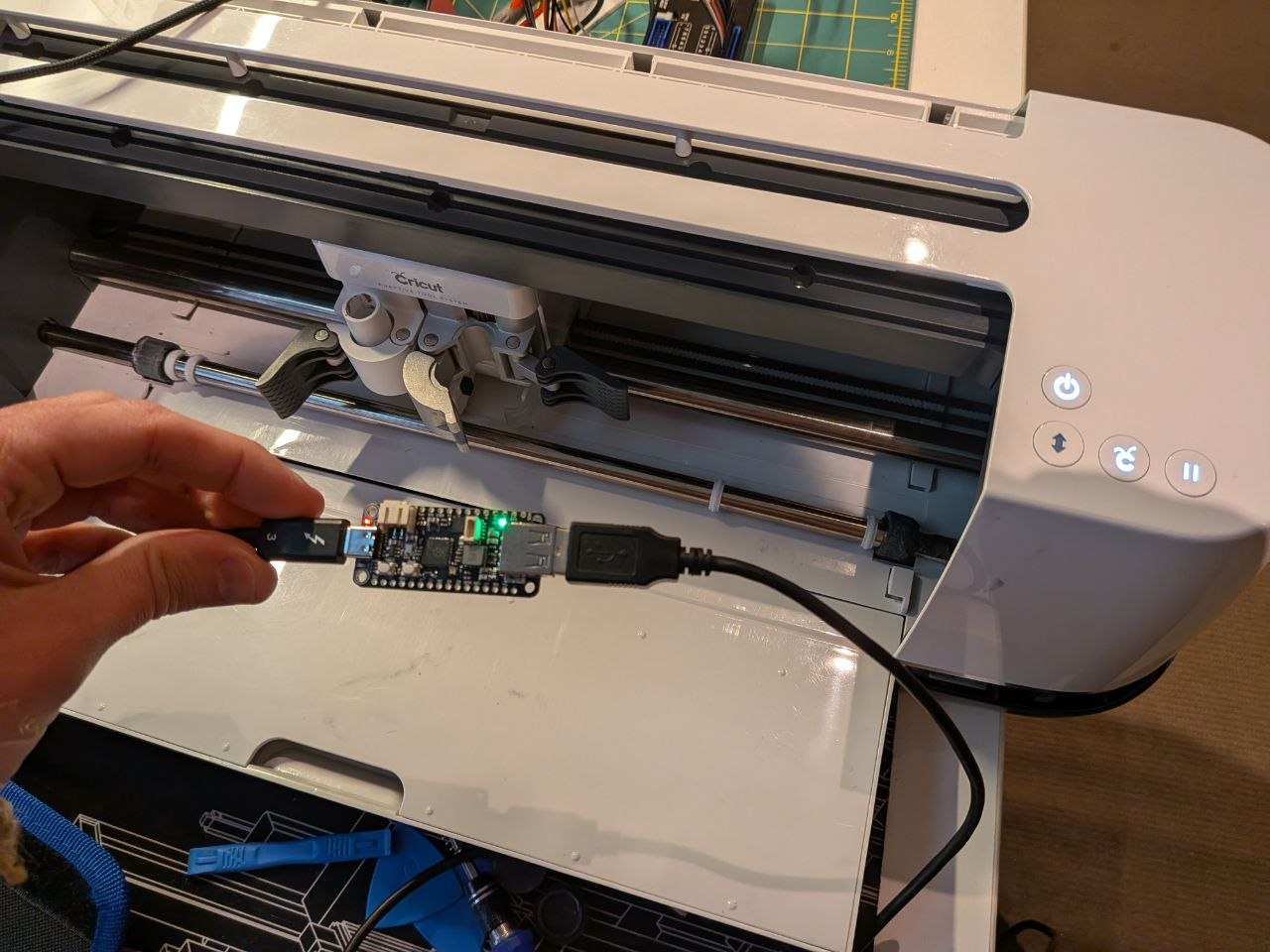
Hacker xssfox has successfully bypassed the software locks on a deactivated Cricut Maker, rescuing the popular crafting machine from the e-waste bin. This hardware hacking project demonstrates a method to reactivate locked devices, offering a potential solution for users with bricked or subscription-restricted machines.
CommentsA joke domain purchase turned in geopolitical warfare

Security researcher xssfox details how a seemingly harmless joke domain purchase unexpectedly escalated into a complex geopolitical incident. The bizarre story highlights the unpredictable intersection of cybersecurity and international relations, demonstrating how minor digital actions can trigger significant real-world diplomatic consequences.
CommentsUnsloth Dynamic 3.0 GGUFs

Users are frustrated by the release of Unsloth Dynamic 3.0 GGUFs because the lack of version numbering in filenames makes it difficult to distinguish new releases from older, identically named model files. Consequently, the community is sharing various workarounds to manage and verify the correct versions, including using Hugging Face command line tools, Git history, and SHA256 checksums.
CommentsA faster way to calculate the day of the week
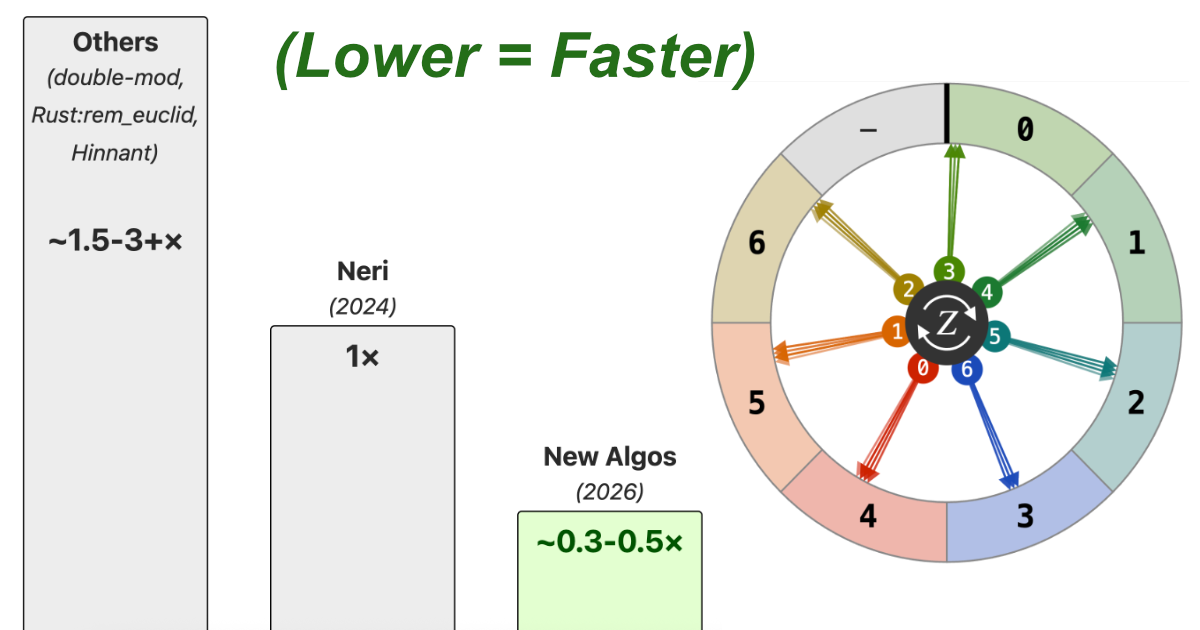
A new programming method offers a faster way to calculate the day of the week by utilizing a range of optimized modulus techniques. These custom mathematical approaches consistently outperform the default code generated by standard compilers. The discovery provides developers with a highly efficient alternative for handling date computations in performance-critical applications.
CommentsCasio F-B100W-1A
Prompted by news of a new Casio watch, tech enthusiasts are debating why the company has not similarly capitalized on the nostalgia market for its classic CZ-series synthesizers. While some argue there is strong consumer demand for modern synth reissues, others contend that original units remain affordable and praise Casio for prioritizing its highly successful watch and calculator lines.
CommentsSol Loves to Cheat
A recent post details the iterative challenges of physical harness engineering through the lens of Sol, a clever subject who consistently finds loopholes to escape their gear. The story highlights the complex design process required to build secure, fail-proof hardware against highly resourceful and determined users.
CommentsWhy travellers are obsessed with foreign supermarkets

Travellers are increasingly exploring foreign supermarkets to experience local culture and discover unique regional foods during their trips. From Tokyo egg sandwiches to Greek dairy products, visiting international grocery aisles has become a beloved and revealing highlight of modern tourism.
CommentsOs8088.com: IBM XT OS now has a Browser, CP/M 2.2 with Z80 core and MS Word 1.1a
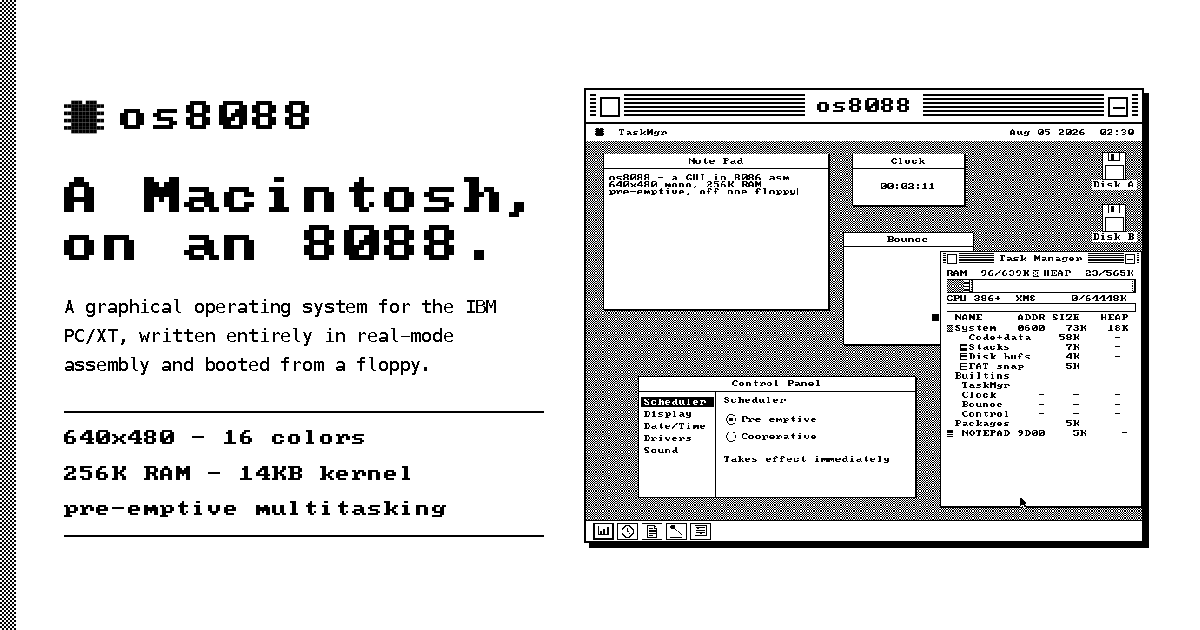
The os8088 project has expanded its Intel 8086 environment by adding a web browser, CP/M 2.2 with a Z80 core, and MS Word 1.1a. The project website provides detailed breakdowns, screenshots, and demonstration videos for each of these new software additions.
CommentsGeolocating a random island using geometry and CUDA programming
A recent blog post details how a developer successfully geolocated a random island by combining advanced geometry with CUDA programming to leverage GPU acceleration. This creative project demonstrates how high-performance parallel processing can be adapted to solve complex spatial and geographical puzzles.
CommentsPostgreSQL for Everything

Many successful companies are simplifying their tech stacks by using PostgreSQL to replace specialized tools like Kafka, Redis, ClickHouse, and Elasticsearch. By consolidating these services into a single unified database, development teams can significantly reduce architectural complexity and accelerate their overall speed to market.
CommentsThe little-known winstart.bat batch file

A recent tech retrospective highlights winstart.bat, a little-known batch file that existed long before the release of Windows 95. Despite its early presence in the operating system, this obscure script was largely forgotten by users and developers over the decades.
CommentsFeature Request: Support AGENTS.md
A new feature request urges the adoption of AGENTS.md, an emerging industry standard that allows various AI coding agents to understand codebases through a unified Markdown file. Proponents argue that shifting away from the Claude-specific CLAUDE.md format will improve cross-platform compatibility with tools like Cursor, Codex, and Amp.
Commentsfx :Tiny, open, native coding agent.

A new open-source coding agent called fx has been launched as a minimal command-line tool written in Zig. Designed for research and seamless integration, it is highly optimized to be embedded as a native component within larger software systems.
CommentsDFlash 2: Keep Drafting Parallel

DFlash 2, the successor to a widely used parallel drafter, has been released with speeds nearly three times faster than standard autoregressive decoding while maintaining identical output. The updated tool is currently available for both Qwen3.8-27B and Meta's Muse Glimmer.
CommentsMathematics in the age of AI

A recent arXiv paper explores the transformative impact of artificial intelligence on mathematical research, highlighting how machine learning models are accelerating complex problem-solving and theorem proving. The authors discuss the evolving symbiotic relationship between human intuition and machine computation while addressing the critical challenges of maintaining rigorous proof standards in an AI-driven landscape.
CommentsOrnith-1.5: From Self-Scaffolding to Self-Improvement

The newly released open-source model family Ornith-1.5 advances AI development by transitioning from basic self-scaffolding to a comprehensive self-improvement loop. This end-to-end approach enables the models to autonomously and continuously refine their own capabilities over time.
CommentsSimulacra and Simulation

Readers discussing Jean Baudrillard's Simulacra and Simulation note that his theories of hyperreality are increasingly relevant in the age of AI-generated deepfakes and social media misinformation. Commenters argue that modern digital technology has created a landscape of copies without originals, where highly realistic fake images spread faster than fact-checking can mitigate their impact. Ultimately, the discussion highlights how these digital simulacra overwhelm the public, making it nearly impossible to distinguish reality from fabrication.
CommentsPressed Penny Machine Map
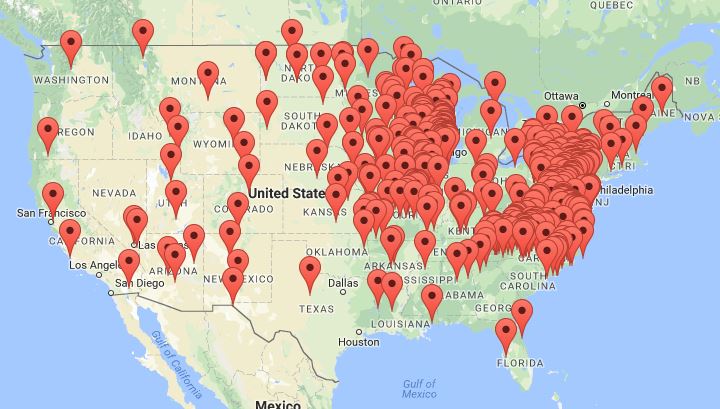
A new digital mapping project has been launched to track the locations of pressed penny machines worldwide. The database currently includes global locations, with a specific focus on mapping the vast majority of these machines across the United States.
CommentsUniversality of Gradient Descent Neural Network Training
Researchers have published a new study exploring the universal properties and theoretical guarantees of gradient descent in neural network training. The paper investigates how this fundamental optimization algorithm can consistently and effectively learn across various network architectures and complex data distributions. These findings provide deeper mathematical insights into why gradient descent remains the cornerstone of modern deep learning success.
CommentsXorshift Generators

This technical deep dive explores xorshift generators, the most popular family of algorithms used for generating pseudo-random numbers. The article breaks down the underlying mechanics of these algorithms and highlights their widespread applications in modern software development.
CommentsExtensible Software in the age of LLMs

The integration of large language models with solid core architectures and capability-based sandboxes is creating a new paradigm for extensible software. This secure approach allows users to safely customize and extend their applications, effectively granting them superpowers in the AI era.
CommentsAir Theremin – A browser theremin you play by waving at your webcam
Air Theremin is a browser-based virtual instrument that allows users to play a theremin in mid-air by waving at their webcam or tilting their smartphone. The application translates these physical gestures to control pitch, volume, and timbre, while also offering built-in features like note snapping, cave reverb, and audio recording.
CommentsHow do payments work in the US, China, and Brazil?

This piece explores the distinct payment infrastructures in the US, China, and Brazil to highlight the technological differences between these major economies. It challenges the common American assumption that global payment systems mirror the domestic model.
CommentsPacing model development in an era of cyber-critical capabilities

OpenAI is implementing enhanced monitoring, alignment, and security protocols to carefully guide the development of its frontier AI models. These new safeguards aim to responsibly pace innovation as artificial intelligence systems acquire increasingly cyber-critical capabilities.
CommentsRemote workers report the highest well-being in study of 7,700 employees

A new study of 7,700 employees reveals that remote workers report the highest levels of overall well-being, dispelling common employer concerns about disconnection. Researchers found that these remote employees are no more likely to experience feelings of isolation than their onsite counterparts.
Comments